Comparisons
Mindbody Alternative for Gyms: Compare 7 Leading Platforms
Find a Mindbody alternative for gyms with a clear comparison of features, ideal use cases, pricing models, integrations, limitations, and migration risks.
 Watch · 20s
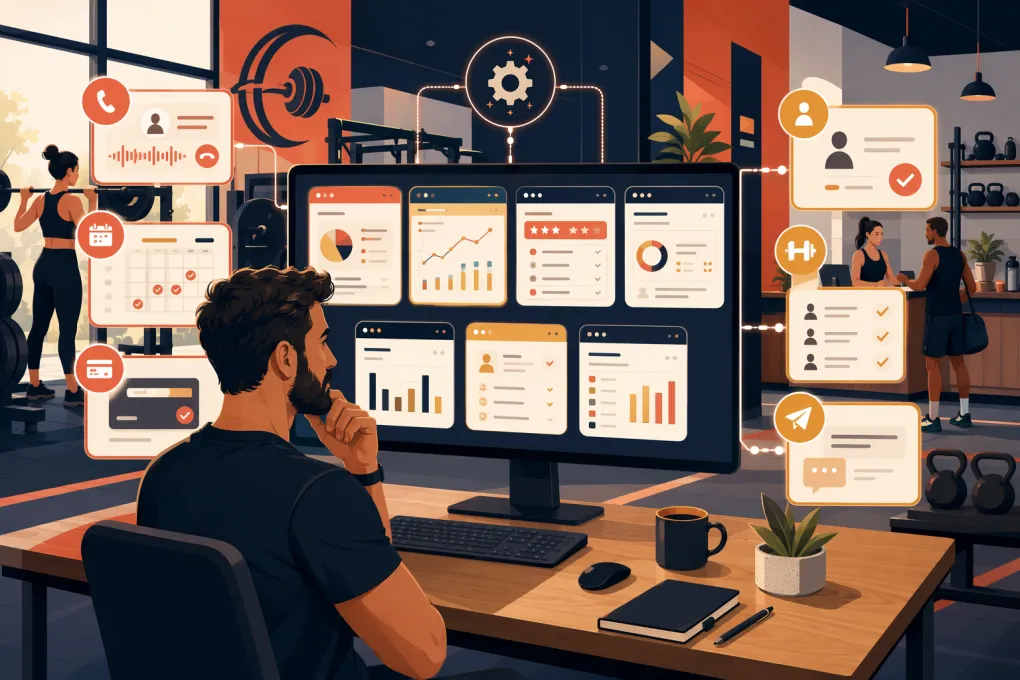
A Mindbody replacement should be chosen at the front desk, not in a feature-list spreadsheet. Can a coach find a waiver while class is starting? Can a prospect who calls after hours get an accurate answer and book? Can the owner reconcile payments without combining three exports?
Those operating moments expose the difference between platforms that look similar during a demo.
This comparison uses vendors’ current public positioning and documented product information, not a claimed hands-on laboratory test. Features, integrations, and pricing change frequently, and many vendors configure products differently by plan. Use the analysis to build a shortlist, then require each vendor to demonstrate your workflows in a live or sandbox environment.
Why gyms replace Mindbody
Mindbody serves a broad fitness, beauty, and wellness market. Its scheduling, payments, consumer marketplace, and business tools may suit operators who value that ecosystem.
A gym may still look elsewhere because it needs:
- A system designed around open-gym memberships rather than appointments
- Better support for martial arts ranks, courses, or family accounts
- Simpler boutique class and waitlist management
- Faster lead response across calls and texts
- Stronger multi-location controls
- Fewer separate tools for sales, communications, and collections
- A pricing or contract structure better aligned with its operation
Do not replace a core system over one irritating screen. Name the operational failure first: missed leads, slow check-in, manual collections, difficult reporting, limited product setup, or excessive staff training. The replacement must improve that workflow enough to justify migration risk.
Mindbody alternatives compared
The table below focuses on operating fit rather than declaring one universal winner. Pricing descriptions indicate the general buying approach visible through official vendor materials; request a current written quote before making a decision.
| Platform | Best starting fit | Operational strengths to evaluate | Limitations or questions to test | Pricing and integration posture |
|---|---|---|---|---|
| WTF Go | Gyms, studios, spas, and wellness operators wanting management software plus an AI receptionist | Fitty is positioned to answer leads, book classes, conduct follow-up, and assist with dues workflows outside staffed hours | Confirm supported channels, schedule access, payment permissions, escalation rules, and exactly which actions require staff approval | Request current pricing and a written list of native or supported integrations |
| ABC Fitness | Traditional health clubs, larger gyms, and multi-location operators | Membership, billing, engagement, and club-management products within a fitness-focused portfolio | Determine which ABC products are required, how implementation is scoped, and whether the staff experience fits a smaller independent gym | Generally sales-led; confirm module, implementation, processor, API, and partner costs |
| Glofox | Boutique studios, class-based gyms, and growing fitness brands | Member apps, class sales, scheduling, and multi-location or franchise-oriented capabilities | Test open-gym access, complex personal-training schedules, reporting consolidation, and branded-app requirements | Sales-led packaging; verify included integrations and charges for branded or advanced capabilities |
| Gymdesk | Independent gyms, martial arts schools, and operators prioritizing straightforward administration | Memberships, attendance, billing, scheduling, and martial arts-oriented workflows | Test enterprise permissions, sophisticated franchise reporting, and any specialized marketing automation you require | Public plan information is available; confirm location, member, messaging, Zapier, and API requirements |
| Mariana Tek | Premium boutique and multi-location class businesses | Consumer booking experience, branded digital experiences, and boutique-fitness operations | May be more platform than a small open-gym facility needs; test non-class memberships and trainer workflows | Sales-led; ask about branded products, implementation, APIs, and partner integrations |
| Vagaro | Gyms that also operate appointment-heavy wellness, spa, or beauty services | Appointments, classes, point of sale, marketplace exposure, and service-provider calendars | Validate recurring gym billing, access control, class capacity, and reporting across mixed business lines | Public base pricing and add-ons may be available; model calendars, locations, hardware, messaging, and payment costs |
| Zen Planner | Martial arts schools, functional fitness gyms, and membership-based studios | Membership management, scheduling, attendance, billing, and workout or skill-oriented use cases | Test the current member experience, sales automation, multi-site reporting, and required third-party connections | Request current packaging; confirm onboarding, website, app, payment, and integration costs |
A vendor’s inclusion does not mean every listed capability is available on every plan. Official product pages are linked so you can verify current claims and request documentation.
Which platform fits which gym type?
Independent open-gym facility
Start with ABC Fitness, Gymdesk, and WTF Go. The deciding factors are usually recurring billing, access control, failed-payment handling, member status changes, and after-hours lead coverage.
Ask each vendor to demonstrate this sequence: a prospect calls when the desk is unattended, books a tour, receives reminders, joins, signs a waiver, obtains access, and later updates a payment method. Count the staff interventions required.
Boutique class studio
Glofox, Mariana Tek, WTF Go, and Vagaro deserve consideration. Prioritize mobile booking, waitlists, recurring reservations, class packs, substitute instructors, cancellation rules, and branded member experiences.
Run a sold-out-class test. Have the vendor show what happens when a member cancels, the next person is promoted from the waitlist, payment is required, and the instructor changes shortly before class.
Martial arts school
Gymdesk and Zen Planner are logical starting points because they publicly address martial arts use cases. Test family billing, rank or skill tracking, attendance, belt-testing eligibility, limited-session programs, and parent-versus-student communication.
Generic fitness software can store a membership. That does not mean it can manage a household with multiple students, different ranks, and one payer cleanly.
Gym with spa, recovery, or wellness services
Vagaro and WTF Go merit evaluation, with Mindbody remaining a relevant benchmark. You need both class or membership logic and appointment logic: provider availability, room or equipment assignment, service duration, tips, retail, packages, and cancellation policies.
Build one mixed checkout during the demo—for example, a membership payment, booked recovery service, and retail item. Watch how taxes, commissions, credits, and reporting are handled.
Multi-location or franchise operation
Evaluate ABC Fitness, Glofox, Mariana Tek, and any other platform only after testing centralized controls. Require demonstrations of location-level permissions, consolidated reporting, shared memberships, cross-location booking, regional pricing, and brand-controlled templates.
“Multi-location” sometimes means that one login can switch between separate accounts. That is not the same as centralized operations.
How to evaluate AI receptionist claims
AI capabilities are difficult to compare from a scripted demo. WTF Go describes Fitty as an AI receptionist or agent that handles lead responses, bookings, follow-up, and dues-related workflows. Those capabilities should be treated as configured operational workflows, not unlimited autonomous authority.
Their usefulness depends on factors such as:
- Access to accurate schedules, offers, and membership rules
- The communication channels enabled for your account
- The actions the agent is permitted to complete
- Payment and member-management connections
- Escalation rules for disputes, injuries, exceptions, or sensitive requests
- Consent, opt-out, and message-history controls
Provide five real inquiries during the demo rather than accepting prepared examples:
- “Can I bring my teenager to the 6 p.m. class?”
- “I have never lifted before. Which session should I book?”
- “Freeze my membership, but only for next month.”
- “My card was charged twice.”
- “I want to join tonight. Can I start tomorrow morning?”
Check whether Fitty—or any competing automation—answers only from approved information, completes permitted actions, records the conversation, and escalates exceptions with enough context for an employee to continue. Also request current documentation covering integrations and data flow. If a required connection is unavailable, include the manual workaround in your cost comparison.
Compare total operating cost, not the headline fee
Software pricing is rarely comparable from one monthly figure. Build a worksheet covering:
- Base subscription and location charges
- Required modules and premium features
- Payment processing and payout terms
- Text, email, voice, and phone-number charges
- Branded app, website, access control, or point-of-sale costs
- Data migration, setup, and staff training
- Contract length, renewal, and termination terms
- External CRM, phone, automation, or reporting tools still required
Then add labor steps. If one system requires an employee to copy every web lead into a CRM, send reminders manually, and reconcile separate billing reports, that work is part of the operating cost even when it does not appear on the invoice.
Demand a migration map before signing
No honest comparison can promise a painless migration without inspecting your data. Export quality, stored payment credentials, future bookings, contracts, waivers, credits, and custom fields all affect the project.
Ask both the outgoing and incoming vendors to identify what happens to:
- Active, frozen, canceled, and overdue memberships
- Renewal dates and contract terms
- Stored payment tokens
- Future appointments and class reservations
- Remaining package visits and account credits
- Signed waivers and uploaded documents
- Household relationships
- Lead sources, notes, and communication consent
- Attendance, sales, and payout history
Require a field-level mapping: source field, destination field, import owner, validation method, and fallback plan. Preserve read-only exports of historical reports even if the new system accepts summary data.
The most revealing migration test is not total record count. Sample difficult accounts: a frozen member with a credit, a family with multiple students, a failed payment under follow-up, and a customer holding future bookings at two locations.
Make the decision with a Monday-morning test
Give every finalist the same operating script. A useful script covers an unanswered call, trial booking, waitlist promotion, check-in, retail sale, membership freeze, failed payment, refund, and owner-level report.
Score each step on four questions:
- Could the customer complete it without unnecessary friction?
- How many staff actions were required?
- Was the result visible in one reliable member record?
- Could a manager audit what happened?
The best Mindbody alternative for gyms is the platform that handles your recurring exceptions—not merely the happy path. Select the system that fits your gym type, prove critical integrations, document migration responsibility, and put every automation claim through a real operating scenario before committing.
Frequently asked questions
What is the best Mindbody alternative for a small gym?
Gymdesk and WTF Go are reasonable starting points for an independent gym, while Zen Planner may fit martial arts or functional fitness operations. Compare billing, access control, lead response, support, and total costs using your real workflows.
Which Mindbody alternative is best for boutique fitness?
Glofox and Mariana Tek focus heavily on boutique fitness, while WTF Go adds an AI receptionist angle and Vagaro may suit businesses mixing classes with appointments. Test waitlists, packs, branded booking, and multi-location controls.
Can stored payment information be migrated from Mindbody?
Possibly, but payment-token portability depends on processors, security requirements, and vendor agreements. Obtain written confirmation before assuming members will not need to re-enter payment details.
How should I compare gym software integrations?
List every required system, including access control, accounting, payments, website forms, messaging, and analytics. Require the vendor to identify whether each connection is native, API-based, partner-built, or manual—and who supports it when it fails.
Can an AI receptionist replace gym front-desk staff?
It can handle defined tasks such as answering approved questions, booking, reminders, and routine follow-up, but exceptions still need human escalation. Evaluate it as workload coverage, not an unrestricted replacement for operational judgment.
Keep reading


Run your gym on autopilot with WTF Go
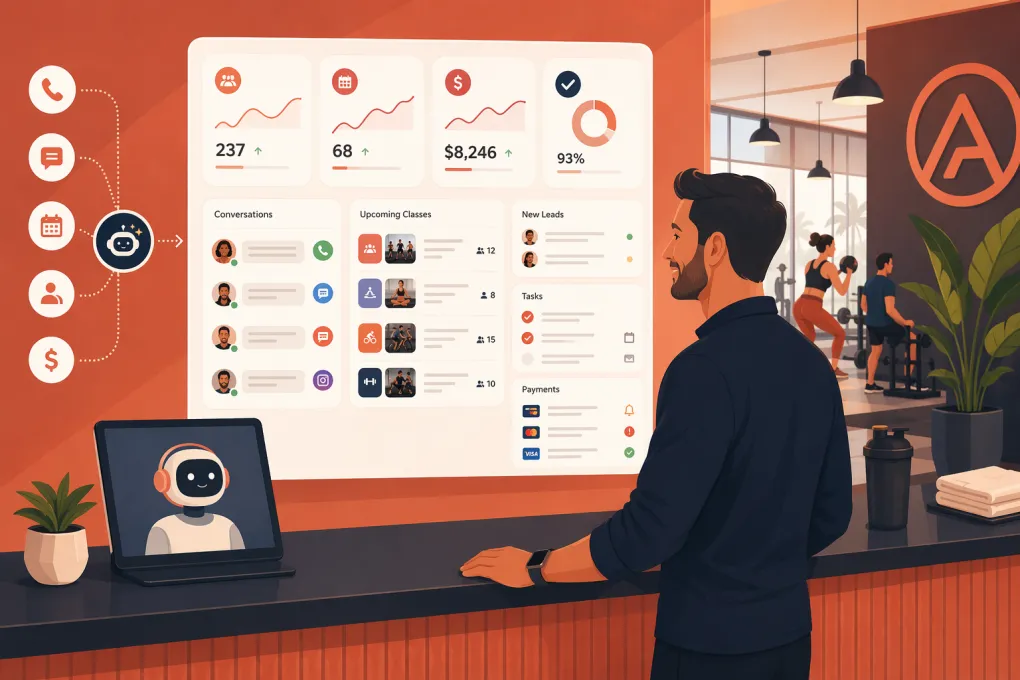
Fitty — your AI receptionist — answers calls and DMs, fills classes, follows up with every lead, and collects dues while you coach.