AI & Automation
Voice AI for Gym Membership Sales: The Operator Playbook
Learn how voice AI for gym membership sales can answer leads, qualify prospects, book tours, follow up, and protect your staff’s time without losing control.
 Watch · 20s
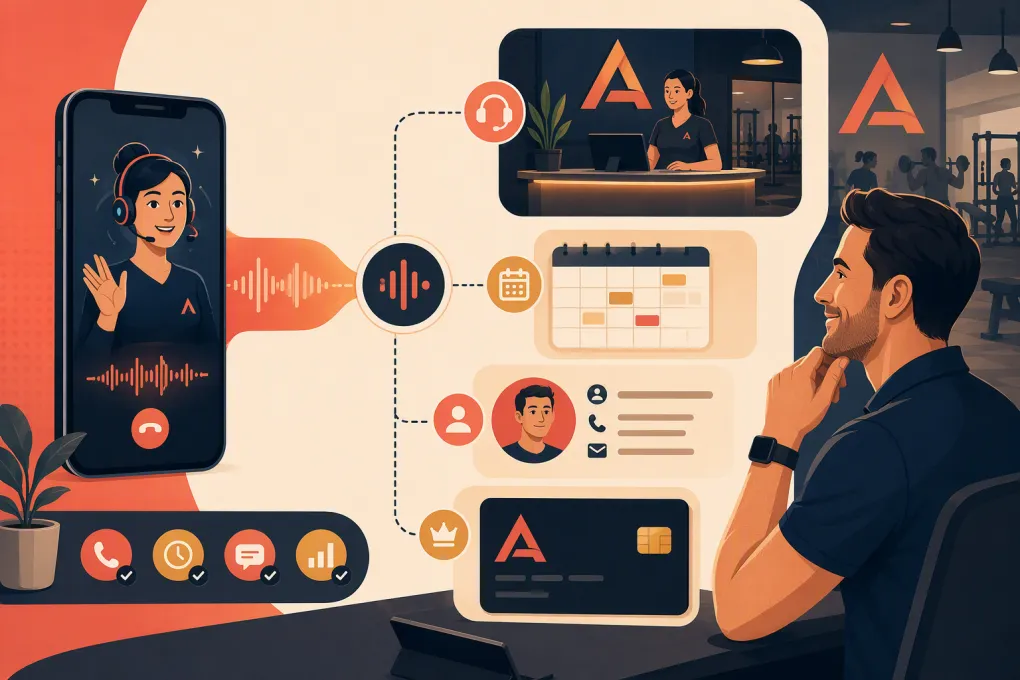
A membership lead calls your gym at 7:14 p.m. The front desk is closing, a coach is running class, and the owner is trying to leave. If the call rolls to voicemail, the prospect may simply call the next gym on the list. Voice AI for gym membership sales is designed to keep that conversation moving without requiring an employee to answer every call.
The value is not that an artificial voice can talk. The value is that it can complete useful sales work: answer common questions, capture intent, qualify the prospect, book the next step, trigger follow-up, and hand the conversation to a person when judgment is required.
That only works when the system is connected to real operating rules. A generic bot with stale pricing, no calendar access, and no escalation path creates more cleanup than it saves.
See how Fitty handles gym leads and booking conversations around the clock →
What voice AI should do for a gym sales team
Voice AI is best treated as a front-line sales coordinator, not an autonomous closer with unlimited authority. Its job is to create momentum while protecting the experience your staff ultimately has to deliver.
A practical system should be able to:
- Answer inbound calls when staff are busy or the facility is closed
- Identify whether the caller is a prospect, current member, vendor, or job applicant
- Explain classes, amenities, schedules, location details, and basic membership options
- Ask a short set of qualification questions
- Book an intro session, tour, consultation, or trial from actual availability
- Send confirmations and follow-up messages
- Route urgent or sensitive issues to the right employee
- Log the conversation and outcome in the prospect record
- Re-engage leads according to approved outreach rules
It should not invent policies, negotiate special rates, promise results, handle emergencies, or improvise around cancellation and billing disputes. Those calls need controlled answers and clear escalation.
Where voice AI improves the membership sales process
The strongest use cases are specific, repetitive, and tied to a next action.
| Sales stage | What the AI can handle | Where staff should take over |
|---|---|---|
| First response | Answer the call, identify intent, collect contact details | Complex questions or callers requesting a person |
| Qualification | Ask about goals, preferred schedule, experience, and start timeframe | Medical, injury, or highly personal discussions |
| Appointment setting | Offer approved openings and book the next step | Exceptions, special events, or unavailable appointment types |
| Follow-up | Remind prospects, confirm attendance, and reopen stalled conversations | Negotiation and high-value personal outreach |
| Membership decision | Explain approved plans and direct the prospect to enrollment | Discounts, contract disputes, or unusual terms |
| Dues outreach | Provide an approved payment path and collect dues when supported | Contested charges or hardship conversations |
The handoff matters as much as the automation. Staff should receive the caller’s name, reason for calling, questions asked, answers given, appointment status, and any concern that requires attention. Making the prospect repeat the entire conversation weakens the experience.
Build the call around one clear conversion
Many gym call scripts fail because they attempt to explain everything. The caller usually needs one useful next step, not a spoken tour of the website.
For most facilities, that conversion will be one of the following:
- Book a facility tour
- Reserve a trial class
- Schedule a goal consultation
- Book an intro or assessment
- Start enrollment through a secure link
- Request a callback from a membership advisor
Choose the primary conversion by lead type. A first-time strength-training prospect may need a consultation, while an experienced drop-in visitor may only need a class reservation.
Use a short qualification sequence
Qualification should improve routing without turning the call into an interrogation. Useful questions include:
- What are you hoping to work on?
- Have you trained in this type of program before?
- What days or times usually work for you?
- Are you looking to start soon or researching options?
- Would you prefer a tour, consultation, or trial session?
Only ask questions that change what happens next. If an answer does not affect booking, routing, or follow-up, it probably does not belong in the initial call.
Connect booking to live availability
An AI agent should not merely promise that somebody will call back to schedule. That preserves the same delay that caused the problem.
Connect the agent to the calendar or booking workflow used by the facility. Define:
- Which appointment types it may book
- The staff and locations eligible for each appointment
- Minimum notice and scheduling windows
- Capacity and class eligibility rules
- Buffer time between appointments
- Rescheduling and cancellation rules
- What happens when no suitable opening exists
The confirmation should restate the location, date, time, appointment type, arrival instructions, and any preparation required.
See how Fitty turns gym inquiries into booked classes and follow-up tasks →
Give the AI approved answers, not creative freedom
A sales-ready knowledge base should reflect how the gym actually operates. Start with the questions your team answers every week:
- What does membership include?
- Is there a contract or commitment period?
- Are classes beginner-friendly?
- Do you offer personal training?
- Is childcare available?
- Where should a first-time visitor park?
- What should someone bring to class?
- Which amenities are available at this location?
- Can members use multiple locations?
- How do freezes, cancellations, and guest access work?
Assign each answer an owner and review date. Pricing, schedules, promotions, and policies change; an unmaintained AI knowledge base will confidently distribute old information.
Use approved phrasing for sensitive topics. The agent should not provide medical advice, guarantee fitness outcomes, or pressure a caller who raises an injury or accessibility concern. It can explain available services and arrange a conversation with qualified staff.
Plan objection handling and human escalation
Voice AI can handle straightforward hesitation, but it should not try to win every argument.
For a price question, it can explain published options and connect the price to what is included. For a caller who says they need to think, it can offer to send information and schedule a follow-up. For schedule concerns, it can check relevant class times.
Escalate when the caller:
- Explicitly asks for a human
- Is upset or repeatedly misunderstands the answer
- Disputes a charge or contract term
- Requests an exception, discount, or custom arrangement
- Mentions an emergency, injury, harassment, or safety issue
- Asks something outside the approved knowledge base
- Has a language or accessibility need the system cannot support well
The AI should identify itself appropriately rather than pretending to be a human employee. Transparency protects trust and sets the right expectation for the conversation.
Treat outbound calling as a compliance workflow
Inbound answering and outbound sales calls carry different operational risks. Before using voice AI to call leads, review federal and state requirements with qualified counsel. Applicable rules can depend on consent, call purpose, dialing method, prerecorded or artificial voice use, call recording, location, and the relationship with the recipient.
Your operating controls should include:
- A documented source and timestamp for consent
- Clear rules for which leads may receive calls
- Calling-hour restrictions based on the recipient’s location
- Internal do-not-call suppression
- Immediate handling of opt-out requests
- Recording disclosures where required
- Limits on contact frequency and retry attempts
- Retention rules for call recordings and transcripts
- Access controls for prospect and payment information
Do not upload an old lead list and assume prior interest equals permission for unlimited automated outreach. Compliance needs to be designed into the workflow before launch, not added after a complaint.
Measure outcomes that operators can act on
Call volume alone does not tell you whether voice AI is helping. Review performance by location, lead source, call type, and time of day.
Track:
- Calls answered and calls abandoned
- Qualified prospects identified
- Tours, trials, and consultations booked
- Booking confirmations and reschedules
- Show and no-show outcomes
- Human transfers and failed transfers
- Questions the AI could not answer
- Incorrect or outdated responses
- Opt-outs and complaints
- Lead-to-membership outcomes where attribution is reliable
Listen to a sample of successful, failed, and escalated calls. Transcripts reveal issues that dashboards hide: awkward phrasing, unnecessary questions, incorrect routing, or callers getting stuck in loops.
Avoid evaluating the agent only on call containment. A call transferred at the right moment can be a success. A fully automated call that gives the wrong answer is not.
Roll out voice AI without disrupting the front desk
Start with a narrow scope and expand after reviewing real conversations.
Phase 1: After-hours inbound calls
Cover common questions, lead capture, and one booking type. This isolates the most obvious coverage gap while keeping the workflow manageable.
Phase 2: Overflow during staffed hours
Let the agent answer when employees are coaching, checking in members, or already on another call. Define transfer availability so the AI does not send calls to staff who cannot answer.
Phase 3: Follow-up and reminders
Add approved outreach for leads who requested contact, appointment confirmations, missed-appointment recovery, and other consent-based workflows.
Phase 4: Broader member service
Expand into routine account questions or dues collection only after access controls, escalation rules, and payment handling have been reviewed.
Before each phase, run test calls for ordinary requests, interruptions, background noise, repeated questions, unsupported requests, and frustrated callers. Confirm that the system fails safely when it cannot complete a task.
How Fitty fits into the sales operation
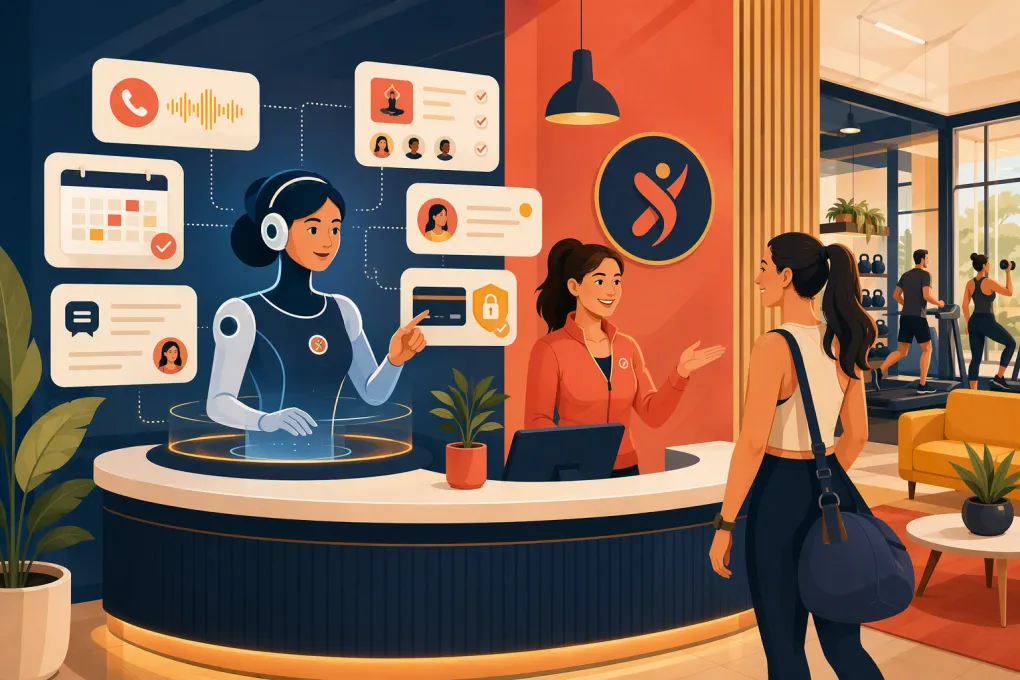
Fitty is the AI receptionist and agent inside WTF Go, an operating system built for gyms, studios, spas, and wellness businesses. It can answer leads, book classes, follow up, and collect dues around the clock, keeping those actions connected to the broader operating workflow rather than leaving them in a separate phone tool.
That connection is the practical advantage. The call should not end as an isolated transcript. It should create the correct booking, follow-up, prospect record, or payment action so staff can see what happened and take over when needed.
The goal is not to remove your sales team. It is to stop good prospects from waiting on voicemail, reduce repetitive front-desk work, and give employees better context for the conversations that require a person.
Explore WTF Go and see how Fitty can support your gym’s membership sales workflow →
Frequently asked questions
Can voice AI sell gym memberships without a staff member?
It can answer questions, qualify leads, book appointments, follow up, and direct prospects into enrollment. Staff should still handle negotiations, exceptions, sensitive concerns, and situations requiring judgment.
Should a gym disclose that callers are speaking with AI?
Yes, the agent should identify itself appropriately rather than impersonating an employee. Separate disclosure and consent requirements may also apply to automated outbound calls and call recording.
What gym calls should not be automated?
Emergencies, injury discussions, billing disputes, cancellation conflicts, harassment reports, and requests for unusual contract terms should be routed to trained staff.
How do I know whether voice AI is improving membership sales?
Track qualified leads, appointments booked, show outcomes, human transfers, unresolved questions, opt-outs, and resulting memberships. Review call samples regularly to catch inaccurate answers or poor handoffs.
Can voice AI answer calls for multiple gym locations?
Yes, if the workflow uses location-specific schedules, services, pricing, policies, calendars, and escalation contacts. Each location should be tested separately before launch.
Keep reading

Run your gym on autopilot with WTF Go
Fitty — your AI receptionist — answers calls and DMs, fills classes, follows up with every lead, and collects dues while you coach.