AI & Automation
AI Receptionist for Gym Small Group Training Bookings
Use an AI receptionist for gym small group training bookings to capture leads, fill open spots, manage follow-up, and reduce daily front-desk workload.
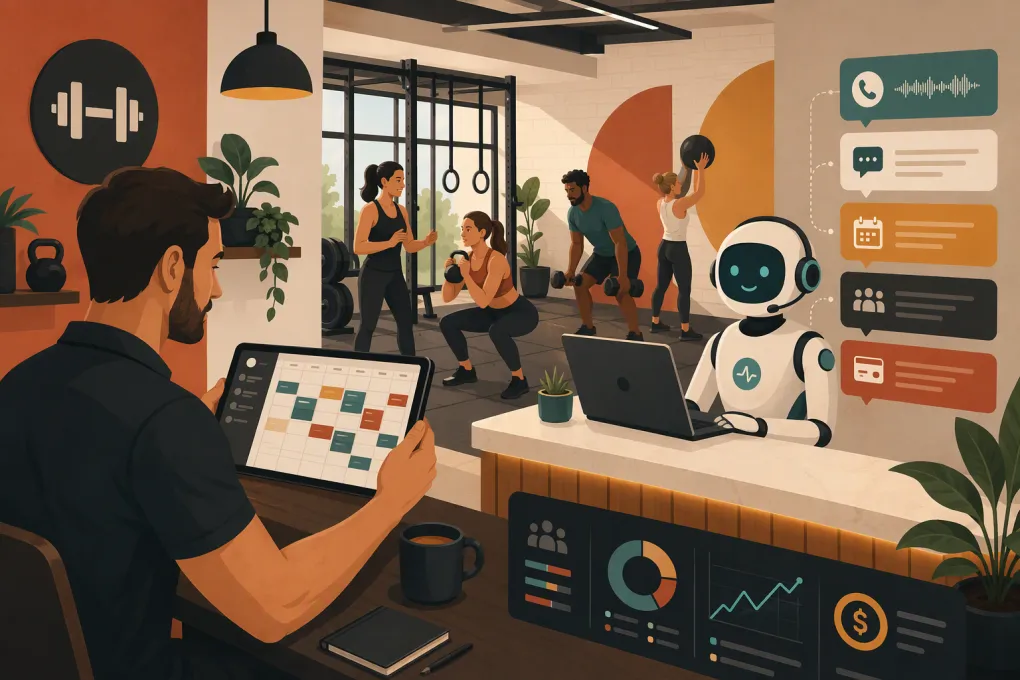 Watch · 20s
Small group training is operationally demanding. It combines the capacity limits of class scheduling with the sales and service expectations of personal training. Every session has a fixed number of spots, members ask detailed questions before booking, and late cancellations can quickly turn a full session into unused coach time.
An AI receptionist can take the repetitive booking work off the front desk without removing human judgment from the operation. Used correctly, it answers common questions, qualifies prospects, finds appropriate sessions, books eligible clients, follows up with undecided leads, and routes exceptions to staff.
The goal is not simply to answer more messages. It is to turn inquiries into properly matched, confirmed bookings while protecting session capacity, coaching quality, and your cancellation policies.
Why small group training bookings are easy to lose
A lead interested in small group training rarely asks only, “What time is class?” They may want to know:
- Whether the program is suitable for beginners
- How many people train in each session
- Whether an assessment or intro session is required
- Which coach leads the program
- What membership or package they need
- Whether injuries or movement restrictions can be accommodated
- What happens if a preferred time is full
These conversations arrive through calls, website forms, texts, social messages, and existing-member inquiries. If nobody responds until the next staffed shift, the prospect may book elsewhere or simply lose momentum.
Existing members create another layer of work. They need to book, cancel, join waitlists, check package eligibility, and understand no-show rules. Front-desk employees can handle those tasks, but repeatedly switching between in-person service and booking conversations creates avoidable friction.
See how Fitty handles small group training inquiries and bookings around the clock →
What an AI receptionist should handle
A useful AI receptionist needs to do more than send a booking link. It should understand the request, gather the required information, apply your rules, and complete the next valid action.
Answer program-specific questions
The receptionist should have access to an approved knowledge base covering:
- Program format and training goals
- Session duration and capacity
- Experience or fitness prerequisites
- Coaches and locations
- Introductory offers or assessment requirements
- Membership and package eligibility
- Booking, cancellation, and waitlist policies
- Parking, arrival, equipment, and check-in instructions
Keep answers operational rather than promotional. If a program is not appropriate for complete beginners, say so and offer the correct starting point. A booking that creates a poor first experience is not a win.
Qualify new prospects
Qualification should be short enough to keep the conversation moving. For most small group programs, the AI may need to collect:
- The prospect’s primary goal
- Preferred days and time windows
- Training experience
- Whether they are a current member
- Any issue that requires a coach or staff conversation
- Their preferred contact details
Avoid turning the exchange into a health assessment. An AI receptionist should not diagnose conditions, provide medical advice, or decide whether an injury is safe to train through. It should escalate those questions to an appropriately qualified person.
Book the correct next step
Not every prospect should enter a regular session immediately. Your booking paths might include:
- Direct booking into a beginner-friendly session
- A gym tour or consultation
- A movement assessment
- A trial session
- A call with the program coach
- A waitlist when the requested session is full
Define these paths before automation goes live. Otherwise, the AI may answer questions well but still leave staff to interpret and process every lead manually.
Follow up without relying on staff memory
Many prospects ask about training but do not book during the first conversation. A practical follow-up sequence can remind them about the session discussed, offer another time, or ask whether they still want help.
Follow-up should stop when the person books, declines, opts out, or needs human assistance. It should also reference the actual inquiry. A specific message about Tuesday’s beginner strength group is more useful than a generic sales check-in.
Build booking rules before switching on automation
An AI receptionist is only as reliable as the operating rules behind it. Document the following before allowing automated bookings.
Capacity and inventory
Set the real maximum capacity for each session. Do not create extra bookable spots on the assumption that someone will cancel. If different sessions use different rooms, equipment, or coach-to-client ratios, configure them separately.
Your scheduling system should remain the source of truth. The AI must check current availability rather than quote a static timetable.
Eligibility
Specify who can book each session. Rules may depend on:
- Active membership status
- Available package credits
- Completion of an assessment
- Program level
- Age requirements
- Location access
- Account standing
If the system cannot verify eligibility, the AI should collect the request and route it to staff instead of promising a spot.
Cancellation and waitlist rules
Document the cancellation window, late-cancel treatment, no-show policy, and waitlist process in plain language. The same policy should appear in staff scripts, booking confirmations, and automated answers.
Decide what happens when a spot opens. Can the first person on the waitlist be enrolled automatically, or must they confirm? How much notice is required? When should the AI offer another session instead?
Human handoff triggers
Automation needs a visible exit ramp. Escalate conversations involving:
- Injuries, pregnancy, or medical concerns
- Membership disputes or refund requests
- Repeated payment failures
- Requests for policy exceptions
- Complaints about a coach or member
- Accessibility needs requiring staff coordination
- Questions the approved knowledge base cannot answer confidently
The handoff should include the conversation history, contact information, requested session, and unresolved issue. Members should not have to repeat the entire exchange.
A practical booking conversation
A well-designed conversation can be brief:
Prospect: “Do you have small group strength training after work?”
AI receptionist: Confirm the relevant location, explain the available program in one or two sentences, and ask which weekdays work.
Prospect: “Tuesday or Thursday after 6. I’m new to lifting.”
AI receptionist: Check beginner eligibility and live availability. If an intro assessment is required, offer times for that step. If direct booking is allowed, present the closest suitable sessions.
Prospect: Selects a time.
AI receptionist: Collect the required details, complete the booking, and send the cancellation policy, arrival instructions, and confirmation.
The exchange should not bury the prospect under every program detail. Answer what was asked, obtain what is needed, and move toward a valid booking.
Use Fitty to answer leads, book eligible clients, and follow up when they do not finish scheduling →
Connect booking automation to the rest of the member journey
The booking itself is only one operational checkpoint. Small group training revenue and retention depend on what happens before and after the session.
Before the first session
Send a confirmation immediately, then deliver only the reminders that help the client arrive prepared. Include:
- Date, time, and location
- Coach or program name
- Arrival and check-in instructions
- What to bring
- Parking or access details
- A link or method for rescheduling
If forms or waivers are required, make that step clear. Do not mark someone ready to attend if essential onboarding tasks are incomplete.
After attendance
Create different follow-up paths based on the actual outcome:
- Attended: Ask about the experience and offer the appropriate package or next booking.
- Canceled properly: Help reschedule while intent is still active.
- Late canceled or no-showed: Explain the applicable policy and provide the next permitted action.
- Did not purchase: Follow up on the specific goal or objection discussed.
Staff should be able to see these conversations in the same operational context as the lead or member record.
When payment blocks the booking
A client may choose a session but lack an eligible package, have an expired membership, or have an outstanding balance. The AI should explain the issue accurately and provide the approved resolution, such as purchasing the correct option or updating a payment method.
Fitty is designed to handle lead responses, booking, follow-up, and dues collection as connected workflows rather than isolated front-desk tasks. See how WTF Go can connect booking conversations with follow-up and payment collection →
How to measure whether it is working
Do not judge an AI receptionist by conversation volume alone. Review operational outcomes such as:
- Inquiries that become booked assessments, trials, or sessions
- Time from first inquiry to first response
- Bookings that require staff correction
- Unanswered questions and escalation reasons
- Waitlist requests converted into another session
- Cancellations that successfully reschedule
- Prospects who stall at eligibility or payment steps
- No-shows linked to unclear confirmations or reminders
Read actual conversation transcripts regularly. Look for wrong assumptions, confusing language, excessive questioning, and moments where a human should have taken over sooner.
A sensible rollout plan
Start with one program, one location, and a controlled set of booking actions.
- Document the program, eligibility, capacity, and policies.
- Clean up the live schedule and remove outdated sessions.
- Define direct-booking and escalation paths.
- Test common, unusual, and incomplete inquiries.
- Run staff and owner test bookings before opening access to prospects.
- Review conversations daily during the initial rollout.
- Expand to more programs only after the first workflow is stable.
An AI receptionist should reduce manual coordination without creating hidden cleanup work. The best setup gives prospects a fast path to the right session, gives staff context when intervention is needed, and gives the operator control over every rule that affects capacity or revenue.
Frequently asked questions
Can an AI receptionist book small group training sessions directly?
Yes, when it can access live availability and verify the client’s eligibility. Requests involving missing information, exceptions, or health concerns should be handed to staff.
Can it manage waitlists and cancellations?
An AI receptionist can explain cancellation rules, process permitted changes, collect waitlist requests, and offer alternative sessions. The exact actions depend on the scheduling system and the gym’s configured policies.
Will an AI receptionist replace front-desk staff?
It is better used to handle repetitive inquiries, scheduling, reminders, and follow-up. Staff should remain responsible for sensitive conversations, exceptions, complaints, and situations requiring professional judgment.
What information should the AI collect from a new training lead?
Usually the lead’s goal, preferred schedule, experience level, membership status, contact details, and any concern requiring staff review. Keep qualification focused on reaching the correct next step.
How should a gym test AI booking automation?
Test direct bookings, full sessions, ineligible accounts, cancellations, payment issues, unclear requests, and human handoffs. Confirm that every action appears correctly in the gym’s scheduling and member records.
Keep reading


Run your gym on autopilot with WTF Go
Fitty — your AI receptionist — answers calls and DMs, fills classes, follows up with every lead, and collects dues while you coach.