AI & Automation
AI Receptionist for Gym Membership Renewal Calls Playbook
Use an AI receptionist for gym membership renewal calls to reach members, handle objections, update payment details, and reduce avoidable churn 24/7.
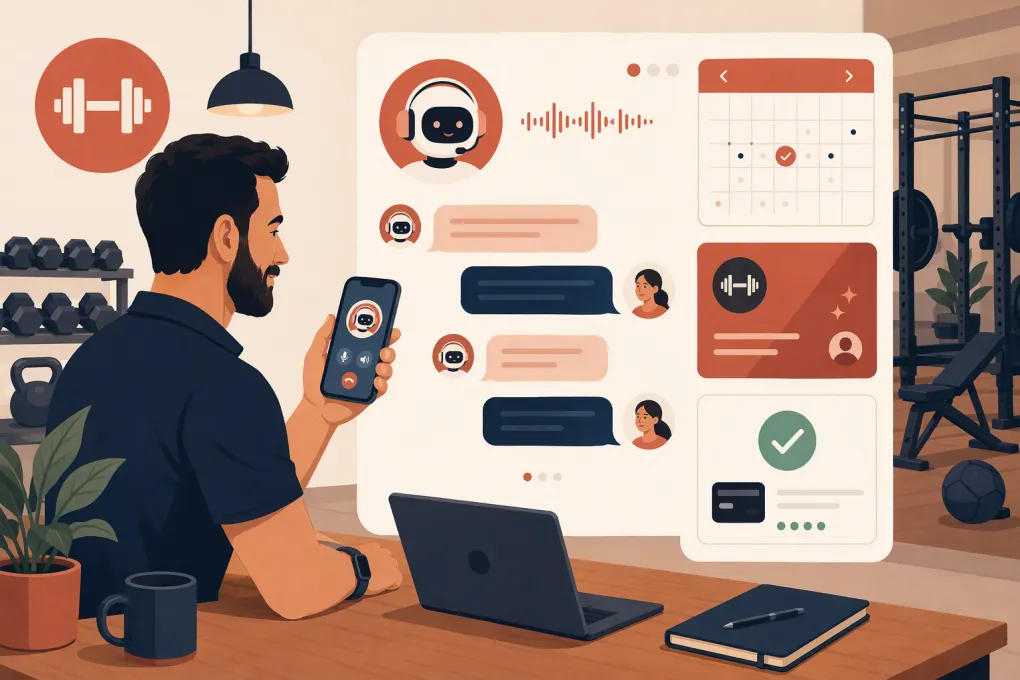 Watch · 20s
Renewal calls look simple until someone has to make them. Your team pulls a list, calls between front-desk interruptions, leaves vague voicemails, forgets follow-ups, and reaches members when they are busy. By the time anyone connects, the membership may already have expired.
An AI receptionist for gym membership renewal calls gives operators a more consistent process. It can contact eligible members, explain the renewal options you approve, answer routine questions, follow up at sensible intervals, and move ready members toward payment or a staff conversation.
The goal is not to replace every retention conversation. It is to make sure every renewal receives timely attention while your staff focuses on coaching, in-person service, and sensitive member issues.
See how Fitty can follow up on gym renewals and collect dues 24/7 →
What a gym renewal AI receptionist should actually do
A useful renewal agent needs more than a text-to-speech voice and a list of phone numbers. It must understand the member’s status, stay within approved policies, and complete or route the next step.
For each member, the system should know relevant details such as:
- Membership or package type
- Expiration or scheduled renewal date
- Current renewal options
- Payment status
- Location or home club
- Previous contact attempts
- Known freezes, cancellation requests, or unresolved disputes
- Whether the member has consented to the applicable communication channel
With that context, the AI receptionist can handle a defined workflow:
- Confirm it is speaking with the correct person without exposing sensitive account information.
- Explain why it is calling.
- Present the eligible renewal option or ask a qualifying question.
- Answer routine policy and membership questions.
- Send an approved payment link or collect dues through a secure workflow.
- schedule a staff callback when human judgment is required.
- Record the outcome and determine whether another follow-up is appropriate.
Without those connections, the AI is only making calls. It is not managing renewals.
Separate renewals from failed payments and win-back calls
These conversations are often grouped together, but they are not the same operational problem.
Upcoming membership renewals
The member has an agreement, package, or prepaid term approaching its end date. The conversation should focus on continuity: whether the member wants to renew, which approved option fits, and how to complete it.
Failed or outdated payment methods
The membership may still be active, but a charge did not complete. The immediate task is to update the payment method or arrange another approved form of payment. The agent should not imply that the member chose to cancel.
Expired-member win-backs
The membership has ended, and the business is asking the former member to return. This is a sales or reactivation conversation, not an administrative reminder. Different consent, offer, and contact rules may apply.
Build separate scripts, statuses, and follow-up sequences for each category. A member with an expired card should not receive the same message as someone who intentionally allowed a term membership to end.
Build the renewal workflow around timing and intent
Calling every expiring member on the same day creates an avoidable backlog. A staged workflow gives people time to act without turning the process into a barrage of reminders.
A practical sequence might include:
- Before expiration: Notify the member that the end date is approaching and explain the available next step.
- Near the renewal date: Ask whether the member wants help renewing or has questions about the plan.
- After expiration: Confirm the membership status and offer an approved route to reactivate, if appropriate.
- After engagement: Stop the generic sequence and follow the member’s stated intent.
The exact timing should reflect your agreement terms, billing practices, contact permissions, and typical member behavior. More attempts do not automatically produce better results. Contact should stop when the member renews, opts out, disputes the account, requests cancellation, or needs a human decision.
Fitty, WTF Go’s AI receptionist, is built to answer, follow up, and collect dues as part of the operating workflow rather than leaving staff to reconcile disconnected call notes and payment tasks.
See how Fitty can turn renewal conversations into completed next steps →
Give the AI clear renewal call guardrails
The quality of an AI call depends heavily on what the agent is allowed to say and do. Start with a narrow, documented policy instead of asking the system to improvise.
Define what it can resolve
Routine situations may include:
- Confirming a renewal date
- Explaining published membership options
- Resending a secure payment link
- Updating a callback preference
- Answering standard questions about access or billing frequency
- Booking a conversation with a membership manager
Define when it must escalate
Send the conversation to a person when the member:
- Disputes a charge or contract term
- Mentions an injury, hardship, death, or other sensitive circumstance
- Requests an exception, refund, discount, or backdated change
- Says they already canceled
- Threatens legal action or a chargeback
- Has account information that conflicts with the system
- Becomes distressed or repeatedly asks for a person
Escalation should create a task with the call outcome, member intent, and requested follow-up. Making the member repeat the entire conversation defeats the purpose of automation.
Use a script that sounds direct, not robotic
A renewal opener should identify the business, explain the purpose, and give the member room to respond. It does not need a long promotional pitch.
For example:
Hi, this is the virtual receptionist calling from [Gym Name] about your membership, which is scheduled to end on [date]. I can help you review the available renewal option, or I can arrange for a team member to contact you. Would you like to continue?
If the member wants to renew:
Your eligible renewal option is [approved plan summary]. I can send a secure payment link now, or schedule a call with the membership team if you would rather speak with someone.
If the member is unsure:
What would you like to clarify before deciding—schedule, membership access, billing, or something else?
The script should never invent a discount, make a policy exception, hide renewal terms, or create false urgency. It should also identify itself appropriately rather than pretending to be a human employee.
Prepare for common renewal objections
AI is most useful when it can recognize intent and follow an approved response path.
“I have not been coming enough”
The agent can ask whether schedule, programming, location, or another issue is getting in the way. It can explain relevant options already available in the account or arrange a staff conversation. It should not promise a custom plan unless your business supports one.
“It costs too much”
The AI can explain eligible plan choices and billing terms. If discounts require approval, it should escalate rather than negotiate.
“I thought it renewed automatically”
The agent should verify the account status and explain the next step using the actual agreement data. This is where integration with the membership record matters.
“I already canceled”
Stop the sales path. Mark the account for review and route it to staff. Continuing to push for payment can turn a data problem into a member complaint.
“Call me later”
Ask for a preferred day or time, confirm the time zone, and schedule the follow-up. A vague promise to call later usually creates another missed connection.
Protect consent, privacy, and payment information
Automated calling is regulated. The rules can vary based on the technology used, the purpose of the call, the recipient’s consent, and federal and state law. AI-generated voices may be treated as artificial or prerecorded voices under US calling rules.
Before launching renewal calls, have qualified counsel review your use case and workflow. Operational safeguards should include:
- Documenting the appropriate consent for automated calls or texts
- Honoring opt-outs and do-not-call requests promptly
- Separating service communications from telemarketing campaigns
- Applying reasonable calling hours and time-zone controls
- Reviewing state call-recording and disclosure requirements
- Limiting the account information spoken before identity verification
- Using a secure payment process rather than reading card details into call notes
- Keeping an auditable record of consent, outreach, and outcomes
A prior business relationship is not a universal substitute for consent. Do not upload the full member database and assume every automated renewal call is permitted.
Measure outcomes, not call volume
The number of calls placed tells you little about whether the workflow is helping. Review the full renewal funnel instead.
Useful operational measures include:
- Members eligible for renewal
- Members successfully reached
- Renewal intent captured
- Secure payment links sent
- Renewals completed
- Human callbacks requested
- Disputes or exceptions escalated
- Opt-outs received
- Calls made after an account should have been suppressed
- Time between member response and staff follow-up
Listen to samples from completed, declined, confused, and escalated calls. Look for inaccurate answers, awkward handoffs, repeated questions, and policies the AI cannot explain clearly. Update the source material and routing rules before expanding the audience.
Start with a controlled rollout
Do not begin with every membership type and every location. Choose one clear segment, such as prepaid memberships approaching a fixed expiration date.
Before launch:
- Clean the member and consent data.
- Confirm the eligible renewal terms.
- Write approved answers to common questions.
- Define suppression and escalation rules.
- Test identity verification and payment handoffs.
- Run internal calls covering normal and difficult scenarios.
- Assign an employee to review exceptions daily.
Once the workflow is reliable, add other segments such as class packs, paid-in-full plans, or expired members. Multi-location operators should also verify that each call uses the correct location name, policies, pricing, staff availability, and time zone.
An AI receptionist works best as part of the operating system that holds the member journey together. WTF Go combines those workflows with Fitty, so renewal outreach can lead directly to follow-up, booking, payment, or a staff handoff.
Explore WTF Go and put Fitty on your membership follow-up workflow →
The real value is consistency. Every eligible member receives a timely, policy-compliant next step, while your staff retains control over exceptions and relationship-sensitive conversations.
Frequently asked questions
Can an AI receptionist collect gym membership renewal payments?
It can guide a member into an approved secure payment workflow or send a payment link. Avoid storing card details in call transcripts or ordinary notes.
Are automated AI renewal calls legal for gyms?
Legality depends on consent, call purpose, technology, jurisdiction, and other factors. Have qualified counsel review the workflow, and maintain clear consent, opt-out, time-zone, and recordkeeping controls.
Should AI handle gym membership cancellation requests?
AI can capture the request and explain established procedures, but disputes, exceptions, refunds, and sensitive circumstances should usually be escalated to trained staff.
What information does an AI receptionist need for renewal calls?
It needs accurate membership status, expiration dates, eligible plans, payment status, location rules, contact permissions, prior outreach, and clear escalation policies.
How is a renewal call different from a gym win-back call?
A renewal call addresses an active or recently ending membership. A win-back call asks a former member to return and should use a separate offer, script, audience, and consent review.
Keep reading


Run your gym on autopilot with WTF Go
Fitty — your AI receptionist — answers calls and DMs, fills classes, follows up with every lead, and collects dues while you coach.