AI & Automation
Virtual Receptionist for Massage Therapy Clinics That Works
Learn how a virtual receptionist for massage therapy clinics handles missed calls, books appointments, follows up with leads, and supports collections.
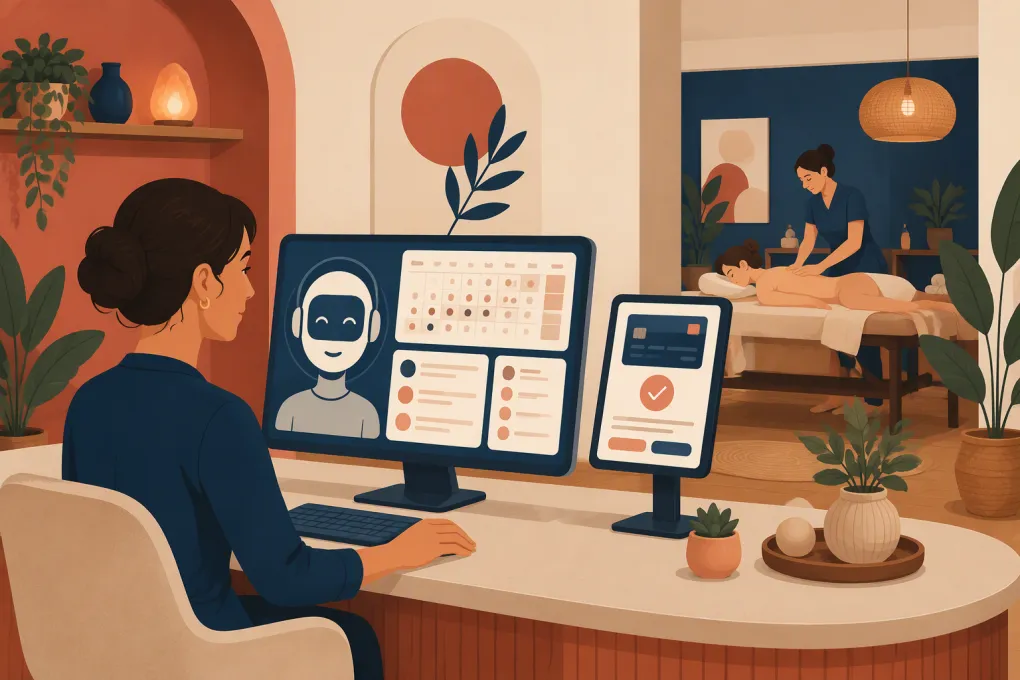 Watch · 20s
A massage therapist cannot answer the phone halfway through a session. That creates a basic operational problem: the clinic is unavailable at the exact moment a prospective client is ready to ask a question or book.
Some callers leave a voicemail. Others call the next clinic in the search results. Existing clients may also need to reschedule, confirm membership details, buy a gift card, or ask whether a particular service is available. Every interruption forces the owner to choose between the client on the table and the person trying to reach the business.
A virtual receptionist for massage therapy clinics closes that coverage gap. The right system answers promptly, handles routine questions, moves qualified inquiries toward an appointment, and sends the exceptions to a person. It should reduce front-desk work without creating booking errors or pretending to make clinical decisions.
See how Fitty can handle massage clinic inquiries while therapists stay in session →
What a massage clinic virtual receptionist should handle
The goal is not to automate every conversation. It is to automate the repetitive administrative steps that otherwise sit in a voicemail box or interrupt treatment.
Answer common pre-booking questions
Prospective clients often want straightforward information before scheduling:
- Which massage modalities the clinic offers
- Available session lengths
- Business hours and location details
- Whether same-day appointments are available
- What clients should wear or bring
- Whether the clinic offers couples sessions
- How packages, memberships, or gift cards work
- Whether a specific therapist or therapist preference can be accommodated
A useful receptionist should answer from clinic-approved information rather than improvising. If a question requires professional judgment—such as whether massage is appropriate after an injury, procedure, or medical event—the system should escalate it instead of providing clinical advice.
Book according to real operating constraints
Massage scheduling is more complicated than placing a name in an open slot. The booking workflow may need to account for:
- Therapist availability and approved modalities
- Treatment-room capacity
- Session duration
- Cleanup or reset buffers
- Couples-room requirements
- Therapist preferences requested by clients
- New-client intake requirements
- Package or membership eligibility
- Same-day booking cutoffs
If the receptionist cannot apply those rules, it may create more work than it removes. Before going live, document the clinic’s scheduling constraints and test combinations such as a couples massage, a long session near closing time, and a request for a modality offered by only one therapist.
Capture leads who are not ready to book
Not every inquiry converts during the first conversation. Someone may be comparing services, waiting for a work schedule, or looking for a gift appointment.
The receptionist should collect only the information needed for a useful follow-up, such as the person’s name, contact method, desired service, preferred timing, and unresolved question. It can then send an approved follow-up instead of relying on an owner to remember another callback at the end of the day.
Manage confirmations and routine changes
Clients also contact the clinic to confirm, cancel, or move appointments. A virtual receptionist can guide them through permitted changes, explain the clinic’s published cancellation policy, and escalate edge cases.
The important word is permitted. Automation should follow the clinic’s rules consistently. It should not waive fees, override blocked time, or squeeze a client into an unavailable room unless the business has explicitly allowed that action.
Support payment and membership conversations
A receptionist can explain accepted payment methods, direct clients to secure payment links, and remind members about outstanding dues. It can also answer basic questions about packages and recurring plans using the terms the clinic has approved.
Payment credentials should be handled through an appropriate secure payment flow—not collected casually in ordinary text messages. Owners should verify how any vendor stores, transmits, and limits access to payment and client information.
AI receptionist, human answering service, or voicemail?
These options solve different versions of the problem.
Voicemail is inexpensive and familiar, but it requires the caller to wait for a response. It also leaves the clinic responsible for monitoring, prioritizing, and returning every message.
A human answering service can provide a personal interaction and handle nuanced conversations. Its usefulness depends on agent training, hours of coverage, access to the clinic’s scheduling system, and how consistently agents follow clinic rules.
An AI virtual receptionist can respond around the clock, handle many conversations at once, apply defined workflows, and follow up automatically. Its limitations depend on the quality of its configuration, knowledge base, escalation rules, and system access.
Many clinics need a hybrid model: automation for routine inquiries and booking, plus a clear handoff to a manager or therapist for clinical questions, complaints, exceptions, and sensitive situations.
Build the workflow before turning on automation
A virtual receptionist will expose unclear policies quickly. If the team gives different answers about deposits, late arrivals, or membership credits, the automation has no reliable rule to follow.
Start with these five steps.
1. Audit actual inquiries
Review recent voicemails, emails, contact forms, and front-desk notes. Group the requests into categories such as new bookings, rescheduling, pricing questions, gift cards, therapist requests, and membership support.
Do not build the workflow from what you assume people ask. Build it from the conversations already reaching the clinic.
2. Create an approved answer library
Write concise answers for each routine question. Include direct links to booking, directions, intake forms, gift cards, and policy pages where relevant.
Keep the language practical. For example:
We offer 60- and 90-minute appointments for this service. I can check availability if you share your preferred day and time range.
That answer is more useful than sending a visitor to a general services page and expecting them to find the next step.
3. Define booking permissions
Specify what the receptionist may book or change without staff review. Document buffers, resource requirements, therapist capabilities, deposits, cancellation windows, and any restrictions for new clients.
Include edge cases. Can a late client shorten a session? Can package credits be transferred? Who approves a cancellation-fee exception? The receptionist needs an escalation path when the normal rule does not fit.
4. Set escalation rules
Route these conversations to a qualified person:
- Questions requiring clinical judgment
- Reports of adverse reactions or injuries
- Complaints about a therapist or treatment
- Accessibility requests that need confirmation
- Refunds and policy exceptions
- Threatening, abusive, or emergency language
- Requests involving information the system is not authorized to access
The handoff should include enough context that the client does not have to repeat the entire conversation.
5. Test like a demanding client
Run test inquiries outside business hours and during peak treatment periods. Use vague wording, spelling errors, multiple service requests, and unavailable time slots. Confirm that the system offers a sensible alternative rather than inventing availability.
Explore how WTF Go and Fitty connect inquiry handling, booking, follow-up, and dues workflows →
Privacy and client trust require deliberate setup
Massage businesses can receive sensitive health information even when they did not request it. Clients may describe injuries, medications, pregnancy, pain, or recent procedures while asking whether they should book.
Configure the receptionist to avoid soliciting unnecessary health details during an ordinary sales conversation. Direct required intake information into the clinic’s approved intake process and limit access according to staff responsibilities.
HIPAA obligations depend on the business, its activities, and its relationships with covered entities. Do not assume that every massage clinic has identical requirements. If HIPAA applies, evaluate vendors, data handling, contracts, access controls, retention practices, and whether a business associate agreement is required with qualified legal or compliance guidance.
Clients should also understand when they are interacting with automation. Clear identification and an easy path to a person build more trust than trying to make software impersonate a staff member.
How to measure whether it is working
Establish a baseline before implementation, then review the same operational measures after launch. Useful measures include:
- Calls or inquiries answered versus sent to voicemail
- Appointments created from inbound inquiries
- Time between an inquiry and the first response
- Booking errors requiring staff correction
- Conversations escalated to employees
- Cancellations successfully rescheduled
- Leads awaiting follow-up
- Staff time spent on repetitive reception tasks
Read conversation logs as well as dashboards. A high number of completed conversations means little if clients receive confusing answers or appointments require manual repair.
Review the system whenever services, pricing, policies, staffing, or hours change. A receptionist using last season’s information is not automated service; it is automated friction.
Where Fitty fits into the clinic
Fitty is WTF Go’s AI receptionist and agent for fitness and wellness operators. It is designed to answer leads, support booking workflows, follow up, and help collect dues around the clock. Within WTF Go’s broader operating system, those conversations can connect to the workflows the business uses to manage clients rather than living in a separate inbox.
For a massage clinic, the practical value is coverage during treatments, after closing, and when the front desk is occupied. Fitty can handle the repeatable steps while the team owns clinical guidance, exceptions, and relationship-sensitive conversations.
The setup still matters. Provide accurate service details, scheduling rules, policies, and escalation contacts. Automation works best when it is operating a well-defined front desk—not being asked to invent one.
See how Fitty can become the always-available front desk for your massage clinic →
Choose based on the workflow, not the demo
A polished demonstration can make any receptionist look capable. The real test is whether it can operate under your clinic’s rules on an ordinary Tuesday when every therapist is booked, a client wants to move an appointment, and a new lead asks a question after hours.
Ask vendors to show how the system handles unavailable slots, therapist-specific services, room constraints, policy exceptions, human handoffs, follow-up, and secure payment routing. Then test those workflows with your own scenarios.
The best virtual receptionist for a massage therapy clinic is not the one that talks the most. It is the one that reliably turns routine conversations into correct next steps while knowing exactly when a person should take over.
Frequently asked questions
Can a virtual receptionist book massage appointments?
Yes, if it can access the clinic’s scheduling workflow and apply rules for therapist availability, service duration, rooms, buffers, and booking restrictions.
Should an AI receptionist answer medical questions about massage?
No. It can provide approved administrative information, but questions requiring clinical judgment should be escalated to a qualified therapist or healthcare professional.
Can a virtual receptionist handle calls after hours?
AI receptionists can provide around-the-clock coverage for routine questions, lead capture, follow-up, and eligible booking requests, depending on how the system is configured.
Is a massage clinic virtual receptionist HIPAA compliant?
That depends on whether HIPAA applies to the clinic and how the vendor handles protected information. Review contracts, access controls, data practices, and BAA requirements with qualified guidance.
What should a massage clinic automate first?
Start with common service questions, availability checks, lead capture, appointment booking, confirmations, and routine rescheduling. Keep clinical questions, complaints, and policy exceptions with staff.
Keep reading


Run your gym on autopilot with WTF Go
Fitty — your AI receptionist — answers calls and DMs, fills classes, follows up with every lead, and collects dues while you coach.