Comparisons
Pilates Studio Waitlist Management Software: 2026 Guide
Compare Pilates studio waitlist management software, workflows, and automation features to fill canceled spots faster without creating front-desk chaos.
 Watch · 20s
A full Pilates class looks profitable on the schedule. It is less profitable when two clients cancel, the people on the waitlist do not see the message, and the front desk spends the next hour texting names one by one.
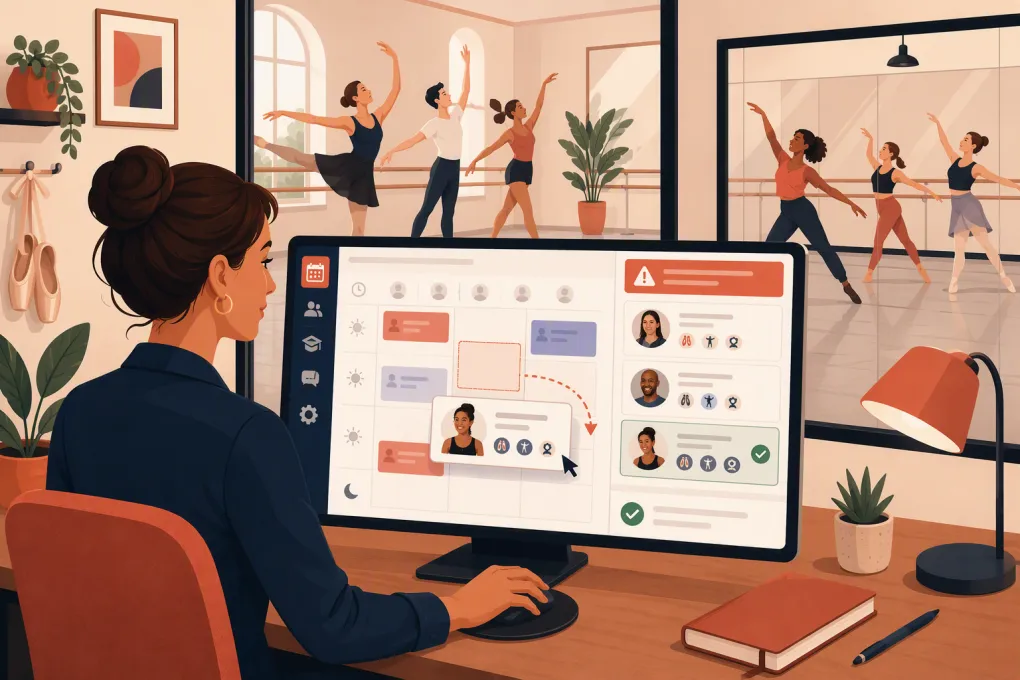
That is the real job of Pilates studio waitlist management software: not simply storing a list, but converting newly available capacity into confirmed attendance without creating more administrative work.
The right system should enforce your rules, contact the right clients, update the roster, prevent overbooking, and keep staff informed. It also needs to work cleanly with memberships, class packs, cancellation windows, recurring reservations, and multiple locations.
See how WTF Go and Fitty handle booking conversations around the clock →
What Pilates waitlist software should actually do
A basic waitlist is just a numbered queue. A useful waitlist workflow manages the entire path from a full class to a replacement booking.
At minimum, evaluate whether a platform can:
- Let clients join a waitlist through the same app or page used for booking
- Define when clients can join and leave the list
- Promote clients in a clear, predictable order
- Notify clients through appropriate channels
- Require confirmation when needed
- enforce an expiration window before offering the spot to someone else
- Check package, membership, and eligibility rules
- Update the class roster immediately after confirmation
- Prevent a client from being booked into overlapping classes
- Give staff a visible record of notifications and responses
- Apply different rules by class, instructor, location, or time slot
Do not assume every product handles these steps the same way. Some systems automatically add the first eligible client. Others send an offer that must be accepted. Some support configurable timing; others use a more fixed workflow.
Ask vendors to demonstrate your exact process using a cancellation that happens during staffed hours and another that happens shortly before an early-morning class.
Pilates studio waitlist software comparison
The best choice depends on whether you need a specialized boutique fitness platform, a broader wellness system, strong consumer discovery, or AI-assisted lead and booking coverage.
| Platform | Core scheduling and waitlists | Communication and automation | Multi-location fit | Pricing approach | Best fit and potential limitation |
|---|---|---|---|---|---|
| WTF Go with Fitty | All-in-one operations platform with class booking and availability-based workflows | Fitty answers leads, books classes, follows up, and handles dues conversations 24/7 | Designed for independent and multi-location fitness and wellness operators | Contact WTF Go for current packaging | Strong for operators who want booking operations and an AI receptionist in one system. Confirm your preferred waitlist promotion and expiration rules during the demo. |
| Mindbody | Broad class and appointment scheduling with waitlist functionality | Marketing, messaging, payments, and consumer marketplace tools are available across its product ecosystem | Commonly used by multi-location wellness businesses | Plan details and add-ons should be confirmed directly | Strong breadth and consumer visibility. The number of features and configuration choices can create additional setup and training work. |
| Mariana Tek | Boutique fitness scheduling, rosters, reservations, and waitlist workflows | Supports branded digital experiences and member communications | Well suited to growing boutique fitness brands | Generally sales-led; request a current quote | Strong boutique and multi-location orientation. It may be more platform than a small, single-location studio needs. |
| Momence | Classes, appointments, memberships, and waitlists in a broad management platform | Includes client communication, sales, and marketing capabilities | Supports single and multi-location businesses | Check current published plans or request a quote | Useful for studios wanting many workflows under one roof. Operators should test how easily staff can configure and monitor waitlist rules. |
| Vagaro | Class and appointment booking with waitlist capabilities | Client notifications, marketing options, marketplace exposure, and payment tools | Serves independent businesses and multiple locations | Pricing varies by business setup and selected features | Strong option for studios that also operate spa or appointment-based services. Verify class-specific automation against your Pilates workflow. |
| WellnessLiving | Class and appointment scheduling, memberships, client apps, and waitlists | Offers marketing, rewards, and communication tools | Suitable for established and multi-location operators | Contact the vendor for current plan and feature details | Broad fitness and wellness functionality. The depth of the platform can require deliberate onboarding and staff training. |
Product features and packaging change. Use this table to build a shortlist, then make each vendor run a live workflow rather than relying on feature checkmarks.
Choose the waitlist promotion model first
Software cannot fix an unclear operating policy. Before comparing platforms, decide how an open spot should be awarded.
Automatic promotion
The system moves the next eligible client directly into the class and sends a confirmation.
This is efficient when clients understand that joining the waitlist is a commitment. It becomes risky if clients routinely join several waitlists and forget to remove themselves. Your terms should explain when cancellation fees apply after automatic promotion.
Offer and confirmation
The system offers the spot to the next person, who must accept within a defined window. If the offer expires, the system moves on.
This reduces surprise bookings but can leave capacity unused when response windows are too long. The right window may be different several days before class than it is an hour before class.
Broadcast offer
Several clients receive the opportunity, and the first eligible person to claim it gets the spot.
This can fill last-minute openings quickly, but it is not a traditional first-in, first-out queue. If you use it, explain the rule clearly so clients do not assume their numerical position guarantees priority.
Your software should support the model you intend to enforce. Do not redesign your entire client policy around a platform limitation unless the operational tradeoff is worth it.
Build rules around real Pilates constraints
Pilates capacity is unusually sensitive because equipment, instructor attention, and safety requirements create firm limits. One opening in a reformer class cannot always be treated like an opening in a mat class.
Configure and test these details:
Eligibility and prerequisites
A new client may need an introductory session before joining an advanced reformer class. The system should not promote an ineligible person simply because that person is first in line.
Document which classes require:
- An intro or assessment
- Instructor approval
- Prior class experience
- A specific membership or package
- Age or other participation requirements
Credits and payment status
Decide whether a client needs a valid credit when joining the waitlist or only when promoted. Also define what happens if the package expires while the client is waiting.
A good demonstration should include a client with no valid credits, a failed payment method, and a restricted membership. You need to know whether the system skips the booking, requests payment, alerts staff, or creates an exception.
Duplicate and conflicting bookings
Clients may join the waitlist for several versions of the same class. When one clears, determine whether the system removes them from conflicting waitlists or leaves that task to the client.
This small detail can cause no-shows and unnecessary blocked capacity if it is ignored.
Use AI without giving up capacity control
Waitlist software manages rules. An AI receptionist manages the conversations surrounding those rules.
A prospect may ask whether the 6:00 p.m. reformer class is likely to open, whether another location has room, or which beginner class is available tomorrow. Existing members may respond to a notification with a question instead of following the booking link. Those conversations often arrive while instructors are teaching or after the desk has closed.
Fitty, WTF Go’s AI receptionist, can answer leads, book classes based on available options, follow up, and collect dues 24/7. That helps the studio convert interest into an appropriate booking instead of leaving every exception and availability question for the next shift.
See how Fitty can cover Pilates booking questions after hours →
AI should not invent availability, override prerequisites, or promise a waitlisted client a specific position. During implementation, verify which system is the source of truth for capacity and what the AI should do when a request falls outside configured rules.
A practical vendor demo script
Send every shortlisted vendor the same scenarios. This produces a more useful comparison than a standard sales presentation.
Ask the representative to show these actions live:
- A client joins a full reformer class from a mobile device.
- The first person is ineligible because of a prerequisite.
- The second person has an expired class pack.
- A confirmed client cancels outside the penalty window.
- The promoted client does not respond before the offer expires.
- Another opening appears 45 minutes before class.
- A client is already booked into an overlapping session.
- Staff manually override the queue and leave an audit trail.
- The operator changes the capacity for one class without changing the recurring series.
- A manager reviews waitlist activity across two locations.
Also ask what happens when a text cannot be delivered, an email bounces, or the booking link is opened after the spot has already been taken.
Metrics worth reviewing each week
You do not need a complicated analytics project. Start with operational questions that expose lost capacity and policy problems:
- Which classes repeatedly have waitlists?
- How many canceled spots remain unfilled?
- Which notification windows produce slow responses?
- How often do promoted clients cancel or fail to attend?
- Are clients blocked by expired packages or failed payments?
- Which classes have long waitlists while nearby times remain underbooked?
- Are staff making frequent manual exceptions?
Persistent waitlists can indicate demand for another session, but only after reviewing instructor availability, room constraints, and attendance patterns. A large queue is not automatically proof that every person would attend a newly added time.
Implementation checklist
Before switching on automated promotions, complete a controlled rollout:
- Publish a plain-language waitlist and cancellation policy
- Standardize class capacities and prerequisites
- Clean up duplicate client records
- Confirm membership and package eligibility rules
- Write notification templates with the class, location, deadline, and action required
- Test booking links on mobile devices
- Train staff on overrides and exception handling
- Run test cancellations with internal accounts
- Monitor the first several promotion cycles closely
- Review member questions and revise confusing policy language
Start with a limited set of classes if your current rules are inconsistent. Once the workflow behaves correctly, apply it more broadly.
The right Pilates studio waitlist management software should make the roster more reliable, not merely make the queue digital. Choose the operating policy first, test edge cases, and make sure someone—or an AI agent with clear guardrails—is available when clients have questions.
Explore WTF Go for booking, follow-up, dues, and 24/7 front-desk coverage →
Frequently asked questions
What is Pilates studio waitlist management software?
It is scheduling software that records demand for full classes and manages how open spots are offered or assigned. Strong systems also handle eligibility, notifications, confirmations, expiration windows, and roster updates.
Should Pilates waitlists use automatic promotion or require confirmation?
Automatic promotion is faster, while confirmation reduces surprise bookings. The better choice depends on your cancellation policy, client behavior, and how close to class time the opening occurs.
Can waitlist software prevent Pilates class overbooking?
It can help when class capacities, equipment limits, and booking rules are configured correctly. Operators should still test manual overrides, recurring schedule changes, and simultaneous booking attempts.
How should I compare Pilates waitlist software vendors?
Give each vendor the same real-world scenarios involving cancellations, expired credits, prerequisites, conflicts, and last-minute openings. Ask for a live demonstration of the complete workflow rather than accepting a feature checklist.
Can an AI receptionist manage waitlist questions?
An AI receptionist can answer availability questions, explain policies, follow up, and help clients book eligible options. Capacity and eligibility should remain controlled by the studio's configured scheduling rules.
Keep reading


Run your gym on autopilot with WTF Go
Fitty — your AI receptionist — answers calls and DMs, fills classes, follows up with every lead, and collects dues while you coach.