Comparisons
Dance Studio Trial Class Booking Software: Buyer’s Guide
Compare dance studio trial class booking software by scheduling, lead response, follow-up, pricing model, migration effort, and fit for your studio.
 Watch · 20s
A parent asking about beginner ballet does not want to study your entire class schedule. They want a reliable answer: Which class fits my child, can we try it, and what happens next?
That makes trial booking more than a calendar function. It is a connected workflow spanning lead capture, class selection, eligibility, waivers, reminders, attendance, enrollment, and payment. Software that handles only registration can still leave staff manually answering inquiries and chasing trial families.
This guide compares the main platform types without pretending every feature can be verified from a marketing page. The product assessments below are based on publicly documented capabilities, pricing approaches, and product positioning—not undisclosed hands-on testing. Because vendors change plans and gate some details behind sales calls, every finalist should also complete the same live workflow test before you sign.
See how Fitty handles dance studio inquiries, booking, and follow-up →
How the platforms were evaluated
The comparison uses official product documentation as the primary source:
- WTF Go for Fitty and WTF Go capabilities
- DanceStudio-Pro for dance management, registration, billing, and studio operations
- Jackrabbit Dance for class management, enrollment, billing, and family accounts
- Mindbody Business for booking, marketing, payments, marketplace exposure, and business management
- WellnessLiving for scheduling, client management, payments, and marketing
Official pricing pages were used to identify whether pricing is publicly structured or sales-led. Exact totals are intentionally omitted because processing, add-ons, implementation, messaging, branded apps, and account size can change the effective cost.
Public documentation can establish that a feature category exists. It cannot prove that the workflow will match your policies or perform well with your data. The fair verification standard for every vendor—including WTF Go—is therefore:
- Review the official documentation.
- Require a live demonstration using the same trial-class scenario.
- Get pricing, implementation, integrations, data ownership, and contract terms in writing.
- Speak with a current studio customer whose operating model resembles yours.
Comparison: dance studio trial class booking software
| Platform | Documented operating focus | Trial-class workflow | Automation and lead handling | Pricing and contract approach | Integrations and implementation | Best fit and main limitation |
|---|---|---|---|---|---|---|
| WTF Go with Fitty | Operating system for gyms, studios, spas, and wellness businesses | Fitty can answer inquiries, book classes, follow up, and collect dues, keeping the lead conversation connected to the next action | Conversational AI receptionist available 24/7; human escalation rules and studio-specific eligibility should be demonstrated before purchase | Obtain a current quote and written scope covering software, messaging, payments, onboarding, and contract terms | Confirm compatibility with any dance administration, accounting, access-control, or marketing tools you intend to retain; implementation depends on whether WTF Go replaces or connects to the current stack | Best for studios whose main leak is slow response or inconsistent follow-up. Confirm dance-specific back-office needs such as recital, costume, and choreography administration |
| DanceStudio-Pro | Dance-specific administration, including registration, tuition, communications, and recital-related work | Online registration and studio administration support getting dancers into classes; studios should distinguish direct trial registration from pre-booking conversations that require qualification | Operational automation and communication are part of the platform, but its primary documented emphasis is dance administration rather than an AI receptionist conducting the full lead conversation | Public pricing is generally structured around studio size or active students; verify current thresholds, payment fees, optional services, and cancellation terms on the official pricing page | Dance-specific setup requires importing families, students, classes, balances, and policies. Verify each external connection needed by your studio rather than assuming an open integration marketplace | Strong fit for independent dance schools prioritizing tuition, family accounts, and recital operations. May require a separate process for conversational lead response |
| Jackrabbit Dance | Class-based dance and youth-activity management, including enrollment, family records, attendance, billing, and reporting | Strong registration foundation for structured programs; the key buying question is how inquiries are managed before a family creates an account or selects a class | Provides communications and administrative workflows, while lead qualification and immediate conversational booking may require staff or an additional lead-response layer | Public pricing has traditionally been tied to active student count. Confirm current minimums, payment processing, messaging, onboarding, data conversion, and termination requirements | Implementation can be substantial for larger schools because student, family, enrollment, tuition, and historical data must be mapped. Review the vendor’s current integration directory and API options for your exact stack | Strong fit for established schools with complex rosters and billing. Less compelling when the primary requirement is an AI agent working new inquiries around the clock |
| Mindbody | Broad fitness and wellness booking, payments, marketing, marketplace discovery, and multi-location management | Supports bookable classes and introductory offers, but dance eligibility, term enrollment, and recital workflows may need configuration or separate tools | Marketing and automation vary by package. Marketplace discovery is a differentiator, but discovery should not be confused with personalized trial placement | Sales-led, tiered commercial model. Request a complete quote including onboarding, payment processing, messaging, branded app options, marketplace-related terms, and contract length | Larger partner and integration ecosystem than many dance-only systems, but setup can be heavier. Confirm which integrations are native, partner-built, or separately billed | Best for fitness-oriented dance concepts, drop-in schedules, and operators valuing consumer discovery. Traditional schools may find it less dance-specific than dedicated platforms |
| WellnessLiving | Scheduling, client management, payments, rewards, and marketing for fitness and wellness businesses | Supports online class booking and introductory offers; confirm how age, level, guardian, term, and instructor-approval rules are enforced | Marketing and client-engagement tools are available by package. Require a live demonstration of inquiry response, no-show recovery, and attended-trial follow-up | Package-based commercial pricing with features and add-ons varying by plan. Obtain written totals for implementation, processing, messaging, apps, and contract terms | Supports a broader wellness stack rather than dance-only administration. Verify required accounting, website, marketing, video, and access integrations against the current directory | Good fit for boutique dance-fitness or wellness hybrids. Traditional dance schools should validate recital and family-account depth |
The practical divide is clear: DanceStudio-Pro and Jackrabbit Dance lead with dance-school administration; Mindbody and WellnessLiving lead with broader wellness scheduling and marketing; WTF Go with Fitty leads with active lead response and front-desk automation. None should receive credit for an unverified workflow simply because the feature category appears on a website.
Use a 100-point selection scorecard
Score each vendor from 0 to 5 for every category, then multiply that rating by the category weight. A zero means the workflow is unavailable; five means the vendor demonstrated it live using your rules and included it in writing.
| Category | Weight | What earns a high score |
|---|---|---|
| Trial qualification and booking | 20 | Applies age, level, capacity, location, prerequisite, and blackout rules without staff intervention |
| Lead response and follow-up | 20 | Responds across required channels, preserves conversation history, escalates exceptions, and changes follow-up based on outcome |
| Dance administration | 15 | Handles family accounts, tuition, attendance, term enrollment, recital needs, and teacher workflows required by your school |
| Customer booking experience | 10 | Mobile-friendly path with minimal account friction, clear instructions, waivers, payment, and self-service rescheduling |
| Reporting | 10 | Shows inquiry-to-booking, booking-to-attendance, attendance-to-enrollment, no-shows, response status, and performance by class or location |
| Integrations and data access | 10 | Documents required integrations, export formats, API availability, ownership, and synchronization behavior |
| Implementation and support | 10 | Provides a named plan for migration, configuration, testing, training, launch, and post-launch support |
| Total cost and contract flexibility | 5 | Supplies a complete written cost covering subscriptions, processing, messages, add-ons, implementation, and exit terms |
Do not let an impressive recital feature compensate for weak lead response if missed inquiries are your actual problem. Weight the scorecard around the constraint you are trying to remove.
Recommendations by studio type
New or small independent studio
Prioritize low administrative overhead, simple online booking, payments, and reliable follow-up. A broad enterprise configuration can create more work than it removes.
If instructors also answer the phone, Fitty’s ability to respond and book outside staffed hours deserves a live test. If recital and tuition administration dominate the workload, compare DanceStudio-Pro and Jackrabbit first.
Established school with term enrollment and recitals
Start with dance-specific platforms because family relationships, tuition schedules, class levels, attendance, and recital administration are core system-of-record requirements.
Then evaluate whether the chosen platform handles new leads adequately. If it does not, add a lead-response layer deliberately rather than expecting teachers to monitor forms, voicemail, and social inquiries between classes.
Boutique dance-fitness studio
Mindbody or WellnessLiving may fit better when the business runs recurring drop-in classes, memberships, introductory offers, and wellness-style scheduling. Marketplace reach and broader fitness integrations may matter more than costume or recital functionality.
Compare the cost of required marketing, messaging, and branded-app options—not only the base subscription.
Multi-location operator
Require demonstrations of shared customer records, location-specific schedules, permissions, consolidated reporting, lead routing, and transfers between locations. Also test what happens when a prospect contacts the brand without naming a location.
Implementation should include a location-by-location data audit and a staged launch plan. A larger platform does not automatically mean cleaner multi-location workflows.
Studio keeping its current dance management system
Do not replace a stable system of record solely because lead follow-up is weak. First evaluate whether an AI receptionist or lead-management layer can solve the front-end problem without disrupting tuition, recital, and family data.
Explore Fitty as the response and booking layer for your existing studio workflow →
The live demo every vendor should pass
Give each provider the same scenario:
A parent contacts the studio after closing. Their nine-year-old has no dance experience, wants ballet on Tuesdays, and needs a trial at the nearest location. One eligible class has space; another is full. The parent asks about clothing, cost, and rescheduling.
Require the vendor to show, not describe:
- How the inquiry enters the system.
- How age, level, location, and capacity are applied.
- What happens when the preferred class is full.
- How the trial is booked and confirmed.
- How waivers and payment are collected.
- What staff see the next morning.
- How attendance changes the follow-up.
- How a no-show reschedules.
- How the trial converts to tuition or membership.
- How the lead, conversation, and outcome appear in reports.
Ask for a recording or screenshots from your configured demonstration when permitted. Also request a written implementation plan and a sample export. These artifacts are stronger buying evidence than a generic feature checklist.
Calculate implementation effort before deciding
Software replacement affects more than future bookings. List the data and workflows that must move:
- Families, guardians, and dancers
- Classes, levels, prerequisites, and capacities
- Current enrollments and waitlists
- Tuition plans, balances, and stored-payment transitions
- Waivers and communication consent
- Attendance and lead history
- Staff permissions
- Website forms and booking links
- Accounting, email, access, and marketing connections
Classify each item as migrated, rebuilt, integrated, archived, or retired. Then assign an internal owner and acceptance test. If a vendor cannot explain how balances, duplicates, guardian relationships, and active enrollments will be validated, implementation risk belongs in its score.
The best dance studio trial class booking software is not the product with the longest feature page. It is the system that moves a qualified inquiry into the correct class, records what happened, and produces the next action without creating avoidable front-desk work.
See how WTF Go connects trial inquiries, booking, follow-up, and dues collection →
Frequently asked questions
What is the best trial booking software for a traditional dance school?
DanceStudio-Pro and Jackrabbit Dance are logical starting points when tuition, family accounts, term enrollment, and recital administration are central. If lead response is the bigger problem, also evaluate WTF Go with Fitty as the operating system or response layer.
Can Fitty work with an existing dance studio management system?
Potential compatibility depends on the system and required workflow. Ask WTF Go to demonstrate how lead, booking, payment, and status data would move between Fitty and your current platform before committing.
Why are exact software prices not listed?
The effective price can include the base plan, payment processing, messaging, apps, add-ons, implementation, and migration. Request a written total based on your active students, locations, transaction volume, and required features.
How should a studio verify an AI booking feature?
Use the same realistic parent inquiry with every vendor and require a live demonstration of qualification, booking, escalation, attendance-based follow-up, and reporting. Confirm the demonstrated capabilities in the contract or implementation scope.
Should we replace our current software just to improve trial conversion?
Not necessarily. If the current system handles tuition and dance administration well, adding a response and follow-up layer may be less disruptive than a full migration.
Keep reading

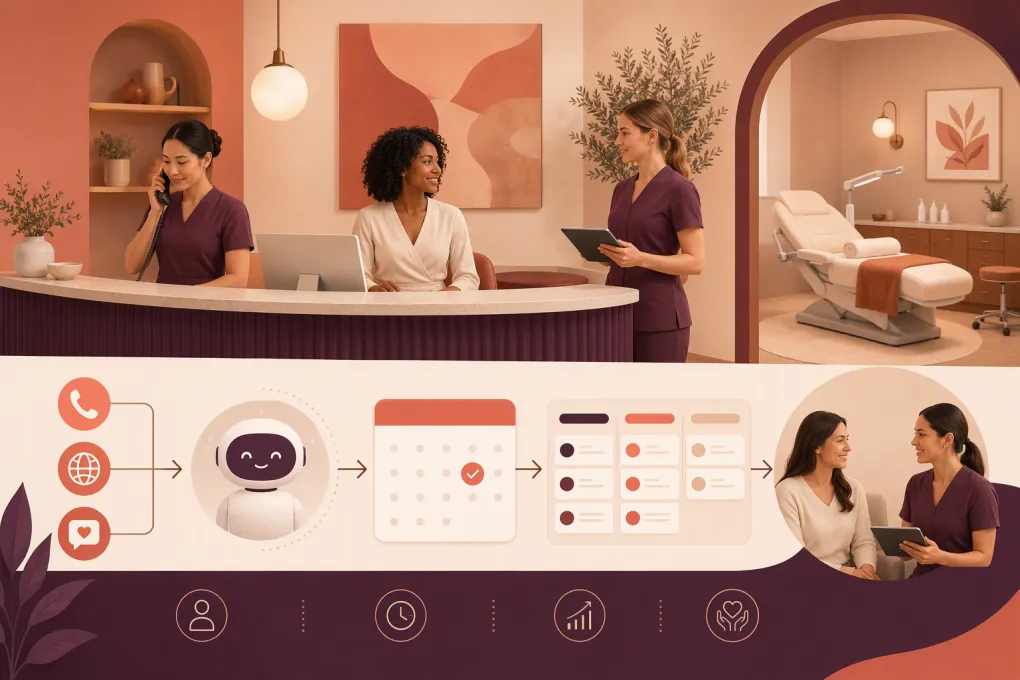

Run your gym on autopilot with WTF Go
Fitty — your AI receptionist — answers calls and DMs, fills classes, follows up with every lead, and collects dues while you coach.