AI & Automation
Missed Call Answering Service for Med Spas That Converts
Learn how a missed call answering service for med spas captures leads, books consultations, handles FAQs, and protects staff time after hours, every day.
 Watch · 20s
A prospective client calls your med spa between appointments, while the front desk is checking out another guest, or after the team has gone home. Nobody answers. The caller does not leave a voicemail; they call the next provider on the list.
That is the operational problem a missed call answering service for med spas should solve. It is not simply a voicemail replacement. The right service should respond immediately, answer routine questions accurately, qualify the inquiry, and move the caller toward a booked consultation without creating more work for your staff.
For med spas, the details matter. Pricing questions can be nuanced. Clinical questions must stay within safe boundaries. Booking rules vary by treatment, provider, location, and new-client status. A generic call center script rarely covers the full workflow.
See how Fitty handles after-hours med spa inquiries and booking →
What a med spa answering service should actually do
At minimum, an answering service should prevent calls from disappearing into voicemail. A stronger system should also help complete the next operational step.
That typically means being able to:
- Answer during business hours when staff are busy
- Cover evenings, weekends, holidays, and lunch breaks
- Identify whether the caller is a new lead or existing client
- Answer approved questions about services, hours, locations, and preparation
- Capture contact details without repeatedly asking for information
- Book consultations or appointments based on your rules
- Send confirmation and follow-up messages
- Escalate urgent, sensitive, or clinically complex calls
- Record the call outcome in the client record or lead pipeline
- Give staff a concise summary instead of a raw voicemail
The difference between call coverage and lead conversion is important. A service that only takes a message may reduce interruptions, but your team still has to chase the caller later. By then, the prospect may have booked elsewhere.
Why med spa calls are easy to mishandle
Med spa inquiries often sit between hospitality, sales, scheduling, and healthcare-adjacent communication. The receptionist needs to be helpful without improvising medical advice or promising a result.
Common calls include:
- “How much does this treatment cost?”
- “Am I a candidate?”
- “How soon can I get in?”
- “Can I combine two treatments?”
- “Who performs the procedure?”
- “Do you have a location near me?”
- “Can I use my membership or package?”
- “I am having a reaction after treatment—what should I do?”
These should not all follow the same script. A pricing inquiry might move into a consultation. A scheduling request can be booked directly if the rules allow it. A report of an adverse reaction requires immediate escalation under your clinical protocol.
A reliable answering workflow distinguishes among sales questions, administrative requests, clinical questions, and possible emergencies. It should never let an automated agent diagnose symptoms, determine candidacy, or make claims that only a licensed professional should make.
Live agents, AI receptionists, or a hybrid model?
There are three common approaches. The best fit depends on your call volume, scheduling complexity, operating hours, and internal staffing.
| Model | Strengths | Limitations | Best fit |
|---|---|---|---|
| Live answering service | Human judgment, natural handling of unusual conversations, useful for sensitive calls | Quality can vary by agent; scripts may become outdated; direct booking may require added setup | Practices that want human-first coverage and can maintain detailed scripts |
| AI receptionist | Immediate availability, consistent answers, simultaneous call handling, structured qualification and follow-up | Requires careful configuration, escalation rules, and regular review | Med spas that need reliable lead response beyond front-desk hours |
| Hybrid service | Automation handles routine calls while staff or live agents take exceptions | More moving parts and handoff rules to manage | Multi-location or higher-volume operators with varied call types |
Do not choose based only on whether a service can “answer calls.” Ask what happens after the greeting. Can it book against live availability? Can it recognize an existing client? Can it transfer urgent calls? Can your team see what happened without listening to every recording?
Build the call flow before choosing the tool
Technology cannot fix an undefined process. Before evaluating vendors, document the call flow you want them to execute.
1. Define the caller types
Separate at least these categories:
- New treatment inquiry
- Existing client scheduling request
- Reschedule or cancellation
- Membership, package, or payment question
- Pre- or post-treatment administrative question
- Clinical concern requiring staff review
- Vendor, employment, or unrelated call
Each category needs a destination. New leads may enter a sales pipeline, while clinical concerns should trigger a designated escalation process.
2. Set booking rules by service
Specify which services can be booked directly and which require a consultation. Include:
- Eligible provider types
- Appointment duration
- Required buffers
- New-client restrictions
- Location availability
- Age or consent requirements
- Deposit or card-on-file rules
- Cancellation policy acknowledgment
Avoid giving an answering service unrestricted access to the calendar. It should book only within rules your operators have approved.
3. Approve the answer library
Create a controlled source of truth for common questions. Include treatment names, starting-price language if you publish it, operating hours, parking instructions, provider information, promotions, and membership basics.
Assign an owner to review this information whenever services, prices, providers, or policies change. Outdated answers create avoidable front-desk cleanup and undermine trust.
4. Define escalation boundaries
Write down exactly when the answering service must stop and involve a person. Examples include:
- Symptoms or possible complications after treatment
- Requests for medical advice
- Complaints involving safety or clinical care
- Refund disputes outside approved policy
- Threats, harassment, or legal inquiries
- Requests involving records or sensitive personal information
The workflow should name the on-call role, backup contact, expected handoff method, and what to do if nobody responds.
Compliance and privacy questions to ask
An answering provider may handle contact details, appointment information, recordings, transcripts, and potentially sensitive health-related information. Do not assume that a general business answering service is appropriate for every med spa workflow.
Ask prospective providers:
- What information is collected, stored, and transmitted?
- Where are call recordings and transcripts stored?
- Who can access them, and how is access controlled?
- What retention and deletion settings are available?
- Does the vendor sign a business associate agreement when one is required?
- How are payment details handled?
- Can recording notices be configured for applicable state laws?
- How is consent captured before sending automated marketing texts?
- Can clinical details be excluded from summaries and routine follow-up?
Your legal and compliance obligations depend on your business structure, services, jurisdiction, and use of patient information. Have qualified counsel or a compliance professional review the workflow. An answering service should support your policies, not define them for you.
A practical med spa call script
Scripts should guide the conversation without making it sound robotic. A basic new-lead flow can follow this structure:
Greet and identify intent
Confirm the med spa and ask what the caller would like help with. Do not force every caller through a long menu.
Clarify the service interest
Determine whether the person is exploring a treatment, comparing options, or ready to schedule. If they ask a clinical suitability question, explain that candidacy is determined during a consultation with the appropriate provider.
Capture only what is needed
Collect the caller’s name, preferred contact method, treatment interest, location, and scheduling preferences. Avoid soliciting unnecessary clinical details through a general lead flow.
Offer a concrete next step
Present available consultation times, route the caller to staff, or create a clearly assigned callback task. “Someone will get back to you” is not a complete handoff unless there is an owner and deadline behind it.
Confirm and follow up
Send the appointment details, location, preparation instructions approved for that appointment type, and a clear way to reschedule or ask administrative questions.
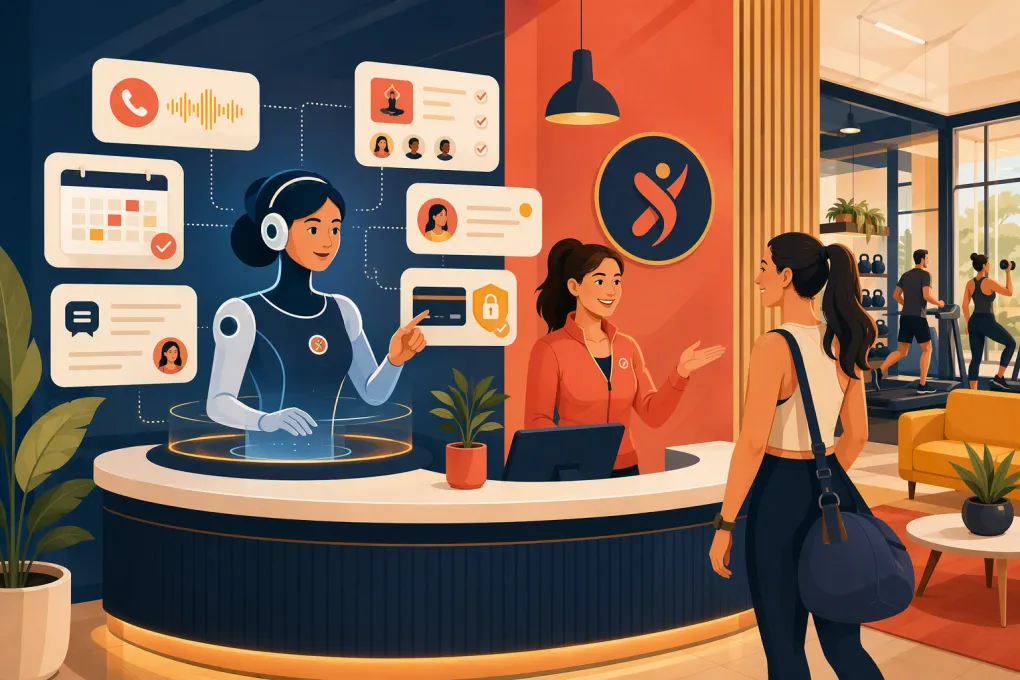
Fitty, WTF Go’s AI receptionist, can answer routine inquiries, qualify leads, work from your configured booking rules, and follow up without leaving every missed call for the opening team to process.
See how Fitty can turn missed med spa calls into scheduled next steps →
How to measure whether the service is working
Do not judge performance only by the number of calls answered. Track outcomes across the full lead journey.
Useful measures include:
- Calls answered by the service
- Calls abandoned before connection
- New leads captured
- Consultations booked
- Calls transferred or escalated
- Booking errors requiring staff correction
- Leads awaiting follow-up
- Cancellations or reschedules completed without staff involvement
- Duplicate contacts created
- Call reasons that the current answer library cannot handle
You can calculate booking rate by dividing consultations booked by qualified booking inquiries. Review this by location, service category, and time of day rather than relying only on an overall figure.
Also audit a sample of call recordings or transcripts. Look for inaccurate claims, awkward handoffs, missed buying signals, unnecessary data collection, and questions that repeatedly confuse the system.
Common implementation mistakes
Treating every call as a sales lead
Existing clients need fast service too. Forcing a current client through a new-lead script creates frustration and bad data.
Automating clinical judgment
An answering service can explain that a consultation is required. It should not determine whether someone is medically suitable for a treatment.
Letting scripts drift out of date
Assign one person to own the answer library and booking rules. Review changes whenever pricing, promotions, staffing, hours, or treatment availability changes.
Sending generic follow-up
Follow-up should match the inquiry. A caller asking about injectables should not receive the same message as someone rescheduling a facial.
Failing to connect calls to the operating system
If call data lives in a separate inbox, staff must re-enter details and guess what happened. The stronger setup connects answering, lead management, scheduling, communication, and payment workflows.
That is where an all-in-one platform becomes operationally useful. WTF Go gives gyms, studios, spas, and wellness operators one system for managing the client journey, while Fitty handles conversations and next steps around the clock.
Explore WTF Go and build a med spa response workflow around your actual booking rules →
What to look for before signing a contract
Run realistic scenarios before committing. Test a price shopper, an existing client, a caller asking a clinical question, a multi-location request, a cancellation, and an after-hours urgent concern.
Then verify:
- How quickly you can update answers and policies
- Whether booking uses real-time availability
- How failed bookings are handled
- Whether summaries are useful to front-desk staff
- What integrations or data exports are available
- How implementation and staff training work
- Whether fees vary by call volume, minutes, users, or locations
- How easily you can retrieve your data if you leave
The best missed call answering service is not the one with the longest feature list. It is the one that follows your rules, protects appropriate boundaries, and reliably moves each caller to the correct next step.
Frequently asked questions
Can a missed call answering service book med spa consultations?
Yes, if it connects to your live calendar and follows service, provider, location, deposit, and new-client rules. Test booking and rescheduling scenarios before launch.
Should a med spa use an AI receptionist or live answering service?
AI works well for routine inquiries, qualification, scheduling, and after-hours coverage. Live or staff escalation remains important for sensitive, unusual, or clinically related conversations.
Is a med spa answering service required to be HIPAA compliant?
That depends on your business structure, workflows, and the information handled. Ask about data practices and business associate agreements, then have qualified counsel assess your specific obligations.
How should a med spa handle calls about post-treatment reactions?
Use a documented clinical escalation protocol rather than a routine sales or scheduling script. The answering service should avoid medical advice and promptly route the caller to the designated professional.
What should a med spa track after installing an answering service?
Track qualified inquiries, consultations booked, escalations, unresolved follow-ups, booking errors, and repeated unanswered questions. Review call samples regularly to check accuracy and client experience.
Keep reading


Run your gym on autopilot with WTF Go
Fitty — your AI receptionist — answers calls and DMs, fills classes, follows up with every lead, and collects dues while you coach.