Comparisons
Martial Arts School Membership Billing Software Compared
Compare martial arts school membership billing software by pricing, payments, contracts, integrations, support, dojo features, and best-fit use cases.
 Watch · 20s
Martial arts school membership billing software has to manage more than monthly card charges. A useful system connects family accounts, agreements, attendance, program changes, rank progression, failed payments, and member communication without forcing staff to reconcile several databases.
The difficult part is comparing platforms fairly. Some products are purpose-built dojo systems. Others offer broader gym management, stronger marketing, or AI-assisted communication. Payment processors, contracts, support, and integrations can also matter more than a long feature list.
This guide compares the practical differences using vendor-published information. Pricing and packaging can change, so the linked official pages should be treated as the final source before signing an agreement.
See how WTF Go connects inquiries, booking, member communication, and dues follow-up →
What the software must do
Before scheduling demos, separate four related jobs:
- Billing administration: Create plans, schedule recurring dues, issue receipts, process refunds, and report on transactions.
- Payment processing: Securely authorize the card or bank transaction and deposit funds. This is normally performed by a payment processor, even when the experience is embedded in management software.
- Collections workflow: Retry eligible failed payments, request updated payment details, assign staff tasks, and escalate unresolved accounts.
- Student management: Track households, attendance, programs, ranks, testing eligibility, and communication.
A platform may be strong in one area and limited in another. In particular, an AI agent that follows up about overdue dues is not itself a payment processor.
How WTF Go and Fitty fit into billing
WTF Go is an operating system for gyms, studios, spas, and wellness businesses. Fitty is its AI receptionist and agent. Fitty answers inquiries, books classes, follows up, and supports dues-collection conversations at any hour.
Fitty should not be described as the financial institution processing a recurring charge. It handles communication and collection follow-up around the configured billing and payment workflow. During a WTF Go demo, operators should ask which payment processor is used for their implementation, how recurring plans are configured, how payment credentials are stored, and how funds are deposited and reconciled.
That distinction matters with every vendor: management software controls the workflow, while the processor moves the money.
Martial arts billing software comparison
The table below uses official vendor pages for product positioning and publicly available commercial information. “Quote required” means the vendor does not provide a complete public price that can be responsibly compared without speaking to sales. It does not necessarily mean the product is more expensive.
| Platform | Billing and processor model | Public pricing and contract information | Martial arts capabilities | Integrations and support | Meaningful limitations | Best fit |
|---|---|---|---|---|---|---|
| WTF Go + Fitty | Dues workflows sit alongside lead management, scheduling, and communication. Fitty handles reminders and conversations; it is not the underlying payment processor. | Pricing, processor terms, implementation charges, and commitments require a direct proposal from WTF Go. | Designed for gyms and studios rather than only martial arts. Validate rank, belt, testing, and family-account requirements in a live demo. | Consolidated operating system with an AI receptionist; request the current integration catalog and support terms. | Less martial-arts-specific positioning than dedicated dojo products. Operators needing detailed belt testing or lineage workflows must verify coverage. | Schools prioritizing rapid lead response, after-hours booking, and automated dues follow-up. |
| Zen Planner | Offers integrated member billing and payment processing as part of its fitness-business platform. Review the current processor and transaction terms in the proposal. | Zen Planner publishes plan information but final cost can depend on package and services. Review term length, onboarding, and cancellation language in writing. | Its martial arts software includes attendance, student management, and belt or rank progression workflows. | Vendor resources include onboarding and support; available third-party connections should be checked against the school’s accounting, access-control, and marketing stack. | A broad feature set can mean more setup and staff training. AI phone reception may require a separate product if it is not included in the selected package. | Established schools wanting mature martial-arts administration and billing in one system. |
| Kicksite | Combines student accounts, recurring billing, payment tracking, and past-due management in a martial-arts-focused platform. Processor availability and rates depend on the current commercial offering. | Kicksite directs buyers through its official pricing process. Obtain the monthly platform fee, processing schedule, setup charges, and cancellation terms together. | Purpose-built around prospects, students, attendance, ranks, and school communication. See its feature overview. | Offers support and business-management tools within the platform. Verify any required accounting, website, access-control, or advertising integrations by name. | Its specialization is useful for traditional schools but may be less suitable for businesses combining martial arts with spa, wellness, or appointment-heavy services. Compare after-hours voice automation separately. | Independent dojos that place rank tracking and martial-arts-specific records first. |
| Spark Membership | Provides membership management, payment collection, sales, and marketing functions for martial arts businesses. Current processor choices and rates must be reviewed in the sales proposal. | Spark uses a sales-led process; review its official martial arts platform information and request an itemized quote. Contract duration, included services, and termination rights should be explicit. | Strong martial-arts positioning with student management, scheduling, marketing, and retention workflows. | Includes business communication and marketing functions. Confirm data exports and every external integration needed before committing. | Public materials do not make every commercial and technical detail easy to compare without a demo. Schools should test reporting depth and avoid assuming all marketing services are included in one fee. | Growth-oriented schools wanting marketing tools alongside student and payment management. |
| Gymdesk | Supports recurring billing and online payments within member management. Processor availability varies by country and setup, so schools should use its current payment documentation when evaluating. | Gymdesk publishes member-based subscription tiers on its official pricing page. The page is the reliable source for current dollar amounts, trial terms, and plan limits because rates can change. | Its martial arts management product covers attendance, ranks, member portals, scheduling, and billing. | Provides online help resources and software integrations; confirm the current list for accounting, automation, door access, and website requirements. | Member-count pricing can rise as enrollment grows. Operators with complex sales automation or AI phone requirements may need additional tooling. | Small and midsize schools wanting transparent packaging and a relatively straightforward dojo system. |
This comparison intentionally avoids quoting a dollar amount that may become outdated while the article remains live. For a defensible cost comparison, capture each vendor’s price and terms on the same day and attach the dated proposal or pricing-page copy to your evaluation.
Decision matrix: which type of school needs what?
| School profile | Prioritize | Strong shortlist | Watch for |
|---|---|---|---|
| New or small independent school | Simple recurring billing, easy attendance, low training burden, usable support | Gymdesk, Kicksite | Minimum fees, processor rates, plan limits, and whether data can be exported easily |
| Traditional dojo with formal belt progression | Rank history, testing eligibility, family records, attendance requirements | Kicksite, Zen Planner, Gymdesk | Whether rank rules are configurable and whether testing fees and events fit the billing model |
| Growth-focused school losing leads after hours | Fast responses, intro-class booking, follow-up, and collections communication | WTF Go + Fitty, Spark Membership | Whether voice, SMS, email, and automation are native, usage-based, or separate services |
| Hybrid martial arts and fitness studio | Flexible class types, appointments, memberships, lead management, and broad reporting | WTF Go, Zen Planner, Gymdesk | A dojo-specific product may not handle appointment-heavy or mixed-service operations elegantly |
| Multi-location organization | Central reporting, location permissions, cross-location access, shared households, and revenue attribution | Zen Planner, WTF Go; evaluate enterprise offerings from other vendors | Whether each location requires a separate database, processor account, contract, or staff login structure |
No shortlist should be based on category labels alone. A ten-minute demonstration of a polished dashboard is less useful than testing the awkward transactions your staff handles every week.
Pricing, processing, and contract questions to ask
Request one written worksheet from every vendor covering the same items:
- Monthly or annual software fee and the metric that changes it
- Implementation, migration, training, and hardware charges
- Card, bank debit, chargeback, refund, and failed-payment fees
- Required processor and whether outside processors are supported
- Deposit timing and reconciliation reports
- Minimum term, renewal mechanism, and cancellation notice
- Costs for SMS, email, calling, AI usage, extra staff, or locations
- Support channels, staffed hours, response targets, and premium support fees
- Data-export format and assistance available when leaving
Processor flexibility is not automatically better. An embedded processor can simplify support and reconciliation. A processor choice can improve negotiating leverage or preserve an existing relationship. The right answer depends on total cost, reporting, deposit reliability, and how difficult it would be to migrate payment credentials later.
Demo these real dojo workflows
A family enrollment
Ask the rep to create one payer with two students in different programs. Change one child’s membership while leaving the other untouched. Then produce an account statement that a parent could understand.
This exposes systems that merely place several unrelated profiles under one email address rather than supporting a functional household.
A failed recurring payment
Have the vendor demonstrate the complete sequence: failed charge, retry rules, member notification, secure credential update, staff escalation, account status, and final reconciliation.
Ask what stops reminders after the member pays. Also ask whether staff can distinguish an expired card from a dispute or other failure. Automation without suppression rules creates confusing member experiences.
For schools where instructors cannot answer calls or chase balances while teaching, see how Fitty handles booking and routine dues follow-up around the clock →. Keep disputed charges, hardship decisions, and policy exceptions assigned to a manager.
A freeze, cancellation, and return
Test effective dates, prorated charges, future invoices, access restrictions, and audit history. Staff should never need to delete a student record to stop billing.
Review your agreement and automatic-renewal procedures with qualified counsel. Software can apply a policy consistently, but it does not determine whether that policy complies with the rules governing your school.
Rank progression and testing
Create attendance requirements, promote a student, schedule a test, charge a testing fee, and retrieve the student’s historical ranks. If the system cannot reproduce your progression model, decide whether a simpler model is acceptable before purchasing.
Multi-location access
For multi-location schools, transfer a member, allow cross-location training, restrict a manager to one location, and run organization-wide and location-level reports. Verify how revenue is attributed and whether each site needs its own merchant account.
Plan the migration before signing
Export and classify active, frozen, canceled, complimentary, and overdue memberships before import. Preserve agreements, balances, ranks, attendance, transaction history, notes, and communication permissions where available.
Payment credentials require separate planning. They are tokenized by payment providers and cannot usually be moved as ordinary spreadsheet fields. Ask the outgoing vendor, incoming vendor, and processors whether a secure transfer is supported. If not, plan a member campaign to collect new payment details.
Finally, reconcile the first billing cycles line by line: expected charges, successful transactions, failures, refunds, fees, deposits, and accounting entries. Assign one person to own discrepancies until the new process is stable.
The best martial arts school membership billing software is not necessarily the platform with the most features. It is the one that supports your real household, rank, payment, and communication workflows with commercial terms your school can understand and administer.
Frequently asked questions
What is martial arts school membership billing software?
It manages membership plans, recurring dues, student accounts, payment histories, and billing communication. Many products also include attendance, scheduling, family accounts, rank tracking, and lead management.
Does Fitty process recurring membership payments itself?
Fitty is WTF Go’s AI receptionist and agent, not the underlying payment processor. It supports dues communication and collection follow-up around the billing and payment workflow configured for the business.
Which billing software is best for belt and rank tracking?
Start with martial-arts-oriented products such as Kicksite, Zen Planner, and Gymdesk. Test your exact attendance requirements, rank structure, testing workflow, and family-account model during the demo.
Can stored cards move to a new dojo billing platform?
Sometimes, but credentials normally require a secure transfer between payment providers. The processors and both software vendors must establish whether token migration is supported.
What should a multi-location martial arts school compare?
Compare central reporting, location permissions, cross-location attendance, household handling, revenue attribution, processor-account structure, data ownership, and location-specific pricing.
Keep reading


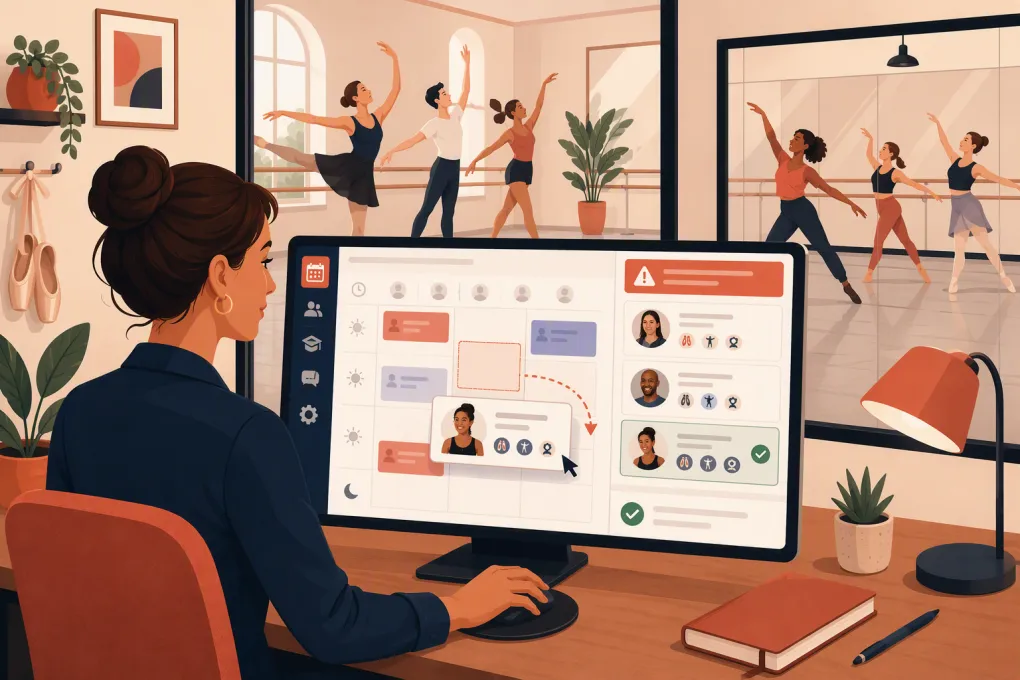
Run your gym on autopilot with WTF Go
Fitty — your AI receptionist — answers calls and DMs, fills classes, follows up with every lead, and collects dues while you coach.