Comparisons
Martial Arts Private Lesson Scheduling Software: 2026 Guide
Compare martial arts private lesson scheduling software, key workflows, and AI follow-up tools to book more sessions and reduce front-desk work every day.
 Watch · 20s
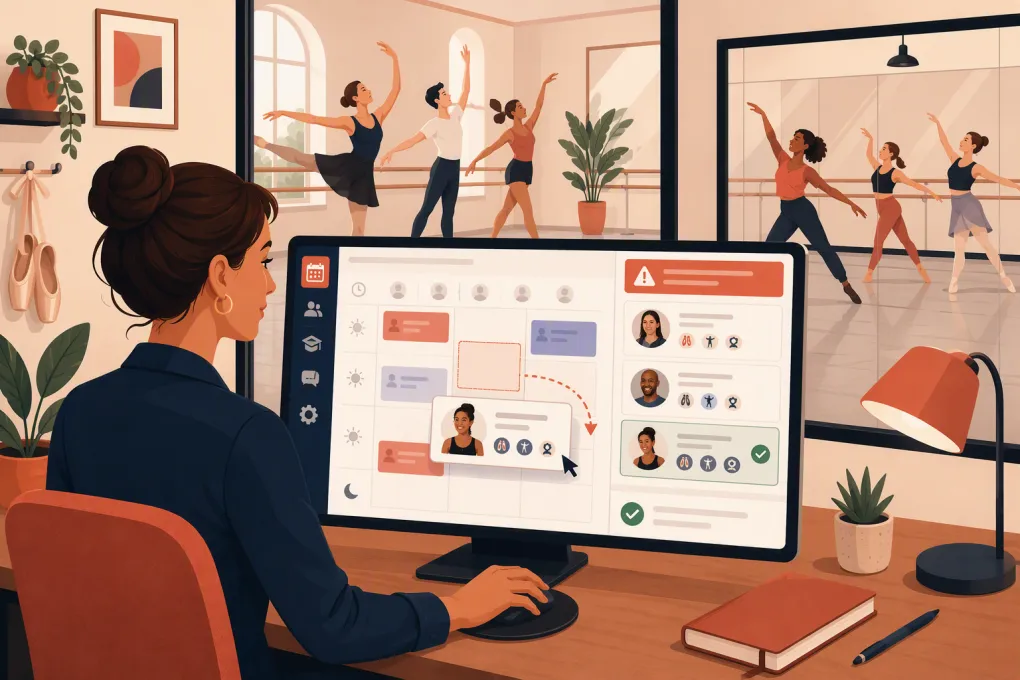
Private lessons look simple on a calendar. Operationally, they are not. Each booking may involve an instructor, student, parent, training area, package balance, payment, waiver, cancellation policy and follow-up task.
Generic appointment apps can put a time on a calendar. The right martial arts private lesson scheduling software should control the entire workflow: capturing the inquiry, matching the student with an instructor, confirming payment or credits, sending reminders and prompting the next booking.
That distinction matters when inquiries arrive while the front desk is empty, instructors manage their own calendars or families expect an immediate answer after evening classes. A booking link alone does not solve those problems.
See how Fitty handles private-lesson inquiries and follow-up 24/7 →
What private lesson scheduling software needs to handle
Start with the actual booking journey rather than a vendor feature list. Map what happens from the first question to the completed lesson and rebooking.
Instructor availability and booking rules
Your system should let you define more than open calendar blocks. Useful controls include:
- Lesson duration by program or instructor
- Buffers before and after sessions
- Minimum booking notice
- Maximum advance-booking window
- Instructor substitutions
- Location and training-area availability
- Student age, level or program eligibility
- One-time and recurring appointments
- Staff-only slots that cannot be booked online
These rules prevent avoidable conflicts. For example, a junior student should not be able to book an instructor who only teaches adults, and two instructors should not be assigned the same limited training area.
Payments, packages and cancellation policies
Decide whether students will pay per lesson, use prepaid credits or purchase a recurring package. Then test whether the software can enforce that model without manual reconciliation.
At minimum, operators should be able to see:
- Whether payment is due before confirmation
- How many private-lesson credits remain
- When a package expires
- Whether a late cancellation consumes a credit
- Who can issue refunds or restore credits
- Which instructor delivered the lesson
If the booking system and billing record disagree, staff end up checking spreadsheets, text threads and payment dashboards. That is exactly the administrative work the software should eliminate.
Parent and student communication
Many martial arts schools serve minors, so the person attending may not be the person booking or paying. Confirm that reminders and policy notices can go to the correct parent or guardian while the student record remains accurate.
The communication flow should cover confirmation, preparation instructions, reminders, rescheduling and post-lesson follow-up. It should also make clear which messages are automated and which require staff intervention.
Comparing martial arts private lesson scheduling software
The market includes full dojo management platforms, broader fitness software and appointment-only tools. None is automatically right for every school. The best choice depends on whether private lessons are an add-on or a major revenue line.
Vendor features and plan availability change, so verify critical workflows in a live demonstration before signing a contract.
| Platform | Private lesson scheduling fit | CRM, follow-up and AI | Broader operations | Pricing and implementation considerations |
|---|---|---|---|---|
| WTF Go with Fitty | Designed for fitness and wellness operations where bookings, leads and member administration need to work together | Fitty answers leads, supports booking conversations, follows up and helps collect dues 24/7 | All-in-one operating system for gyms, studios, spas and wellness businesses | Request current pricing and have the team demonstrate your instructor, package and location rules; strongest fit when reducing front-desk workload is a priority |
| Zen Planner | Established option for class-based gyms and martial arts schools; evaluate the exact private-appointment workflow you need | Includes member management and communication capabilities, but confirm the automation available on the relevant plan | Stronger dojo and gym context than a standalone calendar | Plan packaging and onboarding requirements should be confirmed directly; may be broader than necessary for appointment-only operations |
| Kicksite | Martial arts-focused platform; useful to evaluate when rank, attendance and student records are central | Provides school communication and management tools; confirm how inquiry response and private-lesson automation work | Martial arts features such as student progression are a core attraction | Ask for a full demonstration of private booking, package credits, migration and reporting rather than assuming class features apply to appointments |
| Mindbody | Supports appointment- and class-based wellness businesses | Offers customer management, marketing and booking tools; automation depends on product configuration and plan | Broad ecosystem and consumer marketplace exposure can suit larger wellness operations | Can involve more configuration and operational complexity than a small dojo needs; obtain current plan and add-on details |
| Calendly | Strong for straightforward one-to-one availability and calendar coordination | Can trigger reminders and connect with other business tools, but it is not a martial arts CRM or AI front desk | Limited native membership, rank, attendance and dojo billing functionality | Easy to evaluate for a narrow use case; additional systems may be needed for packages, dues and student records |
| Acuity Scheduling | Appointment-oriented option with intake, calendar and payment features | Supports appointment communication, but broader lead nurturing requires additional workflows or tools | Better suited to service scheduling than complete dojo management | Check payment, package and multi-staff requirements carefully; separate software may still be needed for martial arts operations |
Booking software does not fix missed inquiries by itself
A parent may call to ask whether private lessons are appropriate for a child with no experience. An adult prospect may want pricing, evening availability and an explanation of what to bring. Sending every inquiry directly to a calendar can feel abrupt and leave important questions unanswered.
This is where an AI receptionist can be more useful than a static scheduler. Fitty can answer incoming leads, continue the conversation, support booking, follow up and collect dues without relying on the owner to monitor the phone all day.
The workflow should still include a clear human handoff. Define when the AI or automation must escalate, such as:
- Questions involving injuries or medical accommodations
- Complaints, refunds or disputed charges
- Requests outside approved pricing or policies
- Unusual instructor or facility requirements
- Safeguarding concerns involving minors
See how WTF Go and Fitty connect lead response with booking and dues collection →
How to evaluate a platform in a live demo
Do not let the vendor control the entire demonstration. Bring realistic scenarios and ask the representative to complete them in front of you.
Test these five scenarios
- New lead after hours: A parent asks about beginner private lessons, available instructors and pricing.
- Existing member using a package: The student has one credit remaining and wants to book a recurring time.
- Late cancellation: Staff need to enforce the policy, notify the instructor and decide whether to restore the credit.
- Instructor absence: Several appointments must be reassigned or rescheduled without losing communication history.
- Multi-location request: A student wants to see availability at two schools while keeping one customer record.
For each scenario, count the manual steps and note where staff must switch systems. Also ask whether the customer, appointment and payment data can be exported in a usable format.
Ask about permissions and accountability
Instructors should not necessarily have access to billing data, owner reports or every student record. Look for role-based permissions and an activity history showing who changed an appointment, adjusted a credit or issued a refund.
If independent contractors deliver lessons, clarify how their calendars, customer visibility and compensation reports are handled. Software cannot decide your worker-classification obligations, but it should support the operating model established with your legal and accounting advisers.
Review integrations carefully
An integration logo does not prove that the systems exchange the data you need. Ask which records sync, how often they sync and what happens when an update fails.
Pay particular attention to:
- Payment processing
- Staff calendars
- Website booking forms
- Email and text messaging
- Accounting exports
- Access control or check-in systems
- Lead sources and advertising forms
Build the workflow before migrating data
Moving bad data into new software creates a cleaner-looking version of the same problem. Before migration, standardize instructor names, lesson types, durations, package balances and active customer records.
A practical rollout sequence is:
- Document current policies and identify exceptions.
- Configure lesson types, staff availability and booking limits.
- Clean customer, guardian and package data.
- Test payments, reminders, cancellations and handoffs internally.
- Pilot the workflow with a small set of instructors.
- Publish booking access and monitor failed or abandoned bookings.
- Review exceptions weekly until the process is stable.
Keep the old system accessible during validation, but establish a clear cutoff date for new bookings. Running two active calendars indefinitely invites duplicate appointments.
Ask WTF Go to map Fitty to your current private-lesson inquiry workflow →
The right choice depends on what happens outside the calendar
If private lessons are occasional and staff already manage students elsewhere, a focused appointment tool may be enough. If lessons use membership credits, involve multiple locations or generate a steady stream of questions, an integrated operating platform is usually easier to control.
The deciding factor should be the full workload, not the appearance of the calendar. Evaluate how each system handles the inquiry before booking, the payment attached to the session and the follow-up that produces the next lesson. That is where martial arts private lesson scheduling software either saves operator time or simply creates another tab to manage.
Frequently asked questions
What is the best martial arts private lesson scheduling software?
The best option depends on whether you need only appointment booking or a complete system for leads, members, billing and communication. Test each platform using your real package, instructor and cancellation rules.
Can private lesson software manage packages and credits?
Some platforms can track prepaid lesson packages or credits, but the rules vary. Confirm how credits are deducted, restored after cancellations, expired and reported.
Should instructors manage their own availability?
Usually yes, but within owner-defined controls. Use permissions, booking buffers, eligibility rules and protected time blocks so instructors cannot accidentally override school policies.
How does an AI receptionist help with private lesson bookings?
An AI receptionist can answer common questions, respond after hours, support booking, follow up with leads and route exceptions to staff. It is most effective when connected to accurate availability and clear business policies.
Keep reading


Run your gym on autopilot with WTF Go
Fitty — your AI receptionist — answers calls and DMs, fills classes, follows up with every lead, and collects dues while you coach.