Comparisons
Jiu Jitsu Academy Management Software: The Owner’s Guide
Compare jiu jitsu academy management software for billing, attendance, CRM, scheduling, and lead follow-up. Use this practical buyer’s checklist today.
 Watch · 20s
Running a jiu-jitsu academy is not the same as running a generic fitness studio. You have trial classes, recurring memberships, family accounts, belt progression, packed evening schedules, seminars, retail, waivers, and students who may train across several programs or locations.
The right jiu jitsu academy management software should reduce the administrative work behind those moving parts. More importantly, it should help turn inquiries into trials, trials into members, and overdue accounts into resolved conversations.
That last part is where many systems fall short. They can store a lead or send an automated email, but the owner still has to answer late-night questions, chase trial prospects, and follow up on failed payments between classes.
See how Fitty handles academy inquiries and follow-up 24/7 →
What jiu-jitsu academy software should actually manage
A long feature list is not the same as a usable operating system. Start with the workflows that consume staff time or directly affect revenue.
Lead response and trial booking
Prospects often ask simple but important questions:
- Do I need experience?
- What should I wear?
- Is there a fundamentals class tonight?
- Can my child try a class?
- How much does membership cost?
- Can I train while visiting from another academy?
Your software should capture the inquiry, answer common questions consistently, recommend an appropriate class, and move the person toward a booked trial. If it only adds the lead to a pipeline, someone still has to monitor and work that pipeline.
Look for support across the channels your prospects actually use, such as phone, text, web forms, and chat. Test what happens after business hours, when coaches are teaching, and when the prospect does not respond to the first message.
Scheduling and capacity control
At minimum, the platform should handle recurring classes, open mats, private lessons, seminars, camps, and schedule exceptions. Operators should be able to set eligibility, capacity, waitlists, and booking windows where needed.
The member experience matters here. Students should not need staff help every time they want to reserve or cancel a class. Coaches also need a fast way to see the roster and check students in without navigating a complicated back office.
Membership billing and failed-payment follow-up
Recurring billing is core infrastructure. Evaluate whether the system supports the membership structures you sell, including:
- Monthly recurring memberships
- Paid-in-full agreements
- Class packs or limited-use plans
- Family or household memberships
- Introductory offers
- Freezes, cancellations, and scheduled plan changes
- Retail, events, or private-lesson charges
Then examine what happens when a payment fails. A decline notice alone is not a collections process. You need clear account status, retry rules, payment-update options, communication history, and a defined path for staff escalation.
Attendance and student records
Reliable attendance data helps coaches spot engagement changes before a student quietly disappears. It also supports program planning and can inform promotion decisions, although belt advancement should remain a coaching decision rather than an automatic attendance calculation.
Martial arts-focused platforms may also provide belt, rank, curriculum, or testing records. If those functions are central to your academy, test them in detail. A generic note field is not a substitute for a workflow your coaches will consistently use.
Communication and retention
Useful communication tools should let you segment members rather than blast everyone with every message. Common segments include new trials, active students, parents, competition team members, inactive students, and accounts requiring attention.
Ask whether replies return to a shared inbox or disappear into individual staff phones. Also confirm how consent, opt-outs, templates, and conversation history are handled.
Jiu-jitsu academy management software comparison
No platform is the best fit for every academy. The practical choice depends on whether you prioritize martial arts-specific student records, lead conversion, multi-location operations, marketplace visibility, or a simple member-management stack.
| Platform | Core strengths | Automation and AI | Martial arts fit | Potential limitation | Best fit |
|---|---|---|---|---|---|
| WTF Go | Unified lead management, booking, memberships, communication, payments, and operational workflows | Fitty acts as an AI receptionist that answers leads, books classes, follows up, and helps collect dues around the clock | Can support academy sales, scheduling, member communication, and billing workflows | Academies with highly specialized rank or curriculum requirements should validate those workflows during the demo | Owners who want one operating system with active AI handling front-desk work |
| Kicksite | Martial arts student management, attendance, billing, communication, and rank-related workflows | Offers operational automation; evaluate the depth of conversational lead handling for your channels | Strong martial arts orientation | Broader fitness or wellness workflows may be less central than martial arts administration | Academies prioritizing martial arts-specific student and rank management |
| Gymdesk | Memberships, billing, attendance, scheduling, website tools, and communication | Provides automated operational tools; confirm current lead-response capabilities and channel coverage | Built for gyms and martial arts schools | Complex multi-location or highly customized processes should be tested carefully | Independent academies seeking a straightforward management platform |
| Zen Planner | Established membership, billing, scheduling, attendance, and member-management functions | Automation is available for common workflows; conversational AI may require a separate solution | Commonly considered by martial arts and fitness businesses | Interface, add-ons, and workflow fit should be evaluated against newer platforms | Academies wanting a mature membership-management system |
| PushPress | Gym billing, class management, member experience, and lead-management ecosystem | Supports CRM automation; verify how much staff involvement remains for live lead conversations | Strong gym fit, but rank and belt requirements need validation | Martial arts-specific records may not be the primary design focus | Academies operating more like modern strength and conditioning gyms |
| Mindbody | Broad booking, business management, consumer marketplace, and wellness ecosystem | Marketing and communication capabilities vary by package; assess any AI functionality directly | Can manage classes and appointments but is not jiu-jitsu-specific | May introduce more complexity than an independent academy needs | Larger fitness or wellness operators that value a broad ecosystem and marketplace reach |
| Glofox | Branded member experience, class booking, billing, lead management, and multi-location capabilities | Includes sales and engagement automation; test conversational response requirements | Suitable for class-based businesses, with martial arts details requiring validation | Specialized belt, testing, or curriculum workflows may need another process | Multi-site or brand-focused academies prioritizing a polished digital experience |
Product packaging and capabilities change. Request a current demonstration, contract terms, processing details, and a written list of what is included before making a decision.
How to evaluate the software in a live demo
Do not let the vendor control the entire demo. Give them scenarios from your academy and ask them to complete each one while you watch.
Run a mystery lead test
Submit a realistic inquiry after hours. Ask about a beginner class, pricing, and what to bring. Check:
- How quickly the inquiry is acknowledged
- Whether the response answers the actual question
- Whether the system offers an appropriate trial time
- Whether the booking reaches the correct calendar
- What follow-up occurs if the prospect stops responding
- How staff can review or take over the conversation
A scheduled drip campaign is useful, but it is different from an agent that can understand questions and continue a conversation.
Watch how Fitty turns academy questions into booked trials →
Test a failed payment from start to finish
Ask the vendor to show the entire workflow, not just the billing dashboard. Who is notified? Can the member update the payment method securely? Are retries automatic? Can staff pause or modify outreach? Is every contact attempt recorded?
Also ask how the software distinguishes a temporary card issue from an account that needs personal attention. Collections communication should be persistent and professional without creating a poor member experience.
Test family and youth-program administration
Youth programs create account relationships that generic gym software may handle poorly. Confirm whether a parent can manage multiple children, sign waivers, receive schedule updates, maintain separate student profiles, and use one payment method.
If parents and students need different communication permissions, demonstrate that setup as well.
Test an ordinary front-desk task
Ask a coach or front-desk employee to check in a student, find a waiver, update a phone number, and move someone to a different membership. If basic work requires extensive training or administrator access, adoption will suffer.
AI receptionist versus basic automation
These terms are often treated as interchangeable, but they describe different capabilities.
Basic automation follows predefined instructions: send a text when a form is submitted, remind a trial prospect before class, or retry a failed payment on a set schedule.
An AI receptionist or agent can handle a more flexible exchange. A prospect might ask whether beginners can attend Tuesday’s class, then explain that they work late and need another option. The system should interpret the conversation, provide an accurate answer based on academy rules, and continue toward a booking.
Fitty is designed for that active front-desk role. It answers leads, books classes, follows up, and helps collect dues 24/7 while keeping the workflow inside WTF Go. Staff can focus on exceptions and personal conversations instead of manually touching every routine inquiry.
See how WTF Go combines academy operations with an AI receptionist →
Migration questions to settle before signing
Software can look excellent in a demo and still create problems during implementation. Get written answers to these questions:
- Which member, lead, attendance, billing, waiver, and note data can be imported?
- Who cleans and maps the data before import?
- Will active payment credentials transfer, or must members re-enter them?
- How are future bookings and membership renewal dates handled?
- Can you export your data in a usable format if you leave?
- What onboarding and staff training are included?
- Is migration performed in a test environment before launch?
- Who owns configuration of forms, automations, templates, and schedules?
- What support is available during the first live billing cycle?
Do not cancel the old platform until schedules, balances, member statuses, waivers, and payment workflows have been reconciled. Keep a clear cutoff date and assign one person to approve the migrated data.
Choose based on operating leverage, not feature count
The best BJJ gym software should remove work from the academy, not simply digitize it. A platform may offer dozens of reports while leaving coaches responsible for every lead, missed call, trial reminder, and declined card.
Prioritize the workflows tied to enrollment, member experience, and cash flow. Then test those workflows using your real schedule, membership rules, family accounts, and communication standards.
If martial arts-specific belt and curriculum tracking is your highest priority, a dedicated martial arts platform may be the right choice. If your biggest constraint is an overloaded front desk, inconsistent lead response, or manual dues follow-up, look closely at whether the system can actually perform that work. That is the difference between a database and an operating system.
Frequently asked questions
What is the best jiu jitsu academy management software?
The best option depends on your priorities. Compare platforms using your real workflows for trial booking, recurring billing, family accounts, attendance, rank tracking, communication, and multi-location access.
Does BJJ gym software track belts and promotions?
Some martial arts-focused platforms include belt, rank, testing, or curriculum records. Generic gym platforms may require notes, tags, custom fields, or an additional system, so test this workflow before signing.
Can academy software follow up with new leads automatically?
Most platforms offer some form of automated messaging, but capabilities vary. Basic systems send predefined sequences, while an AI agent such as Fitty can answer questions, continue conversations, and work toward a trial booking.
Can payment information be moved to new academy software?
Sometimes, depending on the payment processors, platform policies, and security requirements involved. Confirm the transfer process in writing before migration because members may otherwise need to enter new payment details.
What should a jiu-jitsu academy test during a software demo?
Test an after-hours lead, trial booking, family account, class check-in, membership change, failed payment, waiver lookup, and data export. Ask the vendor to complete each workflow live rather than relying on slides.
Keep reading


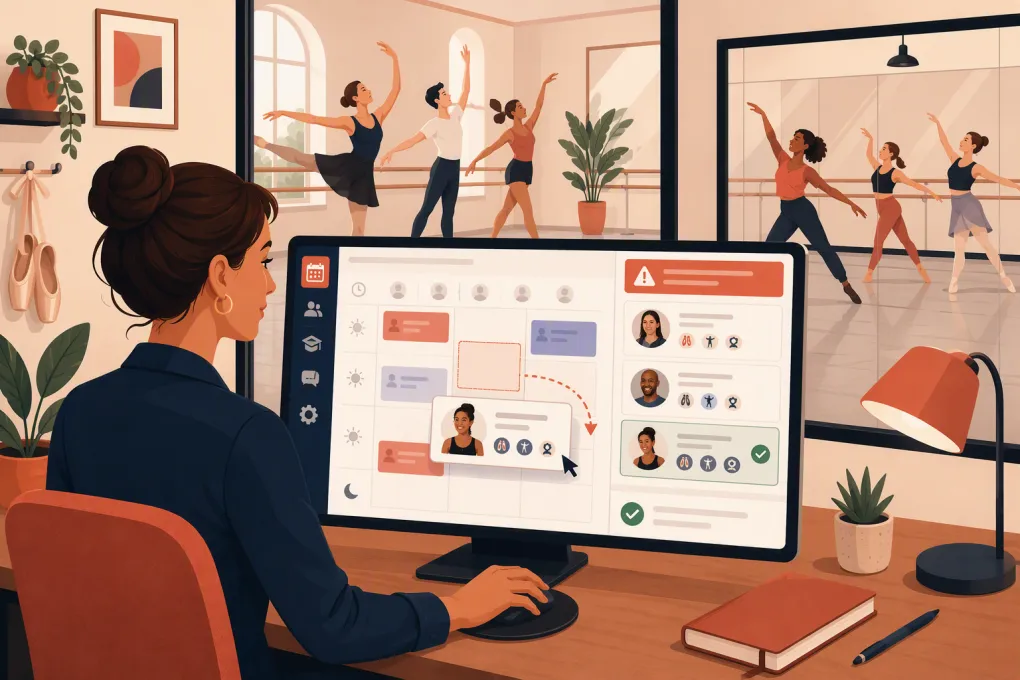
Run your gym on autopilot with WTF Go
Fitty — your AI receptionist — answers calls and DMs, fills classes, follows up with every lead, and collects dues while you coach.