Comparisons
Infrared Sauna Booking Software: A Practical Buying Guide
Compare infrared sauna booking software by scheduling, payments, memberships, waivers, automation, and multi-location tools before you choose a platform.
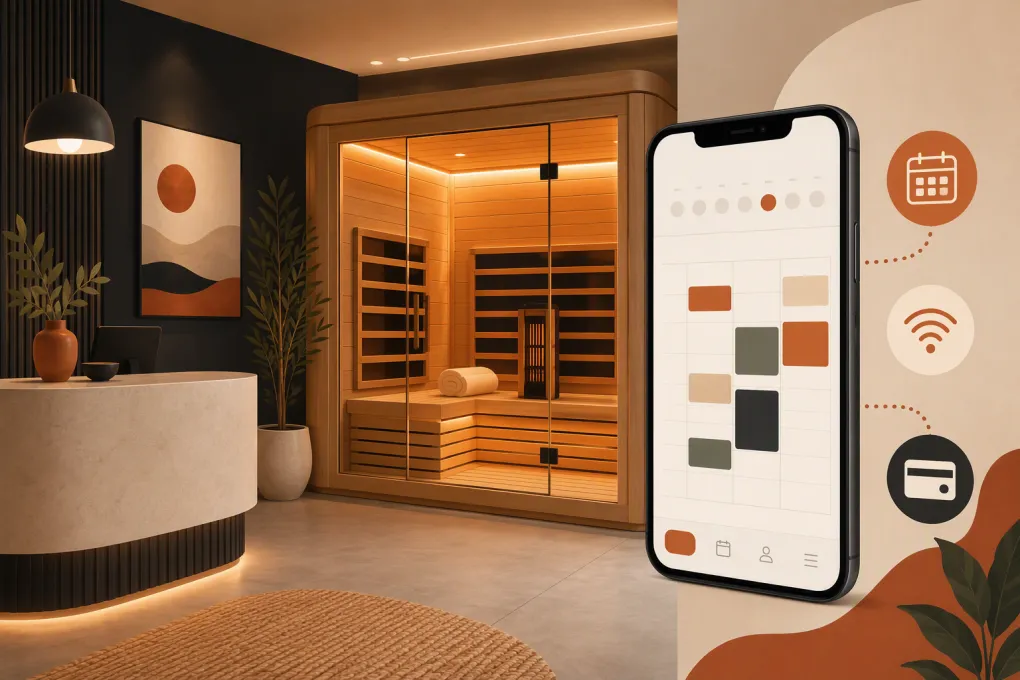 Watch · 20s
Infrared sauna booking looks simple until two clients arrive for the same cabin, a package balance is wrong, or an unanswered evening call becomes a lost appointment. Unlike a standard service calendar, a sauna schedule has to manage limited physical inventory, session length, cleaning buffers, memberships, waivers, payments, and client communication at the same time.
The right infrared sauna booking software does more than put appointments on a calendar. It protects capacity, makes self-booking easy, and reduces the amount of front-desk work required to turn an inquiry into a paid visit.
See how WTF Go and Fitty handle sauna inquiries and bookings 24/7 →
What infrared sauna booking software needs to manage
Most scheduling platforms can create an appointment. The real test is whether they can model the way your facility actually operates.
Services, cabins, and staff are different resources
A client may book a 30-minute session, but the inventory being consumed is the sauna cabin—not necessarily a staff member’s time. Your software should let you distinguish among:
- The service being purchased
- The room, cabin, or sauna assigned to it
- Any employee required for check-in or preparation
- The number of guests allowed
- Setup and cleaning time before or after the session
If the platform only schedules employees, operators often resort to creating fake staff profiles for sauna rooms. That can work as a temporary patch, but it makes reporting, permissions, and payroll-related workflows harder to manage.
Ask every vendor to demonstrate resource scheduling using your exact floor plan. Do not accept a generic appointment-booking demo.
Buffers and operating rules
Back-to-back bookings may look efficient on paper but create problems when a client runs late or the cabin needs cleaning. Look for configurable buffers that block the resource without displaying extra appointment time to the client.
Also test whether the system can enforce:
- Minimum lead time for new bookings
- Advance booking windows
- Cancellation and rescheduling cutoffs
- Different session lengths by cabin or service
- Capacity limits for individual and shared sessions
- Location-specific hours and blackout dates
These controls prevent the front desk from manually repairing the calendar every day.
Packages, memberships, and credits
Sauna businesses commonly sell single sessions, multi-visit packages, recurring memberships, or services bundled with other wellness offerings. The platform should show clients what they can book and automatically apply the correct entitlement.
During a demo, test what happens when a client:
- Uses the final session in a package.
- Books beyond a membership’s allowed frequency.
- Cancels after the cutoff.
- Has a failed recurring payment.
- Wants to buy an additional session without changing membership.
- Uses services at more than one location.
A system that technically supports packages may still require staff to adjust balances manually. Walk through the full lifecycle rather than checking a feature box.
Comparing infrared sauna booking software options
There is no universal best platform. A standalone sauna studio, a multi-service spa, and a gym adding recovery services have different requirements. Product packaging and pricing also change, so confirm current terms directly with each vendor.
| Platform | Scheduling and core workflows | Automation and client communication | Multi-location and expansion | Pricing approach | Best fit and limitations |
|---|---|---|---|---|---|
| WTF Go | All-in-one operations platform for gyms, studios, spas, and wellness businesses; supports booking, lead management, payments, and member workflows | Fitty acts as an AI receptionist to answer leads, book services or classes, follow up, and help collect dues 24/7 | Built for operators who need connected workflows across one or more locations | Contact WTF Go for current scope and pricing | Strong fit when lead response and front-desk automation matter alongside scheduling. Confirm your exact cabin, buffer, and package configuration during the demo. |
| Mindbody | Broad appointment, class, membership, payment, and marketplace capabilities | Offers marketing and client communication tools, with capabilities varying by package | Commonly considered by established wellness brands and multi-location operators | Package-based; request current pricing and included features | Broad ecosystem and consumer discovery are strengths. The product can be more platform than a small sauna-only operation needs, and operators should review add-ons and implementation requirements. |
| Vagaro | Appointment scheduling, memberships, packages, forms, payments, and related spa or salon workflows | Client notifications and marketing tools are available; some capabilities may be packaged separately | Supports businesses with multiple calendars and locations | Published base pricing with optional features may apply; verify the current plan | Practical for appointment-led wellness businesses. Review resource scheduling, add-on costs, and whether its client experience matches a sauna membership model. |
| WellnessLiving | Scheduling, client management, memberships, payments, and wellness business operations | Includes communication and marketing-oriented functionality, depending on configuration | Designed for single- and multi-location fitness and wellness businesses | Typically requires reviewing current plans or a sales quote | Useful for businesses combining appointments, classes, and memberships. Confirm implementation scope, reporting needs, and which features are included. |
| Acuity Scheduling | Strong online appointment scheduling with intake forms, reminders, and payment connections | Provides scheduling notifications and integrations; it is not a full AI front desk or gym management system | Can support multiple calendars, but complex enterprise operations may require additional tools | Tiered subscription plans are generally published | Good for straightforward appointment scheduling. A sauna studio may need separate systems for deeper memberships, lead management, access control, or collections. |
The most important distinction is whether you need a calendar or an operating system. A calendar can be enough for a small appointment-only business. Once you add memberships, multiple service types, unpaid dues, lead follow-up, or multiple locations, disconnected tools create duplicate work.
The booking experience should answer client questions
A client rarely begins with “I want the 6:30 appointment in Cabin Two.” They ask whether a first visit requires preparation, whether they can bring a guest, how long the session lasts, or whether a package works at another location.
Your booking flow should make common answers easy to find without burying the client in policy text. At minimum, clearly present:
- Session duration and expected arrival time
- Guest and capacity rules
- What is included with the booking
- Cancellation and late-arrival policies
- Package or membership eligibility
- Required waiver or intake steps
- Location, parking, and access instructions
An AI receptionist can handle the conversational layer that a static booking page cannot. Fitty can answer leads, guide them toward the appropriate booking, follow up when they do not complete the process, and stay available after the front desk closes.
See how Fitty can turn after-hours sauna questions into booked visits →
Payments, no-shows, and failed dues
Sauna inventory is perishable. Once an empty time slot passes, it cannot be sold later. Your software should support a payment policy that protects the schedule without creating unnecessary friction.
Depending on your business model, that may include:
- Full prepayment for drop-in sessions
- A card on file for members
- Deposits for premium or group bookings
- Automated application of package credits
- Consistent late-cancellation or no-show rules
- Notifications and follow-up for failed recurring payments
Make sure policy enforcement is visible to both clients and staff. If employees have to inspect notes, calculate charges, or remember exceptions, enforcement will become inconsistent.
Payment security matters as well. Use a platform and payment processor that tokenize card data rather than asking staff to record card numbers in notes or messages. Limit employee permissions according to job responsibilities.
Automated dues follow-up is especially useful because a failed payment can affect both revenue and booking eligibility. Fitty is designed to help collect dues and follow up without forcing the front desk to work from a manual call list.
Explore automated sauna booking and dues follow-up with WTF Go →
Waivers, intake forms, and client information
A digital waiver should be connected to the correct client profile and easy for staff to verify before the session. Look for version tracking or a clear renewal process when policies change.
Keep intake forms focused. Collect what is operationally necessary, explain why you are collecting it, and restrict access to sensitive information. Infrared sauna businesses should also avoid turning booking forms into medical assessments unless qualified professionals and appropriate compliance processes are involved.
If your organization is a covered healthcare entity or works with one, ask vendors directly about applicable privacy obligations and contractual requirements. Do not assume that a general wellness booking platform is configured for regulated healthcare data.
Reporting that helps you run the schedule
A long list of dashboard widgets is not the same as useful reporting. Operators should be able to answer practical questions such as:
- Which cabins and time blocks are underused?
- How many appointments are member visits versus drop-ins?
- Which packages are selling and being redeemed?
- Where do booking inquiries fail to convert?
- How much revenue is lost to cancellations, no-shows, or failed payments?
- Are clients returning after their first visit?
- How does performance compare across locations?
Ask whether reports can be filtered by service, resource, location, client type, and booking source. Also confirm whether you can export your data in a usable format.
A practical vendor demo checklist
Give each vendor the same scenarios so you can compare actual workflows instead of polished presentations.
Ask the vendor to complete these tasks live
- Create two sauna cabins with different session lengths.
- Add a cleaning buffer that clients do not see.
- Prevent the same cabin from being booked twice.
- Sell a recurring membership and a five-visit package.
- Book a member whose payment has failed.
- Process a late cancellation and restore or remove the credit correctly.
- Send a waiver before a first visit.
- Reschedule a session from a phone.
- Show the conversation history for a new lead.
- Compare utilization across two locations.
Count the number of manual steps and note every point where staff must switch systems. A feature is only useful if employees can execute it consistently during a busy shift.
Plan the switch before signing
Migration is where a promising software purchase can become an operational mess. Define what must move, who owns the work, and how accuracy will be checked.
Your migration plan should cover:
- Active client profiles
- Membership status and billing dates
- Remaining package credits
- Future appointments
- Signed waivers or document history
- Stored payment method migration rules
- Staff access and permissions
- Automated messages and templates
- Historical reporting requirements
Run test bookings before launch, including cancellations, failed payments, package redemption, and multi-location use. Keep a documented fallback process for the first days after the change.
The best infrared sauna booking software is the one that fits your capacity model, enforces your policies, and removes repetitive front-desk work. Evaluate the full path from first question to repeat visit—not just the calendar clients see.
Frequently asked questions
Can infrared sauna booking software prevent double-booking?
Yes, if it supports resource scheduling. Configure each sauna or cabin as a limited resource and test that buffers, service durations, and capacity rules block conflicting appointments.
Should clients pay when they book a sauna session?
Prepayment or a card on file can help protect limited appointment inventory. The right policy depends on your membership model, cancellation rules, and customer experience.
Can booking software manage sauna memberships and session packages?
Many platforms can, but the depth varies. Test recurring billing, package expiration, credit redemption, late cancellations, failed payments, and use across locations before choosing.
What is the difference between appointment software and an AI receptionist?
Appointment software provides the calendar and booking workflow. An AI receptionist such as Fitty can also answer questions, follow up with leads, book visits conversationally, and assist with dues collection around the clock.
How long does it take to switch sauna booking systems?
Timing depends on data quality, payment migration, memberships, future appointments, and staff training. Ask for a written migration plan and test complete client workflows before launch.
Keep reading

Run your gym on autopilot with WTF Go
Fitty — your AI receptionist — answers calls and DMs, fills classes, follows up with every lead, and collects dues while you coach.