Operations
How to Reduce Med Spa Consultation No-Shows: A Practical Guide
Learn how to reduce med spa consultation no-shows with better reminders, deposits, follow-up, scheduling, and AI receptionist workflows that protect revenue.
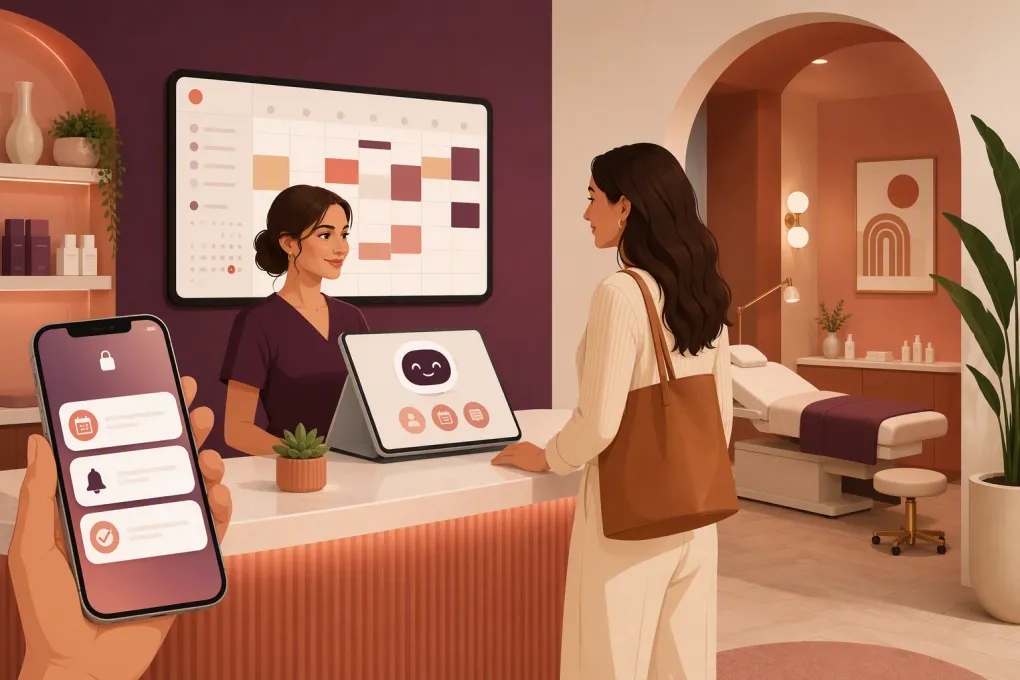 Watch · 20s
A consultation no-show is more than an empty slot. Your provider or coordinator prepared for a prospect who never arrived, the room went unused, and a lead with real acquisition cost slipped out of the pipeline.
The usual response is to send more reminders. That can help, but reminders alone do not fix a weak booking process. Med spa no-shows often start earlier: slow lead response, vague expectations, appointments booked too far out, no commitment mechanism, or no easy way to reschedule.
Reducing no-shows requires a complete consultation workflow—from the first inquiry through the moment the prospect walks in.
See how Fitty can answer med spa leads and keep consultation follow-up moving 24/7 →
Start by measuring the actual no-show problem
Do not change your policy based on a general feeling that “too many people are ghosting.” Establish a baseline first.
Track these outcomes separately:
- Completed: The prospect attended the consultation.
- Canceled: The prospect gave notice but did not rebook.
- Rescheduled: The prospect moved to another date.
- Late cancellation: The appointment was canceled inside your policy window.
- No-show: The prospect did not arrive and did not cancel.
Calculate your consultation no-show rate as:
Consultation no-shows ÷ consultations scheduled
Then segment the result by factors you can act on:
- Lead source
- Location
- Provider or coordinator
- Consultation type
- New versus returning client
- Days between booking and appointment
- Day and time
- Whether the appointment was confirmed
- Whether a deposit or card authorization was used
This analysis may reveal that the problem is concentrated in one channel, one consultation format, or appointments scheduled several weeks ahead. That is more useful than applying a stricter policy to every client.
Respond while the prospect is still looking
Many med spa prospects contact several businesses while comparing treatments, providers, availability, and financing. If your team replies hours later, the prospect may already have booked elsewhere—or may book with you without feeling particularly committed.
Your first response should do four things:
- Acknowledge the inquiry.
- Answer the immediate question when possible.
- Offer appropriate consultation times.
- Create a clear next step.
Avoid making every lead wait for a receptionist to call back. Provide booking options by text or web, while keeping a human handoff available for complicated questions.
The goal is not simply speed. It is continuity. The same conversation that answers “Do you offer consultations for laser treatments?” should be able to move toward scheduling without forcing the prospect to repeat information across a form, phone call, and text thread.
Make the consultation feel specific and worthwhile
A vague “free consultation” can feel disposable. Prospects are more likely to protect time they understand and value.
Your booking confirmation should explain:
- Who they will meet
- How long the consultation is scheduled for
- What will happen during the visit
- What they should bring or avoid beforehand, if applicable
- Whether treatment may occur on the same day
- Whether pricing, financing, or treatment planning will be discussed
- Where to park and how to enter the location
- Your cancellation and rescheduling policy
Be careful not to promise candidacy, clinical results, or a specific treatment before an appropriately qualified professional evaluates the client.
A practical confirmation might say:
You’re scheduled for a 30-minute consultation with our treatment coordinator on Tuesday at 3:00 p.m. We’ll discuss your goals, review suitable next steps, and explain expected costs and scheduling. Reply C to confirm or R if you need another time.
That is more useful than “Your appointment is confirmed.”
Use a reminder sequence, not a single reminder
One automated message sent the day before is easy to miss. Use a short sequence tied to the appointment date.
A workable starting structure is:
Immediately after booking
Send the date, time, location, consultation format, policy, preparation instructions, and a calendar link. Ask for an explicit confirmation.
Several days before
Remind the prospect what the consultation includes. Give them a direct way to confirm or reschedule.
The day before
Send a concise reminder with arrival instructions. If the prospect has not confirmed, create a task for outreach rather than assuming they will attend.
The day of the consultation
Send a brief operational reminder with the time, address, parking information, and contact method for delays.
Every reminder should include a low-friction rescheduling option. A rescheduled consultation is recoverable. A prospect who cannot find the cancellation link may simply disappear.
Keep automated messages focused on scheduling and logistics. Treatment details and sensitive health information require appropriate privacy, consent, and compliance controls. Review messaging practices with your legal or compliance adviser, especially when using text automation.
Add an appropriate commitment mechanism
Deposits and card-on-file policies can reduce casual bookings, but the right approach depends on your positioning, consultation demand, local market, and applicable rules.
Common models include:
- Complimentary consultation: Lowest booking friction, but requires strong confirmation and follow-up.
- Refundable reservation deposit: Returned or released when the prospect attends, subject to the stated policy.
- Consultation fee: Charged for the provider’s time.
- Credited consultation fee: Applied toward an eligible future service or treatment.
- Card on file: Used under a clearly disclosed late-cancellation or no-show policy.
Whichever model you choose, disclose the terms before the prospect confirms. State the cancellation window, fee conditions, refund rules, and how to reschedule. Do not bury the policy in a confirmation email sent after booking.
Test policy changes by consultation category rather than assuming one model fits everything. A provider-led clinical consultation may justify a different structure from a short introductory visit with a coordinator.
Shorten the time between inquiry and consultation
Long booking windows give prospects more time to lose urgency, encounter a schedule conflict, or choose another provider.
Review your calendar setup for unnecessary constraints:
- Are consultation slots available within a reasonable period?
- Are coordinators blocked from offering unused provider time?
- Can suitable prospects choose a virtual consultation?
- Are appointment types routed to the right team member?
- Are high-intent leads offered same-day or next-available openings?
- Can prospects join a waitlist for earlier availability?
Do not solve the problem by opening unlimited slots. Protect provider capacity while creating enough near-term availability to capture demand.
Qualify without turning booking into an interrogation
Basic qualification prevents mismatched appointments, but a long intake form can cause abandonment. Collect only what is needed to route the inquiry safely and accurately.
Useful pre-consultation questions may include:
- Primary concern or treatment interest
- Preferred location
- Preferred days and times
- Whether the prospect wants an in-person or virtual consultation
- Whether they are hoping for treatment by a particular date
- Best contact method
Clinical screening belongs in an appropriate clinical workflow, not an improvised marketing text exchange. The booking team or AI receptionist should know when to stop answering and escalate to a qualified person.
Make confirmation status visible to the team
A reminder is not the same as a confirmation. Your schedule should clearly show which consultations are:
- Booked but unconfirmed
- Confirmed
- Awaiting required forms or deposits
- Rescheduled
- Canceled
- No-showed
Assign an owner to unconfirmed appointments. For example, your process might require a manual call when a high-value consultation remains unconfirmed by a set deadline.
Fitty can support this workflow by responding when staff are busy, continuing lead follow-up, and helping prospects take the next booking step. The operational advantage is not merely sending more messages; it is reducing the number of conversations that stall between inquiry and arrival.
Create a no-show recovery process
A missed consultation should trigger immediate recovery, not silent disqualification.
Send a neutral message shortly after the missed appointment:
We missed you at your consultation today. If you’d still like to discuss your options, reply here and we’ll help you find another time.
Do not lead with blame. There may have been a childcare issue, work conflict, navigation problem, or simple calendar mistake.
Your recovery workflow can include:
- A same-day text or call.
- A direct rescheduling link.
- A second follow-up on the prospect’s preferred channel.
- A final message that leaves the door open without chasing indefinitely.
- A note explaining the outcome or stated reason.
If the prospect repeatedly books and misses appointments, enforce your published policy consistently before offering another slot.
Audit the experience at the front door
Some apparent no-shows are arrival failures. The prospect came to the building but could not find the suite, parking, entrance, or receptionist.
Test the journey yourself:
- Search the address in common map applications.
- Confirm that map pins point to the correct entrance.
- Photograph the building or door for arrival instructions.
- Explain parking costs or validation.
- Include suite, floor, and access-code details.
- Make the location phone number easy to tap.
- Ensure someone answers near appointment time.
For multi-location med spas, verify that every message displays the correct location. A perfectly timed reminder is useless if it sends the prospect to the wrong clinic.
Build a 30-day no-show reduction plan
Turn these ideas into a controlled operational project:
Week 1: Establish the baseline
Define each appointment outcome, audit recent consultations, and segment no-shows by source, location, appointment type, booking lead time, and confirmation status.
Week 2: Repair the booking experience
Rewrite confirmations, add calendar links, clarify arrival instructions, simplify rescheduling, and remove unnecessary intake questions.
Week 3: Automate the sequence
Build booking, pre-appointment, day-of, and missed-appointment workflows. Set escalation rules for unanswered questions and unconfirmed appointments.
Week 4: Review and adjust
Compare outcomes with the baseline. Look beyond the no-show rate: monitor completed consultations, reschedules, cancellations, booking speed, and eventual treatment conversion. A policy that reduces bookings but does not improve completed consultations may be solving the wrong problem.
Reducing med spa consultation no-shows is not about sending increasingly aggressive texts. It is about building commitment, making attendance easy, identifying uncertainty early, and giving prospects a simple way to change plans. When those steps happen consistently—even after hours—your schedule becomes more reliable without making the client experience feel punitive.
Frequently asked questions
Should a med spa charge for consultations to prevent no-shows?
It can help create commitment, but it is not the only option. Consider a consultation fee, credited fee, refundable deposit, or card-on-file policy based on provider time, demand, positioning, and applicable rules.
How many appointment reminders should a med spa send?
Use a short sequence rather than one message: immediately after booking, several days before, the day before, and a brief day-of reminder. Adjust timing based on how far in advance clients typically book.
What should a med spa consultation reminder include?
Include the date, time, location, consultation purpose, arrival instructions, preparation requirements, cancellation policy, and an easy way to confirm or reschedule.
What should we do after a consultation no-show?
Contact the prospect promptly with a neutral message and a direct way to rebook. Record the outcome, continue a limited follow-up sequence, and apply your published policy consistently for repeated no-shows.
Can an AI receptionist help reduce med spa no-shows?
Yes. An AI receptionist can respond after hours, answer routine scheduling questions, follow up with unconfirmed prospects, and help them book or reschedule without waiting for front-desk staff.
Keep reading
Run your gym on autopilot with WTF Go
Fitty — your AI receptionist — answers calls and DMs, fills classes, follows up with every lead, and collects dues while you coach.