AI & Automation
Med Spa Missed Call Text Back Template: Scripts That Work
Use this med spa missed call text back template library to reply faster, qualify leads, protect privacy, and turn unanswered calls into booked consults.
 Watch · 20s
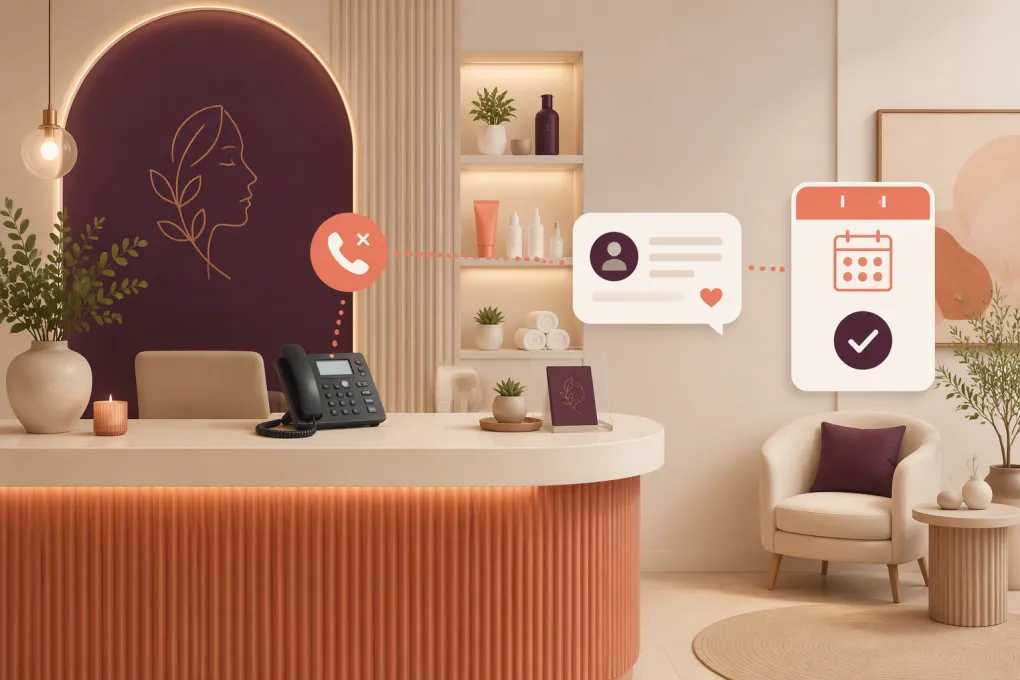
A missed call at a med spa is rarely just a missed call. It may be a prospective client comparing providers, an existing client trying to reschedule, or someone ready to book after researching a treatment. If that person reaches voicemail and another med spa responds first, your team may never get a second chance.
A missed-call text helps close that gap. The goal is not to send a long sales pitch. It is to acknowledge the call, identify what the person needs, and give them one easy next step.
The best system combines a strong med spa missed call text back template with clear routing, booking access, consent controls, and human escalation. A template alone cannot fix a slow or disorganized follow-up process.
See how Fitty can respond to missed med spa inquiries and move qualified leads toward booking →
The best general med spa missed call text back template
Start with this version for most new callers:
Hi {{first_name}}, this is {{team_member_or_assistant}} with {{med_spa_name}}. Sorry we missed your call. Are you looking to book a consultation, ask about a service, or change an appointment? Reply here and we’ll help.
Why it works:
- It identifies the business immediately.
- It acknowledges the missed call without overexplaining.
- It offers three common reasons for calling.
- It asks one question that can be answered quickly.
- It avoids requesting medical or treatment history by text.
If your texting platform requires opt-out language, add the approved wording used by your business, such as Reply STOP to opt out. Do not casually remove required disclosures just to make the message shorter.
10 missed call text templates for common med spa scenarios
Use placeholders only when your system can populate them reliably. A message that says Hi \{\{first_name}} is worse than a clean greeting with no name.
1. Missed call during business hours
Hi {{first_name}}, this is {{med_spa_name}}. Sorry we missed your call. How can we help today—booking, service questions, or an existing appointment?
Use this when someone on the team can monitor replies and take over promptly.
2. Missed call after hours
Hi {{first_name}}, thanks for calling {{med_spa_name}}. We’re currently closed, but we can help you get started. What service or appointment are you contacting us about?
Do not promise an immediate human response if no one is available. Set an accurate expectation in the next automated message if the conversation requires staff review.
3. Consultation request
Hi {{first_name}}, this is {{med_spa_name}} following up on your call. We can help with a consultation. Is there a particular service you’re considering, or would you like help choosing the right appointment type?
This lets the lead express intent without asking for health information.
4. Caller appears ready to book
Hi {{first_name}}, sorry we missed you. If you’re ready to schedule with {{med_spa_name}}, you can book here: {{booking_link}}. If you’re unsure which appointment to choose, reply HELP and we’ll guide you.
Only send a booking link that works well on mobile and displays current availability. Sending people to a generic homepage creates unnecessary friction.
5. Pricing inquiry
Hi {{first_name}}, this is {{med_spa_name}}. Sorry we missed your call. Which service would you like pricing information for? We’ll share the relevant options and explain whether a consultation is needed first.
Avoid using the first text to dodge a straightforward pricing question. If pricing varies, explain what determines it and provide the next useful step.
6. Existing client calling about an appointment
Hi {{first_name}}, this is {{med_spa_name}}. Sorry we missed you. Are you trying to confirm, reschedule, or cancel an appointment? Please reply with the option you need, but don’t send medical details by text.
Your workflow should route this response differently from a new sales inquiry. Existing-client requests often need calendar or staff access rather than lead nurturing.
7. No voicemail or caller details
Hi, this is {{med_spa_name}} returning your call by text. We didn’t receive a voicemail. What can we help you with?
Do not guess why the person called or mention a treatment based on unverified tracking data.
8. Second follow-up after no response
Hi {{first_name}}, checking back from {{med_spa_name}} in case you still need help. Would you like to book, ask a question, or speak with a team member?
A second message should make responding easier, not add urgency that does not exist.
9. Final close-the-loop message
Hi {{first_name}}, we’ll close out your request for now so we don’t keep messaging you. If you still need help from {{med_spa_name}}, reply here or call us at {{phone_number}}.
This is more respectful than leaving leads in an endless automated sequence.
10. Request that needs clinical review
Thanks for contacting {{med_spa_name}}. This question needs review by an appropriate member of our clinical team. Please don’t send photos or sensitive medical information by text. We’ll let you know the approved next step.
Automation should recognize when to stop selling and escalate. Questions involving symptoms, complications, contraindications, prescriptions, treatment eligibility, or post-procedure concerns should follow your medical director’s approved protocol.
What happens after the first text matters more
A quick acknowledgement is useful, but it does not create a good client experience by itself. The workflow behind it should determine intent and send the person to the right destination.
A practical missed-call workflow looks like this:
- Detect the missed call. Confirm that abandoned calls, calls outside business hours, and calls intentionally sent to voicemail are handled correctly.
- Check texting eligibility. Your system should account for landlines, invalid numbers, prior opt-outs, and applicable consent rules.
- Send the appropriate first response. Use different wording during open and closed hours.
- Classify the reply. Common categories include new consultation, pricing question, booking request, existing appointment, clinical concern, and vendor or spam call.
- Take the next action. Offer booking, answer an approved question, create a staff task, or escalate to a qualified person.
- Record the interaction. The conversation and outcome should be visible in the lead or client record.
- Stop the automation when needed. A human reply, completed booking, opt-out, or clinical escalation should suppress irrelevant follow-ups.
See how Fitty handles lead conversations, follow-up, and appointment booking around the clock →
How to make the template sound like your med spa
Generic wording is acceptable. Generic behavior is not. Adjust the template based on how your front desk actually works.
Match your service model
A consultation-led practice may ask what service the caller is considering. A spa with directly bookable services may offer a booking link immediately. Multi-location operators should identify the location or ask which location the caller wants.
Keep the sender clear
Use the med spa’s recognizable business name. If the message is sent by an AI receptionist, do not design the conversation to mislead people into believing they are speaking with a clinician.
Ask one question at a time
Do not open with a questionnaire. The first response should secure engagement. Gather only the information needed to route or book the inquiry, then move sensitive discussions to an approved channel.
Provide a human exit
Include a phrase such as reply TEAM or ask to speak with our front desk when automation cannot resolve the request. Make sure that request creates a visible task with an owner and deadline.
Privacy and texting compliance guardrails
Med spa texting can involve both marketing rules and sensitive health information. Requirements depend on your business, technology, message type, consent process, and jurisdiction. Not every med spa has the same legal status, so obtain advice specific to your operation.
At a minimum:
- Do not assume one inbound call authorizes an ongoing promotional campaign.
- Maintain records of consent and opt-outs where required.
- Honor opt-out requests across connected systems.
- Avoid placing treatment details, diagnoses, photos, or medical history in routine automated texts.
- Use vendors and configurations appropriate for the information your business handles.
- Set reasonable messaging hours based on applicable rules and the recipient’s local time.
- Have written escalation instructions for urgent or post-procedure concerns.
- Separate transactional appointment communication from promotional nurturing.
Automation should enforce these rules consistently rather than relying on every front-desk employee to remember them during a busy shift.
Measure whether missed-call texting produces bookings
Track the full path instead of celebrating the number of messages sent. Useful operating metrics include:
- Time from missed call to first response
- Percentage of texts successfully delivered
- Percentage of callers who reply
- Number of consultations or appointments booked
- Booking rate by call source, location, service, and time of day
- Human handoff volume and response time
- Opt-out rate
- No-show and cancellation rate for resulting bookings
- Leads incorrectly routed or contacted after booking
Review actual conversations regularly. Look for unanswered questions, broken booking links, awkward personalization, repeated prompts, and cases where automation continued after a staff member stepped in.
Build a response system, not just an autoresponder
The strongest med spa missed-call process does more than fire off a canned text. It answers routine questions, identifies booking intent, offers accurate availability, follows up appropriately, and transfers sensitive or complex issues to the right person.
That is where an AI receptionist becomes more useful than a basic phone trigger. Fitty is designed to help wellness operators answer leads, book appointments or classes, follow up, and keep conversations moving even when the front desk is busy or closed.
Explore WTF Go and build a missed-call workflow that moves med spa leads from inquiry to booking →
Frequently asked questions
How soon should a med spa send a missed-call text?
Send the acknowledgement promptly while the caller still remembers the inquiry. The exact timing should reflect your staffing, messaging rules, and whether the system can continue the conversation accurately.
Can a med spa automatically text every missed caller?
Not necessarily. Your workflow should account for consent, opt-outs, invalid or landline numbers, message type, local time, and applicable federal and state requirements.
Should the first missed-call text include a booking link?
Include one when the caller can confidently choose the correct appointment type. If services require qualification or consultation, ask a short routing question first.
What information should a med spa avoid requesting by text?
Avoid requesting medical history, diagnoses, treatment photos, medication details, or other sensitive information through routine automated texting. Move those discussions to your approved intake or clinical channel.
How many times should a med spa follow up after a missed call?
Use a limited sequence with a clear stopping point rather than messaging indefinitely. Stop when the person books, opts out, asks for a human, or indicates they are no longer interested.
Keep reading

Run your gym on autopilot with WTF Go
Fitty — your AI receptionist — answers calls and DMs, fills classes, follows up with every lead, and collects dues while you coach.