AI & Automation
How to Handle After-Hours Calls for Your Fitness Studio
Learn how to handle after-hours calls for a fitness studio with clear routing, scripts, booking rules, lead follow-up, and AI receptionist support 24/7.
 Watch · 20s
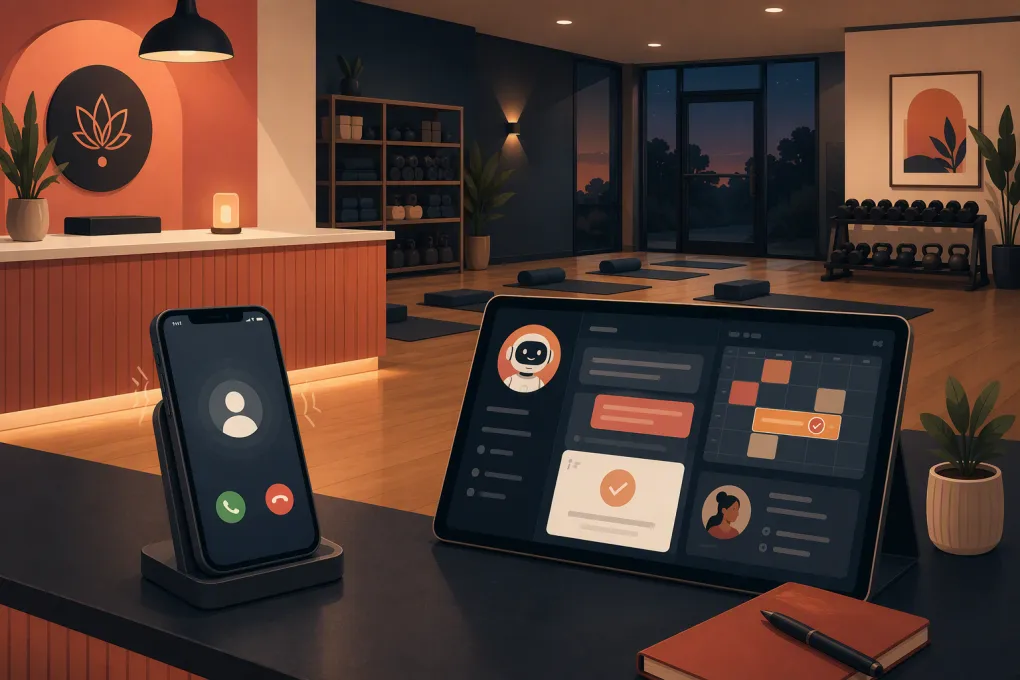
An unanswered call at 8:30 p.m. rarely feels urgent to the person closing the studio. To the prospect calling after work, however, it may be the exact moment they are ready to ask about pricing, confirm a schedule, or book an intro session. If nobody answers and the next step is unclear, that prospect can move on before your team opens the next morning.
Handling after-hours calls well does not require an employee to carry the business phone all night. It requires a defined system: identify the caller’s intent, provide the right information, complete safe transactions when possible, and create a clear handoff when a human is needed.
See how Fitty handles after-hours fitness studio inquiries →
Decide what “after hours” means for your studio
Start by defining coverage instead of treating every call outside front-desk hours the same way.
Your after-hours window may include:
- Early mornings before reception opens
- Evenings after the final staffed shift
- Weekends or reduced-service hours
- Holidays and temporary closures
- Periods when the front desk is helping members and cannot answer
That last category matters. A call at 5:30 p.m. may happen during business hours, but it is functionally after-hours if the coach is teaching and nobody can pick up.
Document your official staffed hours, class hours, and call coverage hours separately. Then decide whether unanswered calls should immediately route to another system or ring the studio first for a limited period.
Sort calls by intent before choosing a response
The best response depends on why someone is calling. Most fitness studio calls fit into a few operational categories.
New lead inquiries
Prospects commonly want to know:
- What memberships or introductory offers are available
- Whether a class is appropriate for beginners
- When the next class or consultation is available
- What they should bring
- Where to park or how to enter the building
- Whether you offer a specific training style or service
These calls have high booking potential. Your system should answer approved questions and move the caller toward a specific next step rather than simply taking a message.
Booking and schedule requests
Existing members and prospects may want to book, reschedule, or cancel. After-hours handling should follow the same capacity, cutoff, cancellation, and eligibility rules used by your staff.
Do not let a separate answering process invent exceptions. If a class is full, the caller should receive an accurate alternative such as joining the waitlist or choosing another session.
Account and payment questions
Members may call about a failed payment, balance, receipt, freeze, or cancellation. Some requests can be completed through a secure workflow, while others should be queued for staff review.
Avoid collecting full payment card details in voicemail, ordinary text messages, or handwritten notes. Use your approved payment process and limit access to sensitive account information.
Facility issues and emergencies
A lockout, water leak, security concern, or medical emergency requires different routing from a pricing question. Define which issues trigger an on-call staff alert.
Your recorded message or automated agent should clearly tell callers to contact emergency services for immediate threats to health or safety. An answering system is not a substitute for emergency response.
Choose an after-hours call-handling model
There are four common approaches. The right one depends on call volume, services offered, staffing, and the complexity of your policies.
| Approach | What it handles well | Main limitation |
|---|---|---|
| Voicemail | Basic message capture at low operational complexity | Delays answers and usually leaves follow-up entirely to staff |
| Call forwarding | Routes calls to an owner, manager, or shared phone | Interrupts personal time and creates inconsistent coverage |
| Human answering service | Provides live pickup and scripted message handling | Agents may have limited access to live schedules, accounts, or studio-specific rules |
| AI receptionist | Answers common questions, qualifies leads, books eligible appointments, and creates structured follow-up | Requires accurate setup, clear escalation rules, and ongoing review |
Some studios use a hybrid model. An automated receptionist handles routine inquiries and bookings, while urgent facility issues route to an on-call manager. Complex membership disputes can become staff tasks for the next business day.
The important question is not simply, “Was the phone answered?” It is, “Did the caller reach the correct outcome?”
Build an after-hours call flow
A useful call flow should be simple enough to maintain but specific enough to prevent improvisation.
1. Identify the caller
Capture the caller’s name, phone number, and reason for calling. For an existing member, use only the verification steps appropriate for the requested action.
Do not force every caller through a long intake. A prospect asking about tomorrow’s beginner class should be able to get an answer quickly.
2. Determine the intent
Route the call into one of your main categories:
- New membership or trial inquiry
- Class or appointment booking
- Existing booking change
- Billing or account support
- Facility issue
- Emergency
- Other request requiring staff review
This classification should appear in the call record or follow-up task so the morning team does not have to replay every conversation.
3. Complete approved actions
Define exactly what the after-hours system can do. Depending on your setup, approved actions might include:
- Share current hours and location details
- Explain beginner options using approved language
- Check live class or appointment availability
- Book an intro, consultation, or eligible class
- Add a caller to a waitlist
- Send a booking confirmation or intake link
- Take a payment through a secure process
- Create a staff follow-up task
Fitty, WTF Go’s AI receptionist, is designed around these operating workflows. It can answer leads, book classes, follow up, and collect dues around the clock instead of leaving every missed call for the opening shift.
See how Fitty can turn after-hours calls into booked next steps →
4. Escalate exceptions
Create a short, explicit escalation list. For example:
- Immediate safety threat: direct the caller to emergency services
- Suspected break-in, flooding, or major facility damage: alert the on-call manager
- Injury report without an active emergency: capture details and flag for management
- Refund, cancellation dispute, or policy exception: create a priority staff task
- Question outside approved information: promise a response during a defined service window
Avoid saying someone will respond “soon.” Tell callers when the studio is staffed again or provide a realistic response window your team can consistently meet.
5. Confirm the outcome
Before ending the call, confirm what happened:
- The class, date, and time booked
- Whether the caller joined a waitlist
- Which link or confirmation was sent
- Whether payment was completed
- Who will follow up and when
This reduces repeat calls and prevents misunderstandings.
Write scripts that sound like your studio
Scripts should provide guardrails, not force every conversation into stiff wording. Build a source-of-truth document with approved answers for pricing, offers, schedules, policies, amenities, accessibility, age restrictions, and beginner requirements.
A basic after-hours opening could be:
Thanks for calling [Studio Name]. The front desk is currently closed, but I can help with schedules, introductory options, bookings, and common account questions. What can I help you with?
For an issue requiring staff review:
I can’t approve that request, but I can send it to the studio team. The front desk reopens at [time]. What is the best phone number or email for the response?
For a lead who is not ready to book:
I can send you the current schedule and a link to the beginner options. Would you prefer text or email?
Review scripts whenever pricing, policies, schedules, or promotions change. Outdated answers are worse than a clean escalation to a staff member.
Connect calls to booking and follow-up
A phone conversation should not become an isolated note. Connect after-hours handling to the systems your staff actually use.
At minimum, save:
- Caller identity and contact details
- New lead or existing member status
- Call reason and outcome
- Class, appointment, or offer discussed
- Booking or payment status
- Follow-up owner and deadline
- Consent or communication preference where applicable
If a caller requests information but does not book, create a follow-up sequence rather than relying on someone to remember. Keep outreach relevant to the request, honor opt-outs, and configure calling, texting, recording, and consent practices for applicable federal and state requirements. Recording and disclosure rules can vary by jurisdiction, so obtain appropriate legal guidance for your operation.
Create a morning handoff routine
Automation does not remove the need for management. It removes repetitive work and gives the team a cleaner queue.
Assign one person per opening shift to review:
- Urgent facility or safety flags
- Payment and account issues
- Leads that requested human contact
- Failed or incomplete bookings
- Conversations the system could not resolve
- Repeated questions that indicate missing information
Use recurring questions to improve your scripts and knowledge base. If callers repeatedly ask whether grip socks are required, for example, add the answer to the approved call content, booking confirmation, and website.
Measure outcomes, not just call volume
Track a small set of operational measures consistently:
- Number of calls received outside staffed hours
- Calls answered versus sent to voicemail
- Bookings completed from those calls
- Leads requiring follow-up
- Time to human response for escalated requests
- Calls transferred or abandoned
- Common unanswered questions
- Booking errors or policy exceptions
Review recordings or transcripts where lawful and available, but sample for quality rather than trying to inspect every call. Look for incorrect answers, awkward handoffs, missing booking details, and points where callers disengage.
A practical rollout plan
You can build an effective after-hours process without changing everything at once.
Week one: document
List your call categories, staffed hours, approved answers, booking rules, payment boundaries, and escalation contacts.
Week two: configure
Set routing, connect the relevant schedule and customer records, load approved information, and create follow-up tasks and notifications.
Week three: test
Call from an outside number and test realistic scenarios: a new lead, a full class, a billing question, a cancellation request, and a facility issue. Verify what the caller hears and what staff receive.
Ongoing: review
Audit unresolved calls, update changed information, and confirm that escalation contacts are current. Treat the call process like any other front-desk procedure: owned, documented, and maintained.
A reliable after-hours system should protect staff time without creating a dead end for callers. When routine questions can become accurate answers, bookings, payments, or organized follow-ups, your studio stays responsive even when the front desk is closed.
Explore WTF Go and put Fitty on your studio’s after-hours desk →
Frequently asked questions
Should a fitness studio use voicemail or an answering service after hours?
Voicemail may be enough for very low call volume, but it delays answers and requires manual follow-up. An answering service or AI receptionist is more useful when callers expect schedule information, booking, or account help.
Can an AI receptionist book fitness classes after hours?
Yes, when it is connected to accurate availability and configured with the studio's eligibility, capacity, waitlist, and cancellation rules. Requests outside those rules should be escalated to staff.
What information should an after-hours call system collect?
Collect the caller's name, contact details, reason for calling, requested class or service, action taken, and any required follow-up. Avoid collecting sensitive payment details through unsecured channels.
How should urgent calls be handled when the studio is closed?
Direct immediate threats to emergency services and route defined facility issues, such as suspected break-ins or major water damage, to an on-call manager. Document exactly which situations justify an alert.
How often should after-hours scripts be updated?
Review them whenever pricing, schedules, offers, policies, or facility details change. A regular operational review also helps identify recurring questions that should be added to the approved answers.
Keep reading
Run your gym on autopilot with WTF Go
Fitty — your AI receptionist — answers calls and DMs, fills classes, follows up with every lead, and collects dues while you coach.