AI & Automation
How to Automate Missed Call Follow-Up for Gyms: 7-Step Guide
Learn how to automate missed call follow-up for gyms with instant texts, smart routing, booking links, escalation rules, and scripts that convert.
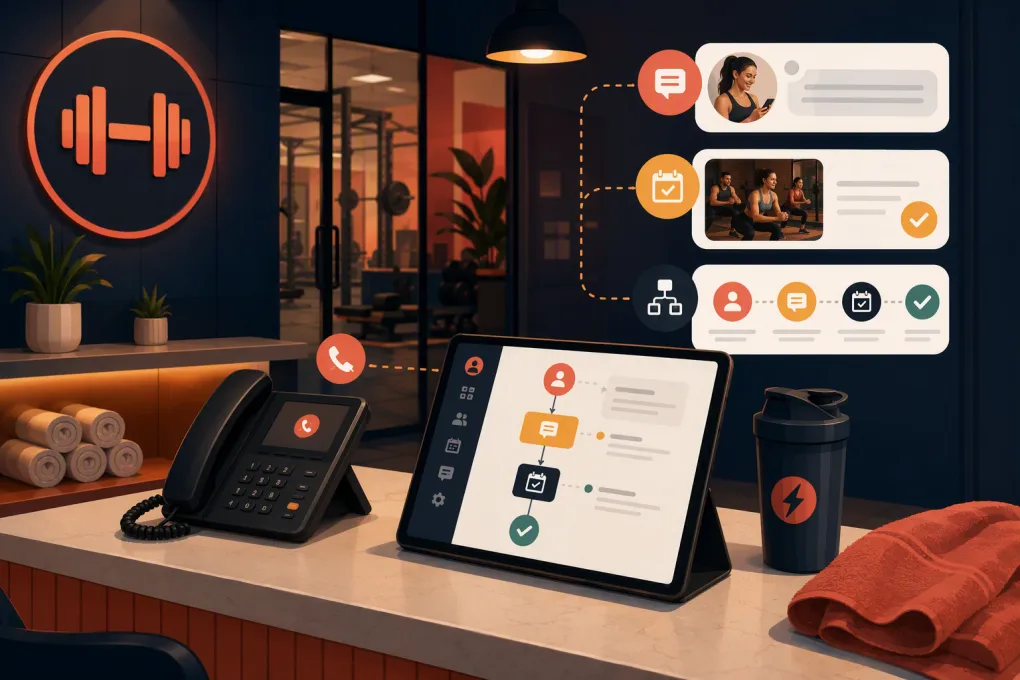 Watch · 20s
A missed gym call rarely feels urgent when the front desk is checking in members, coaching is underway, or the building is closed. To the caller, however, silence is an answer. They may be ready to ask about pricing, book an intro, change a reservation, or resolve a billing issue—and they may call another gym next.
Automated missed-call follow-up closes that gap. It acknowledges the caller immediately, identifies what they need, and moves the conversation toward booking or human help without forcing staff to monitor the phone all day.
The goal is not to bombard every caller with generic sales texts. A good system responds in context, gives the caller a useful next step, and knows when to stop or involve a person.
See how Fitty handles gym inquiries and follow-up around the clock →
What missed-call automation should actually do
At its simplest, missed-call automation sends a text when nobody answers. That is better than voicemail alone, but it leaves too much work to the caller and your staff.
A complete workflow should:
- Detect an unanswered inbound call
- Match the phone number to an existing contact when possible
- Create a new lead when the caller is unknown
- Send an immediate, conversational acknowledgment
- Ask why the person called
- Route them to the right booking, payment, or support workflow
- Notify staff when human attention is required
- Record the conversation in the contact history
- Stop follow-up after a reply, booking, opt-out, or staff takeover
This distinction matters. A missed-call text is a notification. Missed-call follow-up is an operating process.
How to automate missed call follow-up for gyms in seven steps
1. Define which calls count as missed
Start with a precise trigger. Depending on your phone setup, an unanswered call might include:
- A call that rings without being answered
- A call sent to voicemail
- A call received outside business hours
- A call abandoned while waiting in a queue
- A call answered by an automated system but not resolved
Avoid triggering a text when a staff member answered successfully. Duplicate outreach makes the gym look disorganized and can confuse members who already received help.
Also decide whether calls from blocked numbers, landlines, vendors, or known spam contacts should be excluded. Your phone platform may not identify every case perfectly, so create a review process for exceptions.
2. Connect the phone trigger to the contact record
The caller’s phone number should be checked against your CRM or member database.
If the number belongs to an existing member, the workflow can acknowledge that context without exposing sensitive account details. If the number is unknown, create a lead record with the call time, source, location called, and campaign attribution when available.
For multi-location gyms, preserve the number or location the person called. Someone contacting your downtown studio should not receive a booking link for a location across town.
Useful fields include:
- Contact status: lead, prospect, member, former member, or unknown
- Assigned location
- Date and time of the missed call
- Last staff contact
- Lead source
- Conversation status
- Next action and owner
Clean contact data prevents multiple employees or automations from chasing the same person.
3. Send a useful first response
The first message should confirm the missed call and make replying easy. It should not open with a long pitch or demand several pieces of information.
A practical first message is:
Hi, this is [Gym Name]. Sorry we missed your call. Are you looking to book a visit, ask about membership, or get help with an existing account?
For an after-hours call:
Hi, this is [Gym Name]. We’re currently closed, but we received your call. I can help you book an intro or answer common questions now. What can I help with?
Use a recognizable business name. Callers may be comparing several facilities and may not remember which number they dialed.
Keep the initial choices broad. Detailed qualification can happen after the caller responds.
4. Route the reply by intent
Intent-based routing is where automation becomes operationally useful. Common categories include:
- Membership inquiry: Explain the appropriate next step and offer an intro, tour, trial, or consultation based on your sales process.
- Class or appointment booking: Present relevant availability or send the correct booking path.
- Schedule question: Answer from current class and staff availability rather than a static message.
- Existing member support: Collect a brief description and route it to the front desk or account owner.
- Billing or dues: Direct the member to a secure payment workflow or escalate account-specific questions.
- Cancellation or medical issue: Flag the conversation for human review according to your policies.
- Wrong number or spam: Close the workflow and suppress further messages.
Do not make callers navigate a ten-option text menu. Let them respond naturally when your system can interpret the request, or offer three clear choices when it cannot.
5. Move qualified callers directly to booking
A lead who called about joining should not have to wait for a callback just to schedule an intro.
The workflow should offer the correct booking opportunity based on location, service, and availability. If your business requires a consultation before a first class, route the caller to that consultation rather than the general class calendar.
A booking message might say:
I can help you schedule a first visit at our [Location] gym. Would you prefer a weekday morning, weekday evening, or Saturday?
This is often easier than dropping a generic scheduling link into the first text. Once the caller chooses a time range, the system can present relevant options and confirm the selection.
Confirmation should include the date, time, location, what to bring, and a clear way to reschedule. It should also update the CRM so staff can see that the missed call produced an appointment.
See how Fitty turns gym inquiries into booked visits without waiting for the front desk →
6. Create escalation and stop rules
Automation needs boundaries. Define when a conversation moves to a person and when messages end.
Escalate when:
- The caller asks for a manager or coach
- The issue involves an injury, incident, complaint, or cancellation
- The system cannot understand the request
- Account details require staff verification
- The caller shows clear frustration
- A high-intent lead requests a phone conversation
The staff notification should include the caller’s name or number, reason for contact, conversation history, assigned location, and requested next step. A notification that only says “new lead” forces staff to investigate from scratch.
Stop the sequence when the caller replies, books, asks not to be contacted, reaches a staff member, or is marked resolved. Set limits so an unanswered missed call does not trigger an endless sales sequence.
7. Add controlled follow-up for nonresponders
If the caller does not reply, one or two relevant follow-ups may be appropriate, provided your messaging practices and consent basis support them.
For a likely prospect:
Just checking back about your call to [Gym Name]. If you’d like to visit, reply with the best day and we’ll help find a time.
For an unknown caller:
We wanted to make sure your question didn’t get missed. Reply here if you still need help from [Gym Name].
Each follow-up should add a useful next step. Repeating “Are you still interested?” without context does not improve the customer experience.
Use different rules for existing members and prospects. A member calling about access or billing needs service recovery, not a membership pitch.
Basic automation versus an AI receptionist
Rule-based automation works well when callers fit a small number of predictable paths. It can send a text, apply tags, notify an employee, and share a booking link.
Its limitation appears when people respond in their own words. A caller might ask whether beginner boxing is appropriate after an injury, whether childcare is available during a specific class, or whether two family members can tour together. A fixed decision tree can stall or send an irrelevant answer.
An AI receptionist such as Fitty can handle the conversation more naturally, answer leads, support booking, follow up, and help collect dues around the clock. Staff should still own sensitive exceptions, policy decisions, and situations requiring judgment.
The practical model is not AI instead of staff. It is AI handling speed and repetition while staff handle coaching, relationships, and exceptions.
Compliance and customer-experience guardrails
Automated texts are still business communications. Work with qualified counsel to confirm how federal and state requirements apply to your use case, especially when messages become promotional.
At minimum:
- Maintain records of applicable consent
- Clearly identify the business
- Honor opt-out requests promptly
- Suppress numbers on your internal do-not-contact list
- Avoid sending promotional follow-ups at unreasonable hours
- Separate service messages from broader marketing campaigns
- Restrict access to member and payment information
- Keep account-specific details out of unsecured texts
An inbound call can provide context for a direct response, but it should not be treated as unlimited permission for unrelated marketing. Configure the workflow around the caller’s request.
What to measure after launch
Do not judge the system by how many texts it sends. Measure whether it resolves calls and creates useful outcomes.
Track:
- Total missed calls by location, day, and hour
- Percentage receiving a successful automated response
- Caller reply rate
- Conversations resolved without staff intervention
- Staff escalations and response time
- Intro visits or appointments booked
- Show rate for bookings originating from missed calls
- Opt-outs and complaint patterns
- Duplicate or incorrectly triggered messages
- Common caller intents the workflow cannot handle
Review conversation transcripts or logs regularly. They show where your routing, policies, pricing explanations, and booking setup are unclear.
Launch with one workflow, then expand
Begin with after-hours calls from prospective members. That workflow has a clear purpose and is easier to test than automating every phone scenario at once.
Call the gym from a new number, an existing member’s number, and outside normal hours. Test natural replies, booking changes, opt-outs, unclear questions, and escalation. Confirm that staff can see the complete interaction before launch.
Once the workflow is reliable, add member support, billing assistance, class questions, and location-specific routing.
The best missed-call system is not the one with the most branches. It is the one that responds quickly, gives callers a real next step, and keeps your team informed.
Explore WTF Go and put Fitty on your missed-call follow-up workflow →
Frequently asked questions
How quickly should a gym respond to a missed call?
Send the acknowledgment as soon as the missed-call trigger is confirmed. Immediate automation prevents the inquiry from sitting unnoticed while still allowing staff to take over when needed.
What should a gym's missed-call text say?
Identify the gym, apologize briefly, and ask a simple intent question such as whether the caller wants to book, discuss membership, or get member support.
Can missed-call automation book gym appointments?
Yes, if it is connected to current availability and the correct location or service calendar. It should also confirm the booking and record it in the contact history.
Should existing members and new leads receive the same follow-up?
No. New leads usually need booking or membership help, while members may need support with schedules, access, billing, or account issues.
Do gyms need consent to send automated missed-call texts?
Consent requirements depend on the message, technology, jurisdiction, and whether the communication becomes promotional. Identify the business, honor opt-outs, keep messages relevant to the call, and obtain legal guidance for your setup.
Keep reading
Run your gym on autopilot with WTF Go
Fitty — your AI receptionist — answers calls and DMs, fills classes, follows up with every lead, and collects dues while you coach.