AI & Automation
How to Automate Martial Arts Trial Follow-Up That Works
Learn how to automate martial arts trial follow-up with fast replies, clear sequences, staff handoffs, and AI that turns more inquiries into booked visits.
 Watch · 20s
A martial arts trial rarely fails because someone dislikes the idea of training. More often, the lead waits too long for a reply, cannot find a convenient class, forgets the appointment, or finishes the trial without a clear next step.
Learning how to automate martial arts trial follow-up means fixing those gaps without making prospects feel like they are talking to a drip campaign. The right system responds immediately, gathers the information an instructor needs, books the trial, manages reminders, and creates a clean staff handoff when a human conversation matters.
Why martial arts trial leads fall through
Martial arts inquiries create more operational complexity than a basic contact form suggests. A school may need to determine:
- Whether the inquiry is for an adult or a child
- The student’s age and experience level
- Which program and location are appropriate
- Whether a parent must attend
- What the student should wear or bring
- Which introductory class has capacity
- Whether the prospect booked, attended, missed, or completed the trial
If those details live across voicemail, text messages, email, and an instructor’s memory, follow-up becomes inconsistent. Staff often focus on the people already in the building, while new leads arrive during classes, evenings, and weekends.
Automation should not replace the instructor’s judgment. It should make sure every prospect receives a useful response and reaches the right next step.
See how Fitty handles martial arts inquiries and trial booking around the clock →
Define the conversion path before automating it
Do not begin by writing a dozen messages. First, define the stages a lead must move through.
A practical martial arts trial pipeline might use:
- New inquiry
- Contacted
- Qualified for a program
- Trial offered
- Trial booked
- Trial confirmed
- Trial attended
- Trial missed
- Enrollment conversation completed
- Enrolled, nurturing, or closed
Each stage needs an owner and an exit condition. For example, a lead should only move to trial booked after a specific date, time, program, and location are confirmed. A lead should not be marked attended merely because the class time passed; an instructor or check-in record should confirm attendance.
This discipline prevents automation from sending the wrong message, such as a booking reminder after someone has canceled or a generic sales text after a parent has already spoken with the head instructor.
Capture the information needed to book correctly
Keep the first form short enough to complete, but collect enough information to route the inquiry. Useful fields include:
- Prospect or parent name
- Mobile number and email
- Student name, if different
- Student age or age range
- Program interest
- Preferred location
- Preferred days or times
- Prior martial arts experience
- Lead source
- Consent and communication preferences
Avoid turning the form into an application. Questions about detailed goals, injuries, scheduling constraints, or prior training can be handled conversationally after the first response.
Your CRM should maintain one record per prospect or household, preserve the conversation history, and update the status when a booking is made. Duplicate records create duplicate messages and confused staff.
Build the automated trial follow-up sequence
The workflow should react to behavior rather than sending every lead the same fixed sequence.
| Trigger | Automated action | Human responsibility |
|---|---|---|
| New inquiry | Reply immediately, acknowledge the request, and ask the next qualifying question | Review unusual requests or sensitive details |
| Program identified | Offer appropriate trial times or a booking link | Confirm exceptions and class capacity |
| Trial booked | Send confirmation, location, arrival instructions, and what to bring | Prepare the instructor or front desk |
| Trial approaching | Send a concise reminder and an easy way to reschedule | Monitor replies that need judgment |
| Trial missed | Ask whether the prospect wants to rebook; do not shame them | Call high-intent or previously engaged leads |
| Trial attended | Send a thank-you and define the enrollment next step | Conduct the membership conversation |
| No response | Continue a limited, spaced follow-up sequence | Decide when to move the lead to long-term nurture |
The immediate response
The first reply should answer the question the prospect is most likely asking: what happens next?
A useful opening message is:
Hi [First name], thanks for contacting [School]. I can help you find the right trial class. Is the training for you or for a child?
This is easier to answer than a long message describing every program. Once the prospect replies, the workflow can ask age, program, location, or availability questions one at a time.
If the original inquiry contains a direct question, answer it before pushing the booking. A prospect asking about beginner classes should not receive a response that ignores the question and says only to schedule a call.
Booking confirmation and reminders
A confirmation should include:
- Trial date and start time
- School address and parking guidance, if relevant
- Recommended arrival time
- Clothing or equipment instructions
- Whether a parent or guardian must stay
- A reschedule or reply option
Keep reminders transactional and useful. A wall of promotional copy can hide the information the student actually needs.
No-show recovery
Treat a missed trial as a scheduling problem before treating it as rejection. Send a short message that makes rebooking easy:
Hi [First name], we missed you at today’s trial. Would you like to try another day this week, or would next week be easier?
If the prospect answers, stop the generic no-show sequence and resume the booking conversation. If there is no response, use a limited number of follow-ups and then move the record to nurture rather than messaging indefinitely.
Post-trial follow-up
The instructor should record the outcome immediately after class. At minimum, capture:
- Attended or missed
- Program fit
- Student or parent concerns
- Membership option discussed
- Agreed next action
- Follow-up owner and due date
The follow-up should reference the actual visit. For example:
Thanks for training with us today, [First name]. Coach [Name] noted that you were interested in [goal or program]. Would you like to review the next class options or talk through membership?
That message only works if staff enter accurate notes. Automation cannot personalize information that the team never records.
Use AI for conversation, not just scheduled messages
Traditional automation is useful when the next action is predictable. AI becomes more valuable when prospects reply with natural questions such as:
- Do you have classes for a seven-year-old beginner?
- Can siblings attend at the same time?
- What if I work alternating shifts?
- Do I need a uniform for the trial?
- Can we visit before booking?
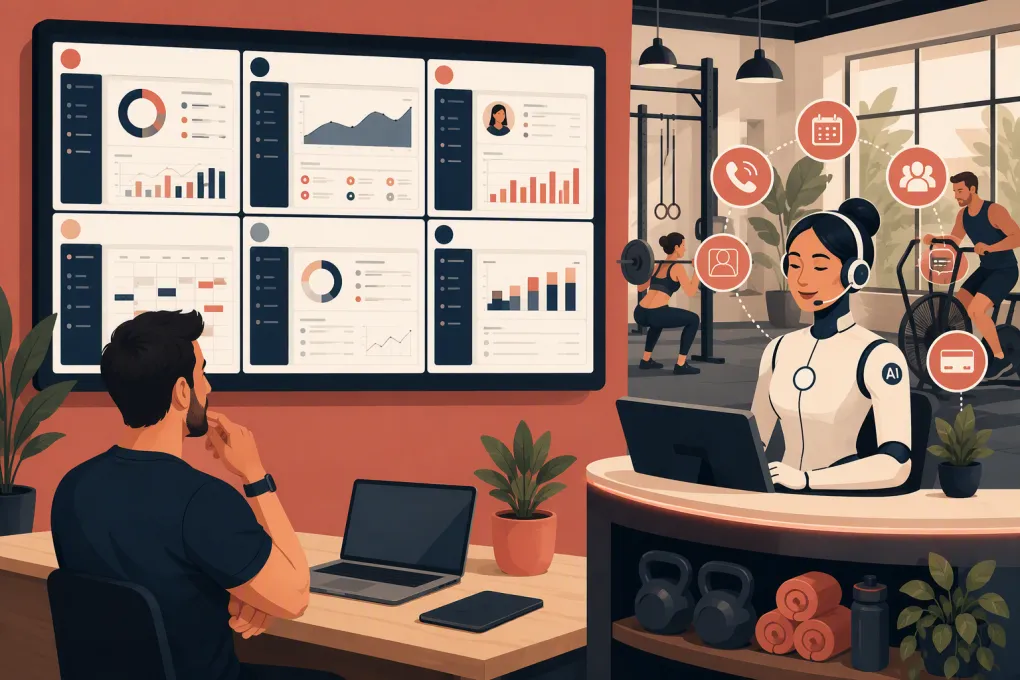
Fitty, WTF Go’s AI receptionist and agent, can answer leads, continue the qualification conversation, book classes, follow up, and escalate situations that need staff attention. That reduces the delay between an inquiry and a confirmed trial without asking instructors to monitor the phone during class.
The AI should work from approved school information: programs, schedules, locations, booking rules, policies, and escalation instructions. It should not improvise around injuries, contractual disputes, safeguarding concerns, or exceptions that require an owner’s decision.
See how Fitty turns martial arts lead replies into booked trial conversations →
Set clear rules for human handoffs
A strong workflow makes it obvious when automation must stop. Create staff alerts for situations such as:
- A prospect asks to speak with an instructor
- The inquiry mentions an injury or medical limitation
- A parent raises a safety or behavioral concern
- The requested program has no suitable availability
- A lead expresses frustration or confusion
- A prospect asks about contract cancellation or a billing dispute
- A high-intent lead repeatedly engages but does not book
Assign alerts to a role, not merely to a shared inbox. Each task should have an owner, a due time, and a visible status.
Staff also need a simple way to pause automation. If an instructor calls a parent and agrees to follow up Friday, the system should not continue sending unrelated booking prompts on Wednesday and Thursday.
Measure whether the workflow is working
Do not judge follow-up solely by the number of messages sent. Review the movement between pipeline stages:
- Inquiry-to-contact rate
- Contact-to-booking rate
- Trial confirmation rate
- Booked-to-attended rate
- No-show rebooking rate
- Attended-to-enrolled rate
- Median first-response time
- Leads requiring human intervention
- Opt-outs, failed deliveries, and unanswered conversations
Break results down by location, program, lead source, and staff owner. A weak conversion rate may indicate a follow-up problem, but it can also reveal poor lead quality, limited class availability, confusing trial offers, or an inconsistent in-person enrollment process.
Review actual conversation threads as well as dashboard totals. Threads reveal whether replies are helpful, repetitive, inaccurate, or too aggressive.
Launch the workflow without disrupting the school
Use a controlled rollout:
- Document the current trial process from inquiry through enrollment.
- Standardize pipeline stages and required fields.
- Verify schedules, program rules, and booking capacity.
- Write messages for the main triggers and common replies.
- Define AI boundaries and human escalation rules.
- Test every path using adult, child, booked, canceled, and no-show scenarios.
- Launch one program or location, review conversations, and then expand.
Before launch, confirm that forms capture appropriate consent, messages identify the business, and prospects have a clear way to opt out. Communication requirements can depend on the channel, consent method, message type, and applicable law, so obtain qualified legal guidance for your setup.
The goal is not to remove people from the enrollment process. It is to remove dead time, forgotten tasks, and inconsistent handoffs so instructors can focus on the conversations where their experience matters most.
Frequently asked questions
How quickly should a martial arts school follow up with a trial lead?
Respond as soon as possible with an acknowledgment and a clear next question. Automation or an AI receptionist can cover inquiries that arrive while staff are teaching or the school is closed.
Should trial follow-up use text, email, or phone calls?
Use the channels the prospect has consented to and monitor replies in one conversation record. Text is useful for short scheduling exchanges, while email can carry detailed instructions and staff calls can handle higher-context discussions.
How many times should a school follow up after a missed trial?
There is no universal number. Use a limited, spaced sequence, stop when the prospect opts out, and move unresponsive leads into appropriate long-term nurture rather than contacting them indefinitely.
Can AI book the correct martial arts class for a lead?
Yes, if it has accurate program, age, location, schedule, and capacity rules. Exceptions involving injuries, safety concerns, disputes, or unusual placement decisions should be escalated to staff.
Keep reading

Run your gym on autopilot with WTF Go
Fitty — your AI receptionist — answers calls and DMs, fills classes, follows up with every lead, and collects dues while you coach.