Retention
How to Automate Gym Member Win Back Campaigns That Work
Learn how to automate gym member win back campaigns with smart triggers, segmented messages, booking workflows, and practical guardrails for retention.
 Watch · 20s
A former member already knows your location, coaches, schedule, and brand. That makes reactivation a different job from lead generation—but not necessarily an easier one. Members leave for different reasons, and a generic discount blast rarely addresses the actual friction that caused them to stop.
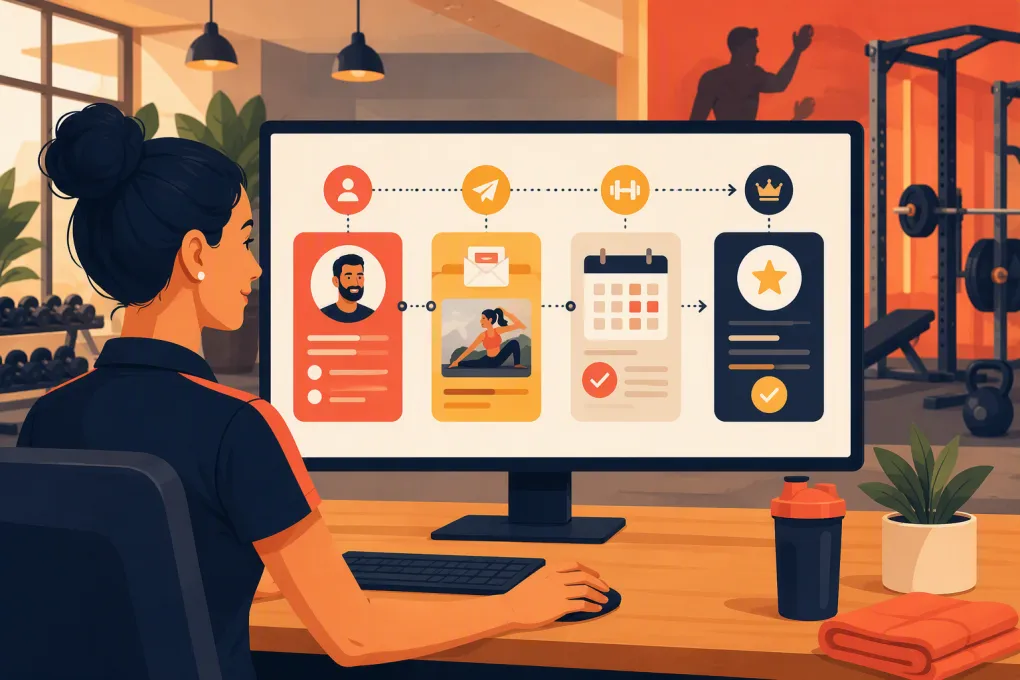
Learning how to automate gym member win back campaigns starts with building the right triggers, segments, conversations, and booking paths. The goal is not to send more messages. It is to identify the right former members, contact them with relevant reasons to return, and make the next step easy.
Done well, automation handles the repetitive work while your staff steps in for sensitive situations and high-value conversations. Done poorly, it repeatedly texts injured members, chases unresolved billing disputes, or keeps messaging someone after they have already booked.
See how Fitty can handle gym reactivation conversations and bookings 24/7 →
Define who actually belongs in a win-back campaign
Do not put every inactive contact into one workflow. An active member who has missed two weeks, a canceled member, an expired trial, and a member with failed payments require different actions.
Useful lifecycle groups include:
- At-risk active members: Still paying, but attendance has dropped below their normal pattern.
- Recently canceled members: Membership ended recently, with a known or unknown cancellation reason.
- Long-term former members: Canceled far enough in the past that schedule, pricing, or personal circumstances may have changed.
- Expired trials or intro offers: Participated but never converted to a recurring membership.
- Delinquent accounts: Access or membership ended because payment could not be collected.
Treat delinquent accounts carefully. The first workflow should resolve the account balance or payment method, not disguise a collections message as a promotional offer. Once the account is in good standing, the member can enter an appropriate reactivation path.
Clean the data that controls the automation
Automation magnifies bad data. Before launching, confirm that your membership platform or CRM can reliably provide the fields your workflow needs.
At minimum, use:
- Membership status and end date
- Last attended visit or class
- Former membership or service type
- Home location for multi-location businesses
- Cancellation reason, when available
- Preferred activities, instructors, or appointment types
- Email and SMS consent status
- Outstanding balance or unresolved dispute status
- Previous win-back contacts and outcomes
Create suppression rules as carefully as entry rules. Exclude people who opted out, requested no further contact, have an open complaint, are dealing with an injury or medical issue, or have already rejoined. Staff should also be able to pause automation manually from the contact record.
Build triggers around behavior, not one arbitrary date
A blanket campaign sent six months after cancellation ignores context. Better triggers reflect the member’s lifecycle and expected attendance pattern.
For an active member, use a meaningful change from normal behavior. A member who usually trains four times a week may need attention after a shorter absence than someone who normally attends twice a month.
For canceled members, trigger the workflow from the membership end date, then adjust the timing by cancellation reason:
- Schedule conflict: Re-engage when schedules change or new time slots become available.
- Price concern: Lead with a lower-commitment option, not the same membership they rejected.
- Moving: Suppress unless you have another relevant location or remote service.
- Injury or health pause: Require a respectful delay or staff review before contact.
- Poor experience: Route to an owner or manager instead of an automated sales sequence.
- No reason recorded: Ask a low-pressure question before presenting an offer.
The trigger should also define an exit condition. Remove the person when they reply, book, restart a membership, opt out, or require staff intervention.
Segment the message by the barrier to returning
Personalization is not inserting a first name. A useful message reflects what the member previously did and what may now be different.
For example:
Former group fitness member
Mention a relevant class format, an instructor they trained with, or a schedule update. Send them directly to the correct class calendar rather than your homepage.
Former personal training client
Offer a short conversation about goals, availability, and coaching needs. A consultation is usually a more appropriate next step than an open-gym pass.
Former spa or wellness member
Lead with the treatment or service category they used, current availability, and a direct appointment path. Avoid promoting unrelated services simply because they have open slots.
Price-sensitive cancellation
Present a legitimate alternative such as fewer visits, a limited schedule, or a different membership structure if your business offers one. Do not automatically train members to wait for a steep discount.
Member with an unknown cancellation reason
Start with a question: what would need to be different for returning to make sense? Their response can route the conversation to schedule, price, service recovery, or booking.
Create a short, multi-step win-back sequence
A practical campaign should have a clear progression rather than repeating the same promotion. The exact timing depends on your membership cycle and audience, but this structure is a useful starting point.
Step 1: Reopen the conversation
Send a brief email or text acknowledging the member’s previous relationship with the business. Give them a simple way to reply.
Example:
Hi Sam, we noticed it has been a while since your last class. Are schedule, motivation, or something else getting in the way? Reply here and we will help you find the best next step.
This message is more useful than pretending the member simply forgot the gym exists.
Step 2: Present a relevant reason to return
If there is no reply, follow with one concrete reason to reconsider: a class time that fits their former pattern, a new service, a lower-commitment option, or a return visit with a familiar coach.
Only claim changes that are real. Do not label an old schedule or standard membership as a special opportunity.
Step 3: Offer a direct booking action
Send the member to a specific class, consultation, appointment, or membership restart flow. Minimize required fields and avoid making former members submit a new-lead form.
Include the essential details in the message:
- What they are booking
- Available location
- Any cost or eligibility requirements
- What happens after booking
- How to ask a question
Step 4: Close the loop
The final message can ask whether the member wants to keep receiving updates or would prefer to pause. This creates a clean endpoint and gives you better preference data.
A response should stop scheduled promotional messages immediately. Continuing the sequence after someone asks a question makes the automation obvious in the worst way.
Automate the conversation after the reply
A scheduled sequence solves only part of the problem. Former members often respond after the front desk closes, then ask about class times, membership options, account balances, or whether a particular coach is available.
That is where an AI agent can do more than a basic drip campaign. Fitty, WTF Go’s AI receptionist, can answer questions, follow up, book classes, and help collect dues around the clock. The practical advantage is continuity: the member can move from initial interest to a booked action without waiting for the next staffed shift.
Set clear escalation rules for conversations involving complaints, injury, cancellation disputes, unusual billing issues, or requests outside approved policies. AI should handle repeatable workflows; management should handle judgment calls.
See how Fitty turns win-back replies into booked classes and resolved next steps →
Use offers without undermining your pricing
A discount is one possible tool, not the foundation of a win-back strategy. Before reducing price, test whether the real barrier is schedule, uncertainty, accountability, or commitment length.
Build an offer ladder from lowest to highest concession:
- A relevant schedule or service update
- A conversation with a coach or membership advisor
- A return visit, assessment, or consultation
- A different membership structure already offered by the business
- A time-limited incentive with clear terms
Set eligibility rules so the same person cannot repeatedly cancel and rejoin through promotional pricing. Also define whether the offer applies to unpaid balances, initiation fees, or specific membership types. Staff and automation must communicate the same terms.
Measure return behavior, not message activity
Open rates and clicks can help diagnose messaging, but they do not prove the campaign generated retained members. Track outcomes through the full workflow:
- Eligible former members entering the campaign
- Deliverable contacts by channel
- Replies and conversation outcomes
- Return visits or consultations booked
- Booked visits actually attended
- Memberships restarted
- Dues successfully collected
- Discounts, waived fees, refunds, and staff intervention
- Retention after reactivation at intervals appropriate to your membership model
Use consistent definitions. Decide whether reactivation means booking a visit, attending, purchasing, or restarting recurring billing. For most operators, these should be separate funnel stages.
When possible, compare different messages or offers among similar segments. Change one major variable at a time so you can tell whether the audience, timing, message, or incentive affected the result.
Protect consent and member trust
Automated win-back campaigns still have to follow applicable communication rules. Maintain accurate SMS consent records, honor opt-outs promptly, identify commercial email appropriately, and include required unsubscribe mechanisms. US operators should review their workflows for compliance with laws such as the Telephone Consumer Protection Act and CAN-SPAM Act, along with applicable state requirements.
Do not treat an old phone number in your database as unlimited permission to send promotional texts. Work with qualified counsel when establishing your consent language and messaging policies.
Launch with a controlled checklist
Before activating the workflow for your full database:
- Test it with internal contacts.
- Confirm every trigger and suppression rule.
- Click every booking and payment link on mobile.
- Verify replies reach a monitored inbox or AI agent.
- Test booking, cancellation, opt-out, and rejoin exit conditions.
- Document when staff must take over.
- Start with one well-defined former-member segment.
- Review conversations weekly and refine the routing.
The strongest win-back system does not feel like a campaign. It feels like a relevant, timely conversation with an easy route back into the business.
Explore WTF Go for automated member follow-up, booking, and dues collection →
Frequently asked questions
When should a gym start a member win-back campaign?
Start from a meaningful lifecycle event, such as reduced attendance, membership expiration, or cancellation. Adjust timing based on normal visit frequency and the recorded reason the member left.
Should every canceled gym member receive the same offer?
No. Segment members by cancellation reason, previous service, location, account status, and behavior. A schedule conflict requires a different message from a pricing concern or unresolved complaint.
Do gym win-back campaigns need to include a discount?
No. Schedule updates, consultations, lower-commitment options, and relevant return visits may address the barrier without reducing price. Use discounts selectively with clear eligibility rules.
What should stop an automated win-back sequence?
Stop it when the member replies, books, rejoins, opts out, opens a sensitive complaint, or needs staff assistance. Automated messages should never continue after the workflow's objective has been reached.
Can AI automate gym member reactivation conversations?
Yes. An AI receptionist can answer common questions, follow up, route members to appropriate options, and book the next step. Complaints, injuries, disputed charges, and policy exceptions should escalate to staff.
Keep reading
Run your gym on autopilot with WTF Go
Fitty — your AI receptionist — answers calls and DMs, fills classes, follows up with every lead, and collects dues while you coach.