AI & Automation
How to Automate Fitness Studio Intro Offer Follow-Up Properly
Learn how to automate fitness studio intro offer follow-up with timely texts, emails, task rules, and AI that turns trial interest into new memberships.
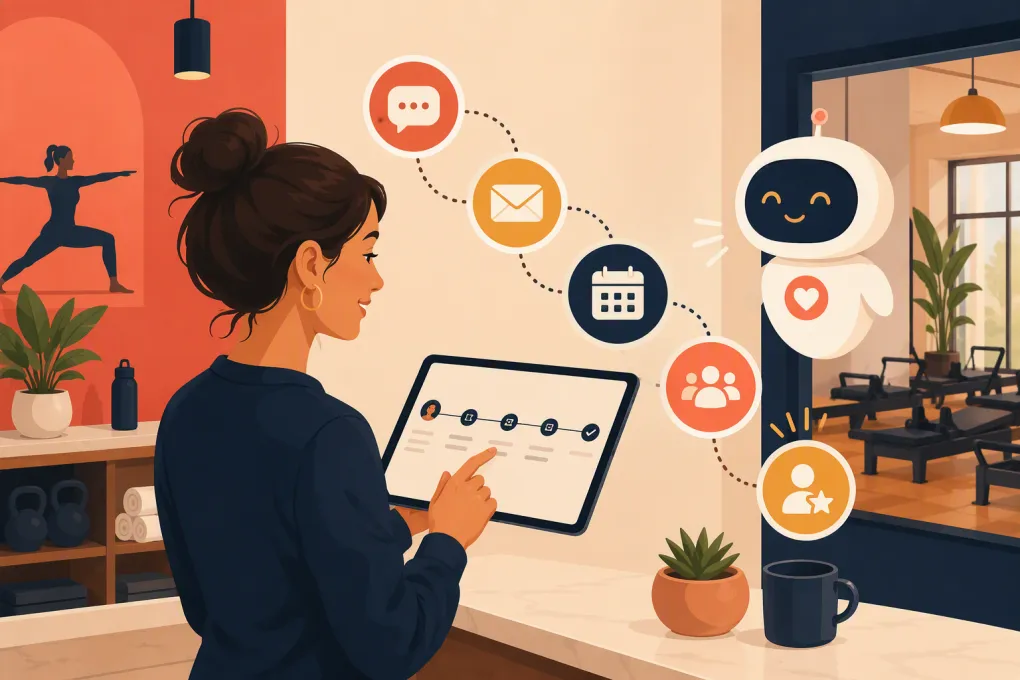 Watch · 20s
An intro offer does not convert someone into a member by itself. It creates a short window in which your studio can help a prospect book, show up, experience progress, and choose what comes next. When follow-up depends on an owner remembering to send texts between classes, too many prospects reach the end of that window without a clear next step.
The answer is not a generic email drip. Effective intro offer automation responds to what each person actually does: purchasing, booking, attending, canceling, going quiet, or asking a question.
See how Fitty handles studio follow-up while your team coaches →
What intro offer follow-up should accomplish
Every message in the workflow should move the prospect toward one of four operational milestones:
- Book the first visit.
- Attend consistently enough to experience the studio.
- Resolve questions or obstacles before the offer expires.
- Select the appropriate ongoing membership or package.
That is different from repeatedly reminding someone that a membership is available. Strong follow-up reduces friction first and sells second.
For example, a prospect who purchased but never booked probably needs scheduling help. Someone who attended three times may need a recommendation based on their goals. A no-show needs an easy way to rebook, not a standard promotional email.
Start with clean statuses and triggers
Automation is only as reliable as the data controlling it. Before writing messages, define the stages that matter in your customer journey.
A practical intro offer pipeline can include:
- Intro offer purchased, no visit booked
- First visit booked
- First visit attended
- No-show or late cancellation
- Active intro participant
- Approaching offer expiration
- Intro offer expired
- Converted to membership
- Opted out or disqualified
Your booking and CRM system should update these stages from actual customer behavior whenever possible. If employees must manually move every contact, the automation will eventually fall behind.
Identify the events your system can detect
Useful triggers include:
- Form submitted
- Intro offer purchased
- Class or appointment booked
- Attendance recorded
- Visit canceled
- Customer marked as a no-show
- A set period with no booking or attendance
- Offer expiration approaching
- Membership purchased
- Text or email reply received
The most important trigger is the conversion event. As soon as someone purchases a full membership, all intro-offer sales messages should stop. Nothing makes automation feel more careless than asking a new member to join again.
Build separate paths instead of one long campaign
A single sequence cannot account for the different ways people use an intro offer. Build short, behavior-based paths that hand contacts from one stage to the next.
Path 1: Purchased but not booked
Send an immediate confirmation that explains what was purchased, when it expires, and how to book. Keep the primary action simple.
Hi [First name], your intro offer is ready. The next step is choosing your first class. You can book here: [Booking link]. If you want help picking the right class, reply with your goal or preferred time.
If the customer has not booked by the next appropriate contact window, send a second message offering help rather than repeating the link.
Want help choosing your first session? Tell us whether mornings, evenings, or weekends work best, and we’ll narrow it down.
The automation should stop when the person books or replies. A reply needs a real response, either from an employee or an AI agent that can access current availability.
Path 2: Booked but not yet attended
Once a visit is booked, switch from selling to preparation. Confirm practical details such as:
- Arrival time
- Parking or entrance instructions
- What to wear or bring
- Cancellation policy
- How to contact the studio
Avoid stacking marketing texts on top of standard booking reminders. Customers should not receive three messages from different systems about the same class.
Path 3: First visit completed
Attendance should trigger a short check-in. Send it while the experience is still relevant, but avoid pretending the message is personal if it is automated.
Thanks for joining us today, [First name]. How did the session feel? Reply here if you have any questions. When you’re ready, your next class options are available at [Booking link].
A reply such as I loved it, my knee hurt, or which class should I take next should leave the automated path and become a conversation. This is where responsive automation has more value than a scheduled email series.
Path 4: No-show or cancellation
Do not treat a missed visit as rejection. Work schedules, childcare, nerves, and simple calendar mistakes all interfere with first visits.
Send a neutral rebooking prompt:
We missed you at today’s class. You can choose another time here: [Booking link]. If you’re unsure which session to book, reply and we’ll help.
If the person has repeatedly booked and missed, create a staff task rather than continuing the same sequence indefinitely.
Path 5: Active but approaching expiration
Near the end of the offer, summarize progress and present the next logical option. Use attendance and stated goals where available.
A person who has attended regularly can receive a direct membership recommendation. Someone who barely used the offer may need a conversation about scheduling or fit before receiving a sales pitch.
Never use a fake deadline. Reference the real expiration date and explain what will happen next.
Use Fitty to answer intro-offer questions, book the next visit, and keep conversations moving 24/7 →
Coordinate text, email, calls, and staff tasks
Automation does not mean every touchpoint must be a text. Assign each channel a clear job.
Text messaging
Use text for actions that are immediate and easy to complete:
- Booking the first visit
- Rebooking after a missed class
- Answering a short question
- Reminding someone about a genuine deadline
Keep messages concise and provide one primary action.
Email works better when more context is useful, such as:
- First-visit preparation
- Instructor or service introductions
- An explanation of membership options
- Policies and frequently asked questions
- A recap of available next steps
Calls
Create a call task when the situation warrants a human conversation. Common examples include an unresolved concern, repeated no-shows, an injury question, a high-intent prospect who requested a call, or a customer deciding between options.
Internal tasks
Automation should also tell employees what to do. A task might ask the front desk to welcome a first-timer, prompt a coach to record a goal, or alert a manager that a prospect replied with a billing concern.
Add AI where a decision or conversation is required
Traditional automation is good at sending a predetermined message after a predetermined event. It is less useful when a prospect responds with an actual question.
An AI receptionist such as Fitty can bridge that gap by:
- Answering common questions outside staffed hours
- Checking class availability
- Helping prospects book
- Following up when the next step is incomplete
- Routing sensitive or unusual requests to an employee
- Assisting with dues collection workflows
This matters because interest does not follow your front-desk schedule. A prospect may reply after an evening class, during an early commute, or while your only employee is coaching.
The AI still needs guardrails. Define which policies it may explain, when it must escalate, which services it can book, and what it should never promise. Review conversations regularly to find missing information and recurring objections.
Set stop rules before activating the workflow
Every sequence needs suppression and exit logic. At minimum, stop or pause automation when:
- The prospect buys a membership
- The prospect opts out
- The person replies and needs a response
- An employee takes ownership of the conversation
- Contact information is invalid
- The offer is refunded or canceled
- A complaint, injury, or sensitive issue is raised
Set reasonable contact windows and frequency limits across all campaigns. Your intro sequence should be aware of booking reminders, newsletters, failed-payment messages, and other automated communications.
You must also obtain appropriate consent and honor opt-out requests. US operators should account for applicable text, calling, and email requirements, including the TCPA and CAN-SPAM Act. State rules and individual circumstances can differ, so obtain legal guidance for your business rather than treating software settings as legal advice.
Measure the journey, not just message engagement
Open and click activity can help diagnose a message, but the real operational metrics are downstream actions.
Track:
- Intro offer purchase-to-first-booking rate
- First-booking-to-attendance rate
- No-show and cancellation outcomes
- Average visits during the offer
- Percentage of participants who reach the membership conversation
- Intro offer-to-membership conversion rate
- Time from purchase to first visit
- Replies requiring staff intervention
- Opt-outs and message failures
Break the results down by offer, location, service type, lead source, and instructor where the data is reliable. That can show whether the problem is follow-up or something deeper, such as limited class availability, unclear offer terms, or a weak first-visit experience.
Review individual conversations as well as aggregate metrics. If prospects repeatedly ask whether beginners are welcome, for example, add that information to the offer page and first message. Automation should help improve the entire journey, not merely send more reminders.
A practical implementation checklist
Before turning the workflow on, confirm that you have:
- One clearly defined intro offer and expiration rule
- Accurate booking, attendance, and purchase data
- Separate paths for no booking, attendance, no-show, and expiration
- Direct links to the relevant booking or purchase page
- A clear owner for escalated conversations
- Conversion and opt-out stop rules
- Channel-wide frequency controls
- Consent and unsubscribe handling
- Test contacts for every possible path
- A recurring process for reviewing results and conversations
Run internal tests using different scenarios. Purchase the offer without booking, book and cancel, mark a test contact as attended, submit a reply, and complete a membership purchase. Confirm that each action starts the correct path and stops the previous one.
Make follow-up part of the operating system
The best intro offer follow-up is not a collection of disconnected campaigns. It is part of the same system that manages leads, schedules visits, records attendance, handles conversations, and recognizes when a prospect becomes a member.
WTF Go brings those operating workflows together, while Fitty handles the repetitive front-line conversations that otherwise wait for an employee. Your team can focus on coaching and the in-studio experience without leaving new prospects to navigate the intro offer alone.
See how WTF Go can automate your studio’s intro offer journey from first inquiry to membership →
Frequently asked questions
How soon should a studio follow up after an intro offer purchase?
Send the confirmation and booking instructions immediately. Later messages should depend on behavior, such as whether the customer books, attends, cancels, or replies.
Should intro offer follow-up use text or email?
Use both for different purposes. Text is effective for immediate actions and conversations, while email is better for detailed preparation, policies, and membership information.
When should automated intro offer messages stop?
Stop them when the prospect converts, opts out, requires human assistance, or is no longer eligible for the offer. A reply should also pause one-way reminders until the question is handled.
Can AI handle fitness studio intro offer follow-up?
Yes. An AI receptionist can answer common questions, help prospects book, and continue follow-up outside staffed hours, with clear escalation rules for sensitive or complex issues.
What is the most important intro offer metric?
Track intro offer-to-membership conversion, but diagnose it through earlier milestones such as first booking, attendance, repeat visits, and completed membership conversations.
Keep reading
Run your gym on autopilot with WTF Go
Fitty — your AI receptionist — answers calls and DMs, fills classes, follows up with every lead, and collects dues while you coach.