Guides
How to Audit Missed Calls at a Med Spa: Practical Guide
Learn how to audit missed calls at a med spa, uncover revenue leaks, score follow-up, and build a callback workflow that converts inquiries into bookings.
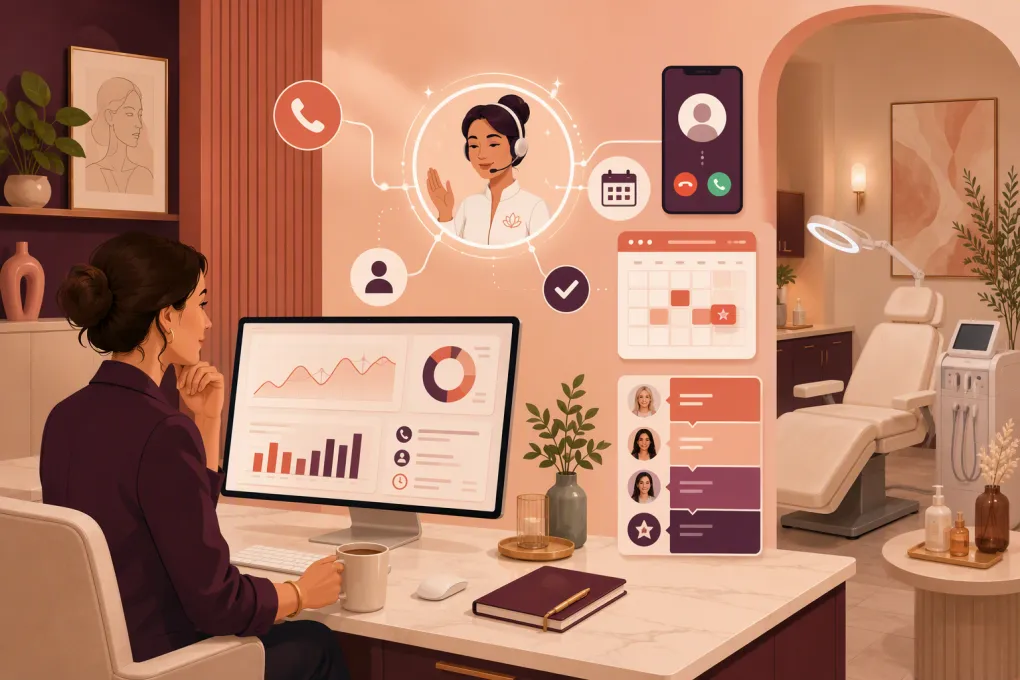 Watch · 20s
A missed call report tells you how many calls went unanswered. A missed call audit tells you what happened next—and whether your med spa recovered the opportunity.
That distinction matters. Some callers leave a voicemail and book later. Others call back, submit a form, or reach another location. But many disappear because nobody responds quickly, ownership is unclear, or the front desk marks a callback complete without recording an outcome.
A useful audit connects each missed call to the caller, response, conversation, booking status, and eventual revenue. It also reveals why calls are being missed in the first place.
See how Fitty handles unanswered med spa inquiries and follows up 24/7 →
Start by defining what counts as a missed call
Do not rely on a dashboard label until you understand how the system assigns it. Phone carriers, tracking platforms, and practice software may classify calls differently.
For your audit, separate these call types:
- Unanswered call: The phone rang but no person or automated agent answered.
- Voicemail: The caller reached voicemail, whether or not they left a message.
- Abandoned call: The caller disconnected while waiting or during a menu.
- Short hangup: A call that ended almost immediately. This could be spam, a wrong number, or an impatient prospect.
- After-hours call: A call received outside the location’s published answering hours.
- Overflow call: A call missed because staff were already handling other calls or guests.
- Failed transfer: Someone answered, but the caller disconnected or reached voicemail during a transfer.
- Repeat attempt: The same caller tried again within the audit period.
Document the exact definition you use. Otherwise, your next audit may appear better or worse simply because someone changed a filter.
Choose a useful audit window
A rolling 30-day window is usually practical for an initial review. It includes enough weekday, weekend, promotion, and staffing variation to expose patterns without creating an unmanageable project.
You may also want to audit a specific period if it included:
- A large advertising campaign
- A new service launch
- A holiday promotion
- Staff turnover or schedule changes
- A phone system migration
- An open house or event
Compare similar periods when possible. A week with limited holiday hours is not a clean benchmark for a normal operating week.
Gather the source data
Export call-level records rather than copying totals from a dashboard. Each row should represent one inbound call and include as many of these fields as your systems provide:
- Date and time
- Caller number or unique contact ID
- Location and dialed number
- Marketing source or tracking number
- Call status
- Ring duration and call duration
- Queue, extension, or staff member
- Voicemail status
- Recording link, where legally permitted
- First callback time
- Callback owner
- Contact outcome
- Consultation or appointment booked
- Service of interest
- Appointment status
- Collected revenue, if available and appropriate
Pull records from the phone provider, call-tracking platform, CRM, booking system, and any shared inbox used for texts or voicemails.
Reconcile the phone log against the CRM. A caller may appear as missed in the phone system but as booked in the CRM under a different channel. Use phone number, timestamp, name, and email to match records, but avoid treating one field as infallible.
Build a missed-call audit sheet
Create one row per unique missed-call event. If the same person calls repeatedly about the same need, preserve every attempt but group them under one contact ID.
Use these audit columns:
| Field | What to record |
|---|---|
| Call classification | Unanswered, voicemail, abandoned, short hangup, overflow, or failed transfer |
| Caller type | New lead, existing patient, vendor, spam, or unknown |
| Service intent | Injectable consultation, facial, laser service, membership, rescheduling, billing, or other |
| First response time | Time from the missed call to the first genuine response attempt |
| Response channel | Call, text, email, or automated conversation |
| Attempts | Number and timing of follow-up attempts |
| Contact made | Yes or no |
| Outcome | Booked, nurturing, not interested, wrong fit, existing-patient request, spam, or unresolved |
| Booking status | Scheduled, completed, canceled, or no-show |
| Root cause | After-hours, understaffed, long hold, transfer issue, routing failure, or unknown |
| Owner | Person or system responsible for the next action |
Use controlled dropdown values instead of free-form notes wherever possible. Consistent labels make the findings easier to filter and compare.
Measure the full recovery funnel
The missed-call rate alone is not enough. A med spa can miss calls but recover them effectively, or answer most calls while failing to convert qualified inquiries.
Track these operational measures:
- Missed-call rate: Missed inbound calls divided by eligible inbound calls.
- Unique missed callers: The number of distinct people, excluding known spam and duplicates.
- First-response time: The elapsed time before the first meaningful follow-up attempt.
- Contact rate: Missed callers who later had a two-way conversation divided by unique missed callers.
- Booking rate: Qualified missed-call leads who booked divided by qualified missed-call leads.
- Unresolved rate: Missed callers with no final outcome or next step.
- Appointment completion: Booked missed-call leads who attended their appointments.
- Recovered revenue: Collected revenue tied to missed callers who were recovered through follow-up.
Define “meaningful follow-up” carefully. An unanswered callback with no message, text, or next attempt should not be treated as a completed recovery.
Be equally careful with revenue projections. Use your own collected revenue and service mix. Do not multiply every missed call by a headline treatment price; many calls are existing-patient requests, vendors, poor-fit inquiries, or spam.
Review calls for quality, not just speed
Fast follow-up does not help if the conversation is confusing or careless. Review a sample of recordings and message threads, subject to applicable recording, consent, and privacy requirements.
Score each interaction on a simple yes/no or consistent rating scale:
- Was the business and staff member clearly identified?
- Did the responder confirm what the caller wanted?
- Were questions answered accurately without making clinical claims?
- Was the caller offered a specific next step?
- Were available times presented clearly?
- Were objections or hesitations acknowledged?
- Was permission captured for text or future follow-up where required?
- Was the outcome recorded in the CRM?
- Was a follow-up task created when the caller did not book?
Keep administrative and clinical conversations separate. Front-desk staff or AI agents can explain availability, logistics, consultation requirements, and general service information. Diagnosis, treatment recommendations, contraindication decisions, and medical advice should go to an appropriately licensed professional.
Find where missed calls are coming from
Once every call has an outcome, segment the data. Overall averages often hide the actual operational failure.
By hour and day
Look for calls missed during lunch coverage, shift changes, opening and closing periods, evenings, and weekends. The fix may be scheduling or overflow coverage rather than more front-desk training.
By marketing source
Separate calls from paid search, social campaigns, organic search, referrals, maps listings, and offline promotions when tracking permits. If a campaign drives calls when nobody is available, the media and front-desk plans are working against each other.
By location
For multi-location med spas, compare routing rules and recovery processes—not just raw totals. One location may receive more calls but maintain clearer ownership and better follow-up.
By service intent
High-consideration services may require multiple conversations before booking. Routine appointment requests may fail because the caller cannot get a quick answer about availability. Different intent requires different follow-up.
By root cause
Tag the operational reason for every miss you can verify. Common causes include simultaneous calls, unanswered transfers, incorrect schedules, disabled forwarding, full voicemail boxes, unavailable staff, and calls arriving outside staffed hours.
Turn findings into a recovery workflow
An audit is only useful if it changes what happens after the next missed call. Build a documented workflow with clear triggers and owners.
A practical sequence could include:
- Send an immediate acknowledgment by an approved channel.
- Identify whether the caller is a new lead or existing patient.
- Ask what service or request they are calling about.
- Answer non-clinical questions and offer relevant appointment times.
- Route clinical or sensitive questions to the correct team member.
- Schedule another attempt if the caller does not respond.
- Record every attempt and outcome in one system.
- Close the lead only with a defined disposition and reason.
Set response targets based on your staffing and published availability. The rule should be specific enough to enforce. “Call back quickly” is not an operating standard; “the assigned owner completes the first response within the defined coverage window” is measurable.
See how WTF Go centralizes lead conversations, booking, and follow-up →
Use automation without creating a compliance problem
Automation can eliminate delays caused by busy treatment rooms, simultaneous calls, and after-hours inquiries. Fitty, WTF Go’s AI receptionist, can answer leads, handle routine questions, help book appointments, and continue follow-up when the front desk is unavailable.
The goal is not to let an AI improvise medical guidance. Configure guardrails around:
- Approved service descriptions
- Current hours and location details
- Booking rules and consultation requirements
- Questions that require staff escalation
- Emergency-language routing
- Consent and communication preferences
- Data retention and access controls
Med spas should also evaluate whether vendors handling protected health information will sign an appropriate business associate agreement and support the organization’s privacy obligations. Call-recording and automated-texting rules can vary by jurisdiction and use case, so involve qualified counsel when setting policy.
See how Fitty can cover after-hours calls without stepping into clinical advice →
Repeat the audit and assign accountability
Run the audit on a regular schedule and assign one operator to own it. That person does not need to make every callback, but they should verify that queues are reviewed, unresolved leads have owners, and recurring routing failures are fixed.
Use a short recurring review:
- Which missed callers remain unresolved?
- Which time blocks generate the most recoverable misses?
- Which sources send qualified calls outside coverage hours?
- Which location or queue has routing problems?
- Which conversations need coaching?
- Which booking objections need better scripts or information?
- Did recovered appointments actually complete?
A missed-call audit should leave you with more than a percentage. It should show who called, why they called, what your team did, whether they booked, and what process needs to change. That is the difference between monitoring phone activity and operating a reliable lead-conversion system.
Frequently asked questions
How often should a med spa audit missed calls?
Review unresolved missed calls frequently and conduct a deeper audit on a recurring monthly or quarterly schedule. Audit again after campaigns, staffing changes, or phone-system updates.
What is the most important missed-call metric?
No single metric is sufficient. Track first-response time, two-way contact, booking outcome, unresolved calls, and completed appointments together.
Should short hangups be included in a missed-call audit?
Yes, but classify them separately. Some are spam or wrong numbers, while repeated short calls from the same number may indicate routing or wait-time problems.
Can an AI receptionist answer med spa calls?
An AI receptionist can handle routine questions, lead qualification, scheduling, and follow-up when properly configured. Clinical advice and treatment decisions should be escalated to appropriately licensed staff.
How can a med spa estimate revenue lost from missed calls?
Use actual qualified leads, booking outcomes, completed appointments, and collected revenue from your own systems. Avoid assigning every missed call the full advertised price of a treatment.
Keep reading

Run your gym on autopilot with WTF Go
Fitty — your AI receptionist — answers calls and DMs, fills classes, follows up with every lead, and collects dues while you coach.