Growth & Marketing
Gym Missed Call Text Back Template: Scripts That Convert
Use this gym missed call text back template to reply faster, qualify leads, book tours and classes, and automate follow-up without sounding too robotic.
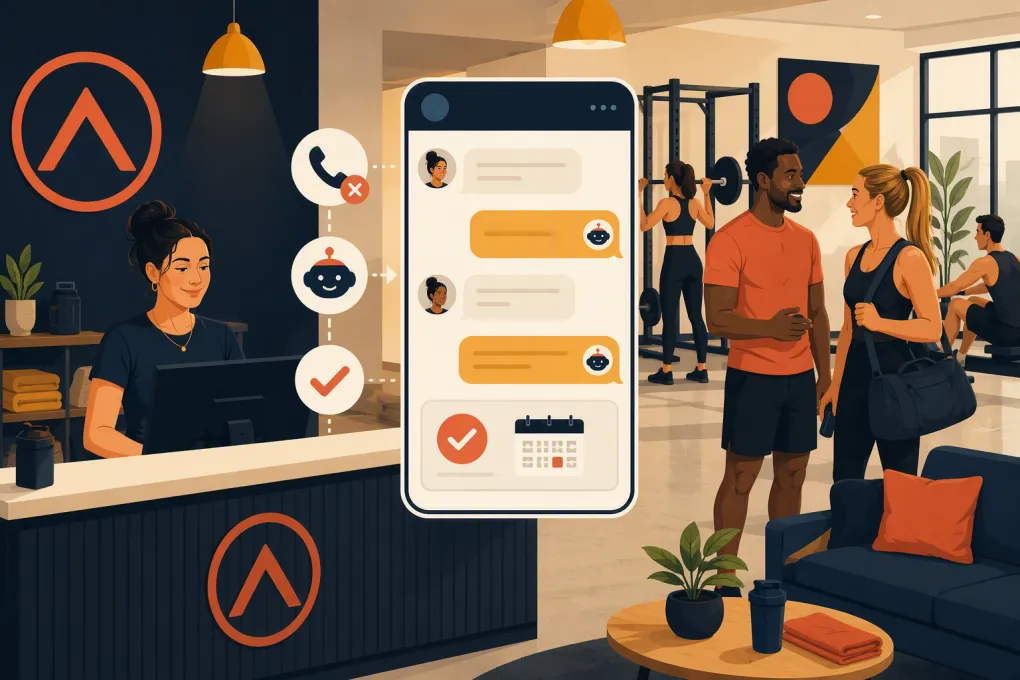 Watch · 20s
A missed call is not automatically a lost lead. It is an unfinished conversation—but only if your gym responds while the caller still remembers why they reached out.
The problem is operational. Your staff may be coaching, checking in members, cleaning equipment, handling a billing question or closing the facility. By the time someone checks voicemail, the caller may have contacted another gym.
A useful missed-call text does three things: identifies your business, acknowledges the call and gives the person an easy next step. It should not read like a generic autoresponder or force every caller through the same sales pitch.
See how Fitty responds to missed gym calls and keeps the conversation moving →
The best all-purpose gym missed call text back template
Use this as the starting point for most new or unidentified callers:
Hi [First name], this is [Name] from [Gym name]. Sorry we missed your call. Are you looking to try a class, ask about membership or get help with something else? Reply here and I’ll help. Reply STOP to opt out.
If the message comes from an automated assistant, say so clearly:
Hi [First name], this is Fitty, the virtual assistant for [Gym name]. We missed your call, but I can help here. Are you interested in a class, membership or account support? Reply STOP to opt out.
This works because it does not assume every caller is a lead. Existing members, vendors, job applicants and parents calling about youth programs may use the same phone number.
The multiple-choice structure also reduces effort. The caller can answer with a few words instead of composing a detailed explanation.
Gym missed call text templates for common situations
One template will not cover every call. Build a small library around the situations your front desk handles most often.
New lead with no voicemail
Hi [First name], this is [Name] at [Gym name]. We just missed your call. Were you looking for membership details, a trial or a specific class? Reply here and I can point you in the right direction. Reply STOP to opt out.
Do not lead with a long pricing explanation or an unqualified booking link. Find out what the person wants first.
After-hours caller
Hi [First name], this is [Name/Fitty] from [Gym name]. We’re currently closed, but I can still help. Are you looking to book a visit, check the schedule or ask about membership?
If your system can book accurately outside business hours, continue the conversation. If a staff member must take over, set a realistic expectation:
Thanks—our membership team will review this when we reopen at [time]. Is text the best way to reach you?
Avoid promising a callback at a specific time unless your team can consistently deliver it.
Caller interested in a trial or first class
We’d be glad to help you get started. Are you more interested in [option one] or [option two], and which day usually works best?
Once the lead answers, offer one or two appropriate times rather than dropping the entire schedule on them:
Based on that, [class/time] or [class/time] could work well. Which would you prefer?
A booking link can still be useful, but it should support the conversation rather than replace it.
Caller asking about membership pricing
Happy to help. Pricing depends on the membership or program you choose. Are you mainly looking for open-gym access, coached classes or personal training?
Then answer the actual question. Do not hide basic pricing behind an unnecessary tour if your gym publishes it. If the plan needs explanation, give a concise range of options without inventing urgency or using bait pricing.
Existing member requesting help
Hi [First name], this is [Name] from [Gym name]. Sorry we missed you. Is this about your membership, a booking, billing or something else?
Move sensitive or complicated issues to an authenticated channel or staff member. A missed-call text should not expose payment details, medical information or private account data.
Caller left a voicemail
Hi [First name], this is [Name] from [Gym name]. We received your voicemail about [topic]. I can help with that here. Would you prefer [relevant option A] or [option B]?
Referencing the voicemail proves that someone—or a properly configured system—understood the request. Do not ask the caller to repeat information you already have.
No response to the first text
A short follow-up can reopen the conversation:
Hi [First name], checking back in case you still need help with [class/membership/topic]. I can answer questions or help you find a time to visit. Reply STOP to opt out.
If there is still no response, close the loop respectfully:
I’ll close this out for now, but you can reply here anytime if you’d like help with [Gym name]. Reply STOP to opt out.
Repeated daily nudges turn a useful service message into noise. Use a defined follow-up limit and stop when the person opts out.
What every missed-call text should include
A strong template has five parts:
- The caller’s name, when reliably available. Do not use a guessed name or a bad contact-field merge.
- Your gym’s identity. People may have called several businesses.
- A direct reference to the missed call. This gives the message context.
- One easy question. Ask what you need to determine the next action.
- Clear opt-out language. This is particularly important when messages and follow-ups are automated.
Keep the first message focused. A caller does not need your full membership menu, class schedule, waiver, app link and sales pitch in one text.
How to automate missed-call text back correctly
Automation should eliminate delay without eliminating judgment. A practical workflow looks like this:
- A call goes unanswered or reaches voicemail.
- The system checks whether the number belongs to a lead, member or unknown caller.
- It excludes known spam, blocked contacts and people who have opted out.
- An appropriate text is sent promptly using the location’s correct identity.
- The reply is classified by intent, such as trial, pricing, schedule, billing or cancellation.
- The system answers approved questions, offers relevant availability or routes the conversation to staff.
- Every message, booking and handoff is recorded in the contact history.
- A limited follow-up sequence runs only when appropriate.
For multi-location operators, location awareness is essential. The reply should use the correct facility name, schedule, services, availability and escalation contact. A caller asking about Pilates in one location should not receive a booking link for another market.
WTF Go brings calling, messaging, lead management and booking workflows into one operating system. Fitty, its AI receptionist, can answer missed-call texts, identify what the caller needs, respond to common questions and move qualified prospects toward a class or appointment—even when the desk is unattended.
See how Fitty turns missed calls into bookable gym conversations →
Where basic autoresponders break down
A basic missed-call tool can send a canned text. That is better than leaving a caller with no response, but it still puts the work back on your staff.
Common failure points include:
- Sending the same sales message to members and prospects
- Asking questions already answered in the voicemail
- Sharing a generic homepage instead of a relevant next step
- Offering classes that are full, unsuitable or at the wrong location
- Continuing to text after a staff member has taken over
- Failing to record the conversation in the lead or member profile
- Letting replies sit unanswered after the initial automated message
The real goal is not to send a text. It is to resolve the caller’s intent. That may mean booking an intro, answering a schedule question, collecting enough information for staff or confirming when a manager will follow up.
Build a clean human handoff
Automation needs an exit ramp. Define which conversations Fitty or another system can complete and which require a person.
Escalate when the caller:
- Disputes a charge
- Requests cancellation or discusses a contract issue
- Reports an injury, safety concern or incident
- Is angry or repeatedly asks for a manager
- Needs an exception outside approved policies
- Asks a question the system cannot answer confidently
The handoff should include the caller’s name, intent, conversation history and requested next step. Staff should not make the caller start over.
Explore an AI receptionist built around gym follow-up, booking and member workflows →
Track outcomes, not just text volume
Review missed-call performance by location and time of day. Useful measures include:
- Total missed calls
- Texts successfully delivered
- Callers who replied
- Conversations that required staff
- Tours, trials, classes or appointments booked
- Booked prospects who attended
- Opt-outs and delivery failures
- Common questions the system could not resolve
Also listen to the operation behind the numbers. A surge in missed calls during a particular class block may indicate a staffing or call-routing issue. Repeated questions about parking, pricing or class preparation may mean your website and pre-visit communication need improvement.
Texting compliance and customer trust
Business texting is subject to federal and state requirements, carrier rules and platform policies. The details depend on how numbers were collected, the message purpose and whether communication is automated. Get qualified legal advice for your specific program rather than treating a template as compliance guidance.
At a minimum, operators should:
- Clearly identify the business
- Maintain records of consent where required
- Honor STOP and other opt-out requests promptly
- Use reasonable messaging hours based on the recipient’s time zone
- Keep marketing follow-ups separate from necessary service communication
- Secure account and payment information
- Use properly registered business messaging channels where applicable
- Train staff not to restart conversations with opted-out contacts
A missed-call text should feel like assistance requested by the caller—not an excuse to add the number to an endless promotion list.
The best template is therefore only part of the system. Fast response, accurate routing, useful answers, clean booking and disciplined follow-up are what turn an unanswered ring into a real customer conversation.
Frequently asked questions
How quickly should a gym send a missed-call text?
Send it promptly while the call is still relevant. An automated workflow can respond immediately, while also checking opt-out status, caller type and location.
Should a missed-call text include a booking link?
Include one when the caller’s intent and the correct service are clear. Otherwise, ask a short qualifying question first so you do not send an irrelevant schedule or location.
How many times should a gym follow up after a missed call?
Use a limited, documented sequence rather than texting indefinitely. Stop when the caller opts out, says they are not interested or the matter has been resolved.
Can an AI receptionist answer gym missed-call texts?
Yes. A gym-focused AI receptionist such as Fitty can identify intent, answer approved questions, help with booking and hand complicated or sensitive issues to staff.
Do missed-call texts need opt-out language?
Automated business texting can trigger federal, state, carrier and platform requirements. Clear identification and opt-out handling are important, but an operator should get legal guidance for its specific messaging program.
Keep reading

Run your gym on autopilot with WTF Go
Fitty — your AI receptionist — answers calls and DMs, fills classes, follows up with every lead, and collects dues while you coach.