Comparisons
Breathwork Facilitator Booking Software: A Buyer's Guide
Compare breathwork facilitator booking software features for scheduling, waivers, payments, follow-up, and growth—then choose the right operating system.
 Watch · 20s
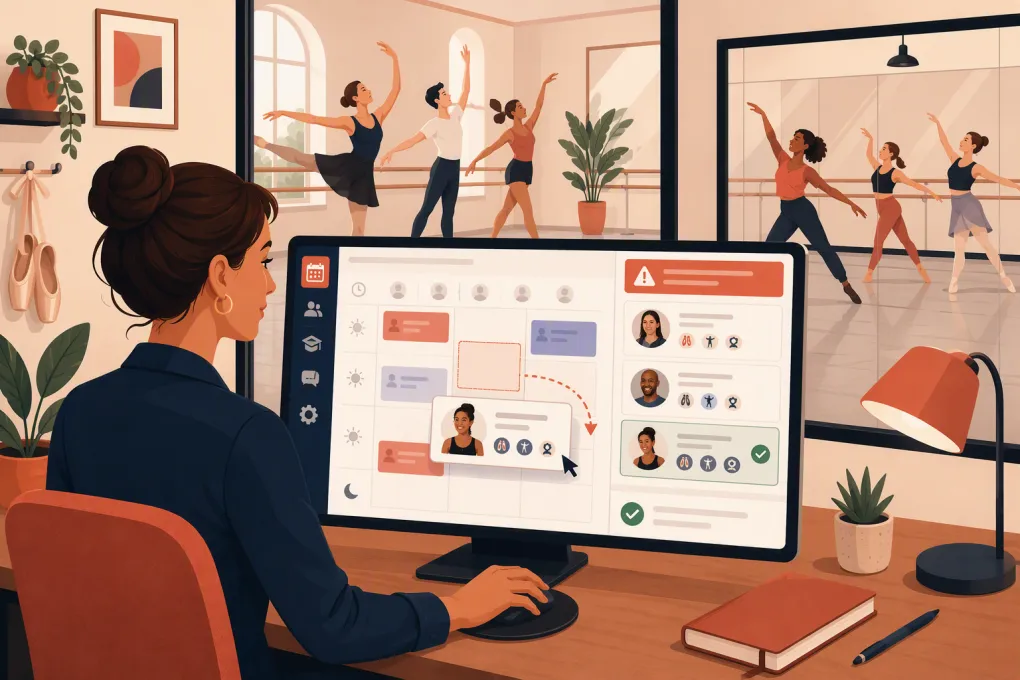
Breathwork businesses have deceptively complicated calendars. A facilitator may offer private sessions, recurring group classes, workshops, online events, corporate sessions, and multi-week programs—all with different capacities, forms, payment rules, and preparation instructions.
Basic calendar software can display availability. It usually cannot run the complete client journey from first inquiry through booking, attendance, follow-up, and renewal. That gap creates manual work: answering the same questions, chasing forms, checking payments, moving clients between sessions, and following up with people who expressed interest but never booked.
The right breathwork facilitator booking software should reduce that operational load without making the client experience feel automated or impersonal.
See how Fitty handles breathwork inquiries, bookings, and follow-up 24/7 →
What breathwork booking software needs to manage
Start with your actual service model rather than a vendor’s feature list. A solo facilitator offering private sessions needs a different setup from a wellness studio running simultaneous classes with multiple practitioners.
Map the workflows for every service you sell:
- Private in-person sessions
- Private virtual sessions
- Drop-in group classes
- Recurring memberships
- Multi-session packages
- Workshops and special events
- Multi-week courses or cohorts
- Corporate or off-site sessions
- Practitioner training and certification programs
For each service, document the duration, capacity, location, price, facilitator, required forms, cancellation policy, and follow-up sequence. This becomes your software evaluation checklist.
The essential features to evaluate
Flexible class and appointment scheduling
Breathwork businesses often need both appointment booking and class registration. Those are not the same workflow.
Appointments require individual availability, buffers, rescheduling rules, and sometimes resource management. Classes require capacity limits, rosters, recurring schedules, and waitlists. Make sure a platform handles both if your business does.
Look for:
- Separate calendars for facilitators, rooms, and locations
- Capacity limits and waitlists
- Recurring classes and multi-week series
- Buffers before and after intensive sessions
- Time-zone handling for virtual clients
- Booking cutoffs and minimum enrollment rules
- Client self-service cancellation and rescheduling
- Calendar synchronization for each facilitator
Test the mobile booking flow yourself. A prospective client should be able to understand the offer, choose a time, complete the required steps, and receive confirmation without calling you for help.
Intake forms, waivers, and informed consent
Breathwork sessions may require health screening, informed consent, emergency contact details, or acknowledgment of contraindications. Software should let you collect the appropriate information before the session and show staff whether required documents are complete.
Do not assume that a standard booking form meets your legal, insurance, or clinical obligations. Have qualified counsel and your insurer review your language and record-retention process. If you handle protected health information, evaluate whether the platform and your configuration satisfy the privacy requirements that apply to your business.
Operationally, the useful features are:
- Service-specific intake forms
- Required acknowledgments before confirmation
- Electronic signatures
- Timestamped records
- Form renewal or expiration rules
- Restricted staff access to sensitive information
Payments, packages, and recurring billing
The system should support the way clients actually buy from you. That may include single sessions, deposits, class packs, unlimited memberships, payment plans, or course enrollment.
Check how the platform handles:
- Payment at booking
- Deposits and remaining balances
- Recurring memberships
- Session packages and expiration dates
- Failed-payment follow-up
- Refunds and account credits
- Discount codes and introductory offers
- Taxes, receipts, and transaction reporting
Ask vendors to explain payment processing fees, software subscription fees, messaging costs, chargeback handling, and optional add-ons separately. A low base subscription can become less attractive when essential workflows require additional products.
Lead response and follow-up
Many breathwork prospects have questions before they are ready to book. They may ask what to expect, whether a session is beginner-friendly, how virtual sessions work, or which offering fits their goals.
A form that sends an email to your inbox is not a complete lead-management system. Look for a CRM that records the inquiry, assigns a next action, and continues follow-up when the prospect does not immediately purchase.
Useful automations include:
- Immediate responses to new inquiries
- Answers based on your approved service information
- Booking links matched to the requested service
- Reminders for incomplete bookings
- Pre-session preparation instructions
- Post-session check-ins
- Invitations to a relevant next session or package
- Follow-up for failed or overdue payments
This is where WTF Go differs from a stand-alone scheduler. Fitty acts as an AI receptionist that can answer leads, book classes, follow up, and collect dues around the clock. Your team defines the services, policies, escalation rules, and approved answers; Fitty handles routine conversations without leaving every inquiry for the facilitator.
Explore an AI receptionist built for wellness booking and follow-up →
Breathwork facilitator booking software compared
There is no universal best platform. The right choice depends on whether you need a personal scheduler, a studio management system, or a broader operating system with active lead handling.
| Platform | Booking and core workflows | Automation and client management | Multi-location fit | Pricing approach | Best fit and limitations |
|---|---|---|---|---|---|
| WTF Go with Fitty | Designed as an all-in-one operating system for gyms, studios, spas, and wellness businesses, including booking and payment workflows | Fitty answers leads, books, follows up, and collects dues 24/7 | Appropriate for independent and multi-location operators; confirm configuration needs during evaluation | Pricing should be confirmed based on the business setup | Best for operators who want scheduling plus an AI receptionist and operational follow-through. Businesses seeking only a simple calendar may not need the broader system. |
| Momence | Classes, appointments, events, memberships, and studio administration | Includes client communication, marketing, and operational automation tools | Can support growing studio operations; verify location-level controls for your structure | Tiered or packaged pricing may vary by selected products and payment services | Strong wellness and studio orientation. Review which communication, website, and marketing capabilities are included in the proposed package. |
| Mindbody | Broad class, appointment, membership, staff, and business-management capabilities | Client management and marketing options are available, with a consumer discovery marketplace as a notable feature | Commonly considered by established and multi-location wellness businesses | Obtain a current quote and identify required add-ons | Broad ecosystem and consumer recognition. The feature depth can create more setup and administrative complexity than a solo facilitator needs. |
| Vagaro | Appointments, classes, memberships, payments, forms, and marketplace exposure | Offers marketing and client-management tools, with optional capabilities depending on the plan | Supports multiple service providers and locations | Subscription pricing generally varies by configuration and add-ons | Useful for appointment-led wellness businesses that also run classes. Confirm the exact cost of forms, messaging, payroll, and other optional tools you need. |
| Acuity Scheduling | Strong self-service appointment scheduling with intake forms, packages, subscriptions, and payment connections | Automated confirmations and reminders; lighter CRM and sales follow-up than a full studio platform | Better suited to solo practitioners and relatively simple teams | Published tiered subscription plans; payment processing is separate | Good for straightforward private-session booking. Operators with memberships, complex class rosters, or active lead pipelines may outgrow it. |
| Calendly | Polished availability-based meeting scheduling and calendar coordination | Routing and workflow features vary by plan, but it is not a full wellness-business CRM | Supports teams, though not designed around studio locations and class inventory | Freemium and paid tier structure | Effective for consultations and discovery calls. It is usually insufficient as the primary system for waivers, memberships, class packs, and attendance. |
Product packaging changes, so use this table to create a shortlist rather than as a substitute for a current demonstration and written proposal.
How to run a useful software demonstration
Do not let the vendor control the entire demo. Give each shortlisted provider the same real-world scenarios and ask them to show every click.
Use a test script such as:
- A new client asks about a beginner-friendly virtual session after business hours.
- The client chooses a service, completes the required form, and pays.
- The facilitator receives the correct notification and sees the completed intake status.
- The client reschedules within your policy window.
- A group class reaches capacity and another client joins the waitlist.
- A membership payment fails and the system starts the appropriate recovery process.
- A workshop attendee receives preparation instructions and a post-event offer.
- An owner reviews bookings, revenue status, attendance, and unresolved leads.
Also ask what requires manual staff work. Software can technically support a process while still forcing employees to export lists, duplicate records, or monitor inboxes.
Set boundaries for AI communication
AI can remove repetitive administrative work, but it needs a defined operating lane. Your AI receptionist should use approved descriptions, policies, prices, and preparation instructions. It should not improvise medical guidance, interpret health disclosures, or promise outcomes.
Create escalation rules for:
- Medical or contraindication questions
- Requests for diagnosis or treatment advice
- Distress, emergencies, or safety concerns
- Refund disputes and chargebacks
- Accessibility accommodations
- Private-session matching that requires facilitator judgment
Review conversation logs regularly, especially after changing services or policies. Automation works best when the underlying information is current and ownership is clear.
Plan the transition before signing
Migration is often harder than the sales demo suggests. Before committing, ask what can be imported and what must be rebuilt.
Your migration plan should cover:
- Client contact records and communication consent
- Active memberships and billing authorizations
- Remaining package credits
- Future appointments and class registrations
- Signed waivers and intake records
- Staff permissions and schedules
- Gift cards, account credits, and outstanding balances
- Website booking links and tracking
- Client instructions for account activation
Run both systems through a controlled validation period if practical, but choose a firm cutoff date to avoid conflicting schedules. Test payments, reminders, forms, cancellations, and reporting before directing all traffic to the new booking flow.
See how WTF Go can consolidate booking, lead response, follow-up, and dues collection →
Choose for the business you are building
A solo facilitator with a handful of private sessions may be well served by a focused appointment scheduler. A studio offering classes, memberships, workshops, and multiple practitioners needs stronger capacity management, client records, payments, and reporting. A growth-focused operator also needs a system that responds to leads and moves them toward a booking—not merely a calendar that waits for them to return.
Score each option against your real workflows, total operating cost, client experience, staff workload, and migration risk. The best breathwork facilitator booking software is the one that reliably completes the work between interest and attendance while giving your team fewer systems to manage.
Frequently asked questions
What is the best booking software for a solo breathwork facilitator?
Acuity or another appointment-focused scheduler may suit a simple private-session practice. If you also need lead follow-up, memberships, classes, or automated payment recovery, consider a broader wellness operating system such as WTF Go.
Can breathwork booking software collect waivers and intake forms?
Many platforms support forms and electronic acknowledgments, but capabilities differ. Confirm that forms can be assigned by service, required before attendance, securely stored, and accessed only by appropriate staff.
Does breathwork scheduling software support virtual sessions?
Most modern schedulers can support virtual appointments through meeting links or video-platform integrations. Test time-zone handling, automatic link delivery, reminders, and instructions for first-time participants.
Can an AI receptionist answer breathwork leads safely?
Yes, when it uses approved business information and clear escalation rules. It should handle scheduling and routine questions while referring medical, safety, and individualized suitability questions to a qualified person.
What should I ask about before switching booking platforms?
Ask about importing clients, future bookings, memberships, package balances, waivers, billing data, and communication consent. Also confirm implementation support, payment fees, messaging costs, contract terms, and required add-ons.
Keep reading


Run your gym on autopilot with WTF Go
Fitty — your AI receptionist — answers calls and DMs, fills classes, follows up with every lead, and collects dues while you coach.