Comparisons
Boxing Gym Class Scheduling Software: Operator Buying Guide
Compare boxing gym class scheduling software for booking, billing, waivers, payments, messaging, access controls, data ownership, and lead follow-up.
 Watch · 20s
Running a boxing gym schedule takes more than publishing class times. You may be coordinating beginner classes, youth programs, sparring, open gym, private training, coach availability, equipment capacity, waivers, and recurring memberships.
The operational problems usually appear between systems. A prospect calls while every coach is on the floor. A parent cannot add a second child. A member books despite an unresolved payment. A waitlisted athlete never hears that a bag opened up. Staff then bridge those gaps through texts, spreadsheets, and memory.
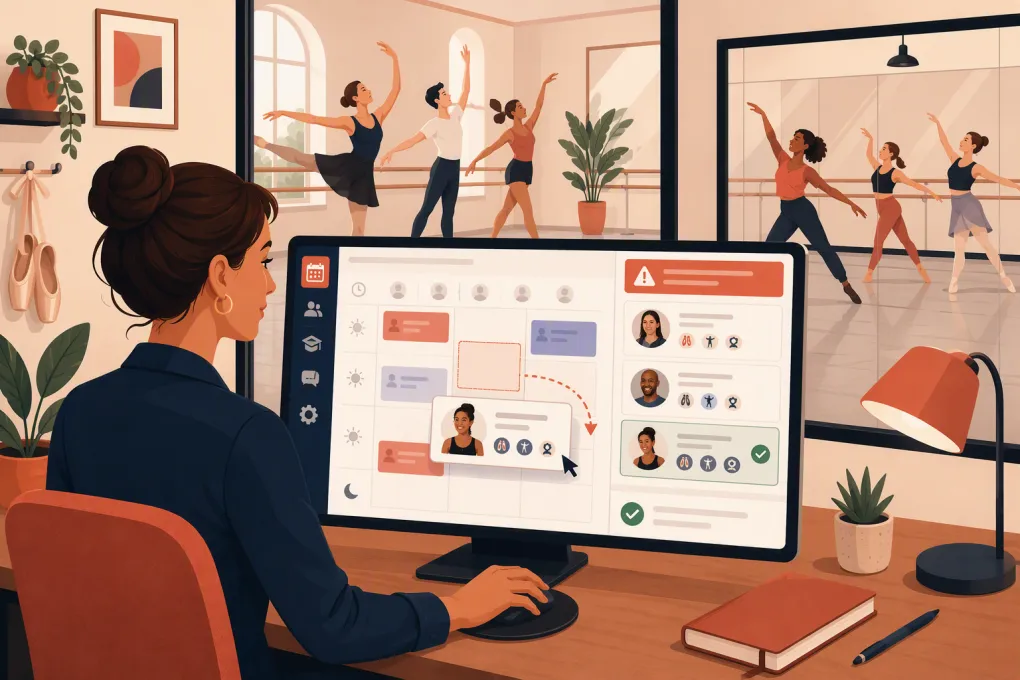
The right boxing gym class scheduling software should connect the entire path from inquiry to attendance—not just provide a calendar.
See how Fitty answers boxing gym inquiries and books classes after hours →
What boxing gyms need from scheduling software
Generic appointment software may work for a solo trainer. A boxing gym typically needs to support several booking and payment models at once:
- Capacity-limited group classes
- Intro sessions and trial offers
- Private appointments assigned to specific coaches
- Youth programs with guardian records
- Open-gym access
- Drop-ins, class packs, and recurring memberships
- Sessions restricted by age, experience, or coach approval
- Waitlists, cancellation windows, and no-show policies
Capacity must also reflect your real constraint. A room may legally hold more people than you have heavy bags. A sparring session may need a lower athlete-to-coach ratio than a conditioning class. Your system should let you set capacity and eligibility by service rather than applying one rule everywhere.
Boxing gym scheduling software comparison
This comparison focuses on publicly established product positioning and durable buyer distinctions, not temporary promotions or unverified feature claims. Product packages and contractual terms change, so exact prices, message allowances, processing rates, and commitments belong in a written proposal before you buy.
Official product pages are linked so you can check the current offering: WTF Go, Mindbody, Glofox, Zen Planner, and PushPress.
| Platform | Scheduling and operational focus | Payments, contracts, and communications | Controls, records, and limitations | Best fit |
|---|---|---|---|---|
| WTF Go | All-in-one operating system for gyms, studios, spas, and wellness businesses. Fitty handles lead questions, booking, follow-up, and dues outreach 24/7. | Pricing is obtained from WTF Go. Evaluate processing terms, communication allowances, implementation, and cancellation language in the proposal. Fitty can support collection workflows, but payment authorization must still use approved payment methods and account permissions. | Ask for a live demonstration of waivers, guardian records, role permissions, audit history, data export, and any door-access integrations your gym requires. Its main distinction is connecting scheduling with an AI receptionist rather than offering scheduling as an isolated tool. | Boxing gyms losing leads to missed calls, slow responses, inconsistent follow-up, or disconnected front-desk workflows. |
| Mindbody | Broad fitness and wellness platform covering classes, appointments, memberships, client management, marketing, and consumer discovery through the Mindbody marketplace. | Integrated payment processing is part of its broader commerce offering. Packages and optional capabilities affect total cost; buyers should obtain the term length, processing schedule, messaging allowance, and add-on list in writing. | Supports staff permissions, client records, forms, and multi-location operations. Its breadth is useful, but setup and package selection can be heavier than a boxing gym needing a narrow class-booking tool. Marketplace visibility is a meaningful distinction from gym-only platforms. | Established fitness or wellness businesses that want a broad platform and consumer marketplace presence. |
| Glofox | Fitness-focused platform built around memberships, class scheduling, lead management, member engagement, and branded digital experiences. It is commonly positioned toward boutique studios and growing fitness brands. | Supports integrated member payments and recurring membership workflows. Commercial terms are generally handled through sales, so request contract length, implementation fees, processing obligations, and included communication volume before signing. | Offers member and staff workflows suitable for multi-site fitness operations. Test guardian handling, boxing-specific eligibility rules, waiver version tracking, data-export format, and granular staff access during the demo. A branded member experience is a stronger emphasis than a consumer marketplace. | Boutique boxing concepts and expanding fitness brands prioritizing a branded app and centralized member experience. |
| Zen Planner | Fitness-business software with scheduling, memberships, attendance, billing, and member management. Its history in martial arts and membership-based gyms makes it relevant to boxing operators. | Provides integrated billing and payment workflows. Buyers should compare current plan inclusions, processing terms, onboarding, communication charges, and any minimum commitment using the provider’s written quote. | Particularly relevant where attendance, member records, family relationships, and structured programs matter. Confirm how guardian accounts, digital waivers, permissions, exports, and multi-location reporting work for your exact setup. Its member-management orientation may be more useful than a lightweight scheduler, but more system than a solo coach needs. | Boxing, martial arts, and membership gyms seeking established attendance and member-administration workflows. |
| PushPress | Gym-focused ecosystem centered on memberships, billing, class booking, check-in, and related lead-management tools. Its product structure allows operators to add capabilities around the core gym system. | Integrated payments and recurring billing are central to the platform. Because lead management and other functions may sit in related products or tiers, compare the complete required stack—not just the entry product. Get processing, messaging, onboarding, and cancellation terms in writing. | Designed around independent gym operations. Review permission levels, waiver history, family accounts, bulk export, door-access compatibility, and cross-location booking. A modular approach can reduce unnecessary features, but the required modules can affect total cost and administration. | Independent boxing and functional-fitness gyms that want a gym-specific system and are comfortable selecting modules for additional workflows. |
No table can tell you how well a platform fits your desk procedures. The useful next step is to make every vendor complete the same scenarios and disclose the same commercial terms.
Buyer criteria vendors should demonstrate
Class, appointment, and resource scheduling
Ask the vendor to build three services during the demo: a capacity-limited bag class, an approval-only sparring session, and a private lesson assigned to a specific coach.
Verify that you can configure:
- Different booking and cancellation windows by service
- Capacity based on equipment or staffing
- Recurring schedules and substitute coaches
- Automatic waitlist promotion
- Member-only or approval-only sessions
- Private appointment buffers
- Cross-location booking rules
- No-show and late-cancellation handling
Do not accept “the platform supports classes” as an answer. Watch the vendor configure your rules.
Contracts, billing, and payment processing
Software subscription cost is only one part of the commercial arrangement. Request a written cost sheet covering:
- Initial contract term and renewal structure
- Cancellation and notice requirements
- Implementation, training, and migration charges
- Payment-processing rates and additional transaction fees
- Hardware requirements
- Charges for extra locations or staff accounts
- Text, email, or voice usage allowances
- Optional CRM, branded app, AI, or marketing modules
- Fees or procedures for exporting data when you leave
Also ask whether you must use the platform’s payment processor. If so, find out how existing recurring payment credentials will be migrated. Card data generally cannot be moved through an ordinary spreadsheet; processor-supported token migration may be required.
Waivers, minors, and guardian records
Youth boxing makes family data more than a convenience. Test whether one guardian can manage multiple minors without sharing login credentials or creating duplicate household records.
The system should make it possible to determine:
- Who accepted a waiver and for whom
- Which waiver version was accepted
- The date and method of acceptance
- Whether an updated waiver requires new consent
- Which guardian can manage bookings and payments
- Whether medical notes or emergency contacts have restricted visibility
A basic checkbox is not the same as a usable consent record. Ask to retrieve a signed record during the demo.
Staff access and auditability
Coaches, front-desk staff, managers, and owners should not automatically receive identical access. Ask whether permissions can restrict financial reports, payment actions, exports, member notes, schedule changes, and settings.
Then test the audit trail. Can an owner identify who changed a membership, issued a credit, edited a waiver, or moved someone into a full class? This becomes increasingly important as the team and number of locations grow.
Messaging limits and consent
Automated reminders and follow-up are useful only when costs and permissions are understood. Ask vendors to separate transactional messages—such as confirmations and payment notices—from promotional campaigns.
Get written answers to these questions:
- Are texts, calls, and emails included or usage-based?
- What happens when the allowance is exceeded?
- Can members choose channels and opt out?
- Is consent history recorded?
- Can staff see the full conversation before replying?
- Do replies return to a shared inbox or a staff member’s phone?
A low software price can be misleading if ordinary reminder and follow-up volume creates separate usage charges.
How AI-assisted dues collection should work
An AI agent should not have unrestricted authority to charge arbitrary amounts or expose full card details in a conversation.
A controlled dues workflow should use the member’s existing account status and predefined business rules. For example, the agent can notify a member about a failed payment, explain the next approved step, provide a secure payment-update route, and escalate disputes or unusual requests to authorized staff.
During evaluation, ask the vendor to demonstrate:
- What event triggers payment outreach.
- Whether messages disclose the gym and reason for contact.
- How the member authenticates before viewing or changing sensitive account information.
- Whether card details stay inside a compliant, tokenized payment environment rather than the chat transcript.
- Which actions require staff approval.
- How disputed charges, refunds, and payment-plan requests are escalated.
- Whether each action is recorded in an audit log.
Fitty can assist with dues collection by conducting authorized outreach and moving members into the approved payment workflow. Your gym should still define permissions, escalation rules, and which actions may occur automatically.
See how Fitty connects booking, follow-up, and controlled dues outreach →
Data migration and exit planning
Migration should be discussed before the contract is signed, not after your old system is canceled. Create an inventory of the data you expect to move:
- Active and inactive member profiles
- Membership status and remaining credits
- Future bookings and appointments
- Attendance history
- Waivers and guardian relationships
- Lead stages, notes, and communication history
- Account balances and failed-payment status
- Staff accounts and permissions
- Recurring payment tokens, where processor migration permits it
Ask for a sample export from the new platform as well. Confirm that core records can be exported in usable formats and determine which items—such as signed documents, conversations, or payment tokens—require a separate process.
Run a boxing-specific demo script
Give every shortlisted vendor the same tasks:
- A beginner calls after the last class and asks whether boxing experience is required.
- A parent books two children and signs the correct waiver for each.
- A member joins a full bag-class waitlist and receives the open spot.
- A coach restricts sparring to approved athletes.
- A private client reschedules without creating a double-booking.
- A failed payment triggers an authorized notice and secure update path.
- A location manager changes a schedule but cannot export financial records.
- An owner exports member and attendance data.
Count the staff actions required for each scenario. Note where information is duplicated, where a separate product is required, and where employees must remember a manual follow-up.
Choose around the operational bottleneck
If your main problem is simple online booking, prioritize ease of setup and member usability. If you run youth programs, put guardian records and waiver retrieval near the top. Multi-location operators should focus on permissions, cross-location access, consolidated reporting, and local control.
If leads regularly arrive while coaches are training clients, a static booking page may not solve the underlying issue. You need a system that can answer questions, guide the prospect to the correct service, complete the booking, and continue follow-up.
That is the specific role Fitty fills inside WTF Go: an AI receptionist connected to operating workflows rather than another inbox for staff to monitor.
Explore WTF Go for your boxing gym’s lead-to-booking workflow →
The strongest choice is not necessarily the platform with the longest feature list. It is the one that reliably enforces your capacity rules, protects member data, reduces staff handoffs, and gives you clear control over contracts, payments, communications, and data ownership.
Frequently asked questions
What is the best boxing gym class scheduling software?
The best choice depends on your class mix, youth programs, lead volume, billing model, and number of locations. Test each platform with the same boxing-specific booking, waiver, payment, and permissions scenarios.
Can boxing gym software manage minors and guardian waivers?
Some full gym-management platforms support family relationships and digital waivers, but implementation varies. Confirm guardian authority, waiver version history, emergency contacts, and separate records for multiple children.
Can AI securely collect overdue gym dues?
AI can conduct authorized outreach and direct members into a secure payment workflow. Sensitive card data should remain in the payment provider’s protected environment, with permissions, authentication, escalation rules, and audit logs controlling the process.
What contract terms should I check before choosing gym software?
Review the initial term, auto-renewal, cancellation notice, processing requirements, implementation fees, messaging limits, add-on costs, data-export procedures, and charges for additional locations or users.
Can recurring payment information be migrated to new gym software?
Sometimes, but it depends on the old and new payment processors. Stored payment credentials usually require a controlled token-migration process and should never be transferred in an ordinary spreadsheet.
Keep reading


Run your gym on autopilot with WTF Go
Fitty — your AI receptionist — answers calls and DMs, fills classes, follows up with every lead, and collects dues while you coach.