Comparisons
Baseball Training Facility Management Software Guide
Compare baseball training facility management software for scheduling, memberships, payments, lead follow-up, staff workflows, and multi-location growth.
 Watch · 20s
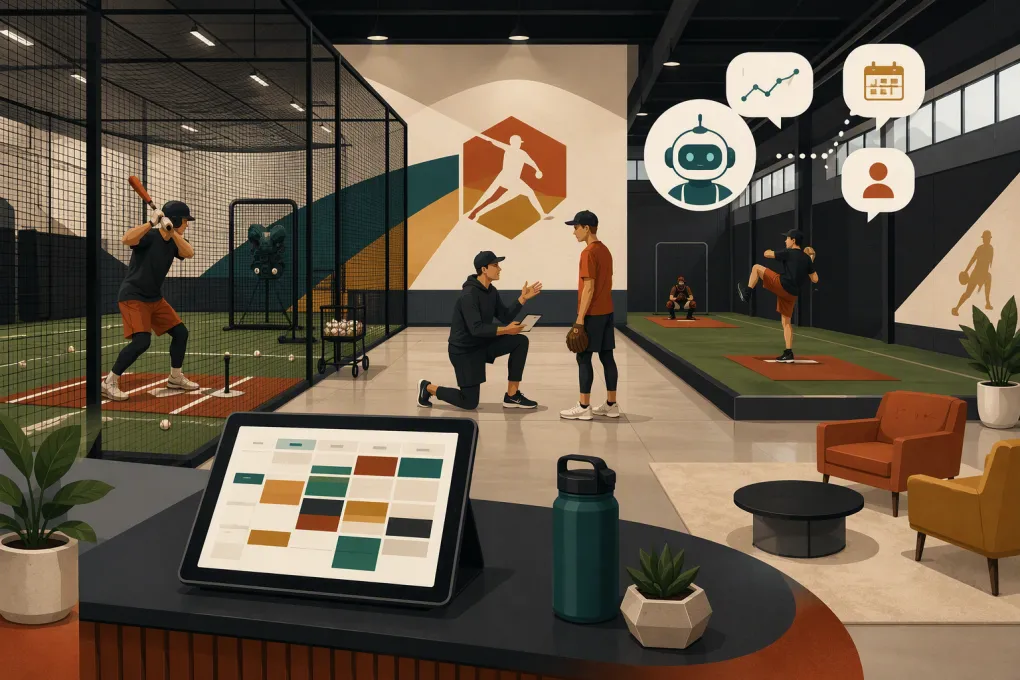
Running a baseball training facility is not the same as running a basic gym. You may need to schedule cages, pitching lanes, instructors, teams, camps, evaluations, and recurring lessons—sometimes in the same transaction. Add memberships, packages, waivers, merchandise, unpaid balances, and after-hours inquiries, and a calendar alone stops being enough.
The right baseball training facility management software should reduce front-desk work without forcing your operation into an awkward template. It should prevent scheduling conflicts, make buying and booking easy, and give staff one reliable view of each athlete or family.
It should also help convert inquiries. A parent asking about pitching lessons at night is not merely a message to answer tomorrow. It is a potential booking that needs an immediate, accurate response.
See how Fitty answers baseball training leads and follows up after hours →
What baseball facility software needs to handle
Start with your actual operating model rather than a vendor’s feature list. A useful system should support the workflows that produce revenue and consume staff time.
Resource and instructor scheduling
Baseball bookings often depend on more than one calendar. A private lesson might require both an instructor and a pitching lane. A team rental might require two adjacent tunnels. A camp may need several coaches and most of the facility.
Look for the ability to manage:
- Cages, tunnels, pitching lanes, turf areas, and rooms
- Instructor availability and substitutions
- Private lessons, group classes, camps, clinics, and rentals
- Recurring team reservations
- Setup and turnaround buffers
- Capacity limits and age or skill restrictions
- Customer self-booking with appropriate access rules
During a demo, build one of your most complicated bookings. Do not settle for watching the vendor schedule a simple class.
Memberships, packages, and billing
Facilities frequently sell several product types at once: monthly memberships, lesson packs, cage credits, camp registrations, drop-ins, and team contracts. The software needs to distinguish between them without requiring staff to make manual adjustments.
Check how the system handles expiration dates, recurring billing, failed payments, freezes, cancellations, family accounts, credits, refunds, and account balances. If one parent manages multiple athletes, confirm that staff can see the household clearly while preserving each athlete’s booking history.
Lead management and communication
A booking system records customers. A stronger operating platform also manages people who have not purchased yet.
At minimum, you should be able to capture the source of an inquiry, assign follow-up, record conversations, and move the lead toward an evaluation, introductory lesson, or facility tour. Automated reminders and follow-up can reduce repetitive work, but staff should be able to see and take over the conversation when needed.
Waivers and operational records
Confirm how waivers are collected, stored, renewed, and associated with minors. You may also need attendance records, coach notes, injury or incident documentation, and custom fields for age, position, skill level, goals, or team affiliation.
Software is not a substitute for legal advice. Have your waiver language and record-retention practices reviewed by qualified counsel.
Baseball training facility management software comparison
There is no universal winner. Some platforms are designed around sports facilities, others around gyms and wellness businesses, and others around reservable courts or spaces. The best fit depends on whether your revenue is driven primarily by coaching, memberships, facility rentals, or a combination.
| Platform | Core strength | Booking and operations fit | Automation and lead handling | Multi-location and migration | Pricing approach | Important limitation to evaluate |
|---|---|---|---|---|---|---|
| WTF Go | All-in-one operations for gyms, studios, spas, and wellness businesses | Memberships, booking, customer management, payments, and staff workflows; confirm your exact cage and linked-resource configuration in a demo | Fitty can answer leads, book classes, follow up, and collect dues around the clock | Suitable for operators evaluating centralized workflows; review data import and location permissions during scoping | Request current plan details | Baseball-specific resource dependencies should be tested against your schedule before committing |
| Upper Hand | Sports business and training operations | Strong alignment with lessons, camps, memberships, scheduling, staff, and sports facilities | Offers customer and operational communication tools; verify the depth of conversational AI and after-hours lead qualification | Relevant to growing sports organizations; confirm migration scope and cross-location reporting | Vendor plans or quote; verify current terms | Test complicated resource combinations, reporting needs, and the exact automation you expect |
| EZFacility | Facility and club management | Scheduling, rentals, memberships, payments, and facility operations make it a logical shortlist option | Provides administrative and communication capabilities; demo lead-response and sales automation closely | Supports facility-oriented operations; ask how records and recurring bookings are imported | Generally quote-led; request current pricing | Evaluate usability for customers and coaches, plus the amount of manual work required for follow-up |
| Mindbody | Broad fitness and wellness ecosystem | Strong for classes, appointments, memberships, payments, and consumer discovery | Marketing and client communication tools are available, with capabilities varying by package | Established option for multi-site wellness businesses; migration should be scoped with the vendor | Package-based; obtain a current quote | Baseball team rentals and linked cage-plus-instructor workflows may require adaptation |
| CourtReserve | Reservation-heavy club operations | Strong resource booking model, memberships, programs, and club activities | Includes member communication and administrative automation; verify lead nurturing requirements | Built for club operations, particularly racquet and paddle businesses | Plan-based; check current features and pricing | Resource scheduling may translate well, but baseball instruction and camp workflows are not its primary focus |
| PushPress | Gym membership and class management | Useful for memberships, billing, classes, staff, and lead workflows | CRM and follow-up capabilities are a notable part of the platform | Relevant to independent and growing gyms; confirm location structure and import services | Plan-based; verify current inclusions | Detailed cage rentals, team contracts, and simultaneous resource booking need hands-on testing |
Product capabilities and packages change. Use this table to create a shortlist, then verify each requirement in a live demo and written proposal.
How to run a useful software demo
Generic demonstrations hide operational gaps. Give each vendor the same scenarios and ask the representative to complete them from beginning to end.
Test these real baseball facility workflows
- After-hours lesson inquiry: A parent asks about pitching instruction for a young athlete. Can the system collect relevant details, show the right offer, book the next step, and continue follow-up if the parent does not purchase?
- Linked-resource booking: Schedule a coach and cage for the same lesson. Then change the coach without losing the cage or notifying the wrong people.
- Recurring team rental: Reserve multiple tunnels each week, apply contract pricing, collect payment, and handle one rescheduled date.
- Membership with credits: Create a membership that includes defined booking privileges or credits. Test overages, expiration, cancellation, and failed payment.
- Camp registration: Enroll siblings, collect waivers, enforce capacity, issue reminders, and give coaches an accurate roster.
- Facility closure: Cancel affected sessions, communicate with customers, and issue credits or rescheduling options without editing accounts individually.
- Past-due account: Trigger an appropriate reminder, update the payment method, collect the balance, and restore access according to your policy.
Ask staff from the front desk, coaching team, finance function, and ownership group to participate. Each sees different failure points.
Where AI reception changes the economics of follow-up
Many facilities do not lose leads because their coaching is weak. They lose them between the inquiry and the first booked visit. Calls arrive while staff are coaching. Social and website messages sit unanswered. Someone responds later without knowing whether another employee already handled the conversation.
An AI receptionist can cover the repetitive first layer:
- Answer common questions about programs, schedules, and policies
- Collect the athlete’s age, goals, experience, and preferred times
- Direct the prospect to an evaluation, lesson, camp, or membership
- Book an eligible class or appointment
- Follow up when an inquiry does not convert immediately
- Remind customers about balances and help collect dues
- Escalate unusual questions to a staff member
The goal is not to remove human judgment from coaching or sensitive customer issues. It is to keep routine inquiries moving when staff are unavailable.
Explore how WTF Go and Fitty connect lead response, booking, follow-up, and dues collection →
Reporting that helps you operate the facility
Avoid buying software because it has a long report menu. Focus on the decisions you need to make.
Useful views include:
- Lead response time and inquiry status
- Introductory appointments booked and completed
- Cage or tunnel utilization by day and hour
- Revenue by service, program, instructor, or resource
- Attendance and no-show patterns
- Membership status and upcoming renewals
- Failed payments and outstanding balances
- Camp capacity and registration pace
- Performance by location
Also check whether reports can be filtered and exported without vendor assistance. A dashboard is only useful if the definitions are clear and the underlying records are accurate.
Plan the migration before signing
Migration problems usually begin with unclear ownership, messy source data, or assumptions about what will transfer. Before selecting a platform, request a written migration scope covering customer profiles, family relationships, memberships, package balances, waivers, payment details, future bookings, recurring reservations, and historical transactions.
Then prepare the operation:
- Remove duplicate and obsolete records.
- Standardize program, membership, and resource names.
- Document booking, cancellation, refund, and access rules.
- Decide which historical data must remain searchable.
- Configure staff roles using the minimum access each role needs.
- Test purchases, bookings, reminders, failed payments, and refunds.
- Train staff with role-specific scenarios rather than a general product tour.
- Set a clear cutover date and reconciliation process.
Do not operate two live booking calendars longer than necessary. That creates a direct path to double bookings and inconsistent customer records.
Choosing the right system
Sports-specific platforms deserve consideration when complex facility scheduling is the center of the business. Gym-oriented platforms may be stronger when memberships, classes, lead conversion, and recurring billing drive the operation. The deciding factor should be the complete customer journey—from first inquiry through booking, payment, attendance, renewal, and reactivation.
WTF Go is worth shortlisting if you want those workflows in one operating system and need Fitty to handle inquiries, bookings, follow-up, and dues while staff coach athletes and run the floor. Bring your hardest scheduling scenario to the conversation so the fit can be evaluated honestly.
See whether WTF Go fits your baseball training facility’s booking and front-desk workflow →
Frequently asked questions
What is baseball training facility management software?
It is software used to manage athlete records, memberships, payments, waivers, staff, lessons, camps, and reservable resources such as cages, tunnels, and pitching lanes.
Can gym management software work for a baseball facility?
Yes, especially when memberships, classes, billing, and lead management are central. However, you should test linked resources, team rentals, recurring reservations, and family accounts before choosing it.
What should batting cage scheduling software prevent?
It should prevent double bookings, unauthorized reservation types, capacity conflicts, and situations where an instructor is booked without the required cage or lane.
Can AI book baseball lessons and follow up with leads?
An appropriately configured AI receptionist can answer routine questions, collect prospect details, book eligible sessions, send follow-up, and escalate complex requests to staff.
How should I compare baseball facility software pricing?
Compare the full operating cost, including required modules, payment processing, messaging, setup, migration, support, additional locations, and any limits on staff or customers.
Keep reading


Run your gym on autopilot with WTF Go
Fitty — your AI receptionist — answers calls and DMs, fills classes, follows up with every lead, and collects dues while you coach.