AI & Automation
AI Receptionist for Yoga Studio Membership Inquiries: Guide
Learn how an AI receptionist for yoga studio membership inquiries can answer prospects, qualify leads, book intro classes, and follow up day and night.
 Watch · 20s
A prospective member finds your yoga studio after dinner. She wants to know whether beginners are welcome, what an intro offer includes, and whether the 6:00 p.m. class fits her schedule. If nobody answers until the next morning, that inquiry may already be cold.
An AI receptionist gives yoga studios a practical way to respond while interest is high. It can answer approved questions, collect lead details, recommend the appropriate next step, book an intro class, and continue following up when the front desk is busy or closed.
The value is not simply answering more messages. The value is moving each legitimate membership inquiry toward a clear outcome without making teachers stop class, forcing managers to monitor multiple inboxes, or letting leads disappear into a spreadsheet.
See how Fitty handles yoga studio inquiries after hours →
What an AI receptionist should handle for a yoga studio
Yoga membership inquiries are rarely limited to “How much does it cost?” Prospects may be comparing class styles, evaluating whether they will feel comfortable, or trying to understand a complicated schedule.
A useful AI receptionist should be prepared for several common inquiry types.
Beginner and class-fit questions
Prospects often need reassurance before they need a sales pitch. The AI should be able to explain:
- Which classes are designed for beginners
- The difference between formats offered by the studio
- Whether mats or props are provided
- What to wear and when to arrive
- How heated classes, prenatal classes, workshops, or private sessions work
- Which questions require guidance from an instructor
Class recommendations should come from studio-approved rules. An AI should not invent recommendations or make medical judgments based on an injury, pregnancy, or health condition. Those situations need a clear human escalation path.
Pricing and membership questions
The receptionist should accurately explain the options currently available, including:
- Introductory offers
- Drop-in rates
- Class packs
- Monthly memberships
- Commitment periods
- Cancellation or freeze policies
- Expiration rules
- Applicable enrollment terms
Do not load outdated pricing into the AI and assume it will sort itself out. Treat the approved knowledge base like your front-desk handbook: assign an owner, review it regularly, and update it whenever an offer or policy changes.
Scheduling and booking
Answering a question without offering a next step creates another opportunity for the lead to disappear. Once the prospect identifies a suitable class or consultation, the AI should be able to guide the person into the correct booking flow.
That requires access to accurate information about class times, capacity, booking rules, locations, and instructor substitutions. If direct booking is enabled, the AI should confirm the class, date, time, location, and any arrival instructions before finishing the interaction.
Lead capture and follow-up
Not every prospect is ready to book immediately. The AI should capture enough information for a useful follow-up without turning the conversation into an interrogation.
Useful fields may include:
- Name and preferred contact method
- New or returning visitor status
- Class or membership interest
- Preferred days and times
- Experience level
- Desired location
- Main question or objection
- Permission to receive follow-up messages where required
The lead record should also preserve the conversation summary. A staff member should not have to ask the prospect to repeat everything.
A practical membership inquiry workflow
Automation works best when the workflow reflects how a skilled studio manager would handle the conversation.
1. Identify the prospect’s intent
Start by determining whether the person wants pricing, schedule information, a class recommendation, help with an existing booking, or assistance with an account.
Membership sales inquiries and member-service requests should not follow the same path. A billing dispute from a current member, for example, may require account verification and human review rather than a promotional follow-up sequence.
2. Answer the immediate question
Give a direct answer before collecting unnecessary information. If someone asks whether a beginner can attend Slow Flow, answer that question first. Then ask whether the prospect wants to see available times or reserve a spot.
This keeps the interaction useful instead of making it feel like a lead form disguised as a conversation.
3. Recommend one clear next step
Too many choices can stall the decision. Based on the studio’s rules, offer the most relevant action:
- Book a beginner-friendly class
- Claim the current intro offer
- Schedule a studio tour
- Request a call from the membership team
- Join a waitlist
- Speak with an instructor about a specialized concern
The recommendation should match what the studio can actually deliver.
4. Confirm and prepare the visitor
After booking, provide the operational details that prevent confusion and no-shows: arrival time, parking, entrance instructions, what to bring, cancellation expectations, and where to check in.
A reminder sequence can reinforce those details without requiring the front desk to send each message manually.
5. Continue the conversation if the lead does not book
A non-booking is not always a rejection. The prospect may be checking work schedules, comparing locations, or waiting to coordinate with a friend.
Follow-up should reference the original inquiry and offer a useful next step. Avoid sending the same generic “Are you still interested?” message repeatedly. A better sequence might answer a common beginner concern, surface suitable upcoming classes, and provide an easy way to speak with a person.
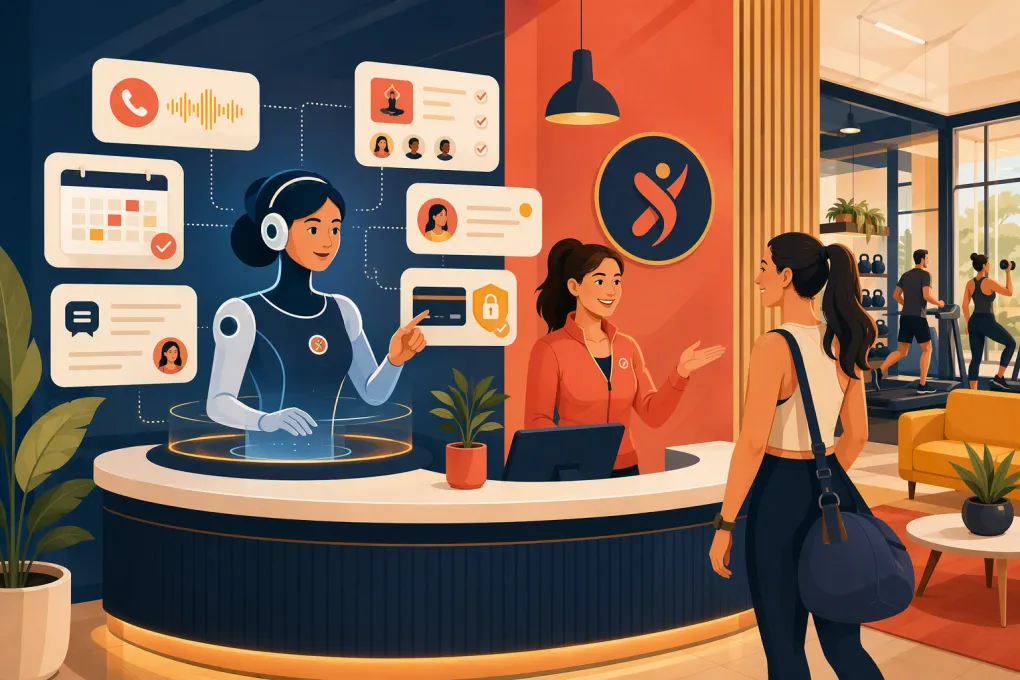
WTF Go brings lead management, booking, follow-up, and member operations together. Fitty, its AI receptionist, can answer leads, book classes, follow up, and collect dues around the clock.
See how Fitty can turn yoga membership questions into booked intro classes →
Build the knowledge base before turning on automation
An AI receptionist is only as dependable as the information and guardrails behind it. Before launch, document the answers your team currently keeps in people’s heads.
Create an approved source for:
- Current pricing and promotions
- Class descriptions and prerequisites
- Studio hours and holiday closures
- Instructor and location information
- Booking, waitlist, cancellation, and late-arrival policies
- Amenities, accessibility, parking, and equipment
- Membership freezes, renewals, and cancellations
- Escalation contacts and business hours
Review actual front-desk questions from recent inquiries. These reveal wording and objections that a generic FAQ will miss. Include variations such as “Is this good for someone inflexible?” and “I have never done yoga before” rather than documenting only formal class descriptions.
Set boundaries for sensitive questions
Yoga studios receive questions that touch health, injuries, pregnancy, accessibility, and personal finances. Automation needs firm boundaries.
The AI should not diagnose conditions, guarantee that a class is safe, or improvise exceptions to a contract. It should explain available information, state when staff review is required, and route the conversation appropriately.
Define immediate escalation triggers, such as:
- Injury or medical-suitability questions
- Refunds and disputed charges
- Requests to cancel under exceptional circumstances
- Harassment or safety complaints
- Accessibility needs not covered by approved information
- Threats, emergencies, or highly distressed language
- Repeated failure to understand the request
Make the human handoff visible. The staff member should receive the prospect’s contact details, conversation summary, requested outcome, and urgency level.
Keep follow-up compliant and respectful
An inquiry does not automatically create unlimited permission to send marketing messages. Configure outreach around applicable consent requirements and the rules of the communication channel you use. Keep records of consent, honor opt-outs, and involve qualified counsel when setting policies under laws such as the Telephone Consumer Protection Act.
Operationally, every automated message should identify the studio, stay relevant to the original request, and make it easy to stop further outreach. Separate transactional messages—such as booking confirmations—from promotional campaigns in your planning.
How to measure whether the AI receptionist is working
Do not judge the system by conversation volume alone. Review whether it improves the membership journey and reduces avoidable staff work.
Track metrics such as:
- Time from inquiry to first response
- Percentage of inquiries receiving a response
- Intro classes or consultations booked
- Booking-to-attendance rate
- Lead-to-membership conversion
- Human escalation rate and reasons
- Unanswered or incorrectly answered questions
- Follow-up opt-out and complaint patterns
- Staff time spent correcting automation
Read a sample of conversations regularly. Look for places where prospects become confused, abandon the booking flow, or receive an answer that is technically correct but operationally unhelpful.
The goal is not to eliminate human contact. It is to reserve human attention for the conversations where judgment, empathy, or an exception is genuinely needed.
A sensible rollout plan
Start with one high-value workflow instead of automating every interaction at once.
A practical rollout looks like this:
- Document the top membership questions and approved answers.
- Connect the current schedule and booking path.
- Define which offers the AI may present.
- Set escalation rules and staff ownership.
- Test normal, ambiguous, and sensitive questions.
- Launch during a controlled period or for a limited inquiry source.
- Review transcripts and booking outcomes.
- Expand only after correcting gaps.
Include instructors and front-desk staff in testing. They know which questions signal anxiety, which policy explanations cause confusion, and which prospects need a personal conversation.
Where Fitty fits into the operation
For many studios, the real problem is fragmentation. Leads arrive in one place, schedules live in another, follow-up depends on a manager’s memory, and billing issues create a separate queue.
WTF Go is designed as an all-in-one operating system for gyms, studios, spas, and wellness businesses. Fitty acts as the always-available receptionist layer: answering membership inquiries, helping prospects book, continuing follow-up, and assisting with dues collection.
That combination matters because a fast answer has limited value if the lead still has to navigate disconnected systems before becoming a member.
Explore WTF Go and put Fitty on your yoga studio’s inquiry workflow →
An AI receptionist should make your studio easier to reach without making it feel impersonal. Give it accurate information, focused workflows, clear boundaries, and a reliable path to your staff. Done well, it becomes an operational safety net: prospects get answers and next steps, while your team stays focused on the people already in the room.
Frequently asked questions
Can an AI receptionist book yoga classes directly?
Yes, if it is connected to an accurate scheduling and booking workflow. It should confirm the class, date, time, location, availability, and relevant arrival instructions.
Can it answer questions about yoga memberships and pricing?
Yes, using studio-approved pricing, policies, and offer details. The knowledge base must be updated whenever memberships, promotions, or terms change.
Should an AI receptionist answer questions about injuries or pregnancy?
It can share approved general information, but it should not provide medical advice or guarantee that a class is safe. These questions should be escalated to qualified staff.
Will an AI receptionist replace yoga studio front-desk staff?
It is better used to cover repetitive questions, booking, after-hours inquiries, and follow-up. Staff should remain responsible for sensitive issues, exceptions, and conversations requiring judgment.
How should a yoga studio evaluate an AI receptionist?
Review response time, booking and attendance outcomes, membership conversions, escalation reasons, answer accuracy, opt-outs, and the amount of staff correction required.
Keep reading


Run your gym on autopilot with WTF Go
Fitty — your AI receptionist — answers calls and DMs, fills classes, follows up with every lead, and collects dues while you coach.