AI & Automation
AI Receptionist for Wellness Center Missed Calls: Guide
An AI receptionist for wellness center missed calls can qualify leads, book visits, and follow up. Learn the workflows, safeguards, and key setup steps.
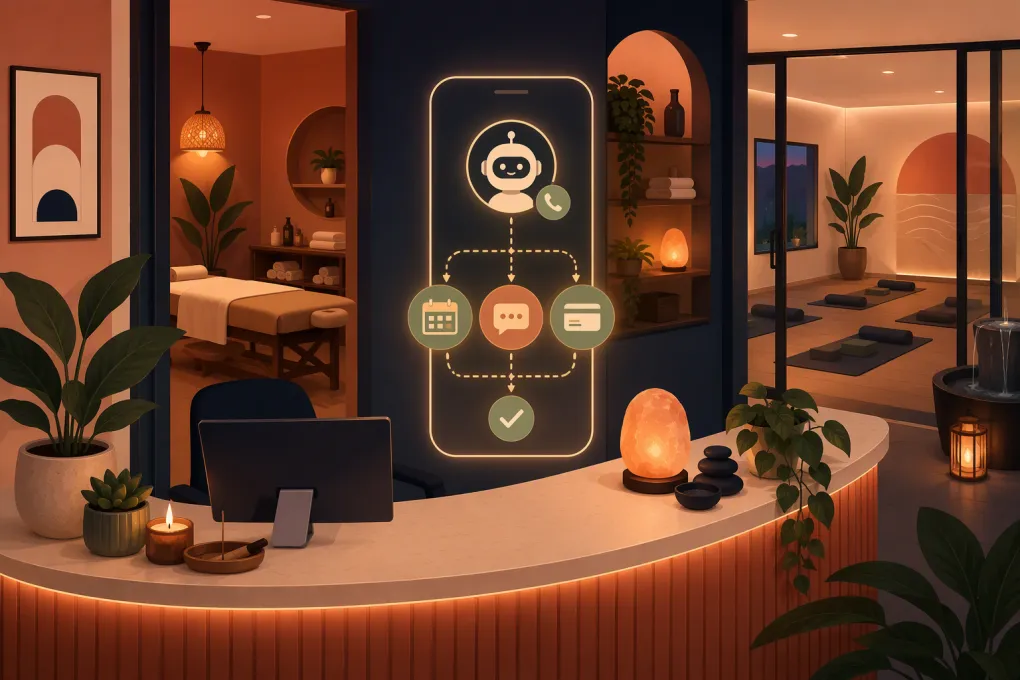 Watch · 20s
A missed call at a wellness center is rarely just a missed call. It may be a new client asking whether you offer a specific treatment, a member trying to change a class, or an existing client with a payment question. If nobody responds quickly and clearly, that person can move on without leaving enough information for your team to recover the opportunity.
Hiring more front-desk coverage can help, but it does not solve every gap. Calls arrive during treatments, before opening, after closing, and when staff are already helping someone in person. An AI receptionist gives wellness centers another option: answer routine calls immediately, complete approved tasks, and escalate the conversations that require a person.
The value does not come from answering every question with AI. It comes from designing a controlled system that knows what it can handle, what it must never guess, and when a staff member needs to take over.
See how Fitty handles after-hours wellness center inquiries →
Why wellness center calls are easy to lose
Wellness businesses often combine several operational models under one roof. A single location might offer scheduled appointments, recurring memberships, group classes, packages, retail products, and services delivered by different practitioners.
That creates more call complexity than a simple name-and-number answering service can manage. Common callers want to know:
- Whether a service is appropriate for what they need
- Which practitioners or appointment times are available
- What to wear, bring, or do before a visit
- Whether a package, credit, or membership can be used
- How to reschedule without losing a deposit
- Whether a class has space
- Why a payment failed or a balance remains
At the same time, staff may be checking in clients, preparing rooms, managing laundry, or delivering services. Even during staffed hours, the phone can become the lowest-priority task.
An effective AI receptionist should reduce that conflict. It should not create a second inbox full of incomplete transcripts for employees to decipher later.
What an AI receptionist should do with a missed call
The goal is resolution, not merely response. Each call should end in one of four states:
- Completed: The caller books, reschedules, pays, or receives an approved answer.
- Qualified: The system captures the caller’s needs and sends the right next step.
- Escalated: A staff member receives a concise summary and a clear action.
- Closed: The caller declines, is ineligible, or does not want further contact.
A practical call workflow looks like this:
| Caller intent | AI receptionist action | When staff should take over |
|---|---|---|
| New service inquiry | Explain approved service details, collect preferences, and offer available times | Caller asks for clinical guidance or has needs outside the approved script |
| Appointment booking | Match service, duration, practitioner, room, and availability | A scheduling exception or special accommodation is required |
| Class inquiry | Explain the class format and book an eligible spot | The caller has a medical concern or needs instructor approval |
| Cancellation or rescheduling | Apply the published policy and offer valid alternatives | The caller disputes a fee or requests a policy exception |
| Membership question | Explain approved plan terms and capture interest | The request involves a contract dispute or an unapproved discount |
| Failed payment or balance | Confirm the appropriate account, request payment through an approved process, and document the result | Identity cannot be verified or the client disputes the charge |
| Urgent or sensitive concern | Stop the routine workflow and provide the approved escalation path | Immediately, according to the center’s written policy |
This structure keeps the AI inside operational boundaries. It also helps staff see exactly which situations still consume human time.
Build the call map before turning on automation
Do not start by uploading every policy document and asking the AI to answer anything. Start with the calls your team already receives.
Review recent call logs, voicemail messages, front-desk notes, and common email questions. Group the requests by intent, then document the approved outcome for each one.
Define what the AI can say
Create a concise source of truth covering:
- Services, durations, and general descriptions
- Practitioner schedules and booking restrictions
- Class levels, capacities, and prerequisites
- Hours, parking, accessibility, and arrival instructions
- Cancellation, late-arrival, deposit, and no-show policies
- Membership and package rules
- Accepted payment methods
- Required forms and preparation instructions
- Escalation contacts and business hours
Avoid vague language. If a late-arrival policy depends on service length, write out the rule for each affected service instead of expecting the system to infer it.
Define what the AI cannot say
A wellness center AI receptionist should not diagnose conditions, promise outcomes, invent contraindications, or improvise around sensitive concerns. Those calls need an approved response and a handoff.
Also define limits around:
- Medical or clinical advice
- Refund and fee disputes
- Custom discounts
- Harassment or threats
- Injuries and adverse reactions
- Legal requests
- Account information without appropriate verification
- Emergencies
For emergencies, the system should follow a short, explicit instruction rather than attempting a prolonged intake.
Connect the call directly to booking
A caller who asks about availability is signaling intent. Sending that person a generic message or asking staff to call back introduces another opportunity for the lead to disappear.
The receptionist should be able to identify the correct appointment or class based on operational constraints, including:
- Service type and duration
- New-client eligibility
- Practitioner preference
- Room or equipment requirements
- Location
- Appointment buffers
- Package or membership eligibility
- Deposit requirements
It should then offer real availability and complete the booking while the caller is engaged. Confirmation, forms, preparation instructions, and cancellation terms should follow automatically through the center’s approved communication process.
Fitty, WTF Go’s AI receptionist, is designed to answer leads and book classes around the clock as part of a broader operating system for gyms, studios, spas, and wellness businesses.
See how Fitty can turn wellness inquiries into confirmed bookings →
Follow up without creating message spam
Not every caller is ready to book. Someone may need to check a schedule, compare services, or speak with a partner. The AI receptionist should capture enough context for relevant follow-up rather than placing everyone into the same campaign.
Useful qualification fields include:
- Service or class of interest
- Preferred location
- Preferred days and times
- Practitioner preference
- New or returning client status
- Main booking obstacle
- Requested follow-up channel
- Permission to receive follow-up communication
A simple follow-up sequence can include the promised information, a booking link or available options, and a final check-in. Stop the sequence when the person books, opts out, gives a definitive no, or requires staff assistance.
The conversation history should remain attached to the lead or client record. Otherwise, the front desk may ask the same questions again and make the automation feel disconnected from the business.
Handle payment calls carefully
Payment recovery is a useful AI workflow because many unpaid balances result from routine issues such as an expired card or a client forgetting to update payment information. Still, payment conversations require tighter controls than general lead intake.
Use an approved payment flow rather than asking callers to provide sensitive card details in an unstructured conversation. Verify identity before discussing account-specific information, document consent, and route disputes to an employee.
Fitty can follow up and collect dues 24/7, helping operators address routine balances without relying entirely on staff call lists.
Explore Fitty for wellness center follow-up and dues collection →
Put safeguards around privacy and call handling
Wellness centers may collect health-related, identity, and payment information. The applicable requirements depend on the services offered, the business structure, the data involved, and local law. Do not assume every AI receptionist vendor satisfies your obligations by default.
Before launch, evaluate:
- What call audio, transcripts, and personal data are stored
- Where data is stored and how long it is retained
- Which employees and vendors can access it
- How callers are informed about AI use or call recording
- How consent and opt-outs are documented
- Whether account identity is verified before details are disclosed
- How payment data is handled
- Whether the vendor supports the privacy and security requirements applicable to your business
Have qualified legal or compliance counsel review sensitive workflows when necessary. This is especially important for businesses delivering regulated healthcare services rather than general fitness or wellness services.
Test with real scenarios before launch
A polished demo is not enough. Test the system against the messy situations your front desk encounters.
Create test calls for:
- A new client who does not know which service to choose
- A caller who changes requirements halfway through the conversation
- A request for a fully booked practitioner
- A cancellation outside the allowed window
- A caller disputing a charge
- A question that is not covered by the knowledge base
- A medical or safety-related concern
- A caller who asks for a person repeatedly
- Background noise, interruptions, and unclear speech
Check whether the AI reaches the correct outcome, records accurate details, and hands off with a usable summary. Fix the workflow rather than merely rewriting the greeting.
Measure resolution, not call volume
The number of answered calls does not tell you whether the system is helping. Review outcomes by intent and track measures such as:
- Calls resolved without staff intervention
- Qualified leads created
- Bookings completed
- Follow-up tasks generated
- Payments completed through the approved workflow
- Transfers and escalation reasons
- Incorrect answers or booking errors
- Caller opt-outs and complaints
- Staff time spent correcting AI work
Listen to a sample of completed, abandoned, and escalated calls regularly. Update policies, service descriptions, and routing rules whenever operations change.
The right AI receptionist should function like a disciplined front-desk process: available when clients call, consistent about policy, connected to booking and follow-up, and quick to involve a person when judgment is required.
Frequently asked questions
Can an AI receptionist book wellness center appointments?
Yes, if it is connected to current schedules and understands service duration, practitioner, location, eligibility, and resource constraints. Test exceptions carefully before allowing live bookings.
Will an AI receptionist replace the front desk?
It can handle many routine calls, bookings, follow-ups, and payment tasks, but staff should remain responsible for sensitive concerns, disputes, exceptions, and conversations requiring human judgment.
Can an AI receptionist answer calls after hours?
Yes. A properly configured system can answer common questions, capture leads, offer available appointments, and trigger approved follow-up outside staffed hours.
Is an AI receptionist appropriate for medical wellness services?
It may support administrative workflows, but clinical advice and sensitive data require strict boundaries. Confirm that the vendor and configuration meet the privacy, security, consent, and regulatory requirements applicable to your business.
What should a wellness center automate first?
Start with high-volume, low-risk workflows such as hours, directions, service information, basic lead qualification, and straightforward booking. Add cancellations, account questions, and payments after testing stronger verification and escalation controls.
Keep reading

Run your gym on autopilot with WTF Go
Fitty — your AI receptionist — answers calls and DMs, fills classes, follows up with every lead, and collects dues while you coach.