AI & Automation
AI Receptionist for Weightlifting Gyms: The Owner's Guide
See how an AI receptionist for weightlifting gyms answers leads, books intro sessions, follows up, and collects dues—without losing the human connection.
 Watch · 20s
A prospective member finds your weightlifting gym at 9:40 p.m. They want to know whether beginners are welcome, whether they need an assessment, and which session to book. If nobody responds until the next morning, that lead may keep searching.
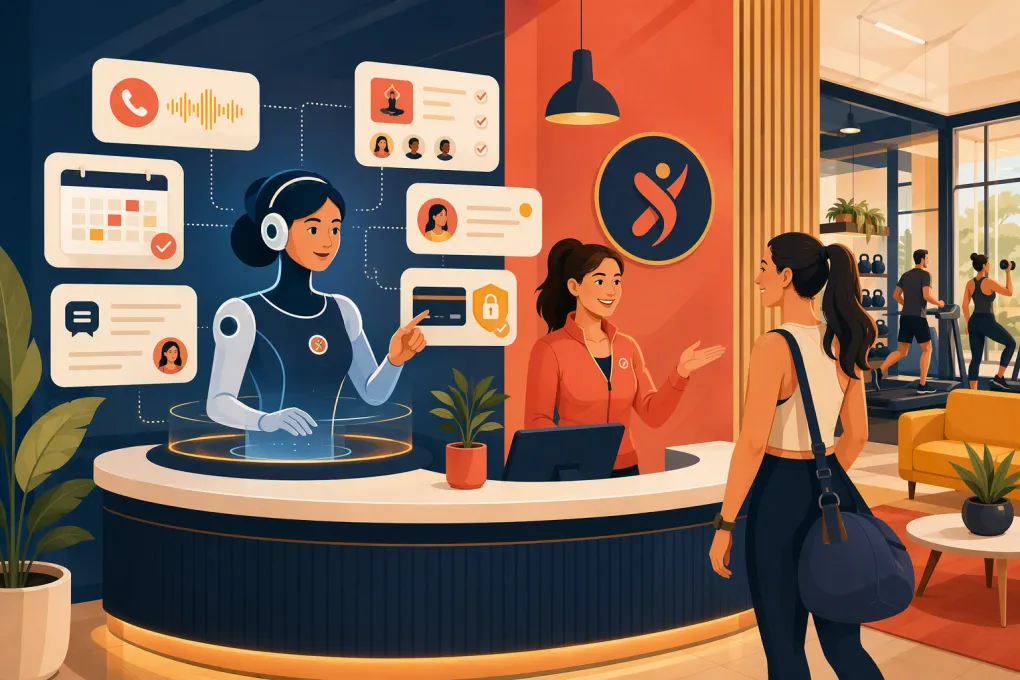
That is the practical case for an AI receptionist for weightlifting gyms. It is not about replacing coaches or pretending software can evaluate a lifter’s technique. It is about handling the repetitive front-desk work that determines whether an inquiry becomes a booked visit: answering common questions, capturing contact details, recommending the correct next step, booking eligible sessions, following up, and routing exceptions to a person.
For owner-operated strength gyms, that coverage matters because the person coaching the evening class is often the same person responsible for sales, billing, scheduling, and tomorrow’s programming.
See how Fitty handles weightlifting gym inquiries and follow-up 24/7 →
What an AI receptionist should do for a weightlifting gym
A useful AI receptionist needs to understand the gym’s actual operating model. A generic chatbot that only says “How can I help?” creates another inbox to manage. The system should move qualified prospects and current members toward a clear resolution.
Answer gym-specific questions accurately
Weightlifting prospects rarely ask only about price. Common questions include:
- Do you teach complete beginners?
- Is this Olympic weightlifting, powerlifting, general strength training, or a combination?
- Can I use the gym without joining a coached class?
- Do I need an assessment or introductory session first?
- Are drop-ins allowed?
- Can teenagers train there?
- Do you have kilogram plates, competition benches, specialty bars, or weightlifting platforms?
- Can I follow my own program?
- What happens if I have an old injury?
The AI should answer from an approved knowledge base rather than improvising. If your policy requires every new athlete to complete an orientation, the receptionist should never send an unassessed beginner directly into open gym.
Route each lead to the right first step
Different prospects need different entry points. A brand-new lifter may need an intro consultation. An experienced visitor may qualify for a drop-in. A competitive athlete may want to speak with the head coach before booking anything.
Build a short qualification path around questions such as:
- What type of training are you looking for?
- How much barbell experience do you have?
- Are you local or visiting?
- Do you want coached sessions, open gym, or individual programming?
- When would you like to start?
The goal is not to interrogate the prospect. It is to avoid booking them into the wrong service and creating a poor first experience.
Book without creating more administrative work
Once the appropriate next step is clear, the AI receptionist should present eligible times and complete the booking against current availability. That is more useful than collecting a phone number and promising that someone will call later.
Booking rules should account for:
- Coach availability
- Class capacity
- Introductory-session requirements
- Advance booking and cancellation windows
- Drop-in eligibility
- Age restrictions
- Location-specific schedules
For multi-location operators, the receptionist should also confirm which facility the prospect wants before offering times.
Where AI creates the most operational value
After-hours lead response
People research gyms outside normal desk hours. An AI receptionist can respond when coaches are asleep, training clients, or running class. It can answer the immediate question and ask for the booking while the prospect is still engaged.
Fast response alone is not enough. The interaction needs to produce a useful outcome: a booked intro, a captured lead with stated preferences, or a clearly assigned staff follow-up.
Consistent follow-up
Many gym leads do not book during the first conversation. They may need to check work schedules, discuss the cost with a partner, or wait until they move into the area.
A sensible follow-up sequence can:
- Remind someone to finish booking an intro
- Check whether an unanswered question is blocking the decision
- Follow up after a missed appointment
- Re-engage a prospect who asked about starting later
- Stop automatically when the person books, opts out, or requests a human
The sequence should reflect intent. Someone asking about competitive coaching should not receive the same message as a parent asking about youth training.
Routine member service and dues
Current members also generate repetitive requests: schedule questions, membership options, failed-payment notices, freeze policies, and booking help. An AI receptionist can explain approved policies, direct members to the appropriate action, and follow up on outstanding dues.
Financial workflows require strict boundaries. The system should use authorized payment processes, confirm what it can and cannot change, and escalate disputes or unusual account situations. It should not invent exceptions to your contract.
See how WTF Go combines Fitty, booking, follow-up, and dues workflows →
What the AI should never handle alone
A weightlifting gym is not a low-risk retail environment. Clear escalation rules protect members, coaches, and the business.
Send the conversation to a qualified person when it involves:
- Pain, injury, rehabilitation, or medical clearance
- Technique diagnosis or programming recommendations
- A billing dispute or requested policy exception
- Harassment, safety concerns, or an incident report
- A minor with unusual consent or custody circumstances
- Competitive coaching needs requiring coach evaluation
- An angry member or a cancellation threat
- Any question the knowledge base cannot answer confidently
The receptionist can collect context before escalating, but it should not offer medical advice or act like a strength coach. A good boundary might be: “I can help you find the right introductory option, but a coach will need to discuss training modifications with you.”
How to prepare your gym before turning it on
The quality of an AI receptionist depends heavily on the operating information behind it. Automating unclear policies only distributes confusion faster.
Build a reliable source of truth
Document the information a front-desk employee would need:
- Memberships, packs, trials, and drop-in options
- Class descriptions and intended experience levels
- Intro, assessment, and onboarding requirements
- Coaching and open-gym schedules
- Equipment and facility details
- Parking, entry, and access instructions
- Age limits and guardian requirements
- Cancellation, freeze, refund, and no-show policies
- Competition-team or specialized-coaching procedures
- Staff contacts and escalation rules
Assign an owner to each category. When pricing, schedules, or policies change, that person should update the source rather than relying on the AI to infer the change.
Define conversation outcomes
Every common inquiry should end in one of a few outcomes:
- Book the appropriate first appointment
- Send the correct purchase or registration step
- Capture the lead and schedule follow-up
- Resolve a routine member question
- Escalate with a concise conversation summary
If the only outcome is “someone will get back to you,” the automation is not doing enough.
Test realistic edge cases
Do not test only easy questions. Use scenarios that expose bad assumptions:
- “I have never touched a barbell. Can I join open gym tonight?”
- “I am visiting for one day and want to snatch during your busiest class.”
- “My 14-year-old wants to train without a parent.”
- “I hurt my back last week. Which class should I take?”
- “I was charged again after asking a coach to cancel.”
- “I want remote programming from your competition coach.”
Check the answer, booking action, data captured, and escalation. Repeat testing whenever you change an offer or policy.
How to evaluate an AI receptionist
A polished demo is less important than fit with your daily workflows. Ask vendors to show how the system handles your real scenarios.
Evaluate:
Operational fit
Can it distinguish between intro sessions, classes, appointments, open gym, and drop-ins? Can it enforce prerequisites and location rules?
Knowledge control
Can your staff update answers without rebuilding the entire system? Is there a clear record of what the AI has been instructed to say?
Booking and customer records
Does a completed conversation update the same system your team uses for schedules, leads, and members, or will staff need to copy information between tools?
Human handoff
Can the system recognize sensitive or uncertain situations, notify the correct employee, and provide the conversation context?
Follow-up logic
Can follow-up stop when a lead books or opts out? Can different lead types receive different next steps?
Visibility
Can managers review conversations, booking outcomes, unresolved questions, and escalation patterns? You need enough visibility to improve the workflow rather than blindly trusting it.
Measuring whether it is working
Start with operational measures tied to actual outcomes:
- Median time from inquiry to first response
- Percentage of qualified inquiries that book an intro or assessment
- Intro attendance and no-show patterns
- Leads requiring human follow-up
- Questions the AI could not answer
- Incorrect bookings or policy explanations
- Outstanding-dues conversations resolved or escalated
- Staff time spent on repetitive front-desk work
Review conversation samples, not just dashboard totals. A high booking count is not a win if inexperienced lifters are being placed into inappropriate sessions.
Fitty is built to act as the always-available front line inside WTF Go: answering leads, booking classes, following up, and helping collect dues while your team handles coaching and higher-judgment conversations.
Explore Fitty as the AI receptionist for your weightlifting gym →
The practical bottom line
An AI receptionist works best when it extends a well-defined sales and service process. It should know what your gym offers, identify the prospect’s likely next step, complete routine actions, and bring a human in when judgment matters.
For a weightlifting gym, the standard is not whether the AI can chat. The standard is whether it can turn a late-night inquiry into the correct booking without compromising coaching boundaries, safety, or member trust.
Frequently asked questions
Can an AI receptionist book weightlifting assessments and intro sessions?
Yes, if it is connected to current availability and configured with your prerequisites, capacity limits, locations, and booking rules.
Will an AI receptionist replace my front-desk staff?
It should handle repetitive inquiries, booking, follow-up, and routine account tasks. Staff are still needed for coaching questions, disputes, exceptions, safety issues, and relationship-driven conversations.
Can AI answer questions about injuries or training programs?
It can explain general facility policies and collect context, but medical, technique, rehabilitation, and individualized programming questions should be escalated to a qualified professional.
What information does an AI receptionist need from my gym?
It needs accurate services, pricing, schedules, prerequisites, policies, facility details, booking rules, and escalation contacts. Assign staff responsibility for keeping that information current.
Can Fitty follow up with leads who do not book immediately?
Yes. Fitty can follow up with leads, help move them toward the appropriate booking, and stop or escalate based on the configured workflow.
Keep reading

Run your gym on autopilot with WTF Go
Fitty — your AI receptionist — answers calls and DMs, fills classes, follows up with every lead, and collects dues while you coach.