AI & Automation
AI Receptionist for Tattoo Studios: More Bookings, Less Admin
See how an AI receptionist for tattoo studios handles inquiries, qualifies leads, books consultations, follows up, and protects artist time, day and night.
 Watch · 20s
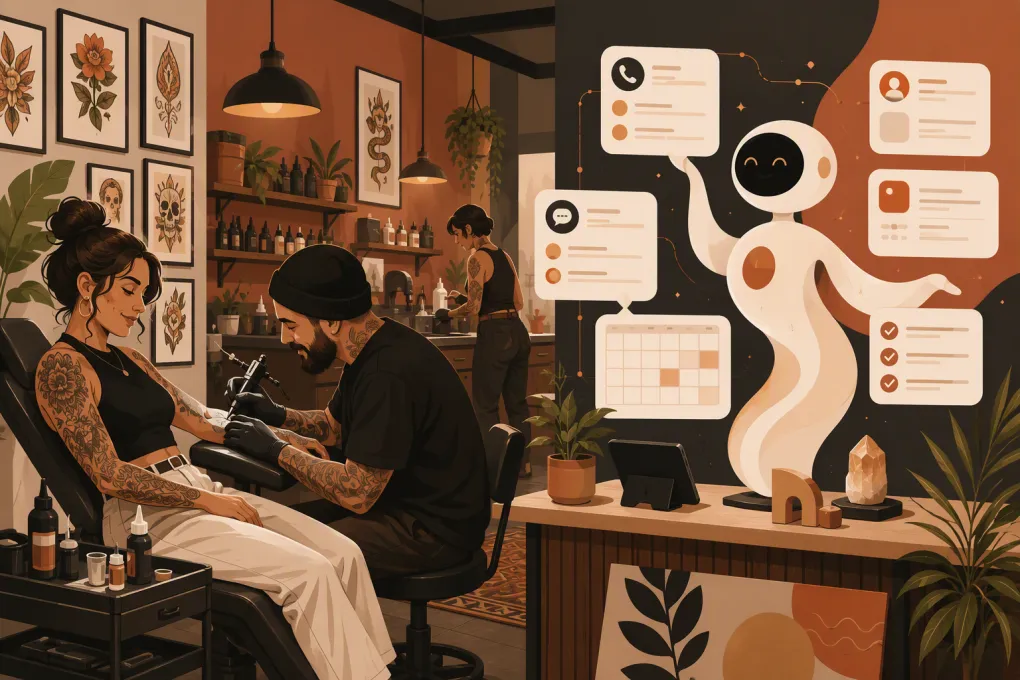
Tattoo inquiries rarely arrive in a neat, bookable format. One prospect calls during a session. Another sends an Instagram message with three reference images but no placement or size. Someone else submits a website form, then follows up by text because they have not heard back.
For owners and artists, the problem is not a lack of interest. It is the administrative work required to turn scattered interest into qualified consultations and confirmed appointments.
An AI receptionist for tattoo studios can manage the first layer of that work: responding promptly, gathering project details, answering approved questions, routing leads and booking the right next step. It does not replace an artist’s judgment. It protects that judgment from being buried under repetitive messages.
See how Fitty can handle tattoo inquiries and consultation follow-up →
What an AI receptionist should do for a tattoo studio
A useful AI receptionist is more than a website chatbot. It should act as a consistent front desk across the channels your studio actually uses, while knowing when to involve a person.
For tattoo studios, the core jobs are straightforward.
Respond when artists cannot
Artists should not have to stop a session to answer the phone or reply to a basic availability question. An AI receptionist can acknowledge new inquiries during sessions, after closing and on days when the front desk is unstaffed.
That immediate response should not pretend the artist has reviewed the idea. It should explain the intake process and start collecting the information needed for review.
Qualify the project before it reaches an artist
A vague message such as “How much for a sleeve?” is not ready for an estimate or appointment. The receptionist should collect details such as:
- Tattoo concept and preferred style
- Placement and approximate size
- Black-and-grey or color preference
- Custom work, flash or cover-up
- Preferred artist, if any
- Reference images or existing tattoo photos
- Desired timing and schedule availability
- Whether the person is legally eligible to be tattooed under applicable rules
- A budget range, if your studio uses one during intake
The objective is not to approve the project automatically. It is to give the artist a complete brief instead of another message that requires five rounds of questions.
Route leads to the right artist or workflow
Not every artist handles every style, body placement or project type. Your AI receptionist should use rules established by the studio to route inquiries appropriately.
A fine-line request might go to one artist, while a large traditional piece goes to another. Cover-ups may require an in-person consultation. Flash bookings may be eligible for direct scheduling, while custom pieces require portfolio review first.
This is where studio-specific configuration matters. A generic bot that treats every inquiry the same can create more cleanup than it removes.
Book consultations without calendar ping-pong
Once a lead meets your intake requirements, the receptionist can offer eligible consultation times based on the correct artist’s availability. It should also communicate whether the consultation is virtual, by phone or in person.
For studios that allow direct booking for selected services, the same workflow can present approved appointment types. Complex custom work should generally stay behind an artist-review step.
A practical tattoo inquiry workflow
The best automation follows your existing operating rules instead of inventing new ones. A tattoo studio could structure its workflow like this:
- Acknowledge the inquiry. Confirm that the request was received and explain what information is needed.
- Collect the project brief. Ask for style, placement, size, color preference, reference images and preferred artist.
- Apply routing rules. Match the request to an artist, consultation type or manual review queue.
- Answer approved questions. Explain studio policies, general availability, accepted payment methods and the booking process.
- Offer the correct next step. Book a consultation, send a flash-booking option or tell the prospect when an artist will review the submission.
- Handle the deposit workflow. If your systems and policies support it, send the approved deposit request and clearly state cancellation or rescheduling terms.
- Confirm and remind. Send the date, time, location, preparation instructions and policy reminders.
- Follow up on incomplete inquiries. Prompt prospects who started intake but did not submit images, choose a time or complete the required booking step.
Fitty, WTF Go’s AI receptionist, is designed to answer leads, manage booking conversations and follow up without requiring an artist to monitor every new message manually.
See how Fitty can turn after-hours tattoo inquiries into organized next steps →
Where tattoo studios lose leads
Automation works best when it targets actual breakdowns rather than adding technology for its own sake.
Missed calls during appointments
A ringing phone creates two bad choices: interrupt the paying client’s experience or let a new lead go unanswered. An AI receptionist creates a third option by handling the initial conversation and escalating only when necessary.
Inconsistent direct-message responses
Social inboxes are often managed between sessions, which leads to uneven response times and incomplete intake. If Instagram remains a major inquiry source, establish a standard reply that directs prospects into one managed workflow. Do not let vital project details live only inside an artist’s personal inbox.
Leads who never finish booking
Many prospects provide a few details but stop before scheduling a consultation or completing the required deposit step. A structured follow-up sequence can remind them what remains unfinished.
Follow-up should be useful, not relentless. Mention the specific missing action, provide a direct way to complete it and stop messaging when the person opts out or declines.
Policy questions that consume staff time
Artists and managers repeatedly answer questions about deposits, rescheduling, guests, age requirements, touch-ups, accepted payment methods and preparation. An AI receptionist can answer these questions consistently using studio-approved language.
That consistency matters. A receptionist should not improvise a policy or promise an exception simply to secure a booking.
What the AI should never decide on its own
Tattooing involves creative, physical and sometimes medical considerations. Clear escalation rules are essential.
An AI receptionist should not:
- Guarantee that a particular design, placement or cover-up is feasible
- Provide a final price for custom work unless the studio has explicitly approved fixed pricing for that category
- Assess whether a skin condition is safe to tattoo
- Diagnose reactions or provide medical advice
- Override age, identification, consent or deposit policies
- Promise a specific artist before availability and fit are confirmed
- Settle complaints or approve refunds outside established rules
If a prospective client reports signs of a serious reaction or health concern, the system should avoid diagnosis and direct the person toward appropriate professional medical help. Studio management should review all health-related response language before it is used.
How to set up an AI receptionist without damaging the client experience
The quality of the result depends on the operating information you provide.
Document your real policies first
Create a single approved source for:
- Studio hours and location details
- Artist specialties and booking status
- Consultation types and durations
- Deposit, cancellation and rescheduling rules
- Minimum charges or fixed service pricing, where applicable
- Guest, identification and age policies
- Touch-up policies
- Accessibility and parking information
- Preparation and general aftercare instructions
If staff members currently give different answers, resolve that inconsistency before automating it.
Separate fixed answers from artist decisions
Mark each topic as one of three types:
- Safe to answer automatically: hours, location and published policies
- Safe to collect but not decide: design ideas, reference images and budget
- Must be escalated: feasibility, final pricing, medical concerns, complaints and exceptions
This simple classification prevents the receptionist from sounding more authoritative than it should.
Use a studio-appropriate voice
Tattoo clients want clarity, not corporate scripts. Responses should be direct, respectful and consistent with the studio’s brand. Avoid forced slang and overly enthusiastic language.
The AI should also identify itself clearly rather than implying that a particular artist is personally responding.
Test edge cases before launch
Run realistic scenarios through the system:
- A first-time client who does not know the tattoo style
- A cover-up request without a photo
- A minor asking about consent
- A prospect demanding an exact custom quote
- A client attempting to bypass the deposit
- A message about a possible post-appointment reaction
- A request for an artist who has closed their books
- An angry cancellation or refund request
Check the answers, routing and handoff behavior. Repeat this testing whenever policies or artist availability change.
How to evaluate the results
Do not judge an AI receptionist by how many conversations it starts. Measure whether it improves the path from inquiry to completed next step.
Useful operational measures include:
- Number of inquiries receiving a timely first response
- Percentage of inquiries with complete project details
- Consultations booked by source and artist
- Incomplete bookings recovered through follow-up
- Manual handoffs and the reasons behind them
- No-shows, cancellations and rescheduling requests
- Common questions the system cannot answer
- Incorrect answers or routing errors requiring correction
Review conversation samples regularly. The goal is not zero human involvement. The goal is to reserve human attention for creative decisions, nuanced client care and exceptions.
Choosing the right setup for your studio
Look for a system that can support your actual intake logic rather than forcing every lead into a standard appointment template. Ask how it handles artist-specific routing, custom versus flash work, image-based inquiries, follow-up, calendar permissions and human escalation.
Also clarify who maintains policies, how quickly information can be updated and how client data is stored. If the platform communicates by text, make sure your consent and opt-out processes are appropriate for your messaging practices and applicable law.
WTF Go combines lead management, booking workflows and Fitty’s AI receptionist capabilities in one operating system. For a tattoo studio, that means fewer disconnected conversations and a clearer path from first question to qualified consultation.
Explore an AI receptionist workflow built around your tattoo studio’s booking rules →
An AI receptionist works when it removes friction without removing judgment. Let it handle responsiveness, intake and routine follow-up. Keep artists responsible for the creative, physical and relationship-driven decisions that require their expertise.
Frequently asked questions
Can an AI receptionist book tattoo appointments automatically?
It can book approved consultation or appointment types when availability and routing rules are clear. Custom work, cover-ups and complex projects should usually require artist review before a final appointment is confirmed.
Can an AI receptionist give tattoo price quotes?
It can share fixed, studio-approved pricing or minimum-charge information. It should not invent a quote for custom work or guarantee a final price without artist approval.
Will an AI receptionist replace a tattoo studio manager?
No. It can reduce repetitive intake, booking and follow-up work, but managers and artists are still needed for exceptions, complaints, creative decisions and sensitive client situations.
What information should tattoo intake collect?
Typical intake includes concept, style, placement, approximate size, color preference, reference images, preferred artist, timing and any studio-required eligibility details.
How should an AI handle tattoo aftercare questions?
It should provide only studio-approved general instructions and avoid diagnosis. Messages involving significant pain, infection concerns or other serious symptoms should be escalated and directed toward appropriate medical help.
Keep reading

Run your gym on autopilot with WTF Go
Fitty — your AI receptionist — answers calls and DMs, fills classes, follows up with every lead, and collects dues while you coach.