AI & Automation
AI Receptionist for Tattoo Removal Clinics That Converts
See how an AI receptionist for tattoo removal clinics can answer leads, book consultations, follow up, and collect payments without missed calls 24/7.
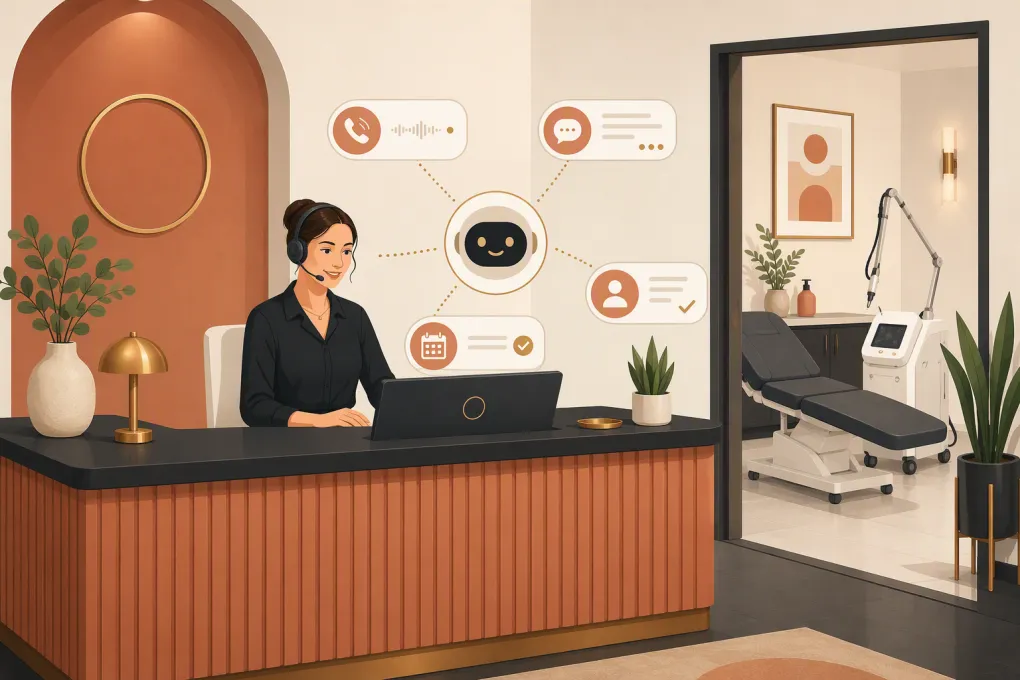 Watch · 20s
Tattoo removal leads rarely arrive when the front desk has time to deal with them. Someone calls during a treatment, sends a message after closing, or fills out a form while comparing several local clinics. If the response is delayed, that prospect may book elsewhere before your team sees the notification.
An AI receptionist gives tattoo removal clinics a practical way to answer routine questions, capture lead details, book consultations, follow up, and handle approved payment workflows around the clock. The goal is not to replace clinical judgment. It is to remove the administrative gaps that cause qualified inquiries to disappear.
See how Fitty answers and follows up with tattoo removal leads →
What an AI receptionist actually does
An AI receptionist is more than a recorded phone menu or a website chatbot that points visitors toward an FAQ page. It acts as a front-line agent across supported channels, following workflows defined by the clinic.
For a tattoo removal business, that can include:
- Answering calls and messages when staff are unavailable
- Explaining the clinic’s consultation process
- Capturing contact information and basic inquiry details
- Booking, rescheduling, or canceling consultations
- Sending confirmations and appointment reminders
- Following up with leads who did not book
- Routing clinical, urgent, or unusual questions to a person
- Sending approved deposit or payment requests
- Re-engaging appropriate past inquiries under clinic rules
The important distinction is that the system can take action. A basic answering service may collect a name and phone number. A well-configured AI receptionist can move the person to the next approved step before interest cools.
Why tattoo removal clinics lose otherwise viable leads
Most lead leakage comes from ordinary operational friction rather than poor demand.
Calls collide with treatment schedules
Laser procedures require the provider’s attention. Front-desk employees may also be checking in clients, turning rooms, processing payments, or supporting consultations. A ringing phone becomes the lowest-priority task even though it may represent a ready-to-book prospect.
Prospects ask questions outside business hours
Tattoo removal is often researched privately and outside working hours. A prospect may want to know whether you treat particular tattoo colors, how consultations work, or whether financing or payment options are available. Waiting until the next business day introduces an avoidable break in the buying process.
The first conversation is repetitive but nuanced
Many inquiries cover the same areas: treatment process, discomfort, expected number of sessions, pricing, downtime, candidacy, and appointment availability. Staff can answer these questions, but they must avoid making promises before evaluating the client.
An AI agent can provide clinic-approved general information while reserving individualized recommendations for a qualified provider.
Follow-up is inconsistent
A lead may ask a question, receive an answer, and then stop responding. That does not necessarily mean the person is uninterested. They may be comparing providers, checking their calendar, or waiting until payday. Without a defined follow-up sequence, these conversations are usually forgotten.
The ideal tattoo removal inquiry workflow
The strongest implementation starts with a clear workflow rather than a large library of generic answers.
1. Respond immediately and identify the request
The AI should determine whether the person wants to:
- Book an initial consultation
- Ask a general treatment question
- Reschedule an existing appointment
- Discuss a payment or deposit
- Reach a clinician or staff member
This prevents every inquiry from being forced into the same script.
2. Capture only useful preliminary information
For a new lead, useful fields may include:
- Name and preferred contact method
- Desired clinic location
- General tattoo location and approximate size
- Whether the tattoo has received previous removal treatments
- Preferred consultation days or times
- How the person found the clinic
Do not turn the opening conversation into a clinical interrogation. Detailed medical history, medication information, skin assessment, and consent documentation belong in the clinic’s approved intake process.
3. Answer within defined boundaries
Build a reviewed knowledge base covering:
- What happens during a consultation
- Services and technology offered by the clinic
- General preparation and aftercare guidance approved by the provider
- Clinic hours, locations, parking, and accessibility
- Deposit, cancellation, and rescheduling policies
- Financing or payment options actually available
- When a staff member must take over
Pricing deserves special attention. If cost depends on tattoo size, ink, placement, prior treatments, or a provider assessment, the AI should explain that clearly and book a consultation. It should not invent a quote simply because the prospect asks for one.
4. Offer real appointment availability
The agent should connect to the clinic’s scheduling rules rather than promising that someone will call back. Configure appointment types, provider availability, location, room or equipment constraints, buffers, lead times, and cancellation rules.
A consultation, treatment session, and follow-up assessment may require different durations and resources. Treating them as interchangeable creates schedule problems for staff.
5. Confirm and continue follow-up
After booking, send the clinic’s approved confirmation, preparation instructions, intake link, and policy information. If a prospect does not book, place them into a limited, purposeful follow-up sequence.
A useful follow-up message should help the lead make a decision. It might offer consultation times, answer a common concern, or provide a direct path to a staff member. Repeated messages that only ask whether the person is still interested will quickly feel like spam.
Use Fitty to answer, qualify, and book tattoo removal inquiries 24/7 →
What the AI should never decide
Tattoo removal operates close to medical and aesthetic care, so automation needs firm limits. An AI receptionist should not independently:
- Determine whether someone is medically eligible for treatment
- Diagnose a skin reaction or complication
- Guarantee complete tattoo removal
- Promise a specific number of sessions or outcome
- Give individualized medical advice
- Override provider protocols or contraindication rules
- Handle urgent symptoms as a routine sales conversation
Create explicit escalation paths for pregnancy-related questions, medication concerns, skin conditions, unexpected post-treatment reactions, dissatisfaction, refund disputes, and requests for a clinician.
If someone describes symptoms that may require urgent attention, the system should use language approved by the clinic and direct the person to an appropriate human or emergency resource. It should not attempt to diagnose the issue.
Privacy, consent, and compliance questions to address
Automation does not remove the clinic’s responsibility for handling information appropriately. Before launch, document what the agent collects, where that information is stored, who can access it, and how long it is retained.
Review the following with qualified legal or compliance counsel where applicable:
- Whether the workflow involves protected health information
- Whether vendors and configurations satisfy your privacy obligations
- How consent is obtained for automated calls and text messages
- How prospects can opt out of promotional communication
- Whether call recording requires notice or consent in relevant states
- How payment information is processed and protected
- Which messages are operational versus promotional
Avoid collecting sensitive medical details in an ordinary chat simply because the AI can ask for them. Use secure, approved forms and systems for clinical intake.
How to configure an AI receptionist without frustrating clients
A successful agent should sound direct and useful, not artificially enthusiastic. Start with these operating rules:
Give it one clear primary objective
For most new tattoo removal leads, the objective is to answer enough approved questions to book a consultation. Do not bury that action beneath a long sequence of qualifying questions.
Make human transfer easy
Let prospects ask for a person. Define when a live transfer is available, what happens after hours, and how the agent summarizes the conversation for staff. The client should not have to repeat every detail.
Use separate scripts for separate lead types
A first-time inquiry should not receive the same workflow as an existing client rescheduling a session. Create distinct paths for new consultations, active treatment clients, missed appointments, billing questions, and post-treatment concerns.
Test difficult questions before launch
Do not test only the ideal booking scenario. Ask the agent about guarantees, adverse reactions, refunds, minors, pregnancy, medications, pricing exceptions, and unavailable appointment times. Confirm that it stays within policy and escalates correctly.
Review conversations regularly
Audit calls and messages for inaccurate answers, awkward handoffs, booking errors, repeated objections, and questions missing from the knowledge base. Assign an owner to update policies whenever services, schedules, providers, or pricing change.
Measuring whether the system is working
Track operational outcomes, not just conversation volume. Useful measures include:
- New inquiries answered by channel and time of day
- Consultations booked from those inquiries
- Time from first contact to booking
- Leads requiring human follow-up
- Appointment reschedules and cancellations handled
- Consultation no-shows
- Deposits or payments successfully completed
- Opt-outs, complaints, and failed handoffs
- Common unanswered questions
Review results by location and lead source if you operate multiple clinics. A workflow that performs well for a high-intent phone lead may not fit someone responding to an educational social ad.
Where WTF Go and Fitty fit
WTF Go is an operating platform for appointment-based fitness and wellness businesses. Fitty, its AI receptionist and agent, is designed to handle the repetitive front-desk work that commonly causes lead loss: answering inquiries, booking appointments, following up, and collecting approved payments.
For tattoo removal operators, the practical value is continuity. A prospect can move from an after-hours question to a scheduled consultation without waiting for an employee to reopen the conversation. Staff can then focus on clinical evaluation, client experience, and the situations that genuinely require judgment.
The right setup still requires your clinic’s policies, scheduling logic, escalation rules, and approved answers. AI works best when it executes a disciplined operating process—not when it is expected to invent one.
See how WTF Go can support your tattoo removal front desk →
Frequently asked questions
Can an AI receptionist book tattoo removal consultations?
Yes. When connected to the clinic's scheduling rules, it can offer available times, book the correct appointment type, and send confirmations or intake instructions.
Can AI answer questions about tattoo removal pricing?
It can share approved pricing structures or explain which factors affect cost. If pricing requires an assessment, it should avoid quoting a final amount and book a consultation instead.
Should an AI receptionist provide medical advice?
No. It should provide only clinic-approved general information and escalate questions about candidacy, medications, skin reactions, contraindications, or treatment outcomes to qualified staff.
Can an AI receptionist follow up with leads by text?
It can support text follow-up when properly configured. Clinics should address consent, opt-outs, message purpose, and other applicable communication requirements before activating automated outreach.
Will an AI receptionist replace clinic staff?
It is better used to cover routine inquiries, scheduling, reminders, and follow-up. Staff remain essential for clinical decisions, complex service issues, sensitive conversations, and relationship-building.
Keep reading


Run your gym on autopilot with WTF Go
Fitty — your AI receptionist — answers calls and DMs, fills classes, follows up with every lead, and collects dues while you coach.