AI & Automation
AI Receptionist for Stretch Therapy Studios: Operator's Guide
See how an AI receptionist for stretch therapy studios handles leads, bookings, follow-up, and dues without losing the personal touch clients rightly expect.
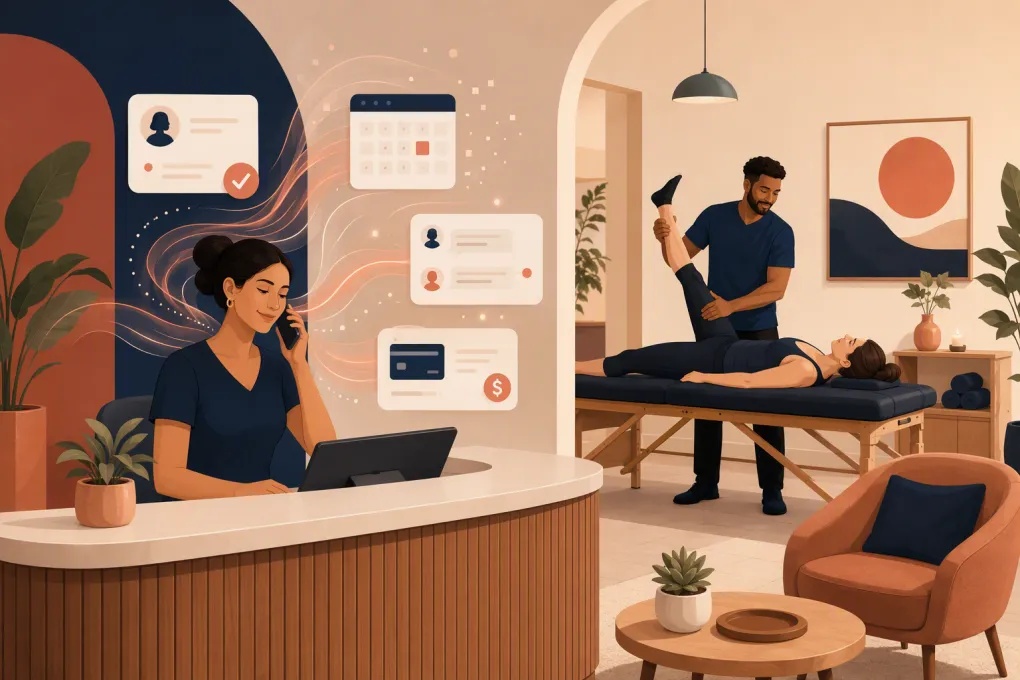 Watch · 20s
A stretch therapy studio does not usually lose a lead because the service is wrong. It loses the lead because nobody replied while the prospect was ready to book.
Your front desk may be helping a client, resetting a room, handling a late arrival, or already off the clock. Meanwhile, a prospective client is asking about first-session pricing, availability, what to wear, or whether assisted stretching is appropriate for a specific concern. If the answer comes hours later, that person may have already booked somewhere else.
An AI receptionist helps close that operational gap. It can respond to routine inquiries, qualify leads, guide people toward the right booking option, follow up with prospects, and handle repetitive account questions. The goal is not to remove the human experience from stretch therapy. It is to make sure clients can reach the business before and after the hands-on work begins.
See how Fitty can respond to stretch studio leads around the clock →
What an AI receptionist should handle for a stretch studio
A useful AI receptionist needs to do more than send a generic instant reply. It should move the conversation toward a clear next step while respecting the boundaries of a wellness business.
For most stretch therapy studios, that means covering five core workflows.
1. Answer common pre-booking questions
Prospects often need basic reassurance before they commit. An AI receptionist can answer approved questions such as:
- What happens during an introductory session?
- How long is each appointment?
- What should a client wear?
- Is there parking nearby?
- What are the studio’s operating hours?
- Does the studio offer memberships or packages?
- What is the cancellation policy?
- Can someone book with a preferred practitioner?
These answers should come from a studio-controlled knowledge base. The AI should not improvise policies, promise outcomes, or turn general service information into medical advice.
2. Convert inquiries into appointments
Answering a question is only half the job. The next action should be obvious.
When a lead asks about availability, the AI receptionist should identify the appropriate service, location, preferred time, and any relevant booking requirements. It should then send the lead into the correct scheduling flow rather than telling the person to call back later.
A strong conversation might follow this sequence:
- Confirm whether the person is a new or returning client.
- Ask what type of session they want.
- Clarify the preferred location, day, and time range.
- Present available booking options or a direct scheduling path.
- Confirm required intake steps, payment terms, and policies.
- Send a reminder if the booking is not completed.
The fewer handoffs and disconnected links involved, the easier it is for an interested lead to become a scheduled client.
3. Follow up without relying on staff memory
Stretch studio leads do not always book during the first conversation. Some ask a question and disappear. Others start scheduling but stop before confirming.
An AI receptionist can place those leads into structured follow-up rather than leaving sticky notes at the front desk. Follow-up messages can address the original question, restate the next step, and offer help if the prospect is unsure which session to choose.
The cadence should be controlled. Repeated messages without context can feel aggressive, especially in a relationship-driven wellness service. Define when follow-up stops, how someone opts out, and when a person should take over.
4. Support existing clients
New leads are not the only people contacting the studio. Existing clients may need help with:
- Rescheduling or canceling an appointment
- Checking package or membership details
- Updating a payment method
- Understanding a late-cancel policy
- Finding an intake form
- Confirming the studio address or practitioner
- Resolving an overdue balance
Automating straightforward requests gives staff more time for situations that require judgment. It also keeps simple administrative questions from interrupting sessions.
5. Escalate sensitive conversations
An AI receptionist needs clear limits. Stretch therapy clients may mention pain, injuries, surgery, pregnancy, mobility restrictions, or diagnosed conditions. Those conversations require careful handling.
The AI should not diagnose a condition, determine medical suitability, or claim that assisted stretching will treat an injury. It should use studio-approved language, share applicable prerequisites, and escalate clinical or safety questions to a qualified person.
Urgent complaints, refund disputes, accommodation requests, and emotionally charged conversations should also have a human handoff path.
Where stretch therapy studios gain the most leverage
AI is most valuable where demand and staffing do not line up.
After-hours inquiries
Many prospects research wellness services during evenings or weekends. An immediate, useful response keeps the inquiry active even when the studio is closed. The AI can answer standard questions, capture contact details, and lead the prospect toward booking without requiring an owner to monitor a personal phone.
Busy appointment transitions
Practitioners and front-desk staff should not have to choose between serving the person in front of them and responding to every incoming message. An AI receptionist can cover routine conversations while the team resets rooms, checks clients out, or prepares for the next appointment.
Multi-location routing
For multi-location operators, booking errors often begin when a lead reaches the wrong location or receives information that does not apply there. The AI should distinguish location-specific hours, services, practitioner schedules, offers, and policies before directing the lead.
This requires disciplined data. If each location uses different policy documents or outdated service names, automation will expose the inconsistency rather than solve it.
Membership and package administration
Recurring services create recurring questions. An AI receptionist can explain approved membership terms, send payment-update instructions, and follow up on dues according to the studio’s rules.
Fitty is built to answer leads, support booking workflows, follow up, and collect dues 24/7 inside the broader WTF Go operating system. That reduces the need to stitch together a chatbot, scheduler, lead tracker, and separate payment reminder process.
Explore how Fitty handles stretch studio booking and dues workflows →
How to set up an AI receptionist without frustrating clients
The software matters, but implementation determines whether it helps.
Build an approved answer library
Start with actual questions from calls, website forms, social messages, and front-desk conversations. Organize answers by topic:
- Introductory sessions
- Services and session lengths
- Pricing, packages, and memberships
- Practitioner selection
- Booking and cancellation rules
- Intake requirements
- Accessibility and parking
- Location-specific information
- Payment and account support
Assign an owner to each policy. When a price, schedule, or rule changes, that person should update the source used by the AI.
Define what the AI must never say
Create explicit restrictions around medical claims, guaranteed results, refunds, exceptions, and unapproved discounts. Also define phrases that trigger escalation, such as references to a recent operation, severe pain, a billing dispute, or a request to speak with management.
This is especially important when intake conversations may include health-related information. Review what data the system collects, where it is stored, who can access it, how long it is retained, and whether your legal or compliance obligations require particular vendor agreements or safeguards.
Connect the next step
Do not deploy an AI receptionist that answers questions but cannot move the client forward. Connect it to the systems required for booking, lead tracking, account support, and payment follow-up.
Test for practical failures:
- Does it offer a service that is unavailable at the selected location?
- Can it distinguish an intro offer from a returning-client session?
- Does it recognize existing clients instead of treating everyone as a new lead?
- What happens when no preferred times are available?
- Can staff see the conversation before taking over?
- Does the lead receive conflicting follow-up from another system?
Make human help easy to reach
Clients should know when they are interacting with an automated assistant. They should also have a clear way to request a person.
A handoff should include the conversation history, contact information, requested service, preferred location, and unresolved issue. Otherwise, the client has to repeat everything, defeating much of the convenience.
A practical rollout plan
Avoid switching on every workflow at once. Roll out in stages.
Stage 1: Frequently asked questions
Launch with low-risk questions about hours, directions, session preparation, basic service descriptions, and published policies. Review conversations daily and correct unclear answers.
Stage 2: Lead capture and booking
Add qualification questions, scheduling paths, incomplete-booking follow-up, and location routing. Test the entire journey using new-client and returning-client scenarios.
Stage 3: Client account workflows
Introduce rescheduling guidance, package questions, membership support, and dues follow-up. Set stricter authentication and escalation rules where account or payment information is involved.
Stage 4: Ongoing optimization
Review what clients ask, where conversations stop, and why staff take over. Useful operating metrics include:
- Response time by channel
- Inquiries that reach the booking step
- Completed bookings from AI-assisted conversations
- Unfinished bookings requiring follow-up
- Human handoff reasons
- Incorrect or outdated answers
- Opt-outs and complaints
- Overdue accounts resolved after follow-up
Do not judge the system only by message volume. The important question is whether it produces accurate, completed outcomes without creating extra cleanup for staff.
What to look for before choosing a platform
Before committing to an AI receptionist, ask for a live demonstration using your own stretch therapy scenarios. Evaluate whether the platform can:
- Maintain separate information for each location
- Work with your booking and client records
- Identify new leads versus active clients
- Keep conversation history visible to staff
- Follow studio-specific escalation rules
- Support permission controls and auditability
- Explain how client data is handled
- Update policies without technical work
- Coordinate follow-up without duplicate messages
- Support payment or dues workflows where appropriate
Also examine the operating burden. A collection of disconnected tools may appear flexible, but every integration adds another place for client data, service names, and automation rules to fall out of sync.
An all-in-one system can be particularly useful when the same team owns lead response, scheduling, memberships, and collections. WTF Go combines those operating workflows with Fitty, so the AI receptionist is part of the studio’s client journey rather than a standalone chat window.
See whether WTF Go and Fitty fit your stretch therapy studio →
The right goal is better access, not less humanity
Stretch therapy is personal. Clients are trusting practitioners with their comfort, mobility goals, time, and money. Automation should make the studio easier to reach while protecting the moments where human judgment matters.
Use AI for speed, consistency, routing, reminders, and routine administration. Keep practitioners and managers responsible for nuanced recommendations, sensitive concerns, exceptions, and relationship repair. When those boundaries are clear, an AI receptionist can give a lean studio the responsiveness of a larger operation without turning the client experience into a maze of forms and voicemail.
Frequently asked questions
Can an AI receptionist book stretch therapy appointments?
Yes, if it is connected to the studio's scheduling workflow. It should identify the service, location, client status, and preferred time before directing or completing the booking.
Can an AI receptionist answer questions about pain or injuries?
It can provide approved general information, but it should not diagnose conditions or promise treatment outcomes. Medical, post-surgical, and safety-related questions should be escalated to a qualified person.
Will clients know they are speaking with AI?
They should. Clear disclosure and an easy path to human support create a better experience than pretending an automated assistant is a staff member.
What information should a stretch studio prepare before setup?
Prepare current services, prices, schedules, locations, staff assignments, booking rules, cancellation policies, intake requirements, membership terms, and escalation procedures.
Can Fitty follow up on leads and unpaid dues?
Fitty is designed to answer leads, support bookings, follow up, and collect dues 24/7 as part of the WTF Go operating system.
Keep reading

Run your gym on autopilot with WTF Go
Fitty — your AI receptionist — answers calls and DMs, fills classes, follows up with every lead, and collects dues while you coach.