AI & Automation
AI Receptionist for Sports Physical Therapy Clinics: Guide
See how an AI receptionist for sports physical therapy clinics handles calls, screens leads, books evaluations, follows up, and protects staff time daily.
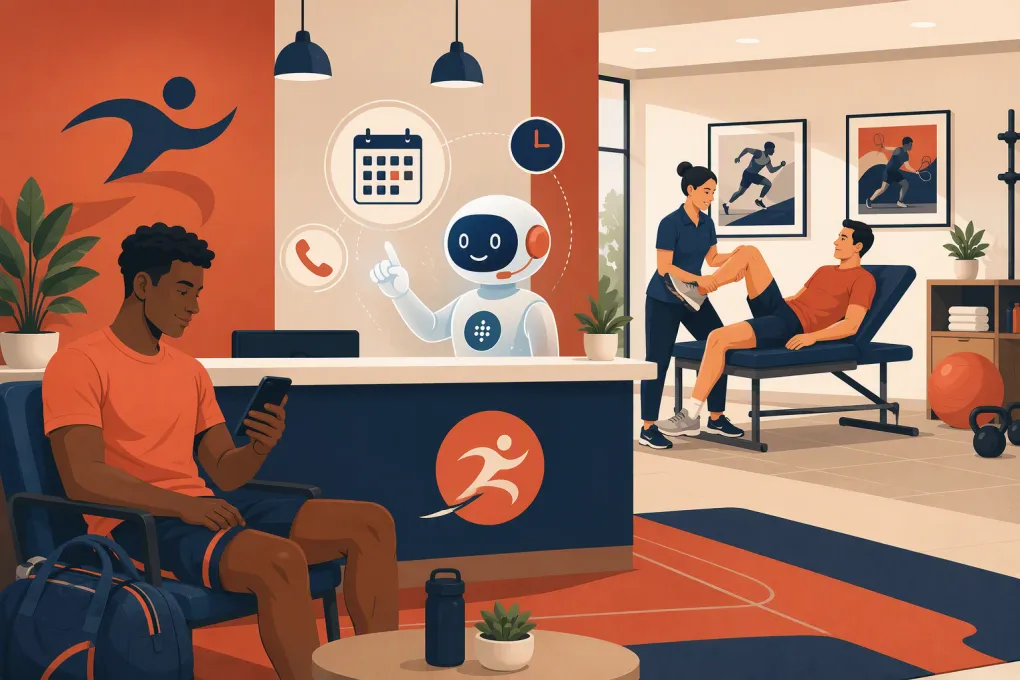 Watch · 20s
Missed calls are expensive for a sports physical therapy clinic—not only because a prospective patient may call another provider, but because each unanswered inquiry creates more administrative work later. Someone has to return the call, collect the same basic information, explain the next step, and find an appointment that works.
An AI receptionist can take over much of that repetitive front-desk workload. The useful version is not a generic chatbot that recites office hours. It is an operational layer that answers promptly, follows a clinic-approved conversation, books appropriate visits, sends reminders, and hands exceptions to a person.
The key is knowing what to automate, what must stay with trained staff, and how to protect patient information throughout the process.
What an AI receptionist should do for a sports PT clinic
A sports physical therapy clinic has a different intake process from a general fitness business. Callers may have acute injuries, postoperative protocols, referral requirements, insurance questions, or a deadline tied to a season or competition.
The AI receptionist should handle administrative workflows without acting like a clinician. A practical scope includes:
- Answering calls and website inquiries outside front-desk hours
- Collecting basic contact details and the caller’s preferred location
- Asking whether the person is a new or returning patient
- Identifying the requested service, such as an evaluation, recovery session, or performance consultation
- Explaining clinic-approved policies and next steps
- Offering eligible appointment times
- Sending confirmation and reminder messages
- Following up with leads who did not schedule
- Escalating urgent, complex, or sensitive conversations to staff
The system should not diagnose an injury, recommend treatment, interpret imaging, or promise insurance coverage. Those boundaries need to be explicit in both the AI’s instructions and the clinic’s operating procedures.
See how Fitty can handle new inquiries and after-hours follow-up for your clinic →
Where sports physical therapy clinics lose inquiries
Most inquiry leakage occurs at predictable points. Fixing these points is more valuable than adding another disconnected communication tool.
Calls during treatment blocks
Therapists and front-desk employees cannot always answer while patients are checking in, paying, or receiving care. Voicemail asks the prospective patient to do more work and delays the conversation.
An AI receptionist can answer immediately, capture the reason for the call, and either complete an approved action or create a structured handoff. That is more useful than sending staff a phone number with no context.
After-hours and weekend demand
Athletes often search for help after work, after practice, or immediately after an injury. The clinic does not need a person sitting at the desk all night, but it does need a controlled response.
The AI can explain that it is handling scheduling on behalf of the clinic, collect limited intake information, and offer available appointments. If booking cannot be completed, it can set an expectation for human follow-up rather than leaving the caller uncertain.
Slow follow-up on unbooked leads
Not every caller is ready to schedule during the first conversation. Some need to check a referral, ask a parent, confirm transportation, or review their calendar.
These inquiries should enter a defined follow-up sequence. For example:
- Send a recap and booking link immediately.
- Follow up at a clinic-approved interval if no visit is booked.
- Ask whether the person still wants help scheduling.
- Stop routine outreach when the person declines or opts out.
- Route insurance, clinical, or referral questions to the correct employee.
Consistent follow-up matters, but frequency and messaging should remain appropriate. Repeated, context-free texts can make a legitimate clinic look careless.
Build the workflow before choosing the technology
An AI receptionist will expose a messy intake process rather than fix it automatically. Before deployment, document how a qualified front-desk employee handles common scenarios.
Define appointment eligibility
Specify which visits the AI may schedule and which require review. Your rules might account for:
- New versus returning patients
- Initial evaluations versus follow-up appointments
- Cash-pay services versus insurance-based care
- Direct-access rules and referral requirements
- Postoperative cases
- Age-related consent requirements
- Clinic location and provider specialization
- Appointment duration and required equipment
Do not let the AI improvise when eligibility is unclear. The correct action is usually to capture the minimum necessary details and request staff review.
Create an approved answer library
Write short, direct answers for the questions your team receives repeatedly:
- Where are you located?
- Do you treat my sport or injury area?
- What should I bring to an evaluation?
- Do I need a referral?
- Do you accept my insurance?
- What is your cancellation policy?
- How long is the first visit?
For insurance questions, distinguish between participating with a plan and guaranteeing payment. Coverage, authorization, deductibles, and patient responsibility may still require verification. The AI should never turn a general network statement into a coverage promise.
Set escalation triggers
An AI receptionist needs a clear exit ramp. Escalate conversations involving severe or worsening symptoms, possible emergencies, postoperative complications, complaints, payment disputes, unclear consent, legal requests, or questions requiring clinical judgment.
Use clinic-approved emergency language. The system should not assess urgency as if it were a licensed provider. It should direct callers to appropriate emergency resources when predefined warning language appears and notify staff according to your protocol.
Protect patient information from the first interaction
A sports PT clinic may receive protected health information during an inquiry. That means vendor selection cannot be based only on how natural the AI sounds.
Ask any provider detailed questions about:
- Whether it will sign a business associate agreement when required
- What information is collected and where it is stored
- Whether conversations are recorded or transcribed
- Who can access transcripts, recordings, and contact records
- How long information is retained
- How data is encrypted in transit and at rest
- Whether customer data is used to train shared models
- How information can be corrected or deleted
- What happens when an account is terminated
- Which subprocessors participate in the service
Your legal and compliance obligations depend on your organization, workflow, contracts, and applicable law. Do not assume that an AI product is appropriate for patient communications because it uses healthcare language in its marketing.
Apply the minimum-necessary principle operationally as well. The first scheduling conversation usually does not need a detailed medical history. Collect only what is needed to route or book the inquiry, then move formal intake into the clinic’s approved system.
Connect the AI to an actual front-desk process
Automation fails when the AI, calendar, inbox, and staff task list disagree. Decide which system is authoritative for availability and patient status.
A sound handoff should give staff a compact record containing:
- Caller name and contact information
- New or returning patient status
- Requested service and location
- Booking status
- Unresolved administrative questions
- Reason for escalation
- Consent or communication preferences collected during the interaction
Avoid copying sensitive details into multiple tools without a clear reason. More copies mean more places to manage access, retention, and corrections.
Fitty, WTF Go’s AI receptionist, is built to answer leads, manage booking conversations, follow up, and support payment collection workflows around the clock. Sports PT operators should confirm the exact configuration, integrations, and handling requirements needed for their clinic before launch.
Explore how Fitty could support your clinic’s inquiry and booking workflow →
A practical rollout plan
Do not switch every phone and messaging workflow at once. Start with a narrow use case where success is easy to evaluate.
Phase 1: After-hours inquiry capture
Let the AI answer when staff are unavailable. Limit its actions to approved questions, basic scheduling, and structured handoffs. Review conversations daily during the initial rollout.
Phase 2: Booking and reminders
Once appointment rules are reliable, allow the AI to book selected visit types and send confirmations. Test cancellations, rescheduling, duplicate contacts, unavailable slots, and multi-location requests.
Phase 3: Unbooked lead follow-up
Add clinic-approved follow-up sequences. Make sure the system recognizes when someone has already booked, declined, opted out, or moved into a staff-managed conversation.
Phase 4: Broader administrative support
Only after the core workflow is stable should you consider payment reminders, reactivation, class or recovery-service booking, and other recurring communication.
What to measure
Evaluate operational outcomes rather than the novelty of the technology. Useful measures include:
- How many inquiries receive an immediate response
- How many eligible inquiries reach a booked evaluation
- How many conversations require staff intervention
- Why handoffs occur
- How often booking rules produce an incorrect result
- Whether staff spend less time returning routine calls
- Cancellation and rescheduling patterns
- Opt-outs, complaints, and compliance exceptions
Review failed conversations, not just successful bookings. A system that books routine cases but mishandles referral questions or urgent language still needs work.
The right role for AI at the front desk
An AI receptionist should create access, consistency, and cleaner handoffs. It should not replace clinical judgment or hide a broken scheduling process.
For sports physical therapy clinics, the best first target is usually the gap between initial interest and a confirmed next step. Answer the inquiry promptly, collect only necessary information, book when the rules are clear, and bring staff in when they are not. That gives patients a faster response while preserving human attention for the work that actually requires it.
Frequently asked questions
Can an AI receptionist book physical therapy evaluations?
Yes, if it is connected to an appropriate scheduling workflow and follows clinic-defined eligibility rules. Complex cases, unclear referrals, and clinical questions should be escalated to staff.
Is an AI receptionist automatically HIPAA compliant?
No. Suitability depends on the vendor's safeguards, contracts, data practices, configuration, and how the clinic uses the system. Ask about business associate agreements, storage, access, retention, and subprocessors.
Can AI verify a patient's insurance coverage?
It can collect plan information or explain approved general policies, but it should not guarantee coverage or patient cost. Formal eligibility and benefit verification may require a separate payer or staff workflow.
What happens when a caller describes a serious injury?
The AI should follow a predefined escalation and emergency-response script rather than assess or diagnose the condition. Clinic staff should define the triggering language and notification process.
Should a clinic replace its front desk with an AI receptionist?
Usually, the stronger use is supporting the front desk by covering missed calls, routine booking, reminders, and follow-up. People remain necessary for clinical judgment, exceptions, sensitive conversations, and complex administrative cases.
Keep reading

Run your gym on autopilot with WTF Go
Fitty — your AI receptionist — answers calls and DMs, fills classes, follows up with every lead, and collects dues while you coach.