AI & Automation
AI Receptionist for Sports Massage Clinics: Owner's Guide
Learn how an AI receptionist for sports massage clinics handles calls, books sessions, follows up with leads, and supports staff without missed inquiries.
 Watch · 20s
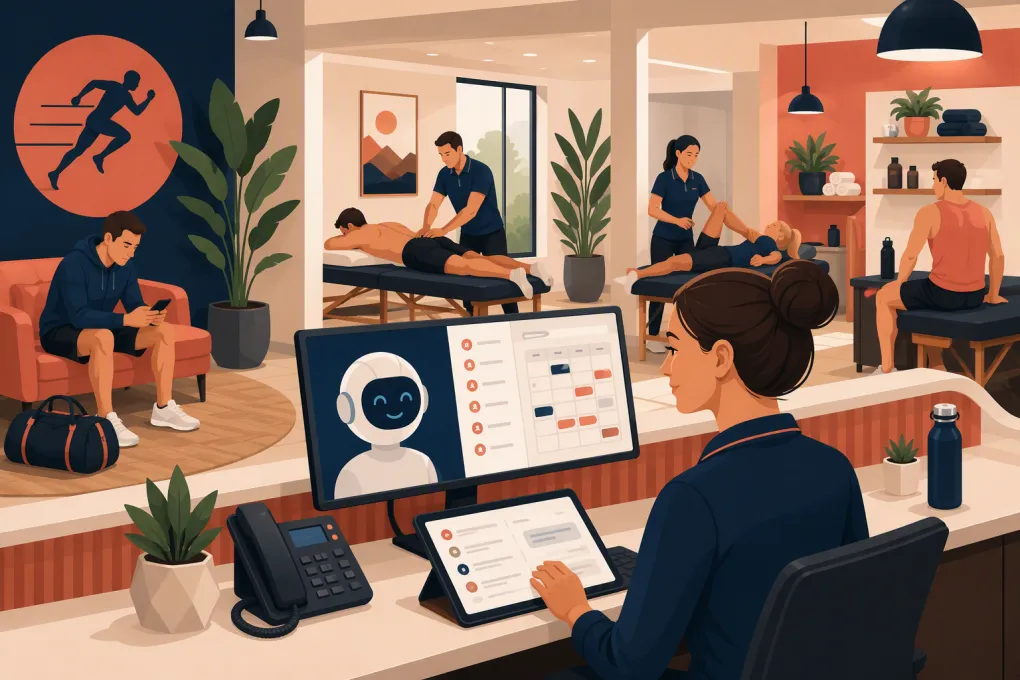
A missed call at a sports massage clinic is rarely just a missed call. It may be a runner looking for an opening before race day, a team manager coordinating several athletes, or an existing client trying to reschedule. If nobody responds quickly, that person can move to the next clinic on the search results page.
An AI receptionist gives clinics a way to respond when therapists are in sessions, the front desk is busy, or the business is closed. The right system can answer common questions, collect lead details, book appropriate services, send confirmations, and hand sensitive or unusual conversations to a person.
The goal is not to eliminate your staff. It is to stop making skilled employees and therapists interrupt client care to handle repetitive reception work.
Where sports massage clinics lose bookings
Sports massage creates a distinctive front-desk workload. Prospective clients often have more questions than someone booking a standard relaxation massage. They may ask about therapist experience, modalities, session length, availability, what to wear, or whether a service is appropriate before or after an event.
The operational problems usually appear in a few places:
- Calls arrive while everyone is working with clients.
- Website leads sit unanswered until the next business day.
- Staff repeatedly explain basic policies and preparation instructions.
- Clients select the wrong service, therapist, or session duration.
- Rescheduling creates gaps that are difficult to refill.
- Follow-up depends on someone remembering to send it.
- Different staff members give different answers about deposits or cancellation policies.
Voicemail does not solve these problems. It records demand but still requires a person to listen, return the call, gather details, and find an appointment.
See how Fitty can answer sports massage inquiries and move clients toward booking →
What an AI receptionist should handle
A useful AI receptionist must do more than produce conversational responses. It should complete defined operational tasks using the clinic’s real booking rules.
Answer common questions consistently
Build a controlled knowledge base covering questions such as:
- Clinic hours, location, parking, and accessibility
- Available services and session lengths
- Therapist specialties and supported modalities
- New-client arrival and intake instructions
- Clothing and draping expectations
- Pricing, packages, memberships, and accepted payment methods
- Cancellation, late-arrival, and no-show policies
- Whether the clinic works with teams, clubs, or event organizers
Answers should come from approved clinic information rather than an AI model improvising. Assign one person to maintain the source material whenever services, staff, or policies change.
Book the right appointment
Appointment scheduling is where a receptionist becomes operationally valuable. The system needs access to current availability and enough rules to avoid creating cleanup work.
Configure it to account for:
- Service duration and required cleanup buffers
- New-client intake time
- Therapist schedules and modality-specific qualifications
- Room or equipment availability
- Same-day booking cutoffs
- Age restrictions or guardian requirements
- Deposits and cancellation terms
- Multi-location availability
A client should not be able to book a service with a therapist who does not offer it. Likewise, the system should not promise a room, treatment tool, or appointment slot that is already committed elsewhere.
Capture and follow up with leads
Not every inquiry is ready to book immediately. Someone may be comparing availability, waiting for a training schedule, or asking on behalf of a group.
The AI receptionist should record the person’s name, contact details, requested service, preferred timing, and location. It can then send an appropriate follow-up instead of leaving the inquiry buried in a voicemail inbox.
Keep the follow-up practical. Reference what the client asked about, provide a clear booking action, and offer a human handoff. Repeated generic messages can damage trust rather than recover the lead.
Support deposits and outstanding payments
If your clinic requires deposits, the receptionist should explain the policy and direct clients through the approved payment workflow. It may also help contact clients about an unpaid balance or failed recurring payment, provided the message is accurate and gives them a secure way to resolve it.
Do not ask clients to send card details through ordinary text messages or conversational fields. Payment information should be collected through a secure payment process connected to your business system.
Explore how WTF Go and Fitty connect conversations, bookings, follow-up, and payment workflows →
What the AI should not do
Sports massage conversations can drift into health assessment. A prospect might describe pain, an injury, swelling, medication use, or symptoms after a competition. That is where the system needs a firm boundary.
An AI receptionist should not:
- Diagnose injuries or explain the cause of symptoms
- Tell someone that massage is medically safe for their condition
- Recommend treatment in place of a qualified professional
- Minimize urgent or concerning symptoms
- Invent therapist credentials, availability, or outcomes
- Argue with an upset client about a charge or clinical experience
Create an escalation path for anything involving potential injury, contraindications, complaints, refund disputes, accessibility needs, or uncertainty about the correct service. For emergencies or potentially urgent symptoms, the system should direct the person to appropriate emergency or medical resources rather than trying to continue the booking conversation.
Build the workflow before switching it on
Automation exposes unclear policies. If staff members disagree about what counts as a late cancellation, an AI receptionist cannot fix the policy for you.
1. Map your real inquiry types
Review recent calls, messages, contact forms, and front-desk questions. Group them into categories such as new booking, rescheduling, service selection, directions, team inquiry, payment question, and clinical escalation.
Use real phrasing from clients. Athletes may ask for recovery work, deep tissue, mobility work, pre-event massage, or help with a specific body area even when those terms do not match your menu.
2. Define approved answers and actions
For each inquiry type, document:
- What the receptionist may say
- Which booking action it may take
- What information it may collect
- When it must involve a human
- Which staff member or queue receives the handoff
Keep answers direct. A scheduling conversation does not need a lecture on massage methodology.
3. Clean up the booking configuration
Check service names, durations, therapist assignments, buffers, resources, location settings, and blocked time. Remove outdated services and internal labels that would confuse clients.
If your menu has several similar options, provide simple selection guidance. For example, distinguish a first appointment from a returning-client session without allowing the AI to make a clinical judgment.
4. Test difficult scenarios
Do not test only the ideal booking. Try situations that commonly break workflows:
- A new client asks for a same-day session.
- Two people want consecutive appointments.
- An athlete is unsure which service to select.
- A client asks to cancel inside the policy window.
- The requested therapist is unavailable.
- A prospect describes an injury.
- A client wants to use a package at another location.
- Someone asks a question the knowledge base does not cover.
The correct response is sometimes a handoff, not an automated booking.
5. Launch with human review
During the initial rollout, review transcripts, booking outcomes, failed actions, and escalations frequently. Correct the source information instead of patching individual conversations one at a time.
Compliance and client trust
An AI receptionist may handle personal information, so data collection should be limited to what the workflow actually needs. Avoid collecting detailed medical histories in a general-purpose lead conversation. Send clients to your approved intake process when health information is required.
HIPAA applicability depends on the clinic’s role, relationships, and data flows—not simply whether the business offers massage. If protected health information will be handled, verify the vendor’s contractual and technical safeguards, including whether a business associate agreement is available when required. Consult qualified counsel for your specific obligations.
Also review consent requirements for automated calls and texts, state call-recording rules, retention settings, user permissions, and opt-out handling. Make it clear when a client is interacting with an automated system, and always provide a workable route to a person.
How to evaluate an AI receptionist
A polished demo is not enough. Ask each vendor to show how the system handles your actual schedule and edge cases.
Evaluate:
- Booking access: Can it read live availability and create, change, or cancel appointments safely?
- Rule control: Can you define services, staff eligibility, buffers, deposits, and escalation conditions?
- Communication channels: Does it support the channels your clients use, such as phone, web chat, or text?
- Human handoff: Can staff see the context without making the client repeat everything?
- Knowledge management: Can your team update approved answers without rebuilding the system?
- Payment security: Are clients sent through a secure collection workflow?
- Multi-location support: Can it respect separate schedules, staff, services, and policies?
- Reporting: Can you review inquiries, booking outcomes, handoffs, and unresolved conversations?
- Data controls: Are permissions, retention, export, and deletion processes clear?
- Implementation support: Who configures the workflows and validates them before launch?
WTF Go is designed as an operating system for gyms, studios, spas, and wellness businesses. Fitty, its AI receptionist, supports the front-end work that often gets dropped between systems: responding to leads, booking, following up, and helping collect dues or payments.
See whether Fitty fits your clinic’s scheduling and follow-up workflow →
Measure outcomes that affect operations
Do not judge the system by how human it sounds. Judge it by whether clinic operations improve without creating new errors.
Track a baseline before launch, then monitor:
- Missed and unanswered inquiries
- Time from inquiry to first response
- Bookings created from inbound conversations
- Conversations requiring staff intervention
- Incorrect bookings or manual corrections
- Deposit completion
- Cancellations and rescheduling outcomes
- Unanswered questions that need knowledge-base updates
Review quality as well as volume. A booked appointment is not a win if it is assigned to the wrong service, therapist, or location.
The best AI receptionist for a sports massage clinic is not the one that talks the most. It is the one that follows your rules, protects clinical boundaries, completes routine work, and gets a person involved when judgment is required.
Frequently asked questions
Can an AI receptionist book sports massage appointments?
Yes, if it is connected to live scheduling and configured with service durations, therapist eligibility, buffers, locations, and booking policies.
Can an AI receptionist answer questions about injuries?
It can provide approved administrative information, but it should not diagnose injuries or decide whether massage is medically appropriate. Clinical questions should be escalated to a qualified person.
Will an AI receptionist replace clinic front-desk staff?
It is better used to handle repetitive and after-hours work while staff manage exceptions, sensitive conversations, client relationships, and tasks requiring judgment.
What should a sports massage clinic automate first?
Start with common questions, new-client lead capture, straightforward appointment booking, confirmations, and follow-up. Add more complex workflows only after testing escalation and scheduling rules.
Is an AI receptionist appropriate for a multi-location massage clinic?
Yes, provided it can distinguish each location's services, staff, availability, resources, pricing, and policies while giving operators centralized oversight.
Keep reading

Run your gym on autopilot with WTF Go
Fitty — your AI receptionist — answers calls and DMs, fills classes, follows up with every lead, and collects dues while you coach.