AI & Automation
AI Receptionist for Spa Treatment Package Sales Playbook
Learn how an AI receptionist for spa treatment package sales can qualify leads, explain offers, book consultations, and follow up without missed calls.
 Watch · 20s
Treatment package sales rarely fail because nobody wants the service. They fail in the gaps: a missed call during a treatment, a web lead answered the next morning, an incomplete explanation of the package, or a prospect who says they need to think about it and never hears from the spa again.
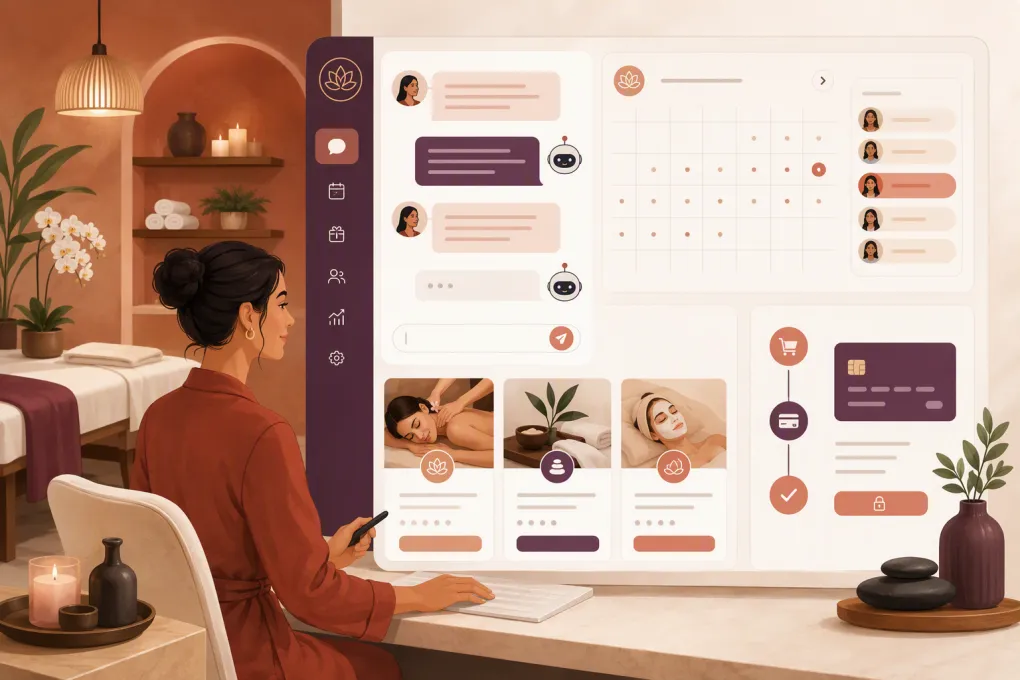
An AI receptionist for spa treatment package sales can close those operational gaps. It can respond immediately, answer approved questions, qualify the prospect, book the right next step, and continue following up when the front desk is busy or closed. The goal is not to replace experienced spa staff. It is to make sure interested buyers consistently reach them with the context needed to complete the sale.
Why treatment package inquiries are difficult to manage
A package inquiry is more complex than a request for opening hours. Prospects may want to know:
- Which treatment is appropriate for their goal
- What is included in the package
- How sessions are scheduled
- Whether there are eligibility requirements
- What the package costs and how payment works
- Whether they need a consultation first
- What happens if they need to reschedule
Answering these questions takes time, and some questions require a licensed provider rather than a receptionist. Meanwhile, prospects often contact several spas and choose the business that provides the clearest path forward.
A conventional voicemail box puts the burden on the prospect. A basic chatbot may collect a name and phone number but still leave the sales work untouched. A useful AI receptionist should carry the conversation as far as your policies and clinical boundaries allow.
See how Fitty can handle spa package inquiries and follow-up around the clock →
What an AI receptionist should do for package sales
The strongest workflow is not simply answer, pitch, and close. It moves the prospect through defined stages while protecting the spa from inaccurate promises.
| Sales stage | AI receptionist task | Desired outcome |
|---|---|---|
| New inquiry | Respond and identify the prospect’s goal | Relevant conversation begins |
| Qualification | Ask approved, non-diagnostic questions | Correct service path is identified |
| Education | Explain package structure and policies | Prospect understands the offer |
| Conversion | Book a consultation or approved treatment | A specific next step is secured |
| Follow-up | Re-engage prospects who did not book | Open inquiries do not disappear |
| Handoff | Send context to the appropriate employee | Staff can continue without repetition |
Respond across the channels prospects actually use
Package inquiries may arrive through calls, website forms, online chat, social campaigns, or text messages. The conversation should enter one shared lead record rather than creating separate lists for each channel.
At minimum, capture:
- Name and contact details
- Service or package of interest
- Primary goal stated in the prospect’s own words
- Preferred location, provider, and timing
- Consultation status
- Questions or objections raised
- Consent and communication preferences
- Current sales stage and next action
This prevents a common front-desk problem: asking the prospect to repeat everything when an employee takes over.
Ask qualifying questions without diagnosing
An AI receptionist can gather information, but it should not decide whether a treatment is medically appropriate. Qualification questions should focus on routing and scheduling.
For example:
- What result are you hoping to achieve?
- Is there a particular treatment or package you are considering?
- Have you visited this location before?
- Would you prefer to start with a consultation?
- Which days and times usually work for you?
If the prospect mentions pregnancy, medication, a medical condition, a previous reaction, or another potential contraindication, the system should stop making service recommendations and route the question to an authorized provider.
That boundary matters. The AI can explain your process; it should not improvise clinical advice.
Build a package knowledge base the AI can trust
An AI receptionist is only as reliable as the source material behind it. Do not train it from scattered social posts, outdated brochures, and employee memory.
Create one approved record for every package containing:
- Package name and plain-language purpose
- Treatments or sessions included
- Consultation requirements
- Current price or approved price range
- Deposit and payment-plan rules
- Expiration, cancellation, and transfer policies
- Scheduling restrictions
- Membership or promotional eligibility
- Approved answers to common questions
- Questions that require employee or provider review
Assign an owner to each record and review it whenever pricing, protocols, or policies change. Retire expired promotions immediately so the AI does not quote an offer that no longer exists.
Separate education from medical claims
Package explanations should describe what the spa offers without guaranteeing outcomes. Avoid language such as guaranteed results, completely safe, or suitable for everyone.
A safer structure is:
- Explain what the package contains
- Describe the usual customer journey
- State that individual suitability and results vary
- Direct clinical questions to a qualified provider
- Offer to book the required consultation
This makes the conversation useful without turning an automated system into an unqualified clinician.
Design the conversion path before automating it
Automation will not fix a vague sales process. Decide what the correct next step is for each package.
For a straightforward wellness service, the next step may be an appointment. For a higher-consideration aesthetic treatment, it may be a consultation. For an existing client, it could be a renewal conversation or payment link.
Each package should have one primary call to action and a fallback:
- Primary: Book the required consultation or appointment
- Fallback: Request a call from a package specialist
Do not end conversations with someone will contact you. Give the prospect available times, confirm the selection, and send clear preparation details when appropriate.
If a deposit is required, explain the amount and policy before presenting the secure payment step. Payment card information should be handled through a compliant payment flow, not copied into free-text messages or staff notes.
Use WTF Go and Fitty to connect lead conversations, booking, follow-up, and payment workflows →
Follow up without making the spa sound robotic
Many prospects are interested but not ready during the first conversation. They may need to check a calendar, compare payment options, or speak with a partner. That is where structured follow-up earns its place.
Create follow-up paths based on behavior rather than sending the same message to everyone.
Prospect asked about price but did not book
Recap what the package includes, answer the pricing question directly, and offer the next available consultation times. Do not hide the requested information behind a forced phone call unless the package genuinely requires individualized pricing.
Prospect selected a time but did not finish booking
Remind them that the booking is incomplete and provide a direct route back to the scheduling step. If availability is not being held, say so clearly.
Prospect completed a consultation but did not purchase
Reference the approved recommendation from the consultation record rather than inventing one. Invite questions, clarify payment or scheduling policies, and provide a human handoff for clinical concerns.
Existing client may be ready to renew
Trigger outreach from package usage or expiration data when your system supports it. Confirm whether the package is still appropriate before presenting a renewal path, especially when the client’s circumstances or treatment plan may have changed.
Every automated sequence needs a stop condition. End promotional follow-up when the person books, purchases, opts out, asks for an employee, or becomes ineligible for the offer.
Put non-negotiable guardrails in place
Before activating an AI receptionist, define what it may say, what it may collect, and when it must escalate.
Your guardrails should cover:
- No diagnosis, prescribing, or individualized medical advice
- No guaranteed treatment outcomes
- No unapproved discounts or policy exceptions
- Immediate escalation for adverse reactions or urgent health concerns
- Clear identification when the customer is interacting with automation
- Secure handling of payment and sensitive personal information
- Communication consent and opt-out processing
- Role-based access to lead and client records
Work with qualified legal and compliance advisers on the rules that apply to your services, location, communication channels, and data. Medical spas may have different privacy and clinical obligations than day spas, and requirements can vary by jurisdiction.
Measure revenue movement, not message volume
A high conversation count does not prove the system is selling packages. Track the stages that show whether inquiries are progressing.
Useful operating metrics include:
- Inquiry-to-response time
- Percentage of inquiries that receive a response
- Qualified lead rate
- Consultation booking rate
- Consultation show rate
- Package purchase rate
- Time from first inquiry to booking or purchase
- Follow-up conversion rate
- Human handoff rate and reason
- Opt-out, complaint, and correction trends
Review transcripts or conversation summaries regularly. Look for recurring unanswered questions, misleading wording, booking failures, and points where prospects abandon the process. Update the knowledge base and workflow from what you find.
A practical rollout plan for spa operators
Start with one package instead of automating the entire menu.
- Choose a package with regular inquiry volume and a clear sales path.
- Document the offer, policies, qualification questions, and escalation rules.
- Define the primary conversion action and fallback handoff.
- Test common questions, edge cases, expired offers, and clinical concerns.
- Run internal conversations before allowing customer access.
- Review early interactions frequently and correct weak answers.
- Add other packages only after the first workflow is reliable.
Include front-desk staff and providers in testing. Receptionists know the objections customers actually raise, while providers can identify questions that must not be handled automatically.
Fitty is built to operate as an always-available agent inside WTF Go, helping fitness and wellness businesses answer leads, keep follow-up moving, support bookings, and collect dues. For spas, that means fewer package inquiries sitting in voicemail or disconnected inboxes—and a clearer path from initial question to staff-assisted sale.
See how Fitty can support your spa’s treatment package sales process →
Frequently asked questions
Can an AI receptionist recommend spa treatments?
It can explain approved services and ask routing questions, but it should not diagnose conditions or determine medical suitability. Clinical recommendations should be handled by an appropriately qualified provider.
Can an AI receptionist sell packages after business hours?
Yes, if it has approved package information and is connected to the necessary booking or payment workflow. Complex clinical questions and policy exceptions should be escalated to staff.
What information should the AI collect from a spa lead?
Collect contact details, stated goals, package interest, location and schedule preferences, consultation status, questions raised, communication consent, and the agreed next step.
How should a spa measure AI receptionist performance?
Track response coverage, qualified leads, consultation bookings, show rates, package purchases, follow-up conversions, handoffs, opt-outs, and recurring answer errors.
Does an AI receptionist replace spa front-desk employees?
It is better used to cover repetitive inquiries, after-hours response, qualification, and follow-up. Staff remain essential for sensitive conversations, clinical guidance, exceptions, and relationship-based selling.
Keep reading

Run your gym on autopilot with WTF Go
Fitty — your AI receptionist — answers calls and DMs, fills classes, follows up with every lead, and collects dues while you coach.