AI & Automation
AI Receptionist for Spa Membership Sales Calls That Convert
Learn how an AI receptionist for spa membership sales calls can qualify leads, answer questions, book consultations, and follow up—without missed calls.
 Watch · 20s
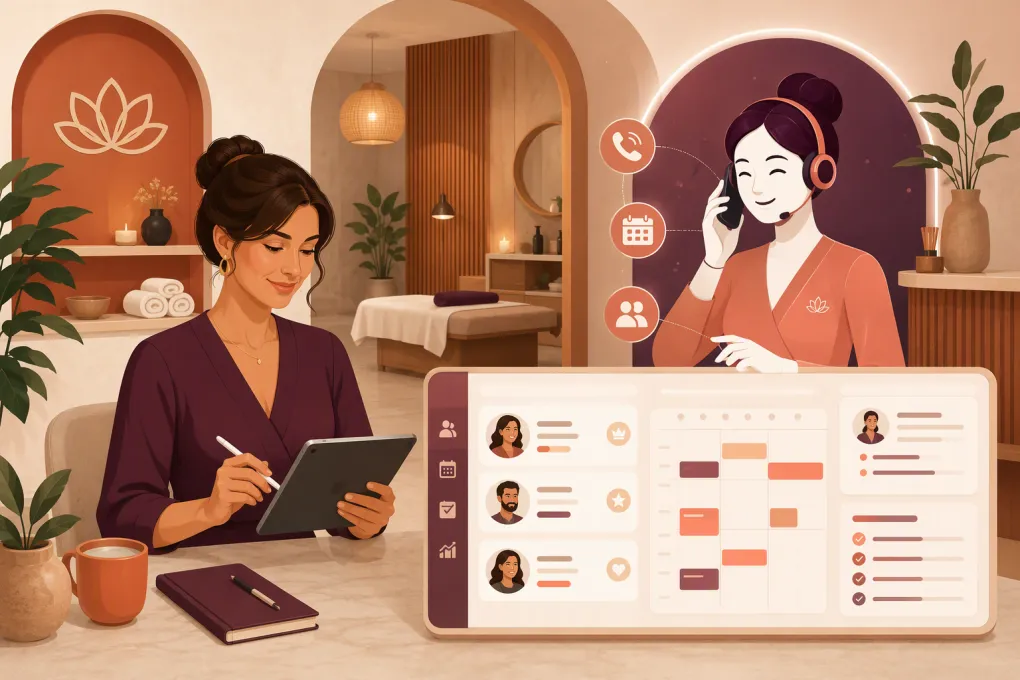
A prospective member calls your spa between appointments. The front desk is checking in a client, a provider needs help, and the call goes to voicemail. By the time someone calls back, the prospect has contacted another business.
That is the operational problem an AI receptionist can solve. It answers immediately, handles routine membership questions, qualifies the caller, books the next step, and continues follow-up when appropriate. But it only works when the system is built around your real sales process—not treated as a generic answering bot.
What an AI receptionist does on a spa membership call
An AI receptionist is a phone-based software agent that can speak with leads using natural language and follow predefined business rules. Depending on the platform and configuration, it may also communicate by text, update lead records, schedule appointments, and route calls to staff.
For spa membership sales, its job should be specific:
- Answer inbound calls during busy periods and after hours
- Identify whether the caller is a new lead, current client, or member
- Explain approved membership options and basic terms
- Ask questions that help determine fit
- Book a consultation, tour, service, or sales call
- Capture contact details and preferred communication channels
- Follow up with leads who do not book immediately
- Escalate pricing disputes, medical questions, cancellations, and unusual requests
The goal is not to make every possible decision. It is to move a qualified caller to the correct next step without forcing the prospect to leave a voicemail or wait for a callback.
See how Fitty handles spa membership inquiries and books the next step →
Why spa membership calls are easy to lose
Membership sales calls rarely arrive at convenient times. They often come while the front desk is handling check-ins, checking out retail purchases, turning over rooms, or helping providers stay on schedule.
Even when staff answer, the conversation can vary significantly depending on who picks up. One employee may confidently explain the membership. Another may read a price and end the call without gathering a name, asking what the caller wants, or offering an appointment.
Common breakdowns include:
- Missed or abandoned calls
- Inconsistent explanations of membership benefits
- No structured qualification process
- Failure to ask for the booking
- Lead details stored in notes instead of a CRM
- One callback attempt with no further follow-up
- No clear owner for unresolved leads
An AI receptionist creates a consistent first response. That consistency matters because membership sales require more than answering questions. The caller needs a clear path from interest to appointment, enrollment, or human follow-up.
Build the call around the outcome
Do not start by writing a long script. Start by choosing the outcome the AI should pursue.
For many spas, the primary call outcome will be one of these:
- Book an introductory service.
- Schedule a membership consultation.
- Transfer a sales-ready caller to an available employee.
- Capture the lead for follow-up when booking is not appropriate.
The best outcome depends on how your spa sells. If membership enrollment normally happens after a first service, the AI should not push callers to join immediately. It should book that first experience and record the caller’s interest in membership.
If your offer is straightforward and can be purchased remotely, the agent may explain the approved terms and send a secure enrollment or payment link. It should not collect sensitive payment data through an unsecured workflow.
A practical membership call flow
A useful call flow can be simple:
1. Identify the caller’s intent
Ask whether the caller wants to learn about memberships, book a service, manage an existing membership, or discuss something else.
2. Discover what the caller wants
Use one or two relevant questions, such as:
- Which services are you most interested in?
- How often do you expect to visit?
- Are you looking for one location or access to multiple locations?
- Do you have a preferred day or provider?
This should feel like a conversation, not an interrogation.
3. Explain the appropriate option
The AI should use a controlled knowledge base containing current benefits, included services, billing frequency, commitment terms, rollover rules, and exclusions. If the answer is not approved or available, it should hand the question to a person.
4. Ask for the next step
Offer specific appointment times instead of ending with a vague invitation to call back.
5. Confirm and follow up
Repeat the date, time, location, and appointment type. Send a confirmation through the channels the caller has agreed to use.
Give the AI approved answers, not sales improvisation
The quality of an AI receptionist depends heavily on the information and rules behind it. Before launch, document the questions your team repeatedly answers.
Your membership knowledge base should cover:
- Membership names and included benefits
- Current pricing and billing cadence
- Enrollment or initiation fees, if applicable
- Minimum commitments and cancellation procedures
- Pause or freeze policies
- Service credits and rollover rules
- Member discounts and exclusions
- Location access
- Guest privileges
- Booking restrictions
- Promotions and expiration dates
- Refund and transfer policies
Assign someone to maintain this information. Old promotions, changed prices, and undocumented policy exceptions can create expensive confusion.
The AI should also know what it must not answer. For a medical spa, that includes diagnosing conditions, recommending clinical treatment, promising outcomes, or deciding whether a procedure is medically appropriate. Those conversations belong with a qualified professional.
Handle objections without making the call robotic
Most membership objections fall into a few categories: price, commitment, uncertainty about usage, service availability, and the desire to think about it.
Give the AI concise, factual responses. For example, when someone is unsure whether they will use the membership, the agent can clarify how credits work and offer a consultation. It should not pressure the caller or invent urgency.
Useful escalation triggers include:
- The caller asks for an unapproved discount
- A billing dispute or refund is involved
- The caller threatens a chargeback or legal action
- The question involves contraindications or medical suitability
- The caller repeatedly asks for a person
- The AI lacks confidence in the answer
- The membership terms do not fit the caller’s situation
A good AI receptionist recognizes the edge of its authority. A bad one keeps talking.
Follow-up is part of the sales call
A large portion of membership interest will not convert during the first conversation. The caller may need to check a schedule, compare options, or speak with someone else.
The AI should record the reason and initiate an appropriate next action. That could be a text with a booking link, a scheduled callback, or a task for a membership advisor.
Follow-up messages should reference the actual conversation. A caller interested in monthly facials should not receive the same message as someone asking about massage availability across several locations.
Fitty, WTF Go’s AI receptionist and agent, can answer leads, support booking, continue follow-up, and help with dues workflows from the same operating system. That reduces the handoff gaps created when phone, scheduling, CRM, and payment work live in separate tools.
See how Fitty turns spa calls into tracked booking and follow-up workflows →
Protect consent, privacy, and payment data
Automation does not remove your compliance responsibilities.
Before using automated outbound calls or texts, review the consent requirements that apply to your business, contact list, message type, and jurisdiction. The Telephone Consumer Protection Act and state rules may affect how and when you contact leads. Obtain legal guidance for your specific workflows rather than relying on software defaults.
For medical spas, determine whether a call could involve protected health information and whether the vendors handling that information support your compliance obligations. Keep clinical intake separate from a general sales conversation unless the system is specifically approved for that use.
Payment workflows should use secure, purpose-built payment tools. Ask any vendor how card information is handled, which payment provider is used, and whether call recordings or transcripts could capture sensitive data.
You should also tell callers when calls are recorded if required, restrict staff access to transcripts, define retention rules, and provide an easy path to a human.
Test before sending every call to AI
Start with a controlled deployment. After-hours calls, overflow calls, or calls generated by a specific campaign are useful starting points.
Test scenarios should include:
- A new lead asking about membership pricing
- A caller who wants to book immediately
- An existing member trying to cancel
- A caller asking for medical advice
- A lead requesting a discount
- A caller changing locations or services mid-conversation
- A person who refuses to provide contact information
- A caller who asks for a human several times
- A service or time slot with no availability
- A question not covered in the knowledge base
Review transcripts and outcomes, not just whether the AI technically answered. Look for incorrect statements, awkward repetition, missed booking opportunities, failed handoffs, and incomplete contact records.
Measure the full membership sales funnel
Call volume alone does not show whether the system is working. Track the progression from conversation to revenue-producing action.
Useful operational measures include:
- Calls answered versus missed or abandoned
- Leads with complete contact information
- Qualified membership inquiries
- Appointments booked from calls
- Booking confirmations delivered
- Human transfers completed
- Follow-up tasks created and completed
- Consultation attendance
- Membership enrollments attributed to calls
- Cancellation or billing issues incorrectly routed as sales leads
Review call recordings or transcripts alongside these outcomes. A high booking count is not helpful if callers receive inaccurate terms or appointments are booked into the wrong service.
What to ask before choosing an AI receptionist
Evaluate the system as part of your spa operation, not as a standalone phone feature. Ask:
- Can it access live appointment availability?
- Can it distinguish leads, clients, and members?
- Does it update the same CRM your staff uses?
- Can it support multiple locations and location-specific policies?
- How are handoffs and urgent calls managed?
- Can staff see summaries, transcripts, and next actions?
- How quickly can pricing and promotions be updated?
- What happens when the system is uncertain?
- How are consent, recordings, privacy, and payments handled?
- Can it continue the workflow after the call through approved follow-up?
The strongest setup is not the AI with the longest script. It is the one connected to accurate business data, clear escalation rules, live booking, and accountable follow-up.
For spa membership sales, speed gets the call answered. Process turns that conversation into a booked appointment and a trackable opportunity.
Frequently asked questions
Can an AI receptionist sell spa memberships directly over the phone?
It can explain approved options, answer routine questions, qualify the caller, and guide them to enrollment or a consultation. Complex terms, discounts, medical questions, and exceptions should be escalated to staff.
Can an AI receptionist book spa appointments during a call?
Yes, if it is connected to live scheduling data and has clear rules for services, providers, locations, and appointment durations.
Should a spa use AI for outbound membership follow-up?
AI can support follow-up when the spa has the appropriate consent and follows applicable federal and state communication rules. The workflow should honor opt-outs and provide access to a person.
Is an AI receptionist appropriate for a medical spa?
It can handle administrative and sales tasks, but it should not diagnose, determine treatment suitability, or promise clinical outcomes. Medical spas should also evaluate privacy and protected health information requirements.
How should a spa measure AI receptionist performance?
Track answered calls, qualified leads, bookings, completed handoffs, consultation attendance, and membership enrollments. Review transcripts regularly to verify accuracy and customer experience.
Keep reading

Run your gym on autopilot with WTF Go
Fitty — your AI receptionist — answers calls and DMs, fills classes, follows up with every lead, and collects dues while you coach.