AI & Automation
How an AI Receptionist for Spa Cancellation Waitlists Works
See how an AI receptionist for spa cancellation waitlists fills openings, protects revenue, and keeps guests informed without adding daily work.
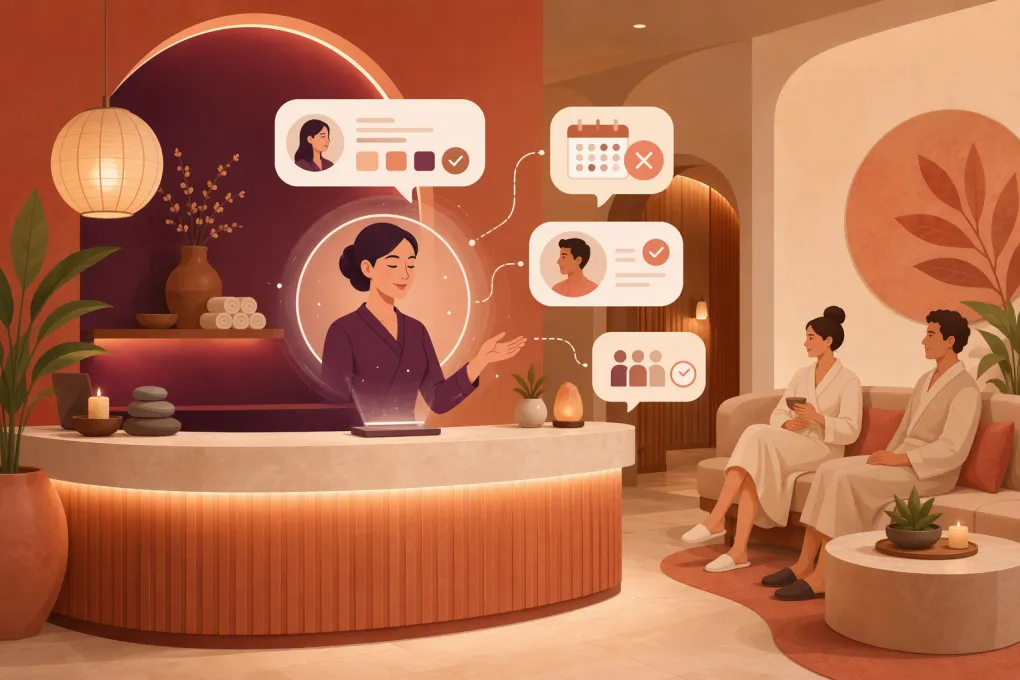 Watch · 20s
A canceled massage or facial is not just an empty block on the calendar. It is perishable inventory. Once the appointment time passes, the spa cannot sell it again.
Most spas technically have a waitlist, but many waitlists are little more than notes attached to guest profiles. When an opening appears, someone at the front desk has to identify the right guests, call or text them, wait for responses, update the schedule, and prevent two people from claiming the same slot. During a busy shift, that process is easy to delay or abandon.
An AI receptionist for spa cancellation waitlists can handle the repetitive coordination immediately. The goal is not to message every guest indiscriminately. It is to match the right opening with eligible guests, enforce booking rules, and hand exceptions to a person.
See how Fitty can respond to cancellations and booking requests around the clock →
Why manual spa waitlists break down
A cancellation waitlist looks simple until actual booking constraints enter the picture. A guest may want a specific provider, treatment, day, location, room type, or time range. The open slot also needs to match the service duration and any required cleanup or equipment time.
Common operational failures include:
- Slow outreach: Staff members do not see the cancellation until they finish another task.
- Incomplete notes: A guest is listed as wanting a massage, but nobody recorded the acceptable providers or times.
- One-at-a-time phone tag: The desk calls one guest, leaves a message, and waits too long before trying the next person.
- Conflicting claims: Multiple guests respond to the same opening, but the slot has already been taken.
- Disconnected channels: A guest replies by text while an employee is returning their voicemail.
- Missing booking requirements: The selected guest does not have a valid card, package, membership entitlement, or required intake form.
Automation only helps if it resolves these problems rather than sending more messages for employees to untangle.
How an AI cancellation waitlist should work
A reliable workflow needs a clear sequence from cancellation to confirmed replacement.
1. Detect the newly available appointment
The process should begin when an appointment is canceled or moved in the live schedule. Staff should not have to copy the opening into a separate spreadsheet or messaging tool.
The system needs the service, duration, provider, location, room or resource requirements, start time, and any booking restrictions attached to that opening.
2. Build an eligible guest list
The AI receptionist should filter the waitlist using the preferences recorded when each guest joined. Useful fields include:
- Requested service or acceptable alternatives
- Preferred and acceptable providers
- Date and time range
- Location preference
- Minimum notice required
- Communication channel and consent status
- Membership, package, or booking eligibility
- Accessibility or room requirements that affect scheduling
This prevents the spa from offering a slot that the guest cannot realistically use.
3. Rank candidates using a written policy
Decide how priority works before turning on automation. A spa might use first-added order, closest preference match, membership rules, or a combination. The policy should be consistent enough for employees to explain and audit.
Avoid an opaque system that always chooses whoever is most likely to respond. That can frustrate loyal guests who have been waiting longer and make front-desk decisions harder to defend.
4. Offer the appointment
There are two practical outreach models:
- Sequential offers: Contact one guest and provide a short response window before moving to the next. This is controlled but can be slower.
- Controlled batch offers: Contact a small group and award the appointment to the first eligible guest who completes confirmation. This fills urgent openings faster but requires explicit language that the slot is not held until confirmed.
The appropriate model may depend on how soon the appointment begins. A same-day opening usually needs a different sequence from one next week.
5. Confirm the booking atomically
The final booking step must check availability again before committing the appointment. This prevents an AI conversation, online booking, and front-desk employee from assigning the same slot simultaneously.
If the slot is gone, the guest should receive an immediate explanation and remain on the waitlist unless they opt out.
6. Complete booking requirements
Before confirmation, the workflow may need to verify a card-on-file requirement, package balance, deposit, intake form, or cancellation-policy acknowledgment. If the AI cannot validate an exception, it should transfer the conversation to staff rather than guessing.
7. Close the loop
Once filled, the system should update the schedule, remove or adjust the successful guest’s waitlist request, stop outstanding offers where possible, and send the normal appointment confirmation.
Set the rules before adding AI
An AI receptionist executes the operating policy you give it. If the policy is vague, automation makes the inconsistency happen faster.
Document these decisions first:
Response windows
Define how long an offer remains active and whether the window changes as the appointment approaches. State clearly that replying does not guarantee the appointment unless the system confirms it.
Booking and cancellation terms
Decide whether waitlist bookings follow the spa’s standard deposit, late-cancellation, and no-show rules. Present those terms before the guest commits.
Service substitutions
Specify whether the system may offer a different provider, treatment length, room, or location. Do not assume a guest requesting one therapist will accept another.
Escalation conditions
Send the conversation to an employee when it involves a disputed charge, contraindication, unusual accommodation, expired package, unhappy guest, or unclear service eligibility.
Messaging consent and privacy
Maintain consent records and honor opt-outs across automated texts and calls. Keep messages focused on scheduling rather than sensitive treatment details. Medical spas should also review applicable healthcare, privacy, and communications requirements with qualified counsel and vendors.
What the guest communication should say
A useful cancellation message is specific without becoming cluttered. It should identify the spa, summarize the opening, explain how to claim it, and make the expiration condition clear.
For example:
An opening is available for your requested 60-minute service with your selected provider on Thursday at 3:00 p.m. Reply BOOK to request it. The appointment is not reserved until you receive confirmation.
If the guest replies with a question, the receptionist should be able to continue naturally:
- Confirm the service and appointment length
- Explain the applicable deposit or cancellation policy
- Answer basic arrival and location questions
- Offer another available time when permitted
- Recognize when an employee needs to take over
A basic blast tool can send the first message. An AI receptionist is more useful because it can manage the conversation that follows.
Where Fitty fits into the workflow
Fitty is WTF Go’s AI receptionist and agent for gyms, studios, spas, and wellness businesses. It can answer leads, manage booking conversations, follow up, and collect dues 24/7 instead of leaving every interaction for the front desk.
For cancellation waitlists, that means the guest can respond when convenient, including after the spa has closed. Fitty can handle routine questions and next steps while preserving human escalation for judgment calls. Because WTF Go is an operating system rather than a standalone messaging patch, the objective is to keep booking, customer communication, and follow-up in one operational flow.
Before choosing any platform, ask to see the exact cancellation workflow in a live demonstration. Confirm how it handles simultaneous claims, booking eligibility, provider preferences, failed payments, opt-outs, and staff handoffs.
See how Fitty can manage spa booking conversations after hours →
Edge cases your workflow must handle
Test the awkward scenarios, not just the perfect booking.
Two guests claim the same opening
Only one booking should succeed. The other guest should be told promptly that the slot was taken and offered the option to remain on the waitlist.
A guest responds after the offer expires
The AI should recheck current availability. It should never confirm based solely on the old message.
The requested provider becomes unavailable
The system should offer an alternative only if the guest previously allowed substitutions or agrees during the conversation.
The guest has a package problem
An expired package or insufficient balance may require payment, another booking method, or staff review. Do not let automation silently override account rules.
The opening is too close to start time
Guests may need a practical arrival buffer. Set a minimum notice rule so the system does not offer an appointment that the guest cannot reach on time.
A canceled appointment reappears
If staff restore the original booking or block the room, all waitlist outreach should stop and any pending claims should be resolved before confirmation.
Implementation checklist for spa operators
Roll out the workflow in controlled stages:
- Clean the waitlist data. Remove stale requests and standardize service, provider, location, and time preferences.
- Write the priority policy. Define candidate order, offer windows, substitutions, and expiration behavior.
- Map booking requirements. Include deposits, cards, packages, forms, buffers, rooms, and equipment.
- Create approved messages. Prepare offer, confirmation, expiration, slot-taken, opt-out, and escalation language.
- Test collision scenarios. Have two employees claim the same test opening through different channels.
- Pilot with limited services. Start with predictable appointments before adding treatments with complex eligibility or resource needs.
- Train the front desk. Staff need to know when AI is communicating, how to take over, and where to see the conversation history.
- Review exceptions regularly. Repeated handoffs often expose a missing rule or incomplete guest field.
Explore WTF Go as the operating system behind your spa’s waitlist follow-up →
Measure whether the waitlist is actually improving
Do not judge the workflow by message volume. Track operational outcomes:
- Waitlist fill rate: Filled canceled openings divided by eligible openings offered through the waitlist
- Time to fill: Time from cancellation to confirmed replacement
- Offer acceptance rate: Confirmed bookings divided by valid offers
- Expired-offer rate: Offers that receive no usable response before expiration
- Human handoff rate: Conversations requiring staff intervention
- Booking error rate: Incorrect services, providers, resources, or payment conditions
- No-show and late-cancellation patterns: Compared with the spa’s normal booking traffic
Review these by service, provider, location, and lead time. If one category performs poorly, inspect the rules and guest data before simply increasing outreach.
A good AI receptionist does not turn the waitlist into a louder marketing channel. It turns cancellations into a controlled booking workflow: detect the opening, identify eligible guests, communicate clearly, confirm safely, and escalate exceptions. That protects appointment capacity while keeping the front desk focused on guests already in the spa.
Frequently asked questions
Can an AI receptionist automatically fill a canceled spa appointment?
Yes, if it can access current availability, match eligible waitlist guests, recheck the slot before booking, and apply the spa's confirmation rules. Complex eligibility or account issues should still escalate to staff.
Should a spa contact one waitlist guest at a time?
Sequential offers provide more control, while small controlled batches can fill urgent openings faster. In either case, guests should be told that the appointment is not reserved until confirmation.
What information should a spa collect for its cancellation waitlist?
Collect the desired service, acceptable providers, date and time range, location, notice requirements, allowed substitutions, contact preference, and messaging consent.
Can an AI receptionist handle deposits and package issues?
It can enforce supported booking and payment rules, but disputed charges, expired packages, unusual account conditions, and unclear eligibility should be handed to an employee.
How is an AI receptionist different from an automated text blast?
A text blast sends a fixed message. An AI receptionist can continue the conversation, answer routine questions, check booking conditions, follow up, and escalate exceptions.
Keep reading


Run your gym on autopilot with WTF Go
Fitty — your AI receptionist — answers calls and DMs, fills classes, follows up with every lead, and collects dues while you coach.