AI & Automation
AI Receptionist for Spa Bridal Party Bookings: Best Practices
Learn how an AI receptionist for spa bridal party bookings can qualify inquiries, capture details, speed follow-up, and protect time without losing warmth.
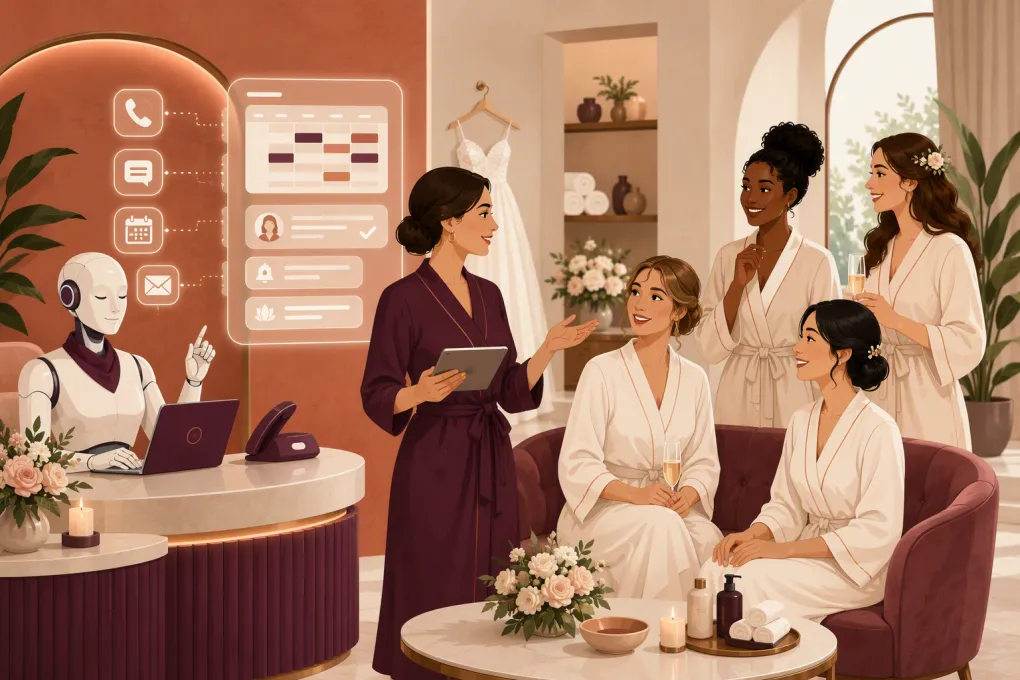 Watch · 20s
A bridal party inquiry is not a normal appointment request. It may involve six guests, several services, a narrow time window, treatment-room limits, deposits, add-ons and a bride who is comparing multiple spas. If the first call goes unanswered—or the response creates more questions than it resolves—the booking can stall before your team has a chance to sell it.
An AI receptionist can fix the response problem, but only when it is built around group-booking operations. The goal is not to let a bot make promises your spa cannot keep. The goal is to respond immediately, collect the right information, apply your policies and move a qualified party to the correct next step.
See how Fitty can answer and qualify bridal party inquiries 24/7 →
Why bridal party bookings create an operational bottleneck
A standard spa appointment usually has a defined service, duration, provider and price. Bridal parties introduce dependencies that make instant scheduling harder:
- Multiple guests may want different treatments.
- Services can require different providers, rooms or equipment.
- The requested time may conflict with normal appointment demand.
- Some guests may be pregnant, underage or have accessibility needs.
- The organizer may not have a final headcount.
- Deposits, cancellation terms and gratuity policies may differ from individual bookings.
- Food, beverages, private space or decorations may require separate approval.
This is why asking a receptionist to “call them back later” is risky. Staff must reconstruct the request, chase missing details and check several calendars before giving a useful answer. During busy treatment hours, that work gets pushed aside.
An AI receptionist for spa bridal party bookings should complete the repetitive front-end work without pretending every request can be confirmed instantly.
What the AI receptionist should handle
Respond across the channels clients actually use
A prospect may call after closing, submit a website form during work or reply by text the next morning. The receptionist should preserve one conversation across supported channels so the organizer does not have to repeat the entire request.
At minimum, the first response should:
- Acknowledge the bridal party request.
- Explain that availability depends on party size and service mix.
- Ask the required intake questions.
- Set a clear expectation for the next step.
- Escalate unusual requests to a person.
Avoid opening with a long policy statement. Capture the essentials first, then introduce relevant requirements as the request becomes clearer.
Collect a complete party profile
Build a dedicated bridal-party intake flow rather than using your standard appointment form. Useful fields include:
- Organizer’s name, phone number and email
- Wedding date and requested spa date
- Preferred start time and acceptable alternatives
- Estimated and minimum confirmed headcount
- Requested services by guest, if known
- Whether guests can receive services in staggered time slots
- Desired finish time for another wedding event
- Add-ons such as private space, refreshments or retail gifts
- Accessibility or accommodation requests
- Preferred contact method
Collect only information needed to evaluate and fulfill the booking. Detailed health information belongs in your established intake process, not in an open-ended sales conversation.
Answer policy questions consistently
Bridal organizers commonly ask about deposits, cancellations, late arrivals, gratuity, substitutions and changing the guest count. Give the AI a controlled policy library based on your actual terms.
The system should quote approved language rather than improvise. It should also recognize when a rule depends on the location, package or party size. If the answer is uncertain, the correct response is to flag the question for staff—not invent a convenient policy.
Separate qualification from confirmation
This distinction protects both the guest experience and your schedule.
An AI receptionist can qualify the request, recommend relevant packages and book a consultation or approved service configuration. It should not confirm a complex party when room capacity, provider availability or special requests still require review.
Define clear booking paths:
- Instant booking: The request fits a preapproved package, headcount and availability rule.
- Tentative request: The preferred slot is captured but awaits operational review.
- Consultation required: The party needs custom services, private space or schedule coordination.
- Decline or alternative: The request exceeds capacity or conflicts with policy, so the AI offers another date, format or location.
Explore how Fitty can turn spa inquiries into structured booking conversations →
A practical bridal party conversation flow
A strong flow feels concise to the prospect while collecting enough detail for the spa.
Step 1: Identify the booking type
Start by determining whether the inquiry is for a bridal party, an individual pre-wedding service or a general group visit. Those requests should not follow the same script.
A useful opening is:
“I can help with your bridal spa plans. How many guests are you expecting, and what date would you like to visit?”
The next question should depend on the answer rather than forcing the organizer through an inflexible questionnaire.
Step 2: Establish the scheduling boundaries
Ask for the preferred date, time and finish deadline. Then ask whether the group is open to staggered services. Flexibility can make an otherwise impossible request workable.
If you operate multiple locations, confirm the preferred location early. Do not offer every property unless the locations have compatible services and group policies.
Step 3: Clarify the service mix
Some organizers want identical packages for everyone. Others want a menu from which guests can choose. Your AI should know which model your spa supports.
If individual selections are not final, capture likely categories—massage, facial, nails or salon services—rather than blocking the lead. Set a deadline for final choices according to your policy.
Step 4: Present the right next action
Do not end with “someone will contact you.” Be specific:
- Book a group consultation.
- Send the approved package menu.
- Offer available dates or time windows.
- Route the request to the spa coordinator.
- Send the next step in your deposit or agreement workflow.
The organizer should know what happens next, who owns it and what information is still required.
Step 5: Follow up without creating noise
If the organizer stops replying, follow up based on the stage of the request. A new inquiry may need a simple reminder. A party awaiting final headcount needs a message tied to its deadline. A prospect who declined because of the date should not receive repeated generic prompts.
Fitty can answer leads and run follow-up around the clock, helping spas keep active bridal opportunities moving while staff focus on guests in the building.
Build guardrails before turning automation on
The quality of an AI receptionist depends heavily on the operating rules behind it. Before launch, document:
Capacity rules
Specify the maximum simultaneous services by location, day and service category. Include treatment rooms, equipment and provider qualifications—not just open calendar slots.
Package rules
List what each package includes, eligible substitutions, minimum party requirements and which components need human approval. Remove outdated PDFs and conflicting policy documents from the system’s reference material.
Escalation triggers
Require human review for scenarios such as:
- Requests beyond normal group capacity
- Buyouts or private-area requests
- Guests needing clinical or accessibility guidance
- Service combinations the system cannot validate
- Complaints, refund requests or policy disputes
- Questions involving contraindications or treatment suitability
The AI should never provide medical guidance. It can explain that a provider or spa team member must review the question.
Communication consent
Use compliant opt-in and opt-out practices for automated texts and marketing follow-up. Transactional booking communication and promotional messaging are not always treated the same. Review your processes with qualified counsel and your messaging providers rather than assuming a form submission authorizes every future campaign.
Measure whether the workflow is working
Do not judge the receptionist only by the number of conversations it handles. Track whether it improves the booking process.
Useful operational measures include:
- Time from inquiry to first response
- Percentage of inquiries with complete party details
- Qualified inquiries that reach consultation or review
- Consultations that become confirmed bookings
- Reasons requests cannot be accommodated
- Number of staff interventions per inquiry
- Follow-ups that receive a response
- Confirmed parties that meet deposit and information deadlines
Review conversation logs regularly. Look for repeated questions, incorrect routing and places where prospects abandon the flow. Those patterns often reveal unclear policies or package design problems—not just AI problems.
Keep the hospitality human
Automation should remove phone tag, incomplete forms and repetitive policy explanations. It should not remove judgment from a high-value group experience.
Give one person ownership after escalation. Make the handoff include the transcript, requested services, scheduling constraints and unresolved questions. The organizer should not have to start over with the spa coordinator.
That combination works best: immediate AI response, structured qualification and a prepared human who can finalize the details. For bridal parties, speed gets the conversation started; operational clarity earns the booking.
See how WTF Go and Fitty can support your spa’s lead-to-booking workflow →
Frequently asked questions
Can an AI receptionist book an entire spa bridal party automatically?
It can book preapproved configurations when availability and capacity rules are clear. Complex parties should be qualified by the AI and sent to a coordinator for final confirmation.
What information should an AI collect from a bridal party?
Collect the date, time range, headcount, location, likely service mix, scheduling flexibility, finish deadline, add-on requests and organizer contact details.
Can an AI receptionist answer questions about spa deposits and cancellations?
Yes, if it uses current, approved policy language. Requests that fall outside the documented policy should be escalated rather than answered speculatively.
Will an AI receptionist replace a spa group coordinator?
Not for complex events. It is most useful for immediate response, intake, routine questions, follow-up and routing, while staff handle exceptions and finalize custom arrangements.
Keep reading
Run your gym on autopilot with WTF Go
Fitty — your AI receptionist — answers calls and DMs, fills classes, follows up with every lead, and collects dues while you coach.