AI & Automation
AI Receptionist for Spa Appointment Rescheduling Guide
Learn how an AI receptionist for spa appointment rescheduling can reduce front-desk work, protect availability, enforce policies, and retain more clients.
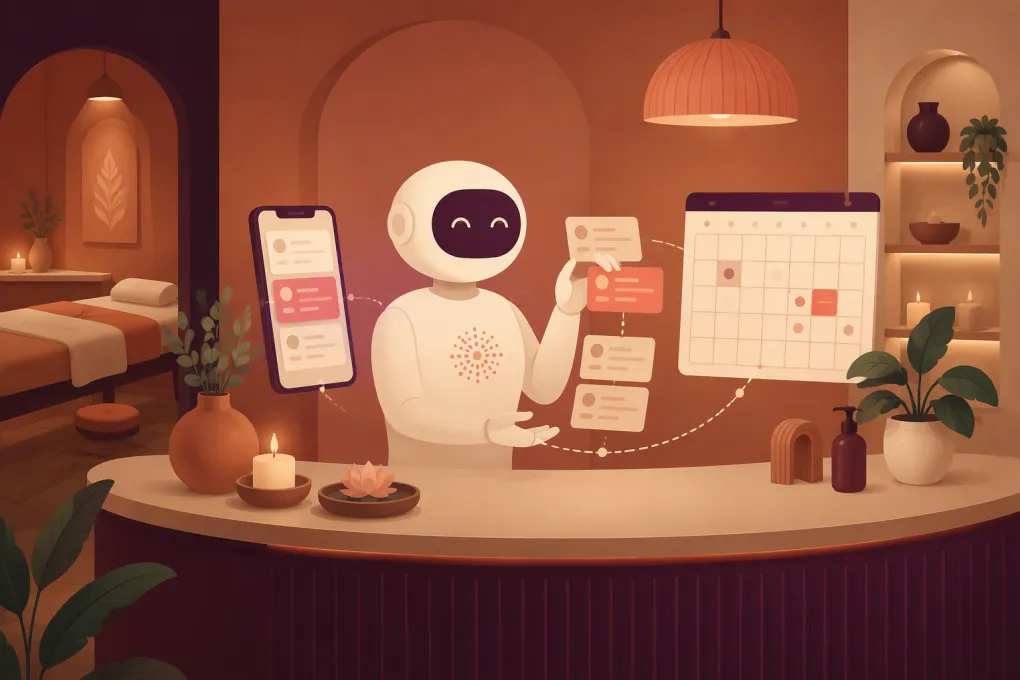 Watch · 20s
Rescheduling sounds like a small front-desk task until it happens repeatedly during treatments, after closing, or while three clients are waiting to check out. Each request can involve identifying the appointment, applying cancellation rules, finding a qualified provider, checking room availability, moving a deposit, and confirming the new time.
An AI receptionist for spa appointment rescheduling can handle much of that work immediately. The goal is not simply to answer messages. It is to move appointments without creating double bookings, bypassing policies, or forcing your staff to clean up mistakes later.
That requires more than connecting a chatbot to a calendar. A reliable system needs access to accurate availability, a clear rescheduling rulebook, and a defined path for exceptions.
See how Fitty can handle spa booking conversations when your front desk is unavailable →
Why spa rescheduling needs a dedicated workflow
A spa appointment is rarely just a block of time. Availability may depend on several connected resources:
- A provider qualified to perform the selected service
- A room with the necessary equipment
- Enough time for treatment, preparation, and turnover
- Add-ons booked with the original service
- Membership credits, packages, deposits, or gift cards
- Provider requests and client preferences
- Cancellation and rescheduling deadlines
A basic automated response can collect a preferred time, but that still leaves an employee to finish the work. A useful AI receptionist should take the conversation from request to confirmed outcome whenever the request falls within approved rules.
It should also know when not to proceed. Requests involving medical concerns, disputed charges, unusual service combinations, expired packages, or repeated late cancellations usually need human review.
What the AI receptionist should do
A dependable rescheduling workflow has six stages.
1. Identify the client and appointment
The receptionist should confirm which appointment the client wants to move. A client may have multiple future bookings or appointments for several household members.
Use a light but meaningful verification step, such as matching the incoming phone number and confirming the appointment date or service. Avoid exposing full appointment details before the client is identified.
2. Check whether the appointment can be moved automatically
Before offering alternatives, the system should evaluate the spa’s rules. Relevant questions include:
- Is the request inside the permitted rescheduling window?
- Does the service require a specific provider qualification?
- Is there a deposit or package credit attached?
- Is the booking part of a series or service bundle?
- Are there add-ons that must move with it?
- Has the client already changed this appointment?
If the request falls outside the rules, the AI should explain the next step without improvising an exception.
3. Offer a short list of valid alternatives
Do not dump an entire day of availability into the conversation. Ask for a useful preference first: day, time range, provider, or earliest available appointment.
Then offer two or three valid choices that account for the full service duration and required resources. If the requested provider is unavailable, ask whether the client wants another qualified provider or different dates.
4. Confirm the client’s selection
Before changing the calendar, restate the important details:
- Service and add-ons
- New date and start time
- Provider, when relevant
- Location for multi-location spas
- Any applicable fee or deposit treatment
The client should explicitly approve the new appointment rather than having the system infer agreement from an unclear reply.
5. Update one source of truth
The booking platform must remain the authoritative calendar. The AI should not maintain a separate list of openings or assume a time shown earlier is still available.
Availability should be checked again before the final change. Once the appointment is moved, the old slot should be released and the new slot reserved as one connected action whenever the underlying system supports it.
6. Send confirmation and trigger follow-up
The final message should include the new appointment details, location, arrival instructions, and a clear way to request another change. Your normal reminder sequence should follow the new appointment rather than the original one.
The newly opened slot can also be sent into a waitlist or lead follow-up workflow. That turns rescheduling from a calendar gap into a recoverable opening.
Build the rulebook before turning on automation
AI should apply your policies, not invent them. Document the following decisions in plain language before launch.
| Rule | Decision your spa must define |
|---|---|
| Rescheduling window | How close to the appointment a client can make an automated change |
| Late-change handling | Whether a fee applies and when staff approval is required |
| Deposits | Whether deposits transfer automatically to the new booking |
| Packages and credits | Which balances can be reused and what happens when they are expired |
| Provider substitution | Whether alternatives may be offered and how qualifications are checked |
| Add-ons | Whether add-ons move together or require separate availability |
| Location changes | Whether clients may move appointments between locations |
| Repeated changes | When multiple reschedules should be escalated |
| Waitlist release | How the newly available slot is offered to other clients |
Write separate rules for services that behave differently. A facial, couples massage, injectable consultation, and multi-service spa package may require different resources and exception paths.
Use scripts that move the conversation forward
Good automation is concise and specific. It should not sound robotic, but it also should not bury the decision under excessive conversation.
When the request is eligible
I found your 60-minute massage scheduled for Thursday at 2:00 p.m. Would you like the same provider, or should I check the earliest available appointment with any qualified provider?
This confirms the appointment and gathers the preference needed to search effectively.
When the preferred time is unavailable
That time is no longer available. I can offer Friday at 11:30 a.m. with your current provider or Thursday at 4:00 p.m. with another qualified provider. Which works better?
The message provides a next action instead of ending with a dead end.
When a request needs staff review
This appointment is inside the spa’s late-change window, so I can’t move it automatically. I’ve sent the request to the front desk with your preferred time. Your current appointment remains confirmed until the team contacts you.
The final sentence matters. It prevents the client from assuming the original appointment has been canceled.
When the move is complete
You’re rescheduled for Saturday at 10:00 a.m. at our Downtown location. Your deposit has been applied to the new appointment. You’ll receive an updated confirmation shortly.
Only mention deposit transfer if the system has verified that it happened.
Design a clean human handoff
The AI receptionist should create a structured task when it cannot finish a request. Staff should receive:
- Client name and verified contact information
- Original appointment details
- Requested dates or times
- The reason automation stopped
- Relevant policy or payment status
- A conversation transcript
- Whether the original appointment remains active
Prioritize tasks based on urgency. A same-day request needs a faster response than someone moving an appointment next month.
Do not make the client repeat the entire story. The handoff should preserve the context already collected and tell the client when to expect a response without promising a timeline your team cannot reliably meet.
Protect privacy and communication consent
Collect only the information needed to complete the scheduling task. General messaging channels are not the place to ask for detailed medical histories or discuss treatment eligibility.
Route clinical questions to an appropriately qualified person. If your spa provides services that may involve protected health information or regulated medical care, work with legal and compliance advisers to determine which privacy requirements apply to your business and vendors.
Keep transactional appointment messages separate from promotional outreach. A client’s request to move an appointment should not automatically become consent for unrelated marketing.
Roll out the workflow without disrupting the calendar
Start with common, low-complexity services rather than every appointment type at once.
A practical rollout looks like this:
- Audit appointment data. Standardize service names, durations, provider qualifications, buffers, rooms, and location settings.
- Document policies. Translate informal front-desk judgment into explicit automation and escalation rules.
- Test realistic scenarios. Include provider requests, add-ons, late changes, deposits, multi-location bookings, and unavailable times.
- Run supervised. Review completed changes and handoffs before expanding coverage.
- Add complex services gradually. Only automate them after resource requirements and edge cases are mapped.
- Review transcripts. Look for unclear prompts, repeated client questions, inappropriate options, and avoidable escalations.
Fitty is designed to answer leads, support booking conversations, follow up, and keep routine client communication moving around the clock. For a spa, the operational value comes from configuring those conversations around the actual calendar and policies—not adding another disconnected inbox.
See how Fitty can support after-hours appointment requests and follow-up for your spa →
Measure whether rescheduling automation is working
Track outcomes that reveal operational quality, not just message volume:
- Rescheduling requests completed without employee intervention
- Requests escalated and the reason for each escalation
- Errors requiring a manual calendar correction
- Time from the client’s first message to confirmed resolution
- Opened appointment slots refilled through waitlists or follow-up
- Clients who abandon the conversation before selecting a new time
- Late-change fees or deposit transfers that need manual adjustment
Review these measures by service and location. A high escalation rate may indicate missing rules, poor calendar configuration, or a service that should remain staff-managed. A high abandonment rate may mean the AI is offering weak alternatives or asking too many questions.
The standard is resolution, not response
A fast reply is useful, but it does not reduce front-desk work unless the appointment is accurately moved, the client understands what happened, and the calendar remains clean.
The right AI receptionist handles straightforward changes immediately, protects policy boundaries, and sends exceptions to staff with complete context. That gives clients a better path to keep their appointments while allowing your team to stay focused on service instead of calendar back-and-forth.
Frequently asked questions
Can an AI receptionist reschedule spa appointments after hours?
Yes, if it can access current availability and is configured with the spa's service, provider, resource, deposit, and rescheduling rules. Requests outside those rules should be escalated.
Can AI handle deposits and cancellation fees when moving an appointment?
It can apply predefined rules when the booking and payment systems support the required action. Disputes, expired credits, and policy exceptions should go to staff.
Will an AI receptionist prevent double bookings?
It should check live availability immediately before confirming a change and update the authoritative booking calendar. Accurate service durations, room requirements, and provider settings are essential.
Which spa appointments should not be rescheduled automatically?
Appointments involving clinical questions, unusual service combinations, payment disputes, expired packages, or policy exceptions generally require human review.
How should a spa start using AI for appointment rescheduling?
Begin with common, low-complexity services, document the rules, test edge cases, and review early conversations before adding more appointment types or locations.
Keep reading
Run your gym on autopilot with WTF Go
Fitty — your AI receptionist — answers calls and DMs, fills classes, follows up with every lead, and collects dues while you coach.