AI & Automation
AI Receptionist for Reflexology Clinics: A Practical Guide
See how an AI receptionist for reflexology clinics can answer inquiries, book sessions, follow up with leads, and collect payments without missed calls.
 Watch · 20s
A reflexology session may be hands-on, but the buying journey starts with a message, call, or booking request. Prospective clients want to know what the session involves, whether you have an opening after work, how much time to allow, and what they should do before arriving.
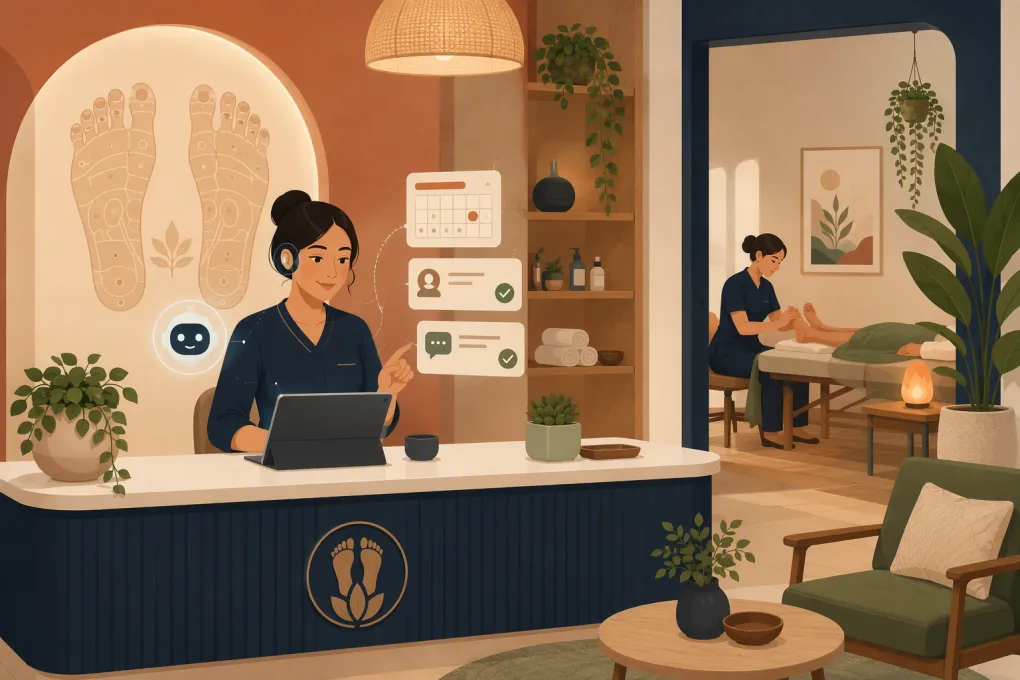
If nobody answers promptly, that interest cools. The practitioner may be in a session, the front desk may be helping another client, and evening inquiries may sit untouched until the next morning. An AI receptionist gives reflexology clinics a way to respond, qualify, schedule, and follow up without interrupting treatment.
The goal is not to remove people from the client experience. It is to let software handle repeatable front-desk work while your team takes over when judgment, sensitivity, or clinical context is required.
See how Fitty handles after-hours reflexology inquiries and booking requests →
What an AI receptionist actually does
An AI receptionist is more than a website chat widget. Properly configured, it acts as the first-response layer across the channels your clinic uses. Its job can include:
- Answering common questions about services, duration, preparation, location, parking, and clinic policies
- Recommending the correct appointment category based on approved rules
- Checking availability and helping a client book
- Sending confirmation, intake, and reminder messages
- Following up with people who asked questions but did not schedule
- Explaining deposit, cancellation, package, and membership policies
- Sending payment links or collecting approved charges through your payment workflow
- Escalating sensitive or unusual questions to a person
The key phrase is properly configured. An AI tool should not invent answers, diagnose conditions, promise outcomes, or make decisions outside rules set by the clinic.
Where reflexology clinics lose front-desk opportunities
Reflexology businesses have several operational characteristics that make immediate response difficult.
Practitioners cannot stop mid-session to answer the phone. Small clinics may not have a dedicated receptionist. Multi-service wellness centers must route clients among reflexology, massage, bodywork, and other appointment types. Many inquiries also arrive outside staffed hours, when prospective clients finally have time to research and book.
Common breakdowns include:
Unanswered first-time-client questions
A new client may not understand the difference between a short targeted session and a full appointment. They may ask what clothing to wear, whether the service involves the whole body, or how early to arrive.
These are usually straightforward questions, but they often stand between interest and a completed booking.
Booking friction
A generic scheduling page can present too many choices without enough guidance. Clients may select the wrong service, overlook preparation instructions, or abandon the process when they cannot find a convenient time.
An AI receptionist can ask a few simple questions before presenting the relevant service and available appointments.
Leads that never receive a second response
Some people ask about availability, pricing, or gift certificates and then disappear. A timely, low-pressure follow-up can bring them back to the booking process. Without automation, that task competes with treatment, cleaning, notes, and other daily work.
Repetitive policy conversations
Deposit requirements, late-arrival rules, cancellations, package expiration, and practitioner preferences generate recurring questions. Consistent automated answers reduce confusion and help the team avoid making different promises to different clients.
High-value workflows to automate first
Do not begin by asking AI to run every client interaction. Start with narrow workflows that have clear answers and measurable outcomes.
1. New-client inquiry to booked session
Build a conversation that gathers only the information needed to guide the booking:
- Is this the client’s first visit?
- Which service or session length are they considering?
- Do they have a preferred practitioner, day, or time window?
- Are they ready to view availability?
- Do they need a person to answer a question before booking?
The AI should explain services using your approved language, not broad health claims. Once the client chooses an appointment type, it should move directly into scheduling rather than forcing them to restart on another page.
2. After-hours response
After-hours inquiries should receive an immediate, useful reply that clearly identifies the automated assistant. The response should offer practical next steps: ask a question, review appointment options, book, or request human follow-up.
Avoid pretending the clinic is actively staffed. Clear disclosure sets the right expectation and makes escalation easier.
3. Incomplete-booking follow-up
A prospect may discuss an appointment without completing it. Configure a short follow-up sequence that:
- References the service they considered
- Provides a direct path back to scheduling
- Offers help if they were unsure what to choose
- Stops once they book, decline, or ask not to receive messages
Keep the tone helpful rather than urgent. Wellness clients do not need manufactured scarcity.
4. Appointment preparation and reminders
Reminders should include the details that prevent avoidable front-desk work:
- Date, time, practitioner, and location
- Arrival instructions
- What to wear or bring
- Intake form link, if applicable
- Parking or building access information
- Rescheduling and cancellation instructions
If your clinic has different preparation guidance for different services, connect each message to the booked appointment type.
5. Deposits and outstanding balances
An AI receptionist can explain when a deposit is required and provide the approved payment route. It can also follow up on an outstanding balance or failed payment according to clinic policy.
Payment messages should state what the charge relates to and how the client can reach a person if something appears incorrect. Do not ask clients to send card details through ordinary chat or text.
Explore how Fitty can book sessions, follow up, and support payment collection 24/7 →
Set boundaries around health-related questions
Reflexology clients may mention pain, pregnancy, medication, recent procedures, swelling, injuries, or diagnosed conditions. That makes escalation rules essential.
An AI receptionist can collect a question and route it, but it should not determine whether reflexology is appropriate for a specific person. It also should not diagnose symptoms or claim that a session will treat a medical condition.
Create a written list of questions that always go to a practitioner. Examples include:
- Whether a specific condition makes a session advisable
- Questions involving pregnancy or recent surgery
- Symptoms that may require medical attention
- Requests for diagnosis or treatment recommendations
- Adverse reactions after a session
- Accessibility needs that require staff confirmation
For urgent or emergency language, the system should instruct the person to contact emergency services or an appropriate medical provider rather than waiting for the clinic.
Privacy requirements also depend on how your business operates and what information it handles. Some wellness businesses may be subject to health privacy rules; others may not be covered entities but still have obligations under state privacy laws, consumer-protection rules, and payment standards. Review what the AI stores, who can access conversations, how long data is retained, and whether sensitive details are necessary at the reception stage.
How to implement an AI receptionist without creating chaos
A reliable rollout starts with your operating rules, not the technology.
Audit real inquiries
Review recent calls, emails, texts, and direct messages. Group them into categories such as pricing, service selection, availability, preparation, directions, gift cards, packages, cancellations, and health-related questions.
This gives you a factual knowledge base based on what clients actually ask.
Standardize services and policies
Document each appointment type with:
- Client-facing name and description
- Duration and scheduling buffer
- Price or approved pricing explanation
- Eligible practitioners and locations
- Preparation instructions
- Deposit and cancellation rules
- Conditions that require staff review
If staff members currently give different answers, resolve those inconsistencies before automating them.
Define the handoff
Specify when the AI should stop and involve a person. Then decide where the handoff goes, who owns it, and how quickly it should be reviewed.
A handoff should include the conversation summary, contact information, appointment interest, and the unresolved question. The client should not have to repeat the entire exchange.
Test the difficult cases
Do not test only perfect booking conversations. Try misspelled service names, vague questions, requests for unavailable times, cancellation disputes, pricing objections, medical questions, and attempts to book multiple people.
Also confirm that automated follow-ups stop when someone books or opts out.
Launch one workflow at a time
Start with frequently asked questions and new-client booking. Add reminders, lead follow-up, payments, and reactivation only after the core conversation is accurate.
Fitty is designed to give wellness operators a 24/7 agent for lead response, booking, follow-up, and dues collection. The value is not simply answering more messages; it is connecting those conversations to the actions that keep the schedule and revenue workflow moving.
See how WTF Go and Fitty can support your reflexology front desk →
What to measure after launch
Track outcomes that reflect both client experience and front-desk efficiency:
- Number of inquiries handled by topic and channel
- Inquiries that become booked appointments
- Booking conversations that require human help
- Time until a new inquiry receives its first response
- Follow-ups that result in a booking
- Cancellations, reschedules, and no-shows by workflow
- Payment requests completed or escalated
- Common unanswered questions
- Incorrect answers reported by staff or clients
Review conversation logs regularly. If clients repeatedly ask the same follow-up question, the service description or automated answer probably needs work. If many conversations escalate at the same point, improve the workflow instead of assuming the AI will solve it by itself.
The practical standard
The best AI receptionist for a reflexology clinic is not the one that talks the most. It is the one that responds quickly, stays within approved boundaries, makes booking easy, and knows when to bring in a person.
Treat it like a front-desk team member: give it accurate information, documented policies, clear escalation rules, and routine quality checks. Done well, it protects practitioners’ focus while making the clinic easier to reach and book.
Frequently asked questions
Can an AI receptionist book reflexology appointments?
Yes. When connected to the clinic's scheduling workflow, it can help clients choose an appropriate appointment type, view availability, and complete a booking.
Should an AI receptionist answer medical questions?
It can provide approved general information, but it should not diagnose, assess suitability, or promise health outcomes. Questions involving symptoms, conditions, pregnancy, surgery, or adverse reactions should be escalated.
Can an AI receptionist handle deposits and payments?
It can explain payment policies, send approved payment links, and follow up on balances. Card information should be handled through a secure payment workflow rather than ordinary messages.
Will an AI receptionist replace clinic staff?
It is better used to handle repetitive inquiries, booking, reminders, and follow-up. Staff should remain responsible for sensitive questions, exceptions, disputes, and interactions requiring professional judgment.
What should a reflexology clinic automate first?
Start with common questions, after-hours responses, and new-client booking. Add reminders, lead follow-up, and payment workflows after the basic information and escalation process are reliable.
Keep reading


Run your gym on autopilot with WTF Go
Fitty — your AI receptionist — answers calls and DMs, fills classes, follows up with every lead, and collects dues while you coach.