AI & Automation
AI Receptionist for Physical Therapy Appointment Bookings
Learn how an AI receptionist for physical therapy appointment bookings can capture calls, schedule patients, and protect staff time without risky shortcuts.
 Watch · 20s
A physical therapy receptionist has to manage more than a calendar. One incoming call may be a new patient looking for an evaluation. The next may involve a referral, insurance question, post-surgical protocol, cancellation, or request for a specific therapist. Meanwhile, the person at the desk is checking in patients and supporting clinicians.
An AI receptionist can absorb much of that communication load, especially during treatments, lunch breaks, evenings, and weekends. But physical therapy appointment booking is not the place for a generic chatbot with unrestricted calendar access. The system needs clear scheduling rules, safe handoffs, and appropriate controls for patient information.
Used correctly, an AI receptionist becomes a front-desk operating layer: answering routine questions, collecting limited intake details, booking eligible appointments, and escalating cases that require human judgment.
See how Fitty can answer PT inquiries and turn eligible callers into booked evaluations →
What an AI receptionist can handle for a PT clinic
An AI receptionist can work across phone, text, and website conversations, depending on the platform and setup. Its most useful role is not replacing every front-desk task. It is handling predictable conversations consistently so staff can focus on patients and exceptions.
New-patient appointment requests
The receptionist can ask approved screening questions such as:
- Is this a new evaluation or a follow-up visit?
- Which clinic location is preferred?
- Is there a preferred day or time?
- Does the patient have a referral or prescription, if one is required?
- Is the visit self-pay, insurance-based, workers’ compensation, or related to an auto claim?
- Is the patient requesting a particular therapist or specialty?
The AI should only book when the request matches an approved appointment type and scheduling rule. If the clinic needs to review benefits, authorizations, or clinical documentation first, the system can collect the request and create a staff follow-up instead.
Routine scheduling changes
Rescheduling and cancellation calls create repetitive work. An AI receptionist can identify the patient, locate an eligible appointment, apply the clinic’s cancellation policy, and offer approved alternatives.
There should still be limits. The system may need to escalate appointments involving authorization deadlines, post-operative protocols, transportation arrangements, recurring visit plans, or repeated late cancellations.
Frequently asked questions
A well-configured receptionist can answer operational questions without interrupting staff:
- Clinic hours and directions
- Parking and accessibility information
- What to bring to an evaluation
- Accepted payment methods
- Whether the clinic treats a general condition or service category
- How referrals and prescriptions are handled
- Cancellation and late-arrival policies
- How to request records or speak with a clinician
Answers should come from clinic-approved content. The AI should not improvise clinical guidance or promise insurance coverage.
Confirmations and follow-up
Once an appointment is booked, the system can send a confirmation with the location, time, preparation instructions, and links to approved forms. It can also follow up on incomplete booking requests and route replies to staff when necessary.
This is particularly useful when someone calls after hours but is not ready to choose an appointment immediately. Instead of leaving the inquiry buried in voicemail, the clinic can continue the conversation through an approved channel.
The scheduling rules your AI needs
The calendar is only as reliable as the rules behind it. Before giving an AI receptionist booking access, document how your clinic actually schedules patients.
Appointment type and duration
Define each appointment category, including evaluations, follow-ups, specialty assessments, wellness services, and cash-pay sessions. Specify the correct duration and whether administrative time or equipment turnover must be protected.
Avoid using one generic appointment type for every request. That creates cleanup work and can put the wrong patient into the wrong slot.
Therapist and location eligibility
Map which providers can deliver each service at each location. Account for specialty areas, state licensure, age restrictions, equipment requirements, and clinic-specific scope.
For multi-location groups, decide whether the AI should prioritize the caller’s preferred clinic, the earliest eligible appointment, or a defined geographic radius.
Payer and referral requirements
Insurance participation does not guarantee coverage for a particular patient or service. The AI should use carefully approved language and avoid saying that treatment will be covered.
Your workflow should distinguish among:
- Requests that can be booked immediately
- Requests that can be tentatively held pending verification
- Requests that require staff review before booking
- Cases the clinic does not accept
If eligibility verification happens in another system, the AI needs either a dependable integration or a clear handoff process. Do not let it guess based on a caller’s insurance card.
Calendar protection
Set rules for same-day appointments, evaluation capacity, therapist breaks, recurring plans of care, and slots reserved for priority cases. Also define how far in advance patients may book or reschedule.
A useful test is simple: if a new receptionist would need to ask a manager before booking the appointment, the AI probably needs an escalation rule too.
Where the AI must hand off to a person
Physical therapy calls can shift from administrative to clinical quickly. Your AI receptionist needs explicit boundaries.
Escalate conversations involving:
- Symptoms requiring clinical interpretation
- Requests for diagnosis or treatment advice
- Possible emergencies or urgent medical concerns
- Questions about post-operative precautions
- Complaints about care or adverse events
- Complex insurance, authorization, legal, or billing disputes
- Requests involving medical records or sensitive disclosures
- Scheduling situations outside approved rules
The system should use a clinic-approved emergency statement rather than attempting to triage. For example, callers describing a possible emergency can be instructed to call 911 or seek appropriate emergency care. Your clinical and compliance leadership should approve the exact language.
Handoffs also need context. Staff should receive the caller’s name, contact information, reason for escalation, conversation summary, and any appointment options already discussed. Forcing the patient to restart the entire conversation defeats much of the value.
Privacy and compliance cannot be an afterthought
Physical therapy clinics may handle protected health information during booking. Before deploying any AI receptionist, determine what data the system will collect, where it will be stored, who can access it, and which vendors or subprocessors are involved.
Ask prospective vendors about:
- Whether they will sign a business associate agreement when required
- Encryption in transit and at rest
- Access controls and audit logs
- Data retention and deletion settings
- Use of conversation data for model training
- Call recording disclosures and consent controls
- Text messaging consent and opt-out handling
- Incident response procedures
- Integration security and permission levels
Be skeptical of vague claims that a product is simply “HIPAA certified.” HIPAA does not create a universal software certification that removes the clinic’s own responsibilities. The actual workflow, agreements, access configuration, staff practices, and data handling all matter.
Collect only what is necessary for the scheduling task. Do not place detailed medical histories or payment card data into unrestricted conversation transcripts. Use secure forms and payment workflows where appropriate, and have qualified compliance or legal advisors review the deployment.
How Fitty fits into the booking workflow
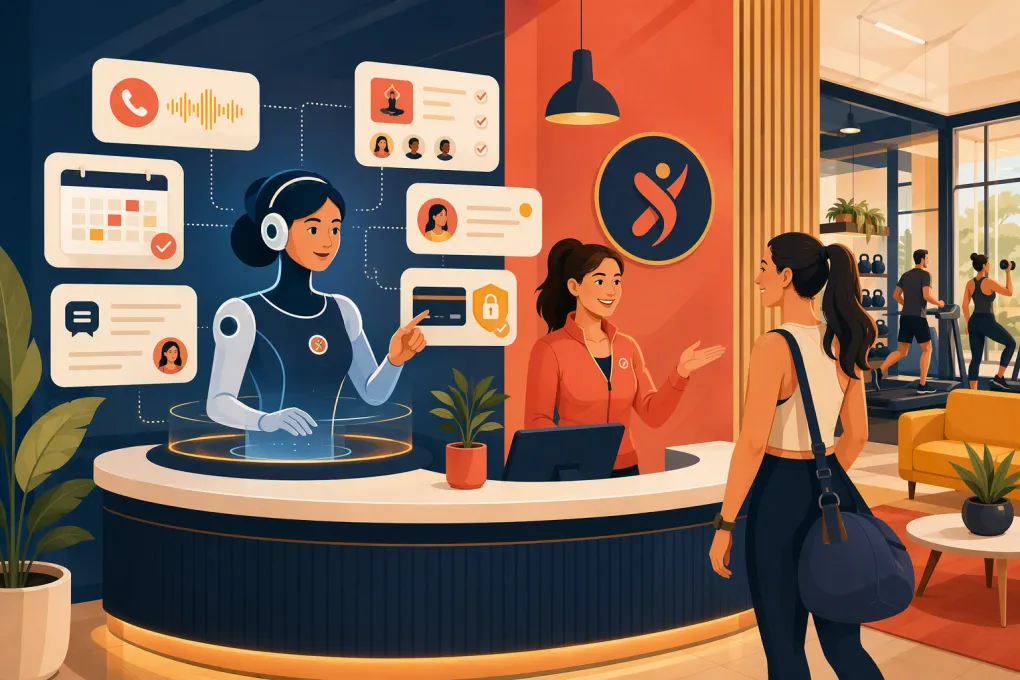
Fitty, WTF Go’s AI receptionist and agent, is designed to keep inbound conversations moving when staff cannot respond. For a physical therapy or wellness operation, that can include answering common questions, capturing new-patient interest, offering eligible appointment times, following up, and routing exceptions to the team.
The practical advantage is continuity. The caller does not have to leave a vague voicemail and wait for a callback just to learn whether an evaluation is available. Fitty can begin the approved booking workflow immediately and preserve the conversation for follow-up.
Clinical environments still require careful configuration. Before using any AI platform with patient information, confirm that its current security, contractual, integration, and data-handling capabilities fit your clinic’s obligations. Fitty should be configured around your rules rather than treated as an unsupervised clinical decision-maker.
Explore how Fitty can support after-hours PT booking and front-desk follow-up →
A safer way to roll out AI appointment booking
Do not automate every call on the first day. Use a staged rollout that exposes weak rules before they affect the full schedule.
1. Map the current call flow
Review the reasons people contact the clinic. Group them into bookable requests, information requests, rescheduling, billing, clinical questions, records, and emergencies. Document what staff do in each situation.
2. Start with a narrow booking scope
Begin with a straightforward workflow, such as cash-pay consultations or standard evaluations that do not require prior verification. Keep complex payer and clinical cases in the human queue until the process is dependable.
3. Build approved answers and escalation rules
Write the exact answers the AI may provide. Assign an owner for every escalation category and define what happens outside business hours.
4. Test realistic edge cases
Test callers asking for the wrong service, requesting an unavailable therapist, mentioning severe symptoms, changing locations, disputing a cancellation fee, or providing incomplete information. Confirm that the AI stops and hands off when required.
5. Review conversations and calendar outcomes
Early review should include both successful and failed interactions. Look for incorrect appointment types, confusing answers, unnecessary transfers, missing information, and calendar conflicts. Update the rules rather than expecting the model to infer your policy.
Talk with WTF Go about building a controlled AI booking workflow for your clinic →
What to measure after launch
Evaluate the receptionist on operational outcomes, not just the number of conversations it handles. Useful measures include:
- Calls answered rather than sent to voicemail
- Eligible inquiries that become booked appointments
- Time from initial inquiry to confirmed booking
- Percentage of conversations requiring human follow-up
- Incorrect bookings or manual calendar corrections
- Unanswered escalations
- Cancellation and rescheduling completion
- Patient opt-outs or complaints
- Staff time spent reviewing AI conversations
Establish a baseline before launch so you can see whether the workflow is improving. A higher booking count is not useful if the front desk has to repair appointment errors or chase missing information.
The right AI receptionist does not make physical therapy scheduling completely hands-off. It gives patients an immediate, consistent first response while protecting staff for the situations where human judgment matters. That is the standard to use when evaluating any system: faster access without sacrificing scheduling accuracy, privacy, or patient trust.
Frequently asked questions
Can an AI receptionist book physical therapy evaluations directly?
Yes, when the request meets clinic-defined rules for appointment type, provider, location, payer, and referral status. Complex cases should be routed to staff before confirmation.
Can an AI receptionist answer insurance coverage questions?
It can explain the clinic's general insurance process, but it should not promise coverage or benefits. Patient-specific eligibility and authorization may require verification through an approved system or staff member.
Is an AI receptionist appropriate for HIPAA-regulated information?
It can be, but the clinic must evaluate the vendor's agreements, security controls, data handling, integrations, and specific workflow. A product claim alone does not make a deployment compliant.
Should AI handle urgent medical calls?
No. The AI should not diagnose or triage symptoms. It should recognize defined urgent language, provide clinic-approved emergency instructions, and escalate according to policy.
Can an AI receptionist work across multiple PT locations?
Yes, if provider eligibility, services, hours, appointment types, and location-specific calendars are configured accurately. The clinic should also define whether the system prioritizes proximity, preference, or earliest availability.
Keep reading


Run your gym on autopilot with WTF Go
Fitty — your AI receptionist — answers calls and DMs, fills classes, follows up with every lead, and collects dues while you coach.