AI & Automation
AI Receptionist for Personal Training Lead Follow-Up Guide
Learn how an AI receptionist for personal training lead follow-up can respond faster, qualify prospects, book consultations, and keep your pipeline moving.
 Watch · 20s
A personal training lead rarely arrives when your sales manager is sitting at a desk with nothing else to do. It comes in while the trainer is coaching, the front desk is checking in members, or the gym is closed. By the time someone responds, the prospect may have contacted three other facilities.
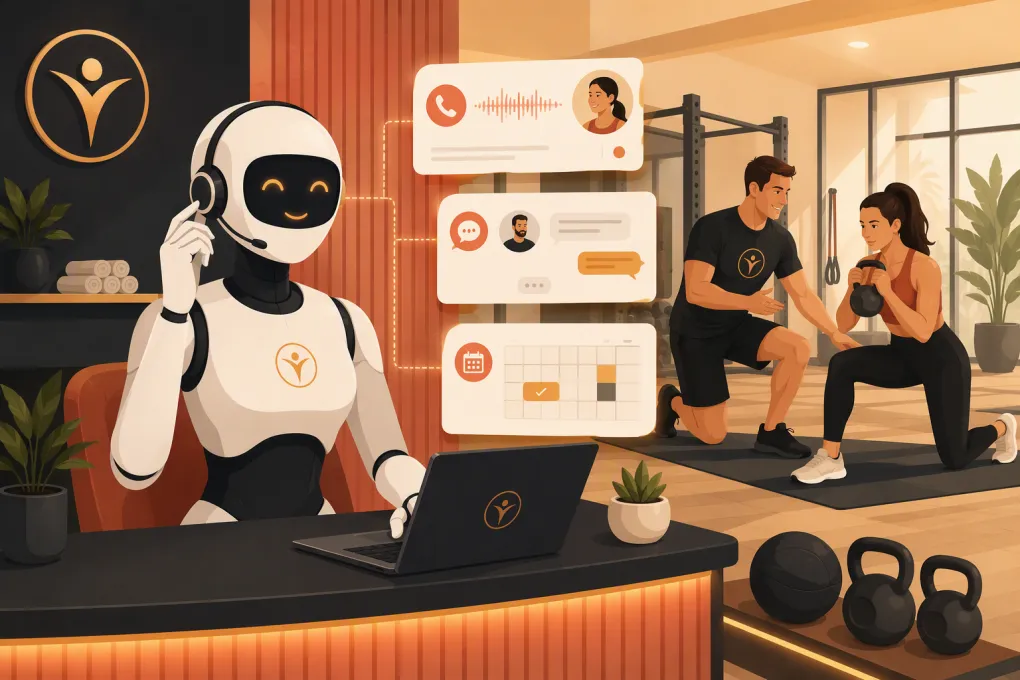
An AI receptionist for personal training lead follow-up closes that operational gap. It can respond to new inquiries, ask useful questions, schedule consultations, continue approved follow-up, and route complex conversations to a person. The goal is not to replace the trainer who sells the relationship. It is to make sure that trainer gets a real conversation with an informed prospect.
Why personal training leads slip through the cracks
Most gyms do not have a lead problem in isolation. They have a consistency problem between inquiry and appointment.
Common failure points include:
- Website forms sitting unanswered until the next business day
- Missed calls receiving no text-back or callback
- Leads scattered across inboxes, spreadsheets, and staff phones
- Follow-up stopping after one unsuccessful attempt
- Prospects being told to call back instead of receiving a booking link
- Front-desk employees answering pricing questions differently
- Consultations being booked without reminders or preparation details
These gaps are especially damaging for personal training because the sale usually requires context. The prospect may be trying to lose weight, rebuild a routine, train around a limitation, or prepare for an event. A generic autoresponder does little to move that conversation forward.
A useful AI receptionist starts the conversation immediately and keeps the next step clear.
See how Fitty handles personal training inquiries 24/7 →
What an AI receptionist should actually do
The label “AI receptionist” is applied to everything from basic website chatbots to voice agents. For personal training lead follow-up, look beyond the label and evaluate the complete workflow.
A capable system should be able to:
- Receive leads from the channels you use. That may include forms, phone calls, text messages, social campaigns, or imported lead lists with appropriate consent.
- Respond using approved business information. It should know your locations, hours, training formats, consultation process, and current offers.
- Ask focused qualification questions. The conversation should collect information the trainer can use without turning into an interrogation.
- Access real availability. Booking against a live calendar prevents staff from cleaning up bad appointments later.
- Send confirmations and reminders. A booked consultation is not useful if the prospect does not know where to go or what to expect.
- Continue follow-up when there is no reply. The cadence and channels should follow your policies, the prospect’s consent, and applicable messaging rules.
- Hand off to staff with context. Trainers should see what the lead asked, what was answered, and why the conversation was escalated.
It should also know when not to improvise. Medical questions, unusual contract requests, complaints, refund disputes, and sensitive personal situations should go to a qualified staff member.
Build the lead follow-up workflow around one next step
Personal training sales pipelines often become too complicated. For most new inquiries, the primary objective is straightforward: book the right introductory appointment.
Depending on your model, that appointment could be a consultation, movement assessment, strategy session, introductory workout, or facility tour. Pick one primary next step and define when an alternative is appropriate.
1. Acknowledge the inquiry and create momentum
The first reply should confirm that the lead reached the right business, identify the agent, and ask one easy question.
For example:
Hi Jordan, this is Fitty with Northside Training. I can help you find the right personal training option and schedule an intro. What would you most like help with right now?
This works better than opening with a long intake form. The prospect only needs to answer one question to start the conversation.
The AI should also preserve the original context. If someone asked about training before work, it should not reply with a generic question that ignores their schedule request.
2. Qualify without creating unnecessary friction
The receptionist does not need to conduct the entire consultation. It needs enough information to recommend the correct next step and prepare the trainer.
Useful qualification topics include:
- Primary training goal
- Preferred location
- One-on-one, semi-private, or small-group interest
- General availability
- Desired start timeframe
- Previous training experience
- Whether the prospect wants pricing explained before booking
Avoid collecting sensitive health details that are not needed for scheduling. If a prospect mentions pain, an injury, pregnancy, or a medical condition, the AI can acknowledge the message and route it according to your established policy. It should not diagnose the issue or promise that a program is appropriate.
3. Answer pricing questions directly but carefully
Many operators avoid discussing price until the consultation. Prospects may interpret that as evasive, especially when they asked a direct question.
Give the AI a defined pricing policy. It might provide a published starting point, explain that rates depend on format and frequency, or state that a coach will recommend options after learning more. The right answer depends on how your business actually sells.
What matters is consistency. Do not let the AI invent a package, quote an expired promotion, or imply that a price is guaranteed when it is not.
4. Book against real trainer availability
Once the lead is ready, the AI should offer a small number of relevant appointment choices rather than dumping an entire calendar into the conversation.
For example:
Based on your evening availability, I can schedule your consultation Tuesday at 6:30 p.m. or Thursday at 5:45 p.m. Which works better?
After booking, send the location, expected duration, parking or entry instructions, what to bring, and any rescheduling policy. The assigned trainer should receive the lead’s conversation summary before the appointment.
See how Fitty turns personal training conversations into booked appointments →
5. Follow up when the prospect goes quiet
Follow-up should be persistent enough to be useful without becoming repetitive. Build the sequence around new information or a simpler action.
A practical starting structure might include:
- Initial response: Answer the inquiry and ask one question.
- Later follow-up: Confirm that help is still available and restate the easiest next step.
- Next-day follow-up: Offer specific consultation times.
- Later check-in: Address a common concern, such as schedule fit or what happens during the intro.
- Final active-sequence message: Ask whether the prospect wants to keep the conversation open.
Treat this as a framework, not a universal schedule. Adjust timing and channel use to the consent the lead provided, your operating hours, and applicable requirements. Honor opt-outs immediately.
Every message should add value. Sending “just checking in” five times is automation, but it is not a good sales process.
6. Make human handoff obvious
AI is most effective when staff know exactly when they are expected to step in.
Create handoff triggers for situations such as:
- The lead asks to speak with a trainer
- The prospect has detailed injury or medical questions
- A corporate, team, or large-group request arrives
- The person disputes a charge or agreement
- The AI cannot confidently answer from approved information
- A high-intent lead wants an unavailable time
- The conversation becomes upset, sensitive, or unusually complex
The handoff should include a summary, transcript, contact details, lead source, stated goal, and requested action. A notification that only says “new lead” forces the employee to restart the conversation.
Give the AI receptionist clear operating guardrails
An AI agent should not learn your sales process by guessing. Build a controlled source of truth covering:
- Current services and who they are for
- Published pricing and approved pricing language
- Membership and training package rules
- Locations, hours, and access instructions
- Trainer calendars and appointment types
- Active promotions and expiration dates
- Cancellation and rescheduling policies
- Escalation contacts
- Claims or language the agent must not use
Assign one owner to maintain this information. When a promotion changes or a trainer leaves, update the source immediately. Outdated instructions create the same operational problems as an untrained front-desk employee.
Before launch, test realistic edge cases. Ask about an expired offer, a frozen membership, training with an injury, two different locations, same-day appointments, and a request outside business hours. Review both the answer and the handoff behavior.
Messaging compliance still applies to automated follow-up
Using AI does not remove your responsibility for compliant outreach. Your business should document how consent is collected, which channels a prospect agreed to use, how opt-outs are processed, and when messages may be sent.
Rules can vary based on channel, message type, location, and how the lead was obtained. Work with qualified legal or compliance professionals when building policies. For operational purposes, make sure your software can retain consent records, suppress opted-out contacts, and prevent employees or automations from restarting blocked outreach.
Do not upload an old contact list and assume every person can receive automated marketing messages. The source and scope of consent matter.
Measure whether the workflow produces appointments
Do not judge the AI receptionist by conversation volume alone. Track the stages that affect revenue and staff workload:
- New leads received by source and location
- Leads successfully contacted
- Qualified conversations
- Consultations booked
- Consultation attendance
- Human handoffs and their outcomes
- Leads that opt out
- Unanswered questions or failed booking attempts
- Personal training sales connected to the original lead
Review transcripts regularly. Look for questions the AI cannot answer, places where prospects abandon the conversation, and appointments that employees repeatedly reschedule. Those patterns tell you whether to change the agent’s instructions, calendar setup, offer, or sales process.
Put Fitty between the inquiry and the missed opportunity
Fitty, WTF Go’s AI receptionist, is built to keep customer-facing work moving when your team is coaching or off the clock. It can answer leads, follow up, book classes and appointments, and collect dues 24/7 within the operating rules you define.
For personal training, that means the inquiry does not have to wait in an inbox. Fitty can begin the conversation, gather the information your trainer needs, present available times, and keep following up until the lead books, opts out, or needs a person.
The strongest setup is not AI versus staff. It is AI handling speed, repetition, and coverage while your trainers handle assessment, trust, and the final recommendation.
See how WTF Go can automate your personal training lead follow-up →
Frequently asked questions
Can an AI receptionist call personal training leads?
Depending on the system and your configuration, an AI receptionist may support voice, text, or both. Any automated outreach should follow the lead’s consent, your policies, and applicable communications rules.
Should an AI receptionist give personal training prices?
It can provide approved pricing information or explain how pricing is determined. It should never invent rates, apply unauthorized discounts, or guarantee an offer that requires staff approval.
Can AI replace a personal training sales consultation?
AI is best used to answer initial questions, qualify the lead, and book the consultation. A trainer or sales professional should handle nuanced assessments, sensitive concerns, and individualized program recommendations.
What information should the AI collect from a training lead?
Collect only what supports the next step, such as the lead’s goal, location, preferred training format, general availability, start timeframe, and contact details. Route medical or complex personal questions to qualified staff.
Keep reading

Run your gym on autopilot with WTF Go
Fitty — your AI receptionist — answers calls and DMs, fills classes, follows up with every lead, and collects dues while you coach.