AI & Automation
AI Receptionist for Personal Training Consultation Bookings
Learn how an AI receptionist for personal training consultation bookings captures leads, qualifies prospects, schedules visits, and follows up 24/7 daily.
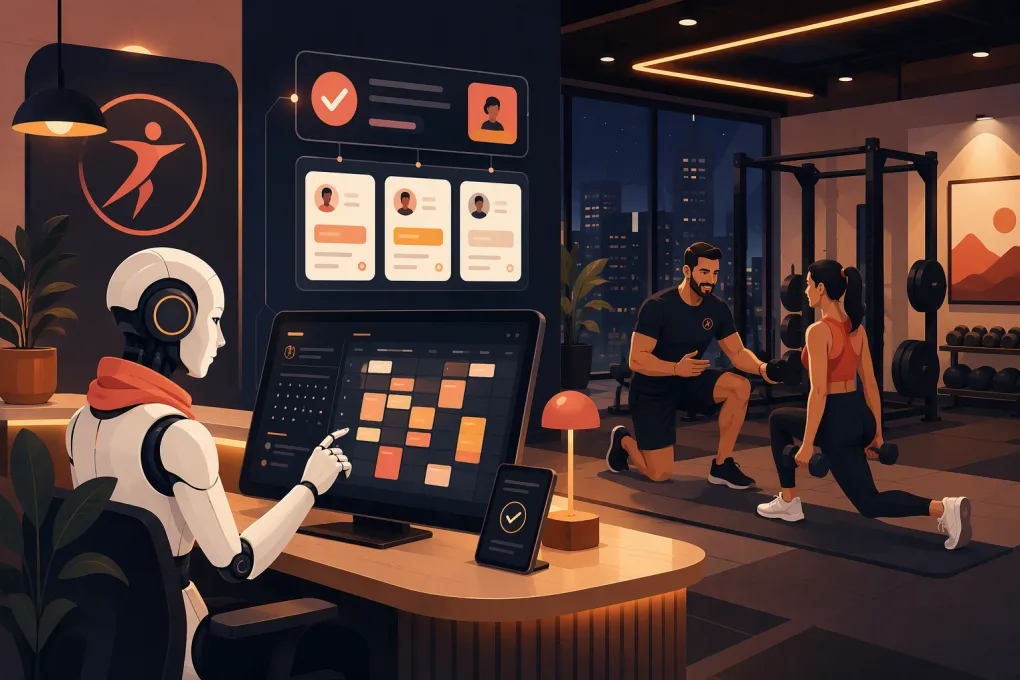 Watch · 20s
A personal training lead can arrive while your coach is on the floor, your front desk is helping a member, or your facility is closed. If booking requires a voicemail, a callback, and three rounds of calendar coordination, that prospect may never make it to a consultation.
An AI receptionist removes that administrative gap. It can respond when interest is fresh, answer routine questions, qualify the prospect, offer valid consultation times, and continue following up without pulling a trainer away from a paying client.
The goal is not to replace the sales process. It is to get more qualified prospects into that process with less friction.
Why personal training consultations are easy to lose
Personal training is usually not a simple add-to-cart purchase. Prospects may want to discuss goals, injuries, trainer fit, pricing, scheduling, or whether they need individual coaching at all.
That creates several points where the conversation can stall:
- The initial inquiry sits unanswered during a busy coaching block.
- Staff respond but forget to ask for the booking.
- The prospect and trainer exchange multiple messages about availability.
- Nobody follows up after the first unanswered message.
- A consultation gets booked without reminders or clear arrival instructions.
- The trainer enters the meeting without knowing the prospect’s goals.
A traditional form captures contact information. An AI receptionist should move the person toward a real next step.
See how Fitty turns personal training inquiries into booked consultations →
What an AI receptionist should handle
The strongest setup covers the complete booking workflow rather than sending one automatic reply.
1. Respond to the initial inquiry
The receptionist should acknowledge the lead immediately, whether the inquiry comes from an available connected channel such as a website conversation, text exchange, or campaign response.
The first message should be useful and direct. It should identify the facility, confirm the person’s interest, and ask one easy question.
For example:
Thanks for reaching out about personal training. Are you mainly looking for help with strength, weight management, mobility, sports performance, or something else?
Avoid opening with a long intake form. The immediate objective is to start a conversation, not conduct the entire assessment.
2. Qualify without interrogating
Qualification helps your team prepare and prevents obvious scheduling mismatches. Keep it limited to information that affects the next step.
Useful questions may cover:
- Primary training goal
- Preferred days or times
- Desired start date
- Previous coaching experience
- Interest in one-on-one, semi-private, or small-group training
- Relevant limitations the prospect wants the trainer to know about
Do not ask an AI receptionist to diagnose injuries, provide medical advice, or determine whether someone is safe to exercise. Health concerns should be escalated to a qualified human and handled through your established screening process.
3. Offer real consultation times
A booking assistant becomes far more valuable when it can offer valid appointment options instead of promising that someone will call later.
Configure consultation availability around actual operating constraints:
- Which trainers can conduct consultations
- Whether prospects can choose a trainer
- Consultation duration
- Required buffers before or after appointments
- In-person versus virtual availability
- Location-specific calendars
- Minimum notice and maximum advance-booking windows
- Blackout periods, staff leave, and holidays
Offer a small number of relevant choices rather than displaying an overwhelming calendar. If the prospect says weekday mornings, the next response should present weekday morning options.
4. Confirm and prepare the prospect
A confirmation should answer the practical questions that commonly create uncertainty:
- Date, time, and expected duration
- Facility address or virtual meeting instructions
- Parking and entry details
- What to wear or bring
- Whether the consultation includes movement or an assessment
- How to reschedule or cancel
Set expectations accurately. Do not call the meeting a free workout if it is primarily a goals discussion, and do not promise an assessment the trainer does not provide.
5. Send reminders and recover cancellations
Reminders should give the prospect a simple way to confirm or reschedule. If the person cancels, the workflow should immediately offer new times instead of closing the conversation.
No-shows also need a defined follow-up:
We missed you at your consultation today. Would you like to choose another time, or would you prefer to speak with the training team first?
That wording is neutral and easy to answer. Avoid guilt-heavy messages that make returning uncomfortable.
Build a conversation that sounds like your business
An AI receptionist needs more than access to a calendar. It needs accurate operating information and clear rules.
Define the consultation offer
Document exactly what a prospect is booking:
- The consultation’s purpose
- Its length and format
- Whether there is a fee
- Who conducts it
- What happens after the consultation
- Which services may be discussed
If different locations or trainers use different processes, define each variation. Otherwise, the assistant may provide an answer that is technically plausible but operationally wrong.
Give it an approved knowledge base
Create concise, maintained answers for recurring questions about:
- Personal training formats
- Facility access
- Trainer specialties
- General availability
- Consultation policies
- Membership requirements
- Introductory offers
- Cancellation and rescheduling
Pricing requires special care. If rates vary by package, trainer, or location, the receptionist should explain the pricing structure and book the appropriate conversation rather than inventing a quote.
Set human handoff rules
Automation should know when to stop automating. Route the conversation to staff when a prospect:
- Requests a specific accommodation
- Describes a medical or injury concern
- Has a complaint or billing dispute
- Asks for an exception to policy
- Needs a service the system cannot confidently identify
- Explicitly asks to speak with a person
The handoff should include the conversation history, stated goal, preferred schedule, and unresolved question. Making the prospect repeat everything defeats much of the value.
Explore how Fitty answers leads, follows up, and books appointments inside WTF Go →
Follow-up sequences that support the sale
Not every prospect books during the first exchange. A useful AI receptionist recognizes different lead states and follows up accordingly.
The prospect stopped replying
Send a brief reminder that returns to the stated goal and offers one next step. Do not repeatedly send the same generic question.
For example:
You mentioned wanting to improve strength and preferring evenings. I can help you find an evening consultation if you would still like to meet the training team.
The prospect asked about price
Answer with approved information when pricing is fixed and available. When pricing depends on the program, explain why and move toward the consultation.
Avoid hiding basic information behind a forced appointment. If your business publishes a starting price, package range, or consultation fee, the AI should not pretend that information is unavailable.
The prospect booked but did not confirm
Use a reminder that includes the appointment details and a clear confirmation action. If the prospect needs a different time, offer rescheduling within the same conversation.
The prospect completed a consultation but did not buy
This stage requires coordination with the trainer. Follow-up should reference the agreed next step, not restart the lead conversation. The trainer or sales owner should record the recommended service, open questions, and next contact date.
Fitty can support this broader workflow by handling lead responses and follow-up while your staff focuses on consultations and coaching. See how WTF Go connects lead management, booking, and ongoing follow-up →
Measure the workflow, not just message volume
A busy inbox does not prove that automation is helping. Track the stages that affect revenue and staff workload:
- Inquiry-to-conversation rate: Did the lead engage after the first response?
- Conversation-to-booking rate: Did engaged prospects schedule a consultation?
- Booking time: How long did it take to move from inquiry to a confirmed appointment?
- Confirmation and show status: Did booked prospects confirm and attend?
- Rescheduling recovery: Did canceled appointments get rebooked?
- Human handoff rate: Which questions or situations regularly require staff?
- Consultation outcome: Did the prospect enroll, decline, or require later follow-up?
Review results by lead source, location, service, and appointment type when possible. A campaign may generate plenty of inquiries but few qualified consultations. Another may produce fewer leads that are better aligned with your training offer.
Read conversation logs as well as reports. Logs reveal unclear answers, awkward phrasing, missing policies, and questions your knowledge base does not yet cover.
A practical rollout plan
Start with one consultation type and a controlled set of rules.
- Map the current journey. Record every step from inquiry through consultation outcome.
- Remove unnecessary questions. Collect only what is needed to book and prepare.
- Clean up calendars. Verify trainer availability, buffers, locations, and blackout dates.
- Write approved answers. Cover services, pricing structure, policies, and logistics.
- Define escalation. Assign who receives each type of human handoff.
- Test realistic scenarios. Include late-night inquiries, pricing questions, cancellations, injuries, and requests for a specific trainer.
- Review the first conversations closely. Correct knowledge gaps before expanding the workflow.
- Add additional services or locations. Scale only after the initial booking path is reliable.
The best AI receptionist is not the one that talks the most. It is the one that reliably moves a qualified prospect from interest to a well-prepared consultation while protecting the member experience and your staff’s time.
Frequently asked questions
Can an AI receptionist book consultations directly on a trainer's calendar?
Yes, when the booking workflow is connected to current trainer availability and configured with the correct duration, buffers, locations, and scheduling rules.
Should an AI receptionist discuss personal training prices?
It should provide approved pricing information when available. If pricing varies, it should explain the structure honestly and help the prospect book the appropriate consultation rather than inventing a quote.
What questions should the AI ask before booking?
Ask only what affects scheduling and preparation, such as the prospect's goal, preferred times, desired start date, and training format. Medical concerns and complex accommodations should be handed to qualified staff.
Can AI follow up with personal training leads who do not book?
Yes. It can send relevant follow-ups, answer additional questions, offer appointment times, and stop or escalate according to your communication and consent rules.
Will an AI receptionist replace personal training sales staff?
It is better used to handle response, qualification, scheduling, reminders, and routine follow-up. Trainers and sales staff should still manage nuanced recommendations, sensitive concerns, and enrollment conversations.
Keep reading

Run your gym on autopilot with WTF Go
Fitty — your AI receptionist — answers calls and DMs, fills classes, follows up with every lead, and collects dues while you coach.