AI & Automation
AI Receptionist for Permanent Makeup Studios: Booking Guide
Learn how an AI receptionist for permanent makeup studios can answer leads, qualify clients, book consultations, follow up, and collect deposits 24/7.
 Watch · 20s
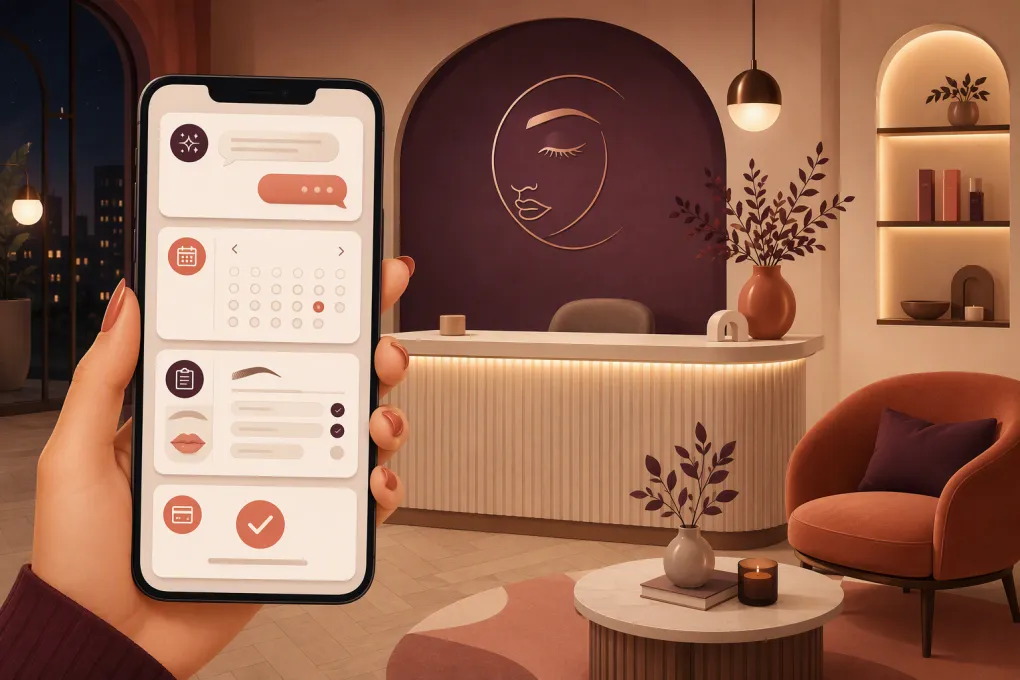
A potential lip blush client messages your studio at 9:40 p.m. She wants to know whether the procedure is suitable for her, how much it costs, and when she can get in. If she waits until tomorrow for an answer, she may contact three other artists before you open.
That is the operational gap an AI receptionist can close. It can respond immediately, answer approved questions, gather lead details, explain your process, and guide qualified prospects toward a consultation or appointment.
But permanent makeup is not a basic salon service. Booking involves contraindications, preparation requirements, deposits, healing expectations, touch-up policies, and questions that sometimes require an experienced artist. An AI receptionist for permanent makeup studios therefore needs more than a generic chatbot script.
See how Fitty can handle after-hours PMU inquiries and follow-up →
What an AI receptionist does for a PMU studio
An AI receptionist works across the repetitive conversations that usually consume an owner, front-desk employee, or artist between appointments. Depending on the system and your configuration, it can support workflows such as:
- Answering common questions outside business hours
- Explaining the difference between services such as microblading, powder brows, combination brows, lip blush, and permanent eyeliner
- Collecting a prospect’s name, contact details, desired service, and preferred timing
- Sending prospects to the correct consultation or booking path
- Communicating deposit and cancellation policies
- Following up with leads who asked questions but did not book
- Sending appointment, preparation, and payment reminders
- Escalating sensitive or unusual questions to a human
- Re-engaging clients who may be due for a consultation about a color boost or touch-up
The goal is not to remove the artist from the client relationship. It is to keep routine communication moving while protecting the points where professional judgment is required.
Why permanent makeup inquiries are difficult to manage manually
PMU leads rarely ask one simple question. A price inquiry often turns into a longer conversation about previous work, skin type, medications, pain, healing, color selection, or whether a consultation is required.
At the same time, artists may be unable to respond because they are:
- Performing a procedure that cannot be interrupted
- Taking consultation photos or completing client records
- Cleaning and resetting the treatment area
- Managing follow-up messages from existing clients
- Working without a dedicated receptionist
Response delays create more than a customer-service problem. They create an inconsistent intake process. One lead may receive your complete preparation policy while another receives only a price. A third may book before disclosing information that requires review.
A properly configured AI receptionist gives every inquiry the same first-line process, regardless of when it arrives.
The booking workflow your AI receptionist should follow
The strongest implementation starts with a defined workflow. Do not give an AI tool a few website pages and expect it to make every booking decision correctly.
1. Identify the requested service
The first step is determining what the person is interested in and whether they understand the service.
A useful opening flow might ask:
- Which service are you considering?
- Is this your first permanent makeup procedure in that area?
- Do you currently have previous work from another artist?
- Would you like to book a consultation or review available appointments?
Previous work matters because the artist may need clear photos or an in-person assessment before accepting the booking. The AI should recognize this branch and avoid treating it like a straightforward first-time appointment.
2. Present pricing without hiding important conditions
If your prices are public, the receptionist should provide the current price and state what it includes. Clarify whether your listed amount includes:
- The initial procedure only
- A follow-up session
- A consultation
- An aftercare kit
- Sales tax, where applicable
- A booking deposit
If pricing varies based on correction work, previous pigment, or artist level, say so. The AI should explain the starting point and route the lead to an assessment rather than promise a final price it cannot verify.
3. Conduct preliminary screening
An AI receptionist can ask studio-approved screening questions, but it should not diagnose conditions or decide whether a procedure is medically safe.
Screening may cover topics your studio already asks about, such as pregnancy or nursing, medications, recent procedures, active skin issues near the treatment area, allergies, and previous permanent makeup. The exact questions should come from your artist protocols, insurer guidance, consent process, and applicable local rules.
A flagged response should trigger a clear next step: pause online booking and send the information to a qualified team member for review. For medical questions, instruct the prospect to consult an appropriate healthcare professional.
4. Book the correct appointment type
Not every lead should see the same calendar. Your setup may require separate appointment types for:
- New-service consultations
- First-time procedures
- Existing-work assessments
- Initial follow-up sessions
- Annual or periodic color-boost consultations
- Correction or removal consultations
Build realistic durations and buffers into each appointment type. A fast booking experience does not help if the calendar gives an artist too little time for intake, photography, numbing, treatment, or room turnover.
5. Secure the booking
A deposit can distinguish a confirmed appointment from a casual expression of interest. Before requesting payment, the receptionist should clearly present the amount, whether it is refundable or transferable, and how cancellation or rescheduling affects it.
The client should affirm the policy rather than receiving it in an easy-to-miss paragraph. Keep that acknowledgment attached to the booking or client record whenever your software allows it.
Explore how WTF Go and Fitty can connect lead response, booking follow-up, and payment collection →
Questions the AI should answer—and questions it should escalate
Clear boundaries make an AI receptionist safer and more useful.
| The AI can usually handle | The AI should escalate |
|---|---|
| Published prices and service descriptions | Whether a specific medical condition makes treatment safe |
| Studio hours, location, parking, and accessibility | Diagnosing a rash, infection, allergy, or healing problem |
| Deposit, cancellation, and rescheduling policies | Assessing old pigment or correction complexity without artist review |
| General preparation instructions approved by the studio | Guaranteeing a specific healed result or number of sessions |
| Typical studio-defined appointment stages | Severe pain, swelling, discharge, or other urgent post-procedure concerns |
| Consultation and availability questions | Complaints, refund disputes, or emotionally sensitive conversations |
Escalation should create an actionable handoff. Capture the client’s question, contact details, relevant service, and any photos or information your process permits. Then notify the responsible person instead of merely telling the client to call later.
Build a PMU-specific knowledge base
Your AI receptionist is only as reliable as the information you approve. Create a source of truth that includes:
Service information
Document what each service is, who performs it, appointment length, current price, what is included, and whether consultation approval is required.
Policies
Add deposit terms, late-arrival rules, guest policies, cancellation deadlines, age requirements, touch-up eligibility, and how outside work is handled. Remove conflicting language from old forms, social profiles, and website pages.
Preparation and aftercare
Use instructions written or approved by the practitioner. Separate general educational information from individualized advice. Add an escalation instruction for unexpected healing concerns.
Communication standards
Decide how the receptionist should sound, which claims it must avoid, and when it should stop automating. For example, prohibit guarantees such as “your brows will last three years” or “this procedure is safe for you.” Results and suitability vary.
Review the knowledge base whenever you change pricing, policies, services, staff availability, or consultation requirements.
Lead follow-up without becoming intrusive
Many PMU prospects need time. They may be comparing artists, planning around healing, or waiting for an event-free window. Immediate pressure can damage trust, but no follow-up leaves revenue sitting in the inbox.
A practical sequence can include:
- An immediate answer to the original inquiry
- A reminder containing the consultation or booking link
- A follow-up asking whether the prospect has questions about preparation, healing, or policies
- A final message that makes it easy to opt out or return later
Follow-up should reflect the conversation. Someone awaiting an artist’s review should not receive an automated “ready to book?” message before that review occurs.
For text marketing, obtain the appropriate consent, honor opt-outs, and work with qualified counsel on your obligations under federal and state rules. Appointment-related communication and promotional messaging may be treated differently, so do not assume one consent covers every campaign.
How to evaluate an AI receptionist for your studio
Before committing, test the system with real scenarios from your inbox. Ask the vendor to show how it handles:
- A first-time brow client asking only for the price
- A client with old microblading from another artist
- A lead who mentions a possible contraindication
- A client asking whether a touch-up is included
- A late-night inquiry that should proceed to booking
- A healing concern that requires immediate human attention
- A reschedule request close to the cancellation deadline
- Multiple artists, services, rooms, or studio locations
Also verify who controls the knowledge base, how quickly staff can update policies, what happens when the AI is uncertain, how conversations are logged, and whether booking and payment workflows connect to your existing operation.
Avoid choosing solely on how human the demo sounds. Accuracy, escalation, calendar control, and operational visibility matter more than clever conversation.
Measure whether it is actually helping
Start with a narrow workflow, such as after-hours new-lead response, and review conversations closely. Useful operating measures include:
- Number of inquiries handled by service and channel
- Time from inquiry to first response
- Consultations or procedures booked from AI-assisted conversations
- Leads requiring human review
- Deposit completion and appointment confirmation status
- No-shows, cancellations, and reschedules
- Questions the AI could not answer correctly
- Opt-outs or complaints related to follow-up
Read the conversations, not just the dashboard. A high booking count can hide poor qualification, unrealistic expectations, or appointments placed in the wrong category.
WTF Go is designed to bring lead handling, booking, follow-up, and collection workflows into one operating system, with Fitty acting as the always-on AI receptionist. For a PMU studio, the value is not “more AI.” It is fewer dropped inquiries and a more controlled path from first question to confirmed appointment.
See whether Fitty fits your permanent makeup studio’s intake process →
Keep the artist in control
The right AI receptionist should make your studio more responsive without pretending permanent makeup is a commodity service. Automate repeatable information, scheduling steps, reminders, and follow-up. Preserve human review for suitability, previous work, complications, complaints, and anything requiring professional judgment.
That balance gives prospects fast answers while protecting the quality standards your reputation depends on.
Frequently asked questions
Can an AI receptionist book permanent makeup appointments automatically?
Yes, when connected to an appropriate booking workflow. Studios should restrict certain services, previous-work cases, and flagged screening responses until an artist reviews them.
Can AI answer medical or contraindication questions about PMU?
It can present studio-approved screening information, but it should not diagnose conditions or declare a procedure medically safe. Sensitive answers should be escalated to the artist or an appropriate healthcare professional.
Can an AI receptionist collect PMU booking deposits?
Some systems can connect booking and payment collection. The client should see and acknowledge the deposit, cancellation, refund, and transfer terms before paying.
Will an AI receptionist replace a PMU studio's front desk?
It can absorb repetitive inquiries, follow-up, and booking tasks, but human staff remain important for consultations, previous-work assessments, complaints, healing concerns, and exceptions.
What information should I prepare before setting up the AI?
Prepare current service descriptions, pricing, appointment types, artist availability, deposit policies, screening questions, preparation instructions, aftercare guidance, and clear escalation rules.
Keep reading
Run your gym on autopilot with WTF Go
Fitty — your AI receptionist — answers calls and DMs, fills classes, follows up with every lead, and collects dues while you coach.