AI & Automation
AI Receptionist for Menopause Clinics: A Practical Guide
Learn how an AI receptionist for menopause clinics can capture leads, book visits, answer common questions, and protect patient trust around the clock.
 Watch · 20s
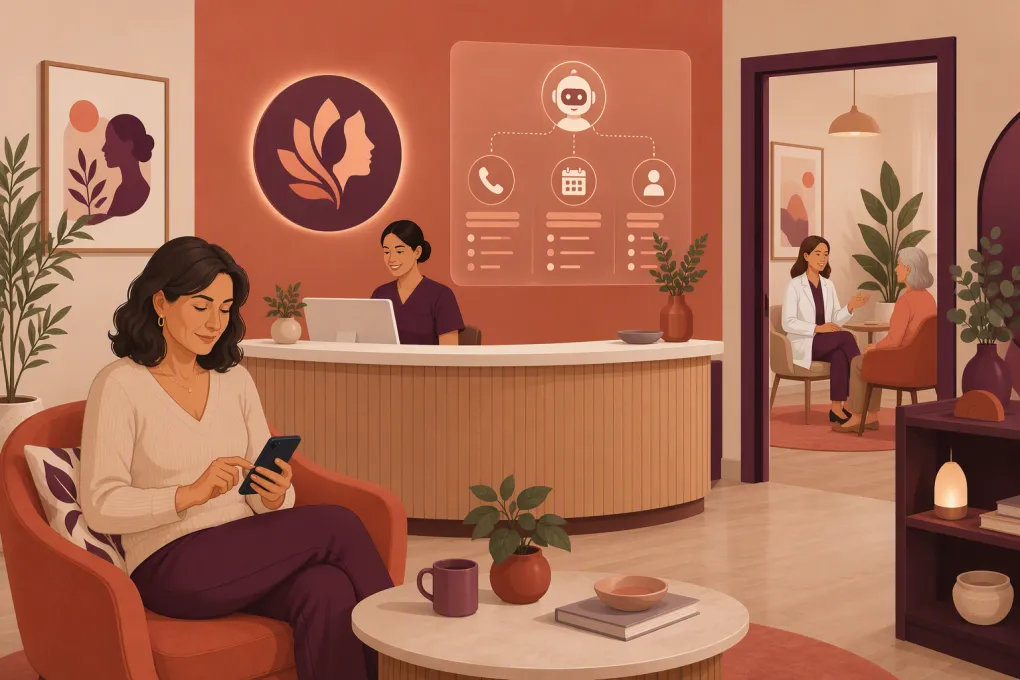
A potential patient rarely contacts a menopause clinic on a perfectly convenient schedule. She may call after work, send a message late at night, or abandon an inquiry when nobody answers. The conversation is also more sensitive than a routine salon or fitness booking: privacy, empathy, clinical boundaries, and trust all matter from the first interaction.
An AI receptionist can close the administrative gap without pretending to be a clinician. Properly configured, it can answer approved nonclinical questions, collect limited intake information, book appropriate appointments, follow up with inquiries, and route sensitive situations to a qualified person.
The key is not simply adding a chatbot. It is designing a front-desk system that knows what it can handle, what it must escalate, and what it should never discuss.
See how Fitty can handle after-hours menopause clinic inquiries →
What an AI receptionist can do for a menopause clinic
An AI receptionist works across channels such as phone, web chat, and text, depending on the platform and configuration. Its purpose is to handle repetitive administrative conversations consistently while keeping staff available for work that needs judgment or clinical knowledge.
Useful workflows include:
- Answering calls when the front desk is busy or closed
- Explaining clinic hours, locations, parking, and appointment types
- Describing the administrative difference between an initial consultation and a follow-up
- Capturing contact details and communication preferences
- Booking, rescheduling, or canceling eligible appointments
- Sending confirmation and reminder messages
- Following up with people who inquired but did not book
- Explaining accepted payment methods or general billing procedures
- Routing clinical, billing, privacy, or complaint-related questions to staff
- Supporting program or membership payments where appropriate
That coverage matters because menopause care often begins with research. A prospective patient may have questions about the clinic’s process, provider credentials, telehealth availability, insurance handling, or what to expect at a first visit. Fast, clear administrative answers can make the next step easier.
Where AI should stop
An AI receptionist is not a healthcare provider. It should not assess symptoms, recommend treatment, interpret test results, suggest medications, or tell someone whether a particular service is medically appropriate.
Use a clear division of responsibility:
| Request | AI receptionist role | Human role |
|---|---|---|
| Hours, location, parking | Answer from an approved knowledge base | Update information when it changes |
| Appointment availability | Offer eligible times | Resolve scheduling exceptions |
| Service overview | Use clinician-approved administrative language | Discuss suitability and treatment decisions |
| Symptoms or side effects | Decline to advise and escalate | Evaluate through the clinic’s clinical process |
| Test results or prescriptions | Route securely | Handle through authorized clinical staff |
| Insurance question | Explain general office policy | Verify benefits or resolve account-specific issues |
| Urgent or emergency language | Present the clinic-approved emergency instruction | Follow the clinic’s escalation protocol |
| Complaint or privacy concern | Acknowledge and route promptly | Investigate and respond |
Do not let the system improvise medical answers. Build responses from language reviewed by clinic leadership and, where appropriate, legal, compliance, or clinical advisers.
The workflows worth automating first
1. Missed and after-hours inquiries
Start with the calls and messages your team currently misses. The AI receptionist should identify the reason for contact, provide approved basic information, and create a clear next step.
For a new inquiry, collect only what is necessary, such as:
- Name
- Preferred contact method
- General appointment interest
- Preferred location or telehealth option
- Broad scheduling preference
- Whether the person is a new or existing patient
Avoid collecting a detailed symptom history through a general marketing or booking channel. Clinical information should enter the systems and workflows your clinic has approved for that purpose.
2. Appointment qualification and booking
Not every calendar slot is interchangeable. Before allowing automated booking, document the rules your staff already uses:
- Which appointments new patients can book
- Which services require a referral or prior step
- Which providers handle each appointment type
- Whether virtual care has location or eligibility restrictions
- How much time each visit requires
- Which appointments need staff approval
- When a deposit or card policy applies
The AI should offer only valid choices. If the request falls outside those rules, it should create a task or transfer the conversation instead of forcing a booking.
Explore how Fitty can connect inquiry handling, booking, and follow-up →
3. Lead follow-up without awkward pressure
Someone may inquire and then pause because of timing, cost uncertainty, privacy concerns, or simple distraction. A measured follow-up sequence can help without making a sensitive healthcare decision feel like a hard sell.
A practical sequence might include:
- An immediate acknowledgment with the requested next step
- A reminder if the person started but did not complete booking
- A final check-in offering staff assistance or an opt-out
Keep the copy neutral. Do not mention menopause, symptoms, or a particular treatment in an SMS preview unless the person has clearly requested that content and your privacy process permits it. A safer message may simply identify the clinic and ask whether assistance is still wanted.
4. Routine questions from existing patients
Existing patients often call about arrival time, rescheduling, forms, payment procedures, or how to contact the clinical team. AI can explain the process, but it should not become an alternative route for clinical messages unless it is specifically integrated and approved for that use.
For example, a prescription question should be directed to the authorized patient communication channel rather than collected casually in a general chat.
Privacy, consent, and security requirements
Menopause clinics may handle protected health information and other sensitive personal data. Before deployment, determine whether the AI vendor will create, receive, maintain, or transmit information regulated under HIPAA. If it will, assess the vendor’s safeguards and whether a business associate agreement is required. Do not assume that calling a product “HIPAA-ready” resolves your clinic’s obligations.
Your review should cover:
- What information the AI collects
- Where data is stored and processed
- Who can access conversations and transcripts
- How long recordings and messages are retained
- Whether data is used to train models
- How information is deleted or exported
- Whether access is logged and role-based
- How the system connects to scheduling, CRM, or patient systems
- What happens when an integration fails
Phone recording and automated texting rules also matter. Recording consent requirements vary by jurisdiction, and marketing texts may require specific consent and opt-out handling. Get qualified guidance for the states in which you operate and the channels you use.
For payments, use approved payment infrastructure rather than asking people to type card information into an unrestricted conversation. The same principle applies to identity documents, test results, and other sensitive files.
Build a knowledge base the AI can actually trust
The quality of an AI receptionist depends heavily on its source material. A messy website and outdated internal documents will produce inconsistent answers.
Create one approved operational knowledge base covering:
- Clinic hours, locations, and holiday closures
- Provider and appointment categories
- New-patient booking rules
- Telehealth availability and administrative eligibility rules
- General insurance and self-pay processes
- Cancellation, rescheduling, and deposit policies
- Accessibility and language assistance procedures
- Contact routes for clinical questions
- Emergency and urgent-care wording approved by the clinic
- Escalation contacts and coverage hours
Assign an owner to review this information whenever schedules, policies, providers, or services change. Version control matters: staff and AI should not be working from different policies.
Design escalation before launch
A good AI receptionist does not merely transfer everything it cannot answer. It classifies the request, captures enough context, and sends it to the right queue with an expected response window.
Create separate escalation paths for:
- Clinical questions
- Possible urgent or emergency situations
- Prescriptions and results
- Billing or insurance issues
- Privacy requests
- Complaints
- Technical booking problems
- Prospective-patient questions requiring judgment
Test what happens outside business hours. If no employee is available, the system needs approved language that sets expectations without implying that a clinician is monitoring the conversation.
How to measure whether it is working
Avoid judging the system only by how many conversations it handles. Review whether those conversations produce accurate, appropriate outcomes.
Useful operating measures include:
- Missed inquiries captured
- Eligible appointments booked
- Booking completion and abandonment
- Rescheduling and cancellation handling
- Time to human follow-up after escalation
- Incorrect answers found during transcript review
- Opt-outs and communication complaints
- Staff time spent correcting AI-created records
- Reasons callers still request a person
Audit a sample of conversations regularly. Look for vague answers, excessive data collection, incorrect scheduling, poor tone, and failed escalations. Clinical and operational leaders should both participate in review.
How Fitty fits the front-desk workflow
Fitty is WTF Go’s AI receptionist and agent for handling leads, booking, follow-up, and payment-related workflows around the clock. For a menopause clinic, the most practical starting point is usually the nonclinical front door: responding to new inquiries, explaining approved administrative information, offering valid appointment options, and ensuring requests do not disappear after hours.
WTF Go can also help centralize customer-facing operations for clinics and wellness businesses that offer consultations, classes, recurring programs, or memberships. The exact setup should reflect your scheduling systems, privacy obligations, consent requirements, and clinical escalation process.
Do not automate every conversation on day one. Launch a narrow workflow, review real interactions, fix gaps, and expand only after the clinic is confident in the boundaries.
Ask WTF Go about a privacy-conscious Fitty workflow for your clinic →
A practical launch checklist
Before turning on an AI receptionist:
- Map your five most common call and message types
- Separate administrative questions from clinical communication
- Approve every booking rule and escalation path
- Minimize the personal information collected
- Review HIPAA, recording, texting, and payment requirements
- Confirm vendor contracts and data-handling terms
- Test new-patient, existing-patient, after-hours, and urgent-language scenarios
- Give callers an easy path to a human
- Train staff to handle AI-created tasks
- Schedule recurring transcript and knowledge-base reviews
The best implementation is not the one that sounds most human. It is the one that gives patients clear next steps, protects sensitive information, books accurately, and hands off to qualified people at the right moment.
Frequently asked questions
Can an AI receptionist give menopause treatment advice?
No. It should handle approved administrative information and route clinical questions to qualified staff rather than assessing symptoms or recommending treatment.
Can an AI receptionist for a menopause clinic be HIPAA compliant?
It can be part of a HIPAA-compliant workflow, but compliance depends on configuration, data handling, contracts, safeguards, and how the clinic uses it. Confirm whether a business associate agreement is required.
Can AI book both in-person and telehealth menopause appointments?
Yes, if it has accurate availability and clearly defined eligibility, provider, location, and appointment-type rules. Exceptions should be routed to staff.
What should a menopause clinic automate first?
Start with missed and after-hours inquiries, common administrative questions, eligible appointment booking, and nonclinical follow-up. Keep clinical communication in approved human-led workflows.
Should patients always be able to reach a person?
Yes. Provide a clear human escalation option, especially for clinical questions, complaints, privacy concerns, billing disputes, and situations the AI cannot confidently handle.
Keep reading

Run your gym on autopilot with WTF Go
Fitty — your AI receptionist — answers calls and DMs, fills classes, follows up with every lead, and collects dues while you coach.