AI & Automation
AI Receptionist for Med Spa Treatment Quote Requests Guide
Learn how an AI receptionist for med spa treatment quote requests can qualify leads, explain pricing, book consults, and protect staff time, 24/7, every day.
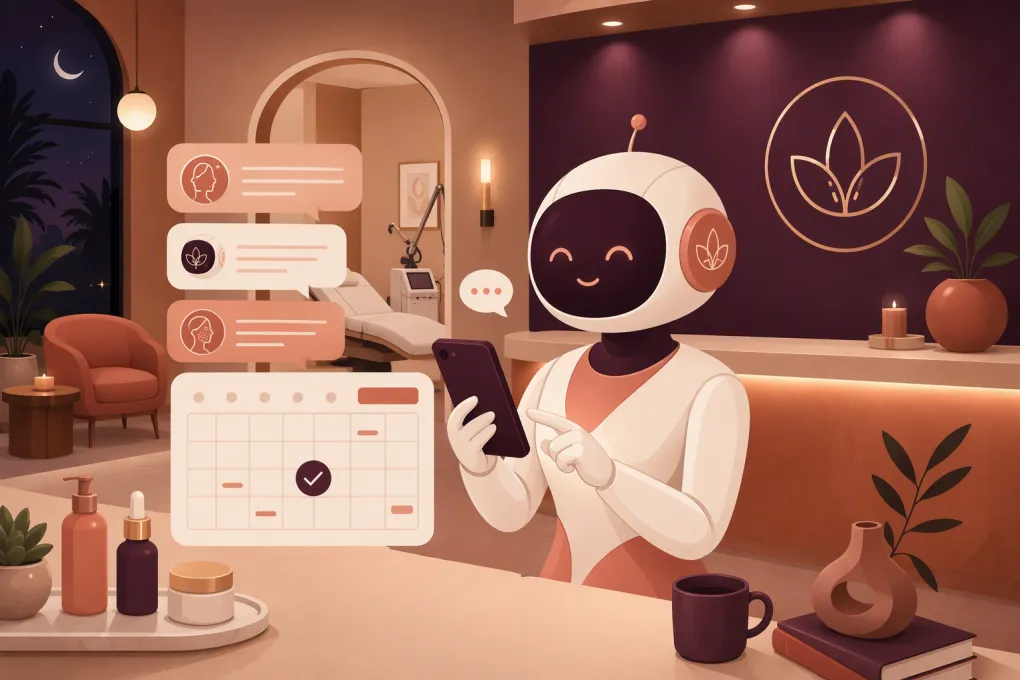 Watch · 20s
A prospective client asks what lip filler costs at 8:42 p.m. Your injector has gone home, the front desk is closed, and the lead is probably asking two other med spas the same question. If your reply comes the next morning—or never—you may lose the consultation before your team sees the message.
An AI receptionist can close that response gap. But it should not simply throw out a price and hope for the best. Med spa treatment quotes depend on the service, treatment area, provider assessment, product or equipment used, and the client’s goals. A useful AI receptionist answers what it safely can, collects the right information, and moves the person toward a consultation.
That combination matters: speed without reckless quoting, and automation without pretending AI is a medical provider.
See how Fitty handles med spa quote inquiries and books the next step →
Why treatment quote requests are difficult to manage
Quote inquiries look simple, but they create several operational problems.
First, they arrive across multiple channels and outside business hours. Someone may submit a website form, reply to an ad, send a social message, or call while the front desk is helping an in-person client.
Second, the initial question is often too broad to answer accurately. “How much is laser?” could refer to hair removal, resurfacing, tattoo removal, or another service. Even a specific request may require details about the treatment area, number of sessions, or desired result.
Third, price is rarely the lead’s only concern. Behind “How much?” may be questions about discomfort, downtime, eligibility, provider experience, appointment availability, or payment options.
Finally, repeated follow-up takes time. Staff members may answer the first message but forget to reconnect when the prospect stops replying.
An AI receptionist is most useful when it handles these repetitive steps consistently while escalating clinical, sensitive, or unusual questions to a qualified person.
What a good AI response should accomplish
A strong response to a treatment quote request should do five things.
1. Acknowledge the specific request
Generic responses make the experience feel like a dead-end chatbot. The AI should reference the service the person asked about and confirm that it can help with pricing information and scheduling.
For example:
I can help with information about microneedling pricing and consultation availability. Are you interested in treating the face, neck, another area, or a combination?
That is more useful than immediately requesting a name, email address, and phone number without addressing the question.
2. Ask only necessary qualification questions
Do not turn an initial quote request into a long medical intake. Collect enough information to route and book the lead, such as:
- Treatment or concern of interest
- Treatment area
- New or returning client status
- Preferred location for multi-location businesses
- Preferred appointment days or times
- Basic contact information and communication consent
Clinical history belongs in the appropriate intake process, not casual lead qualification unless your compliance and clinical teams have deliberately approved the workflow.
3. Use approved pricing language
The AI should only provide pricing your business has authorized. Depending on the treatment, that may be a fixed starting price, a range, a per-area structure, or an explanation that a consultation is required.
Avoid presenting an estimate as a guaranteed final quote. A useful pattern is:
Pricing starts at the amount listed by the practice, but your final treatment plan and price depend on the provider’s assessment and recommended approach.
The actual wording should match your policies. If your pricing changes frequently, connect the AI to a maintained source rather than copying amounts into scattered scripts.
4. Offer a concrete next step
“Someone will contact you” creates more work and leaves the lead waiting. The AI should offer available consultation times, place the appointment on the correct calendar, and send the appropriate confirmation.
For treatments that do not require a consultation, it can follow your approved booking rules. For treatments requiring provider review, it should book the correct consultation type rather than promising a procedure appointment.
5. Continue the conversation
If the prospect does not book immediately, follow-up should be helpful rather than relentless. A follow-up might offer to answer another nonclinical question, share consultation availability, or confirm whether the person is still considering the treatment.
The system also needs clear stop rules. It should stop messaging after an opt-out and avoid repeatedly pursuing leads who decline.
A practical quote-request workflow
Build the workflow around the decisions your front desk already makes. Document those decisions before adding AI.
| Stage | AI receptionist action | Operator decision required |
|---|---|---|
| New inquiry | Respond to the requested service and identify intent | Which channels and services are supported? |
| Qualification | Ask a short set of relevant questions | What information is actually needed to book? |
| Pricing | Provide approved information or explain why an assessment is needed | Which prices are fixed, variable, or consultation-only? |
| Booking | Offer the correct location, provider, appointment type, and time | What are the booking and deposit rules? |
| Confirmation | Confirm the appointment and provide preparation instructions | Which instructions are approved for each appointment type? |
| Follow-up | Reconnect if the lead has not booked or confirmed | What cadence and stop conditions should apply? |
| Handoff | Send the conversation to a staff or clinical team member | Which topics require immediate human review? |
The workflow should also account for existing clients. Someone asking about the cost of an additional area may need a different path than a brand-new lead requesting a first consultation.
With Fitty, WTF Go’s AI receptionist, med spas can centralize lead response, booking, follow-up, and payment-related workflows instead of asking the front desk to manually chase every inquiry.
Explore how Fitty can turn treatment questions into booked consultations →
Set firm clinical and privacy boundaries
An AI receptionist is not an injector, esthetician, nurse, or physician. It should not diagnose conditions, determine candidacy, recommend a medical treatment, or guarantee results.
Create immediate handoff rules for messages involving:
- Possible complications or adverse reactions
- Urgent symptoms
- Questions about contraindications
- Pregnancy or medication-related concerns
- Prescription products
- Requests for personalized medical advice
- Complaints that require management review
Your escalation response should tell the person what will happen next without offering a clinical opinion. Emergency language should follow instructions approved by your clinical leadership.
Privacy deserves the same discipline. Some med spas operate as healthcare providers or handle protected health information, while others have different regulatory obligations. Do not assume that calling a tool “AI” or “HIPAA compliant” resolves your responsibilities.
Before launch, confirm how conversations are stored, who can access them, how data is transmitted, whether appropriate agreements are available, and what information the AI is allowed to collect. Your legal and compliance advisers should review the setup for your business and jurisdictions.
How to implement the system without creating new problems
Start with one high-volume service category rather than automating every treatment at once.
Build a controlled knowledge source
Give the AI one maintained source for:
- Service names and plain-language descriptions
- Approved pricing language
- Consultation requirements
- Appointment duration and provider eligibility
- Location-specific availability
- Deposit and cancellation policies
- Preparation instructions
- Financing or membership information your practice actually offers
- Escalation contacts and business hours
Assign an owner to update this information whenever pricing, providers, or policies change.
Test realistic conversations
Do not test only clean questions such as “What does Botox cost?” Include misspellings, vague requests, bundled-service questions, unavailable locations, returning clients, discount requests, and people who ask clinical questions midway through booking.
Have front-desk and clinical staff review the responses. They will catch different problems: reception staff understand scheduling edge cases, while clinicians can identify unsafe language.
Launch with supervision
Review early conversations regularly. Look for incorrect service matching, unnecessary questions, booking errors, stale pricing, and situations that should have been escalated.
Automation should remove repetitive work, not remove accountability. A named operator should own the workflow and correction process.
Measure what happens after the first reply
Fast response is useful, but it is not the final outcome. Track the complete path from inquiry to appointment.
Useful operating metrics include:
- Time to first response
- Percentage of quote inquiries that receive a response
- Consultation booking rate by service and lead source
- Time from inquiry to booking
- Appointment confirmation and show status
- Human handoff rate and reason
- Follow-up conversion
- Opt-outs and complaints
- Incorrect answers or booking exceptions
Review conversation quality alongside the numbers. A high booking rate does not excuse misleading pricing, poor consent practices, or appointments placed with the wrong provider.
Choosing an AI receptionist for a med spa
A generic chatbot may answer basic questions, but treatment quote requests require deeper operational control. Ask potential vendors to demonstrate your actual workflow rather than relying on a polished sample conversation.
Confirm that the system can:
- Use service-specific pricing rules
- Book the correct appointment type and location
- Respect provider and calendar restrictions
- Escalate clinical or sensitive questions
- Follow up without ignoring consent or opt-outs
- Maintain a visible conversation history
- Support staff takeover when needed
- Report on inquiry and booking outcomes
- Update knowledge without rebuilding the entire bot
Also ask what the vendor will—and will not—claim about privacy, security, and healthcare compliance. Get important commitments in writing and verify that the configuration matches those commitments.
WTF Go is built as an operating system for gyms, studios, spas, and wellness businesses. Fitty adds an always-on AI receptionist that can answer leads, book appointments, follow up, and support collection workflows from the same operating environment.
See whether WTF Go and Fitty fit your med spa’s quote workflow →
The goal is a booked, well-informed prospect
The best AI receptionist does not dodge the price question, invent a definitive treatment quote, or impersonate a clinician. It gives the prospect approved information, explains what affects final pricing, and makes the next step easy.
For operators, that means fewer inquiries buried in an inbox, more consistent follow-up, and less front-desk time spent repeating the same answers. For the prospective client, it means getting a useful response when interest is highest—even when the spa is closed.
Frequently asked questions
Can an AI receptionist give exact med spa treatment prices?
It can provide exact prices when the practice has approved a fixed-price service. For variable treatments, it should give approved starting prices or ranges and explain that the final quote requires a provider assessment.
Can AI determine whether someone is eligible for a treatment?
No. Treatment candidacy and personalized medical recommendations should be handled by an appropriately qualified provider. The AI should escalate clinical questions and book the correct consultation.
How should an AI receptionist handle after-hours quote requests?
It should acknowledge the requested treatment, gather minimal booking information, provide approved pricing context, and offer available consultation times. Urgent or clinical messages should follow a separate escalation process.
Is an AI receptionist automatically HIPAA compliant?
No. Compliance depends on the business, vendor, contracts, data handling, configuration, and actual use of the system. Review the workflow with qualified legal and compliance advisers before collecting sensitive health information.
What should a med spa automate first?
Start with a high-volume service that has clear pricing language and booking rules. Test the workflow with staff, monitor early conversations, and expand only after the first service is operating reliably.
Keep reading


Run your gym on autopilot with WTF Go
Fitty — your AI receptionist — answers calls and DMs, fills classes, follows up with every lead, and collects dues while you coach.