AI & Automation
AI Receptionist for Med Spa Rescheduling Requests: Setup Guide
Learn how an AI receptionist for med spa rescheduling requests can protect bookings, update calendars, enforce policies, and reduce front-desk work daily.
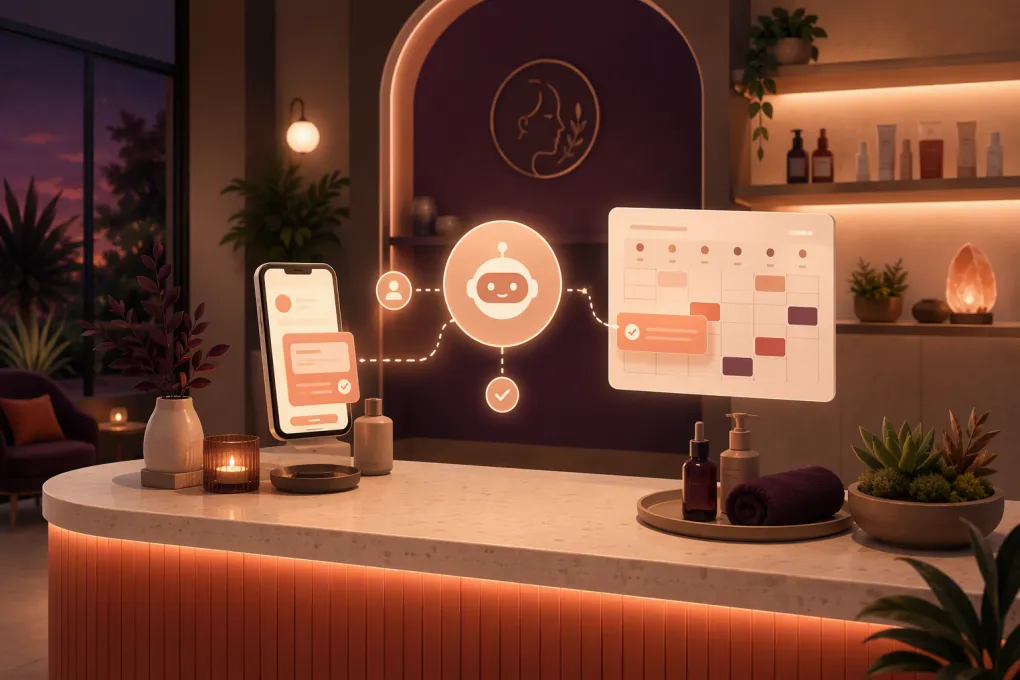 Watch · 20s
A rescheduling request looks simple until it reaches the front desk. The team has to identify the client, find the appointment, check the cancellation window, preserve the correct provider and room, handle any deposit, offer valid alternatives, update the calendar, and send a confirmation.
When the request arrives after hours, the work gets harder. The client may call another med spa, forget to follow up, or simply miss the original appointment. A delayed response turns an ordinary schedule change into an avoidable no-show or lost booking.
An AI receptionist can handle much of this workflow immediately, but only if it works from real scheduling rules rather than sending generic replies. Here is what med spa operators should require, configure, and test.
See how Fitty can respond to med spa scheduling requests around the clock →
What an AI receptionist should do with a rescheduling request
A useful AI receptionist does more than tell a client that someone will call back. It should move the request toward a completed calendar change while keeping the operator’s rules intact.
A well-designed workflow should:
- Recognize that the client wants to change an existing appointment.
- Verify enough information to locate the correct client and booking.
- Check whether the appointment can be changed automatically.
- Search only eligible times for the correct service, provider, room, and equipment.
- Present a short list of practical alternatives.
- Update the booking after the client selects a time.
- address deposits, packages, memberships, or cancellation policies as configured.
- Send confirmation through the appropriate channel.
- Escalate exceptions to a staff member with the conversation context attached.
The objective is not to automate every unusual situation. It is to complete routine changes quickly and route exceptions cleanly.
Why med spa rescheduling is operationally complex
Med spa calendars have more dependencies than a basic appointment book. A valid opening may depend on several variables at once.
Provider qualifications
The client may need a particular licensed provider, provider type, or experienced practitioner. The receptionist should never substitute a different provider merely because the calendar shows an opening.
Treatment rooms and equipment
A provider can appear available while the required room or device is already assigned elsewhere. Rescheduling logic must account for every resource attached to the service.
Treatment timing
Some services require setup, cleanup, consultation time, or buffers. The AI should use the duration and buffer rules stored in the scheduling system instead of estimating them from the conversation.
Deposits, packages, and prepaid services
A moved appointment may have an attached deposit, package credit, promotional condition, or membership benefit. The workflow needs clear rules for whether these items transfer automatically or require review.
Cancellation and rescheduling policies
A request inside the policy window may trigger a fee or require manager approval. The AI should explain the applicable policy accurately, not invent an exception or waive a charge without authorization.
These dependencies are why a standalone chatbot often falls short. If it cannot access current availability and booking rules, it can collect a message but cannot reliably complete the reschedule.
Build the workflow before turning on automation
Start by documenting how your strongest front-desk employee handles a routine request. Then separate the process into actions the AI may complete and situations that need human judgment.
Step 1: Define the information required
Ask only for what is needed to find and modify the booking. Depending on your setup, that may include:
- Client name
- Mobile number or email associated with the account
- Existing appointment date or service
- Preferred new days or time ranges
- Provider preference
Avoid gathering clinical details in a general scheduling conversation. If health information is necessary, use an approved intake process rather than an improvised text exchange.
Step 2: Set automatic-rescheduling boundaries
Write explicit rules for when the AI can complete a change. For example:
- The appointment is outside the restricted cancellation window.
- The service type permits online rescheduling.
- The required provider and resources are available.
- No unresolved payment or account issue blocks the change.
- The request does not involve a treatment complication or clinical question.
Anything outside those boundaries should create a clear handoff rather than a dead end.
Step 3: Control which alternatives are offered
Do not overwhelm clients with every open slot. Configure the receptionist to prioritize options that match the original booking, requested time range, location, and provider preference.
If there is no exact match, the AI can ask whether the client would prefer:
- The same provider on another day
- A different eligible provider at the preferred time
- Another location, if appropriate
- The next available appointment
- A waitlist position
That sequence makes the tradeoffs visible and lets the client choose without unnecessary back-and-forth.
Step 4: Confirm the completed change
The final message should state the service, date, time, provider or location when relevant, and any arrival instructions. It should also make clear that the previous appointment has been released.
Fitty, WTF Go’s AI receptionist, is built to answer inbound leads and clients, support booking conversations, follow up, and keep routine work moving when the desk is busy or closed. See how Fitty can support your med spa’s booking and rescheduling workflow →
Decide what the AI must escalate
Good automation has a visible off-ramp. Your AI receptionist should hand the request to staff when it encounters situations such as:
- A clinical question or possible adverse reaction
- A request to change the treatment itself rather than the appointment time
- A disputed fee, refund, or deposit
- Conflicting account information
- A booking that cannot be found confidently
- Repeated changes that require manager review
- A minor’s appointment or another case with special consent requirements
- A request for an accommodation that staff should coordinate
- No eligible time matching the client’s constraints
The handoff should include the client’s request, the appointment identified, options already discussed, and the exact reason automation stopped. Making the client repeat the entire conversation defeats much of the value.
For urgent clinical concerns, the response must follow the med spa’s approved escalation language. An AI receptionist is an administrative tool, not a substitute for licensed clinical assessment or emergency services.
Protect privacy and communication consent
Scheduling conversations can expose personal information, even when they do not include detailed treatment records. Treat access, retention, and vendor selection accordingly.
Before deployment, confirm:
- Which systems the AI can access
- What conversation data is stored and for how long
- Which staff roles can view transcripts
- Whether sensitive information is redacted from notifications
- How identity is verified before a booking is changed
- Whether vendors handling protected health information will sign an appropriate business associate agreement
- How clients consent to automated calls or texts
- How opt-out requests and communication preferences are honored
HIPAA applicability depends on the business, the information involved, and how services are delivered. State privacy, consumer-protection, telemarketing, and professional-practice rules may also apply. Have qualified counsel review your specific workflow rather than treating a software feature as a compliance guarantee.
Test real conversations before launch
A demo with one clean request is not enough. Build a test matrix from the situations your team actually sees.
Test at least these scenarios:
- Same service, same provider, later date
- Same service, different eligible provider
- Request inside the cancellation window
- Appointment with a deposit attached
- Package or membership booking
- Multi-location request
- No matching availability
- Misspelled name or changed phone number
- Multiple future appointments on one account
- Combined or sequential services
- Clinical question mixed into a scheduling request
- Client who changes their mind midway through the conversation
Verify both sides of every test: what the client receives and what appears on the operational calendar. Look for duplicate bookings, incorrect durations, missing resources, stale holds, unclear fee language, and confirmations that do not match the final record.
Measure whether the workflow is helping
Track operational outcomes instead of judging the AI by how human its messages sound.
Useful measures include:
- Rescheduling requests completed without staff involvement
- Requests escalated and the reasons for escalation
- Time from first contact to confirmed new appointment
- Bookings lost because no acceptable time was found
- Duplicate or incorrect calendar changes
- After-hours conversations converted into confirmed appointments
- Staff time spent correcting automation errors
- Client opt-outs or complaints related to messaging
Review transcripts and exceptions regularly. If many requests fail for the same reason, fix the scheduling rule, integration, or script instead of asking staff to keep cleaning up the result.
What to look for when choosing an AI receptionist
For med spa rescheduling, prioritize operational depth over a polished chat interface. Ask potential vendors to demonstrate the full process using a realistic service and your actual rules.
Your checklist should cover:
- Live calendar access rather than lead capture alone
- Provider, location, room, device, and service constraints
- Phone, text, and web coverage where needed
- Identity verification controls
- Deposit and policy handling
- Human escalation with conversation context
- Confirmation and reminder workflows
- Permission and audit controls
- Multi-location routing
- Reporting on completed and failed requests
- Clear implementation and support ownership
Also ask what happens when the calendar system is unavailable. The safe response is usually to collect the request, avoid promising an unverified time, and route it for follow-up.
The operating principle: automate certainty, escalate judgment
Routine rescheduling is an excellent use case for an AI receptionist because the work is repetitive, time-sensitive, and governed by defined rules. The mistake is giving automation authority where the rules are incomplete.
Let the AI handle requests it can verify: identify the booking, check eligible inventory, present valid choices, update the calendar, and confirm the result. Send policy disputes, clinical concerns, unusual financial issues, and ambiguous records to a person.
That balance gives clients an immediate path to a new appointment without asking the front desk to monitor every channel around the clock. It also protects the calendar from the careless changes that make weak automation more expensive than manual work.
Explore WTF Go and Fitty for a more responsive med spa front desk →
Frequently asked questions
Can an AI receptionist reschedule med spa appointments automatically?
Yes, when it can access current availability and follow defined rules for services, providers, resources, deposits, and cancellation windows. Exceptions should be escalated to staff.
Can an AI receptionist handle rescheduling by phone and text?
Some platforms support multiple channels, but capabilities vary. Confirm that the system can maintain context, verify the client, update the live calendar, and send an accurate confirmation on each channel.
Is an AI receptionist for a med spa HIPAA compliant?
Compliance depends on the business, data, configuration, vendors, and workflow. If protected health information is involved, verify safeguards and business associate agreement availability with each vendor and seek qualified legal guidance.
What rescheduling requests should always go to a person?
Escalate clinical concerns, fee disputes, refund requests, unclear client records, special consent situations, treatment changes, and any request the system cannot complete confidently.
How should a med spa evaluate an AI receptionist?
Test it against real scheduling scenarios and inspect the resulting calendar records. Focus on completion accuracy, appropriate escalation, policy handling, response time, and how much correction work remains for staff.
Keep reading


Run your gym on autopilot with WTF Go
Fitty — your AI receptionist — answers calls and DMs, fills classes, follows up with every lead, and collects dues while you coach.