AI & Automation
AI Receptionist for Med Spa Pre-Treatment Instructions Guide
Learn how to use an AI receptionist for med spa pre-treatment instructions to automate reminders, confirm readiness, answer questions, and protect staff time.
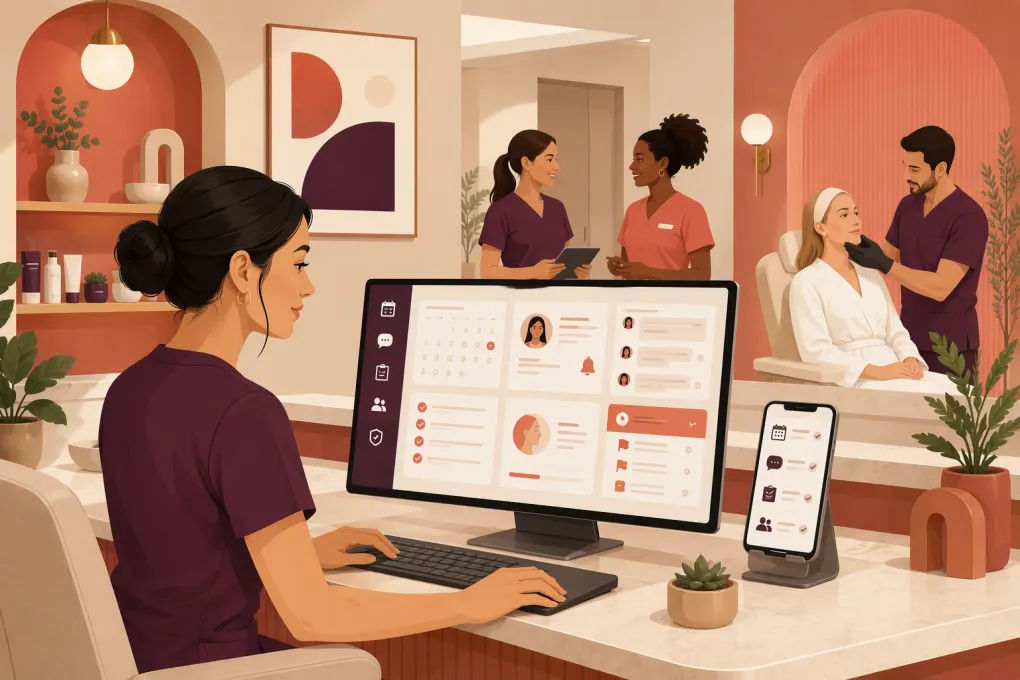 Watch · 20s
An AI receptionist for med spa pre-treatment instructions can remove a repetitive burden from the front desk—but only if it delivers the right message, at the right time, without drifting into unsupervised medical advice.
That distinction matters. Med spa teams spend hours confirming appointments, resending forms, answering logistical questions, and checking whether clients reviewed their instructions. Meanwhile, a missed message or improvised answer can create scheduling problems, treatment delays, or clinical risk.
The best approach is not to let AI invent instructions. It is to give the AI a clinician-approved source of truth, clear communication rules, and an immediate path to escalate anything that requires human judgment.
See how Fitty can handle med spa reminders and routine client questions 24/7 →
What an AI receptionist should handle before treatment
A well-configured AI receptionist should manage the administrative layer surrounding pre-treatment preparation. That includes delivering approved information, confirming receipt, handling common logistical questions, and notifying staff when a client needs individual guidance.
Useful workflows include:
- Sending the correct instructions for the booked service
- Confirming the appointment date, time, provider, and location
- Sharing links to intake forms, consent documents, or a secure portal
- Asking the client to confirm that instructions were received
- Answering approved questions about parking, arrival time, cancellation policies, and what to bring
- Resending forms or instructions on request
- Identifying responses that require clinical review
- Alerting the appropriate employee without relying on someone to monitor a general inbox
- Recording communication activity in the client or appointment record
The AI should not determine whether a treatment is appropriate, interpret symptoms, recommend medication changes, or create new preparation requirements.
Build the workflow around approved protocols
Before automating anything, document the pre-treatment process for each service. Do not start with a generic reminder and expect the AI to fill in the gaps.
Create one source of truth per treatment
Each treatment should have an approved protocol containing:
- The official treatment name and any booking aliases
- Which instructions apply to that treatment
- When each message should be sent
- Required forms or acknowledgments
- Questions the AI may answer directly
- Conditions or responses that trigger escalation
- The team or role that receives escalations
- Version ownership and the most recent review date
Have the appropriate licensed professional review clinical content. Operational staff can define timing, routing, and appointment details, but clinical instructions should come from qualified clinical leadership.
If protocols vary by provider, device, treatment area, or client history, build those distinctions into the workflow. Do not send one universal set of instructions simply because the services have similar names.
Separate fixed content from conversational AI
The safest model combines two layers:
- Fixed, approved content: The actual pre-treatment instructions, form links, disclaimers, and escalation language.
- Conversational assistance: The AI identifies the client’s intent, retrieves the relevant approved answer, confirms receipt, and routes exceptions.
This allows clients to communicate naturally without giving the system permission to improvise clinical guidance.
For example, an AI receptionist can answer a parking question from an approved location record. If a client asks whether to stop a medication, the AI should not infer an answer from general internet knowledge. It should acknowledge the question and route it to the designated clinical team.
Design a practical messaging sequence
Message timing should reflect the treatment, clinic policy, and preparation window. Avoid applying the same schedule to every appointment.
A typical sequence may include the following stages.
Immediately after booking
Send a confirmation containing:
- Service booked
- Date, time, provider, and location
- Link to the approved instructions
- Required intake or consent forms
- A simple way to ask a question or request help
Keep sensitive clinical details out of ordinary text or email when they belong in a secure channel. The booking confirmation can direct the client to an authenticated portal where appropriate.
During the preparation window
Send the treatment-specific reminder according to the approved protocol. Ask for a simple acknowledgment, such as confirmation that the client reviewed the instructions.
If the client does not respond, define what happens next. The workflow might send one follow-up, create a staff task, or flag the appointment for review. The correct action depends on how important confirmation is for that particular treatment.
The day before or day of treatment
Send operational details such as arrival time, address, parking information, and form status. Give the client a clear path to disclose a concern without inviting the AI to assess it.
For example, the message can say that clients should reply if they have a health, medication, pregnancy, illness, or preparation concern so the clinical team can review it. The categories and wording should be approved by your clinic.
Use Fitty to connect appointment reminders, replies, and staff follow-up in one workflow →
Define exactly when the AI must escalate
Escalation rules are the control system for the entire workflow. A useful rule is that the AI can explain clinic-approved processes, but it cannot make a clinical decision.
Common escalation categories include:
- Questions about starting, stopping, or changing medication
- Pregnancy or possible pregnancy
- New illness, symptoms, infection, or skin changes
- Questions about contraindications or treatment eligibility
- Reports of an adverse reaction or urgent concern
- Conflicting instructions from another clinician
- Requests to interpret laboratory results or medical records
- Uncertainty about which protocol applies
- Any question not covered by approved content
Each category needs an owner and response path. A generic message saying that someone will follow up is not enough if no queue, alert, or task is created.
Define:
- Who receives the alert
- Whether it is routine, priority, or urgent
- Which channel is used
- Expected internal response procedures
- What the client is told while waiting
- What happens outside business hours
The AI should also recognize emergencies as outside its scope and direct clients to appropriate emergency services according to clinic-approved language. It should never present itself as emergency support.
Protect privacy and communication consent
Med spas have different ownership, service, and regulatory structures. Some may be subject to HIPAA for particular activities, while others may have different privacy obligations. Determine what applies to your business with qualified legal and compliance guidance.
At a practical level, review the following before launch:
- Whether vendors handle protected or sensitive health information
- Whether a business associate agreement is required and available
- Which information can appear in SMS or email
- Whether sensitive details should stay inside a secure portal
- How client identity is verified before disclosing information
- How long conversation records are retained
- Which employees can access messages and escalations
- How communication consent and opt-out requests are recorded
Texting rules also matter. Maintain appropriate consent records, identify the business clearly, honor opt-outs, and have counsel review automated messaging practices under applicable federal and state requirements.
Do not collect extra information simply because the AI can ask for it. Limit each conversation to what the workflow actually needs.
Connect instructions to the live appointment record
Automation breaks when it operates from stale or disconnected data. The receptionist needs access to current appointment details so it does not send instructions for a canceled, moved, or incorrectly categorized service.
At minimum, synchronize:
- Client contact details
- Appointment status
- Service and treatment identifiers
- Provider and location
- Relevant forms or completion status
- Communication consent
- Delivery, reply, and escalation history
Changes should affect future messages. If a client reschedules, the reminder sequence should adjust. If the service changes, the old protocol should stop and the correct one should begin.
This is where Fitty becomes more useful than a standalone chatbot. It can serve as the conversational layer around lead response, booking, reminders, and follow-up rather than leaving staff to transfer information between disconnected tools.
See how WTF Go and Fitty can automate the client journey from inquiry to appointment →
Test before giving the AI live conversations
Run a structured test instead of checking only whether a reminder was delivered.
Build test scenarios for:
- Each treatment and booking alias
- New and returning clients
- Appointment changes and cancellations
- Missing or invalid contact information
- Clients who do not respond
- Common logistical questions
- Medication and health questions
- Messages with spelling errors or ambiguous wording
- After-hours escalations
- Opt-out requests
- Links that have expired or changed
Ask clinical leadership to test questions the AI must not answer. Confirm that those conversations produce the correct response, alert, and record.
Review transcripts regularly after launch. Look for outdated content, unanswered intents, repeated escalations, and situations where clients misunderstood the next step. Update the approved knowledge base rather than patching individual conversations with improvised wording.
Measure operational performance, not AI novelty
The goal is not to maximize the number of conversations handled by AI. The goal is to make preparation more consistent while giving staff better visibility into exceptions.
Useful measures include:
- Instruction delivery failures
- Client acknowledgment status
- Form completion before arrival
- Questions answered from approved content
- Clinical and operational escalation volume
- Time from escalation to staff action
- Reschedules related to preparation concerns
- Appointments requiring last-minute staff intervention
- Opt-outs and communication complaints
Review these by treatment, provider, and location. A high escalation volume may indicate cautious automation, but it can also reveal unclear instructions or gaps in the approved content. The transcript should help you tell the difference.
The standard to aim for
A strong AI receptionist does not replace clinical judgment. It makes sure routine communication happens consistently, clients can get logistical help outside business hours, and the clinical team sees the questions that genuinely require expertise.
Build from approved protocols, keep sensitive data in appropriate systems, connect messages to live appointment information, and make escalation unavoidable when the answer is not administrative. That is how pre-treatment automation saves time without lowering the standard of care.
Frequently asked questions
Can an AI receptionist give med spa pre-treatment instructions?
Yes, it can deliver and explain clinician-approved instructions. It should not create new clinical guidance, assess treatment eligibility, or recommend medication changes.
What questions should a med spa AI receptionist escalate?
Escalate medication, pregnancy, illness, contraindication, symptom, adverse reaction, treatment suitability, and other questions requiring clinical judgment.
Can pre-treatment instructions be sent by text message?
They can be when appropriate consent, privacy, and messaging requirements are addressed. Sensitive information may need to remain in a secure portal rather than ordinary SMS.
How does Fitty help with med spa pre-treatment communication?
Fitty can automate appointment-related messages, answer approved routine questions, track replies, and route exceptions to staff so the front desk does not have to manage every conversation manually.
Should every med spa treatment use the same reminder schedule?
No. Message timing and content should follow the preparation requirements, clinical protocol, and operational needs of each treatment.
Keep reading

Run your gym on autopilot with WTF Go
Fitty — your AI receptionist — answers calls and DMs, fills classes, follows up with every lead, and collects dues while you coach.