AI & Automation
AI Receptionist for Med Spa Missed Calls: Practical Guide
Learn how an AI receptionist for med spa missed calls answers leads, books consultations, routes urgent needs, and protects revenue 24/7 without adding staff.
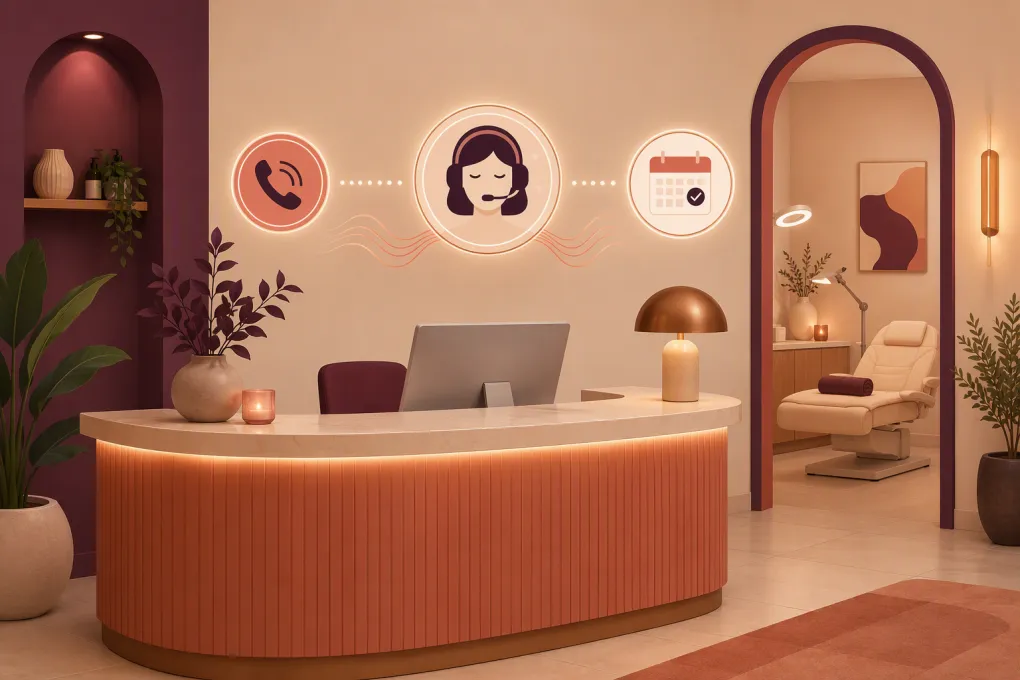 Watch · 20s
A missed med spa call is rarely just a missed conversation. It may be a prospective patient comparing providers, an existing patient trying to reschedule, or someone with a post-treatment concern. Sending every caller to voicemail forces them to wait—and gives high-intent prospects time to call another practice.
An AI receptionist can cover the gap when your front desk is busy, the practice is closed, or multiple calls arrive at once. But it needs more than a friendly voice. The system must identify why someone is calling, handle booking rules correctly, protect sensitive information, and know when a human should take over.
See how Fitty can answer med spa leads and keep missed calls moving toward a booking →
What an AI receptionist should do with a missed call
For most med spas, the goal is not to automate every conversation. It is to resolve routine requests immediately while routing clinical, sensitive, or unusual situations to the right person.
A useful missed-call workflow should be able to:
- Answer when the front desk does not pick up or when the practice is closed.
- Identify whether the caller is a new lead, existing patient, vendor, or job applicant.
- Answer approved questions about services, hours, locations, and general policies.
- Offer consultation or appointment times based on actual availability.
- Capture contact information when immediate booking is not appropriate.
- Send an approved confirmation or follow-up message.
- Escalate clinical questions and urgent concerns without attempting to diagnose.
- Record the outcome so staff can see what happened and what remains unresolved.
That last point matters. If the AI conversation lives in a separate inbox that no one checks, the practice has traded voicemail for another operational blind spot.
Build separate call paths for different caller intents
A single generic script will not work for every med spa caller. Start with the most common reasons people call and define a path for each one.
New prospective patients
A new lead usually wants to know whether you provide a service, what the process involves, when they can come in, and sometimes what it costs.
The AI receptionist should provide only information approved by the practice. It can explain that a consultation may be required, offer available times, and collect the minimum information needed to complete the booking. It should not decide whether a person is medically eligible for a treatment.
A practical call flow is:
- Identify the service or concern the caller is interested in.
- Confirm the preferred location if you operate multiple sites.
- Explain the approved next step, such as booking a consultation.
- Offer two or three available times.
- Confirm the caller’s name, contact details, location, time, and cancellation policy.
- Send the confirmation through the practice’s approved communication channel.
Existing patients with scheduling requests
Existing patients may need to confirm, cancel, or move an appointment. The receptionist should verify identity using your approved process before revealing appointment details.
Your rules should specify:
- Which appointment types can be rescheduled automatically.
- How close to the appointment a change can be made.
- Whether late cancellation fees apply.
- When staff approval is required.
- Whether the original provider, room, or device must remain attached to the booking.
Do not let the AI place a caller into any open calendar slot without checking these constraints. An apparently open hour may not be valid for the requested treatment.
Clinical or post-treatment concerns
An AI receptionist should never improvise medical guidance. Create a clear escalation path for callers mentioning symptoms, complications, medication questions, pregnancy, allergies, adverse reactions, or treatment candidacy.
The system can collect a concise message and route it according to your clinical protocol. If a caller describes a potential emergency, it should deliver your approved emergency instruction, such as contacting emergency services, rather than continuing through a sales or scheduling script.
Your medical leadership—not the software vendor—should approve this language.
Sales calls, vendors, and other requests
Not every missed call deserves immediate staff attention. Create lower-priority paths for vendors, employment inquiries, media requests, and obvious solicitation. Capture the caller’s details and place the message in the appropriate queue instead of interrupting the front desk.
Make booking rules operationally accurate
The quality of an AI receptionist depends heavily on the calendar and rules behind it. A conversational interface cannot repair inaccurate availability.
Before allowing automated booking, document:
- Appointment type: Consultation, treatment, follow-up, or membership visit.
- Duration: Include preparation, numbing, cleanup, photography, or recovery time where applicable.
- Provider requirements: Identify which licensed or trained team members may perform each service.
- Resource requirements: Account for rooms, devices, and shared equipment.
- Location: Prevent a provider or device from being booked at two locations simultaneously.
- Lead time: Define same-day booking and cutoff rules.
- Patient status: Separate new-patient consultations from eligible returning-patient appointments.
- Deposit policy: State when a deposit is required and how it is processed.
- Cancellation policy: Present it before the caller confirms.
Fitty is designed to handle lead conversations, booking, follow-up, and payment-related workflows around the clock. The operational win is not simply answering the phone; it is carrying the caller through the next approved action without creating cleanup work for your staff.
Explore how Fitty can turn after-hours med spa inquiries into tracked follow-up and bookings →
Follow up when the caller does not book
Some callers are not ready to choose a time during the first conversation. The AI receptionist should not treat those calls as completed just because it answered a few questions.
Create an unbooked-lead workflow with clear ownership:
- Save the caller’s name, contact details, service interest, location, and stated timing.
- Record why the person did not book, if they volunteered a reason.
- Send an approved follow-up message when consent and applicable rules allow it.
- Offer a direct path back to scheduling rather than forcing the lead to start over.
- Create a staff task for high-value, complex, or uncertain inquiries.
- Stop automated outreach when the person opts out or requests human contact.
Be careful with texting and automated calls. Consent, identification, recording, and disclosure requirements can vary by channel and jurisdiction. Have qualified counsel review your communication practices rather than assuming a software feature makes every outreach compliant.
Protect patient information and payment data
A med spa should evaluate an AI receptionist as part of its broader privacy and security program. Do not assume that a product is appropriate for protected health information simply because it serves healthcare or wellness businesses.
Ask potential vendors:
- What information is captured in call recordings, transcripts, and summaries?
- Where is the data stored, and who can access it?
- Can retention periods be configured?
- Can sensitive fields be excluded from transcripts?
- Is role-based access available for staff?
- Are actions and record changes logged?
- How are deleted records handled?
- Will the vendor sign required agreements when applicable?
- Which subprocessors or third-party AI services handle the data?
For payments, use a properly configured payment processor. Staff and AI systems should not place full card details into free-text notes, transcripts, or ordinary messages. If you collect consultation deposits or outstanding balances, the caller should be directed through an approved payment workflow.
Measure outcomes, not just answered calls
An answered-call count can look impressive while hiding poor bookings, incorrect information, or unnecessary escalations. Establish a baseline before launch, then review outcomes by call type and location.
Useful measures include:
- Calls missed by staff and routed to the AI receptionist.
- Calls resolved without staff intervention.
- New leads who book a consultation.
- Unbooked leads who receive follow-up.
- Confirmed appointments that show, cancel, or reschedule.
- Calls escalated to clinical or administrative staff.
- Incorrect bookings requiring manual correction.
- Callers who request a person or opt out of automation.
- Average time until unresolved calls receive human attention.
Review transcripts and outcomes regularly during the initial rollout. Look for repeated questions the knowledge base cannot answer, confusing service names, calendar rules that cause dead ends, and situations in which the AI should escalate sooner.
A practical rollout plan
Do not begin by giving an AI receptionist unrestricted access to every service and calendar. Roll it out in controlled stages.
1. Audit missed calls
Review when calls are missed and categorize their reasons. Separate new leads, scheduling requests, billing questions, clinical concerns, and non-patient calls.
2. Choose a narrow starting scope
Start with after-hours new-lead calls, overflow coverage, or consultation booking for a small group of services. Avoid automating complex clinical scheduling first.
3. Create an approved knowledge base
Document service descriptions, hours, locations, consultation requirements, policies, financing information, memberships, and escalation contacts. Assign an owner to keep this information current.
4. Configure the real calendar rules
Test provider, room, device, duration, buffer, deposit, and location restrictions. Include edge cases such as holidays, staff leave, and temporary service changes.
5. Define hard escalation triggers
Specify the words, intents, and situations that require a clinical team member, manager, billing specialist, or emergency instruction.
6. Test realistic calls
Have staff test clear requests, vague questions, interruptions, background noise, multiple services, pricing objections, rescheduling, and post-treatment concerns. Confirm that every call creates the correct record and next action.
7. Launch, review, and expand
Begin with limited hours or call types. Review conversations frequently, correct the source information, and expand only after booking and routing are reliable.
See how WTF Go and Fitty can cover missed calls without adding another disconnected inbox →
The standard is a completed next step
For a med spa, answering a missed call is not enough. The system should produce a clean operational result: a correctly booked consultation, a captured lead with scheduled follow-up, a completed routine request, or a clearly routed escalation.
That requires accurate scheduling logic, approved language, privacy controls, and ongoing review. Get those pieces right, and an AI receptionist can give callers a useful response when your front desk cannot—without asking the system to make clinical decisions it should never make.
Frequently asked questions
Can an AI receptionist book med spa consultations after hours?
Yes, if it can access accurate availability and follow your rules for providers, rooms, locations, deposits, and appointment types. Complex or clinical bookings should be escalated when staff review is required.
Should an AI receptionist answer post-treatment questions?
It can identify the concern, provide approved emergency instructions, and route the call. It should not diagnose symptoms, determine treatment candidacy, or invent medical guidance.
Is an AI receptionist automatically HIPAA compliant?
No. Evaluate how each vendor stores, processes, shares, and deletes information, and determine whether required agreements and safeguards are available for your use case.
What happens if a caller does not book?
The system should capture the lead, record the service interest and outcome, trigger permitted follow-up, and create a staff task when the inquiry needs personal attention.
Keep reading

Run your gym on autopilot with WTF Go
Fitty — your AI receptionist — answers calls and DMs, fills classes, follows up with every lead, and collects dues while you coach.