AI & Automation
AI Receptionist for Med Spa Gift Card Sales That Convert
Learn how an AI receptionist for med spa gift card sales can answer buyers, take payment, deliver cards, and hand off sensitive questions safely 24/7.
 Watch · 20s
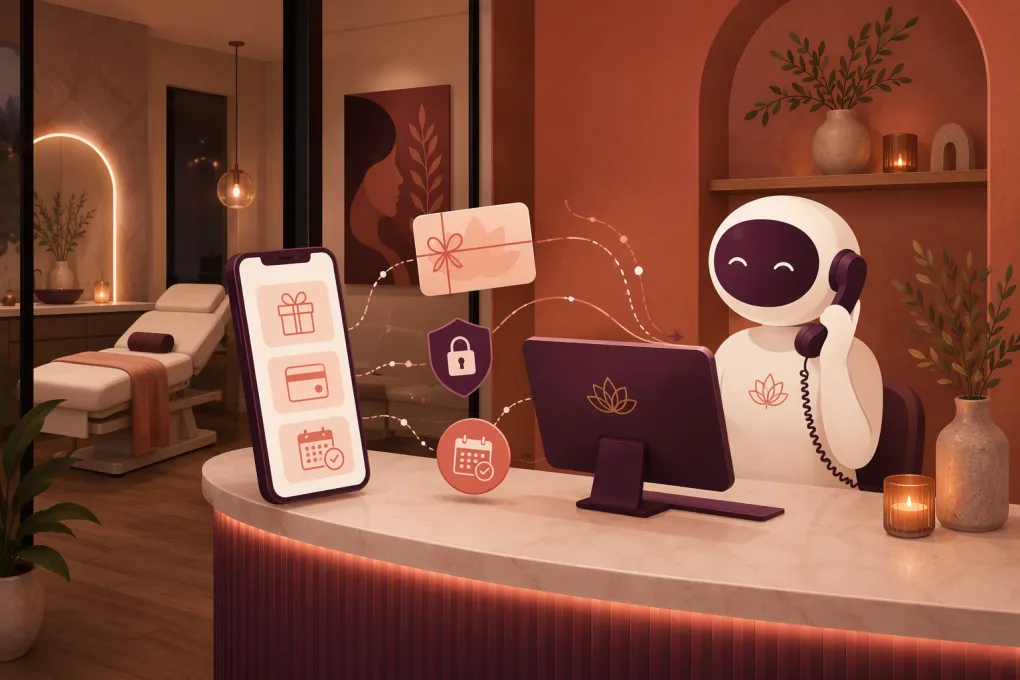
A gift card buyer is usually ready to spend. The problem is that they may call after your front desk leaves, ask a question through text, or abandon checkout because they are unsure which amount or treatment to choose. An AI receptionist for med spa gift card sales can keep that buyer moving without asking your providers or front-desk team to monitor every channel around the clock.
The goal is not to replace good staff with a chatbot. It is to remove avoidable friction from a straightforward transaction while giving clinical, policy-related, and unusual requests to the right person.
Why med spa gift card sales break down
Gift cards look simple from the operator side: choose an amount, collect payment, and send the card. Buyers often see more uncertainty.
They may want to know:
- Whether the recipient can use the card for injectables, facials, retail products, or any service
- If a consultation is required before treatment
- Whether the card works at every location
- How quickly a digital or physical card can be delivered
- Whether promotional value expires or has separate restrictions
- If the recipient can combine the card with a membership or promotion
- What happens if the recipient is not eligible for the treatment the buyer had in mind
If nobody answers, the buyer may delay the purchase or choose a simpler gift elsewhere. The issue becomes more visible during holidays, birthdays, and local promotional periods, when questions arrive outside normal reception hours.
An AI receptionist can answer approved questions immediately, recommend a safer gift-card structure, send a secure purchase link, and follow up when the buyer does not finish.
See how Fitty can handle after-hours med spa gift card inquiries →
What an AI receptionist should actually do
A useful AI receptionist needs to do more than repeat your website copy. It should support the complete nonclinical sales workflow while knowing where its authority ends.
Answer common purchase questions
Build an approved knowledge base covering:
- Available gift-card amounts or custom-value options
- Digital and physical delivery methods
- Participating locations
- Redemption rules
- Eligible service categories
- Consultation requirements
- Refund, transfer, and replacement policies
- Current promotions and their exact terms
- Front-desk hours and human escalation options
The answers should come from one maintained source. Do not let separate phone, website, and text bots invent different policies.
Clarify intent without overcomplicating the sale
The receptionist can ask a few useful questions:
- Is the gift for a specific treatment or general med spa use?
- Does the buyer want digital delivery or a physical card?
- When does it need to arrive?
- Which location will the recipient likely visit?
- Does the buyer want to purchase now or speak with the team first?
This is enough to route most buyers. A long qualification script creates the same friction you are trying to eliminate.
Direct buyers to secure payment
The safest default is to send the buyer to an approved, secure checkout rather than asking them to type card information into a normal text conversation or web chat.
Your payment and gift-card systems determine what can be automated. Depending on the setup, the AI may send a checkout link, confirm that the transaction was completed, trigger delivery through the connected system, or alert staff that manual fulfillment is required.
Do not describe a workflow as fully automated until you have tested payment, issuance, delivery, refunds, and reporting from end to end.
Follow up on incomplete purchases
A buyer who requested a link but did not complete checkout is a high-intent lead. A short follow-up can recover the conversation:
You asked about a digital gift card for the Midtown location. Were you able to complete the purchase, or can I answer a question about redemption or delivery?
The message is useful because it refers to the buyer’s actual request. Repeated generic reminders feel like spam and create unnecessary opt-outs.
Design an offer the AI can sell clearly
Automation exposes messy offer design. If your team cannot explain the gift card in two or three sentences, the AI will struggle too.
Start by deciding whether you are selling stored-value gift cards, treatment-specific certificates, promotional vouchers, or some combination. These are not interchangeable.
Stored-value gift cards
A stored-value card gives the recipient flexibility. It is often the easiest option when the buyer does not know the recipient’s treatment history, candidacy, or preferences.
Your receptionist should state where the card can be redeemed and whether any categories are excluded. It should not promise that a particular medical service will be appropriate for the recipient.
Treatment-specific offers
A treatment-specific gift may sound more personal, but it introduces clinical and pricing complications. The recipient may need a consultation, may not be a candidate, or may need a different treatment plan.
Use language such as:
The gift can be purchased for that treatment, but the recipient’s provider will confirm candidacy during consultation. If needed, our team can explain the available redemption options.
That preserves the sale without allowing the AI to make a medical determination.
Promotional gift cards
If the buyer receives bonus value, your terms must distinguish the amount paid from the promotional portion. Clearly document redemption dates, location limits, stacking rules, exclusions, and any conditions that apply to the bonus.
Gift-card and gift-certificate rules can vary by jurisdiction, and promotional value may be treated differently from purchased value. Have qualified counsel review your terms rather than copying another med spa’s promotion.
Build the conversation around buyer intent
A practical gift-card flow should branch based on what the person wants.
| Buyer intent | AI receptionist action | Human handoff trigger |
|---|---|---|
| Purchase a general gift card | Confirm amount, location and delivery method; send secure checkout | Checkout failure or policy exception |
| Buy a specific treatment | Explain consultation requirement and approved redemption terms | Questions about candidacy, contraindications or expected results |
| Check gift-card balance | Use an approved verification process or provide self-service instructions | Identity mismatch or inaccessible account |
| Replace a lost card | Collect only the information required by policy | Ownership cannot be verified |
| Request a refund | Explain the published policy without promising an outcome | Dispute, exception or chargeback threat |
| Make a large or unusual purchase | Explain standard options and notify the designated employee | Fraud concern, custom package or business order |
The AI should summarize the interaction when it transfers the conversation. A useful handoff includes the buyer’s name, channel, requested amount, intended location, delivery deadline, questions asked, and checkout status. That prevents the buyer from repeating everything to your staff.
Put clinical, privacy, and payment guardrails in place
Med spa conversations can move from retail to medical quickly. Your AI receptionist needs explicit boundaries.
Do not let the AI assess candidacy
The agent should not decide whether someone can receive an injectable, laser procedure, body treatment, or any other medical service. It can explain that an evaluation may be required and help arrange the next step, but clinical guidance belongs with an appropriately qualified professional.
Keep payment information out of open conversations
Use a payment provider and checkout flow appropriate for card transactions. Avoid collecting full card details in free-form chat, ordinary email, or unstructured text fields. Limit system access based on job function and keep a clear transaction record.
Treat sensitive information carefully
A gift-card question is not necessarily a clinical conversation, but buyers may volunteer treatment history or information about the recipient. Configure the AI to stop unnecessary medical questioning and escalate sensitive issues.
If a workflow handles protected health information, assess whether the technology, data handling, contracts, and vendors meet your applicable privacy obligations. Do not assume that calling a tool “AI” changes those responsibilities.
Obtain proper messaging consent
Follow applicable rules for automated calls and texts. Record consent where required, identify the business, honor opt-out requests, and separate transactional updates from marketing campaigns. A gift-card receipt does not automatically create unlimited permission for future promotional messaging.
How WTF Go and Fitty support the workflow
Fitty, WTF Go’s AI receptionist and agent, is designed to answer leads, continue conversations, follow up, and keep revenue-related tasks from sitting untouched after hours.
For gift card sales, the operating model is straightforward:
- Load Fitty with your approved gift-card policies and offer details.
- Define which questions it can answer and which require staff.
- Connect the conversation to your approved purchase path.
- Set follow-up rules for buyers who request a link but do not finish.
- Route clinical, disputed, or unusual requests to the correct employee.
- Review transcripts and outcomes to improve the knowledge base.
The exact checkout and fulfillment process depends on your current payment and gift-card systems. That implementation detail matters. The right question is not whether an AI can talk about gift cards; it is whether the whole workflow reliably moves from inquiry to payment, delivery, and reporting.
Explore how Fitty can turn gift-card questions into tracked sales conversations →
Measure outcomes that reveal operational problems
Do not judge the project only by how many messages the AI sends. Track the stages of the purchase path:
- Gift-card inquiries by phone, text, and web
- Inquiries received outside staffed hours
- Secure checkout links sent
- Completed purchases tied to those conversations
- Unfinished checkouts receiving follow-up
- Human handoffs and their reasons
- Failed delivery or fulfillment cases
- Refund, dispute, and opt-out requests
- Questions the knowledge base could not answer
Review transcripts regularly at launch, then maintain a recurring quality check. Look for incorrect policy explanations, dead links, repetitive prompts, unnecessary data collection, and transfers that reach the wrong employee.
A practical launch checklist
Before promoting an AI-assisted gift-card channel, confirm that:
- Gift-card terms have been reviewed for your locations and jurisdictions
- Every offer has a plain-language description
- Clinical claims and candidacy decisions are excluded from the AI’s role
- Digital and physical delivery timelines are accurate
- Checkout works on mobile devices
- Test purchases appear correctly in payment and gift-card reporting
- The recipient receives the expected card or redemption instructions
- Staff know how to handle escalations, refunds, and failed delivery
- Follow-up timing and opt-out handling are configured
- Transcripts and outcomes have an assigned reviewer
Run tests using ordinary purchases and edge cases: a last-minute birthday, a recipient in another state, a treatment-specific request, a failed card payment, an incorrect email address, and a request involving multiple locations.
An AI receptionist for med spa gift card sales works best when the offer is clear, checkout is secure, and handoffs are deliberate. Get those pieces right, and your med spa can serve ready-to-buy customers even when the front desk is busy or closed.
See how WTF Go can build an always-on reception and follow-up workflow for your med spa →
Frequently asked questions
Can an AI receptionist sell med spa gift cards over the phone?
Yes, it can answer approved questions and guide the caller to a secure checkout. Whether it can confirm payment or trigger delivery depends on the payment, gift-card, and phone systems connected to the workflow.
Should an AI recommend a specific med spa treatment as a gift?
It can explain available options, but it should not assess the recipient's candidacy or promise clinical results. Treatment-specific requests should include consultation language and a human or provider handoff when needed.
Can the AI collect credit card details in chat or by text?
The safer approach is to direct buyers to an approved secure checkout rather than collecting full card details through free-form messages. Payment handling should follow your provider's requirements and applicable security obligations.
What information does Fitty need to answer gift-card buyers?
Provide current amounts, eligible services, participating locations, delivery methods, redemption terms, consultation requirements, refund policies, promotion rules, and clear escalation instructions.
How should a med spa follow up on an abandoned gift-card purchase?
Send a brief message tied to the buyer's original request, offer help with checkout or policy questions, and stop when the buyer opts out. Avoid repeated generic promotional messages.
Keep reading

Run your gym on autopilot with WTF Go
Fitty — your AI receptionist — answers calls and DMs, fills classes, follows up with every lead, and collects dues while you coach.