AI & Automation
AI Receptionist for Med Spa Cancellation Requests Guide
Learn how an AI receptionist for med spa cancellation requests can verify clients, enforce policies, update calendars, fill openings, and escalate safely.
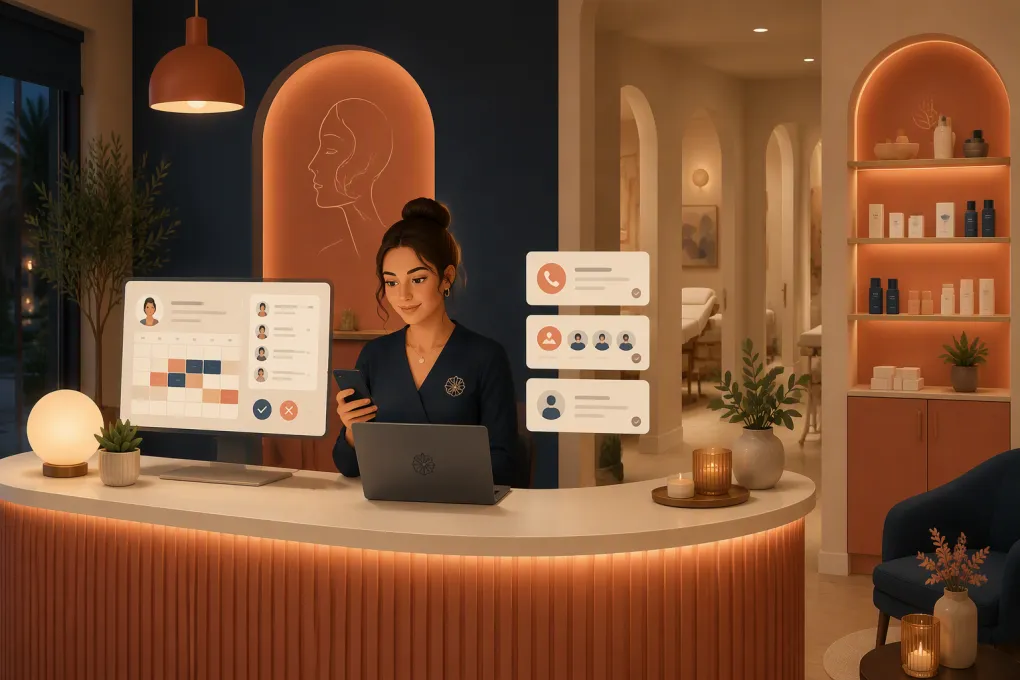 Watch · 20s
A cancellation request looks simple until it lands after hours, arrives from an unknown number, or comes with a dispute about the deposit. The front desk then has to identify the client, locate the correct appointment, apply the right policy, release the provider and room, offer a new time, and document the outcome.
An AI receptionist can handle much of that work, but only if it operates from defined rules. A generic chatbot that merely says, “Your appointment is canceled,” can create duplicate bookings, lost deposits, privacy problems, and frustrated clients.
The goal is not to automate every judgment. It is to automate routine requests while giving staff clean control over exceptions.
See how Fitty can support after-hours med spa booking conversations →
Why med spa cancellations require more than calendar access
Med spa appointments often depend on several connected resources:
- A specific provider or provider type
- A treatment room
- Equipment assigned to the service
- Appointment duration and cleanup time
- Deposits, packages, memberships, or prepaid balances
- Preparation instructions or treatment-specific restrictions
- Location-specific cancellation policies
Removing an appointment from the calendar without addressing those dependencies can leave the operation out of sync. A provider may appear available while a room remains blocked, or a client may believe a deposit was refunded when the request only reached a staff inbox.
Cancellation messages can also contain clinical information. A client may write that they are canceling because of swelling, pain, medication changes, pregnancy, or a reaction after treatment. Those are not ordinary scheduling conversations. The AI should stop the automated workflow and route the message according to the med spa’s clinical escalation procedure.
What an AI cancellation workflow should do
A reliable workflow moves through a defined sequence rather than jumping directly to cancellation.
1. Identify the client and the appointment
The receptionist should first determine which appointment the client means. Matching only on a phone number is not always enough because families may share contact information, clients may use a different number, and one person may have multiple upcoming services.
Use the minimum information needed to verify the request, such as:
- Full name
- Mobile number or email already associated with the account
- Appointment date or service
- Location, if the med spa has multiple locations
Avoid asking clients to send sensitive medical details through an ordinary text conversation. If the system cannot establish a confident match, it should collect the request and send it to staff instead of guessing.
2. Clarify whether the client wants to cancel or reschedule
Clients often say “cancel” when they actually mean “I cannot make that time.” A useful AI receptionist should ask whether they want to cancel completely or find another opening.
This small distinction protects revenue without pressuring the client. If they want to reschedule, the system can preserve the appointment value by showing appropriate alternatives based on service, provider, location, and duration.
3. Apply the correct policy
Cancellation rules should come from structured business settings, not language invented by the AI. The workflow needs to know:
- The cancellation cutoff for each service or appointment type
- Which timezone controls the cutoff
- Whether the policy differs by location
- How deposits, packages, and memberships are handled
- Whether the client has already received an exception
- Which cases require manager approval
The AI should explain the applicable policy plainly before processing a late cancellation. It should not promise a refund, waive a fee, or make an exception unless the business has explicitly authorized that action.
Fee disputes should go to a person. An AI can state the recorded policy and gather the client’s concern, but it should not argue with the client or adjudicate a dispute.
4. Update the source-of-truth schedule
A cancellation is complete only when the scheduling system confirms it. The AI should not tell a client that an appointment has been canceled merely because it sent a request to another system.
A sound workflow should:
- Submit the cancellation to the booking system.
- Wait for a successful response.
- Release the associated provider, room, and equipment blocks where supported.
- Record the policy outcome and any fee or deposit status.
- Send the client a confirmation with the canceled service, location, date, and time.
If the booking system is unavailable, the AI should say that the request has been received and requires confirmation. That is more accurate than issuing a false cancellation notice.
5. Offer relevant rebooking options
Rebooking should follow service rules, not simply display every open slot. The options may need to account for provider credentials, treatment duration, room availability, equipment, and location.
Keep the interaction focused. Offer a short set of suitable times, allow the client to request a different day, and provide a staff handoff when the service requires consultation or clinical review.
6. Start the opening-recovery workflow
Once the cancellation is confirmed, the newly available time can become a recovery opportunity. Depending on the med spa’s communication permissions and operating rules, the system can:
- Notify clients who asked for an earlier appointment
- Follow up with leads interested in the same service
- Offer the time to clients who need to reschedule
- Alert staff when a high-value opening remains unfilled
Outreach should respect the client’s communication preferences and applicable federal and state requirements. Your legal counsel or compliance advisor should review automated calling and texting practices, especially consent, opt-out handling, and message content.
Explore how Fitty handles 24/7 lead conversations, booking, and follow-up →
Build escalation rules before turning on automation
The safest automation has a short, explicit list of situations it will not handle alone.
| Request or message | Recommended action |
|---|---|
| Routine cancellation inside the allowed window | Verify, cancel, confirm, and offer rebooking |
| Late cancellation with an undisputed policy outcome | Explain the policy and process only what the med spa has authorized |
| Refund, fee, or deposit dispute | Pause and route to a manager or billing-trained employee |
| Symptoms, adverse reaction, medication question, or clinical concern | Stop scheduling automation and follow the clinical escalation protocol |
| Appointment cannot be matched confidently | Collect basic details and route to the front desk |
| Minor’s appointment or authorized-representative issue | Follow the business’s identity and authorization procedure |
| Booking platform is unavailable | Record the request without claiming the cancellation is complete |
| Angry, threatening, or legally sensitive message | Preserve the conversation and escalate immediately |
Every route should have an owner and response expectation. “Send to staff” is not enough if nobody knows which queue to monitor after closing.
If your med spa is a HIPAA covered entity—or if a vendor handles protected health information on its behalf—review whether the technology, data flow, contracts, and access controls satisfy your obligations. Not every spa has the same legal status, so this determination should come from qualified counsel rather than the software vendor’s marketing page.
Write cancellation messages that prevent confusion
Scripts should be short and operationally precise. Avoid vague confirmations such as “You’re all set.” State exactly what happened.
Routine cancellation
I found your [service] appointment at [location] on [date] at [time]. Would you like to cancel it or see available times to reschedule?
Late cancellation
This appointment is within the cancellation window for [service]. The policy associated with your booking is [approved policy summary]. Would you like me to submit the cancellation, or would you prefer help from the front desk?
Pending system confirmation
I received your request, but I cannot confirm the calendar update right now. I have sent it to the front desk for review. Your appointment is not confirmed as canceled until you receive a cancellation confirmation.
Clinical language detected
I’m routing this message to the appropriate team because it may require clinical attention. If you believe you are experiencing a medical emergency, contact emergency services rather than waiting for a reply here.
Have management and clinical leadership approve these scripts. The AI should use the business’s reviewed language rather than improvising medical guidance.
Configuration checklist for med spa operators
Before launching an AI receptionist for med spa cancellation requests, document the rules it needs to follow:
- List every appointment type and its cancellation window.
- Define how deposits, packages, credits, and memberships are treated.
- Map services to eligible providers, rooms, equipment, and durations.
- Set the correct timezone for each location.
- Identify which system is the source of truth for availability.
- Define identity-verification steps and failed-match handling.
- Create approved responses for routine, late, and pending cancellations.
- List clinical phrases or topics that trigger immediate escalation.
- Assign owners for billing, clinical, technical, and general exceptions.
- Test duplicate requests so the same appointment is not canceled twice.
- Test requests that arrive while staff are editing the appointment.
- Confirm that opt-outs and communication preferences are honored.
- Review access logs, conversation records, and data retention settings.
Run test scenarios before allowing live calendar changes. Include an on-time cancellation, late cancellation, ambiguous appointment, multi-location client, disputed deposit, booking-system outage, and message mentioning a possible reaction.
Measure whether the workflow is actually helping
Do not judge the system solely by how many messages it answers. Track operational outcomes:
- Cancellation requests resolved without staff intervention
- Requests escalated by reason
- Failed or unmatched appointment lookups
- Canceled appointments converted into reschedules
- Openings refilled after cancellation
- Average staff response time for exceptions
- Duplicate, incorrect, or reversed calendar actions
- Fee and deposit disputes created by the workflow
- Clients who opt out after automated outreach
Review conversation samples regularly. A high automation rate is not a win if the system gives unclear confirmations or routes clinical messages incorrectly.
Fitty is built to serve as an always-on AI agent for wellness businesses, helping answer leads, book services, follow up, and handle payment-related workflows. For cancellation automation, the important step is mapping those capabilities to your actual booking rules, escalation paths, and client communication standards.
See how WTF Go and Fitty can support your med spa’s front desk workflow →
The best AI receptionist does not replace operational judgment. It handles predictable work quickly, documents what happened, and brings staff into the conversation at the exact point human authority or clinical expertise is required.
Frequently asked questions
Can an AI receptionist cancel med spa appointments automatically?
Yes, when it can verify the client, match the correct appointment, apply an approved policy, and receive confirmation from the booking system. Ambiguous requests, disputes, and system failures should be escalated.
Should AI charge a late cancellation fee?
Only when the med spa has clearly configured the policy and has an appropriate authorization and payment workflow. Refund requests, exceptions, and fee disputes should usually be reviewed by staff.
How should an AI receptionist handle a client reporting a reaction?
It should stop the normal cancellation flow and route the message through the med spa’s approved clinical escalation process. It should not diagnose the issue or provide improvised medical advice.
Can an AI receptionist help refill a canceled med spa appointment?
It can support waitlist outreach, lead follow-up, and rescheduling when availability and communication permissions are connected to the workflow. Outreach must respect consent, opt-outs, and applicable messaging rules.
Keep reading


Run your gym on autopilot with WTF Go
Fitty — your AI receptionist — answers calls and DMs, fills classes, follows up with every lead, and collects dues while you coach.