AI & Automation
AI Receptionist for Med Spa Botox Bookings That Convert
Use an AI receptionist for med spa Botox bookings to answer leads fast, screen requests, schedule consultations, reduce no-shows, and protect patient privacy.
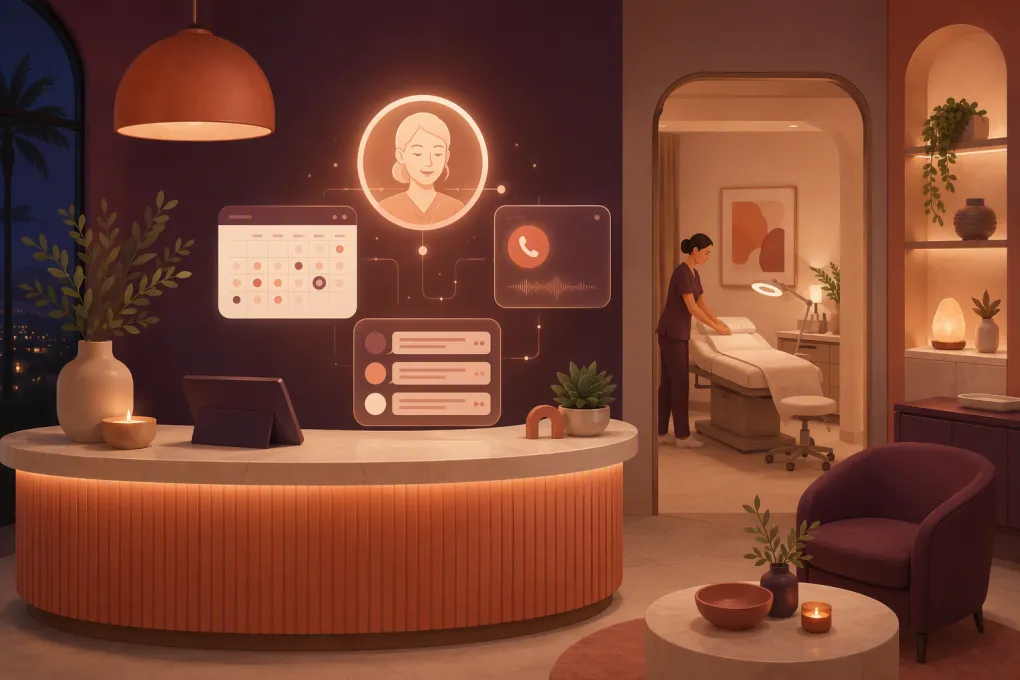 Watch · 20s
A Botox lead rarely arrives at a convenient time. Someone sees a before-and-after post during lunch, searches after work, or sends a message while your front desk is helping a patient. If the lead gets voicemail or waits until the next business day, the conversation can move to another med spa.
An AI receptionist helps close that response gap. It can answer common questions, collect basic information, schedule the appropriate consultation, send reminders, and follow up when a prospect goes quiet. The goal is not to replace clinical judgment. It is to remove the administrative friction between interest and a properly scheduled appointment.
For med spa operators, that distinction matters. Botox booking workflows touch marketing, patient experience, scheduling, consent, privacy, and medical oversight. A useful AI receptionist must handle all five without pretending to be a provider.
See how Fitty can respond to Botox inquiries and move qualified leads toward a consultation →
What an AI receptionist should handle
A med spa AI receptionist should own the repetitive parts of the booking journey while escalating anything clinical, sensitive, or unusual to your team.
A practical workflow includes:
- Respond immediately. Acknowledge calls, web inquiries, texts, or other connected lead channels at any hour.
- Identify the requested service. Determine whether the person is asking about Botox, another injectable, a facial, laser treatment, or a general consultation.
- Set expectations. Explain that treatment recommendations and eligibility require evaluation by an appropriately licensed provider.
- Collect booking details. Ask for the information needed to find the right location, provider, appointment type, and time.
- Schedule the correct visit. Book a consultation or treatment appointment according to the med spa’s rules.
- Confirm and remind. Send approved preparation instructions, confirmation details, rescheduling options, and reminders.
- Follow up. Re-engage incomplete bookings and missed appointments without overwhelming the lead.
- Escalate when necessary. Route medical questions, adverse-event concerns, complaints, accessibility needs, and exceptions to a human.
The best automation is usually narrow and disciplined. It should do approved administrative work reliably rather than improvising answers outside its role.
Botox inquiries are not ordinary appointment requests
A person asking for a haircut can often choose a service and book it directly. An injectable appointment has more variables.
Your workflow may depend on:
- Whether the person is a new or established patient
- Whether your practice requires a consultation before treatment
- Provider licensure and availability
- The patient’s requested treatment area
- Timing around previous treatments or upcoming events
- Location-specific protocols
- Deposits, cancellation terms, and rescheduling rules
- Whether the message contains a clinical question
State laws and professional rules governing medical spas vary. Your medical director or legal counsel should approve the booking logic, terminology, escalation rules, and services that can be scheduled without prior review.
An AI receptionist should never tell someone that Botox is appropriate for them, promise a particular result, diagnose a condition, or override a provider’s instructions. It can say that a licensed provider will assess goals, history, and suitability during the appointment.
Build the booking conversation around intent
Long intake interrogations cause drop-off. Start with the information needed to route the inquiry, then move detailed medical intake into your approved patient process.
Step 1: Find out what the lead wants
A concise opening works better than a wall of information:
I can help you schedule a Botox consultation. Are you a new or returning patient, and which location would you like to visit?
If your med spa offers direct booking for eligible returning patients, the AI can branch accordingly. If every patient requires an evaluation, it should consistently book the consultation rather than making exceptions.
Step 2: Separate administrative and clinical questions
The receptionist can answer approved operational questions such as:
- Available locations and hours
- Which providers offer injectable consultations
- Appointment length, if defined by the practice
- Deposit and cancellation policies
- Parking and arrival instructions
- How to reschedule
Clinical questions belong with a qualified human. Examples include questions about pregnancy, medications, contraindications, side effects, complications, treatment intervals, or whether a symptom is normal.
Create an explicit handoff response, such as:
A licensed member of our clinical team should answer that. I can take your contact details and ask the team to follow up, or help you schedule an evaluation.
Messages describing trouble breathing, swallowing difficulty, severe allergic symptoms, or another potential emergency should trigger the practice’s approved urgent escalation language. The AI must not attempt to assess the severity itself.
Step 3: Offer specific appointment choices
Avoid asking, “When are you free?” if the system can read actual availability. Offer a small number of valid choices based on location, appointment type, provider rules, and booking duration.
Before confirming, restate:
- Service or consultation type
- Location
- Provider, if selected
- Date and time
- Deposit or card requirement
- Cancellation policy
This final check prevents avoidable scheduling errors.
Use follow-up without making it feel like spam
Many Botox leads do not book during the first exchange. They may be comparing providers, checking their calendar, or waiting for payday. A structured follow-up sequence can recover those conversations, but frequency and content matter.
Segment follow-up by status instead of sending the same message to everyone:
| Lead status | Useful next action | What to avoid |
|---|---|---|
| Asked about availability | Send valid appointment options | Repeating a generic sales pitch |
| Started but did not finish booking | Provide a direct path to resume | Pretending the appointment is reserved |
| Asked a clinical question | Confirm human follow-up | Letting the AI improvise medical guidance |
| Booked | Send confirmation and approved instructions | Continuing acquisition messages |
| Canceled | Offer rescheduling options | Applying pressure or hiding policy terms |
| No-showed | Follow the practice’s rebooking policy | Charging or rebooking without authorization |
Texts and automated calls also require attention to consent, identification, opt-out handling, and applicable federal and state communication rules. Keep records of how a person opted in, honor opt-outs, and have counsel review campaigns that go beyond direct responses to a consumer’s inquiry.
Fitty is designed to help businesses answer leads, book appointments, follow up, and collect dues around the clock. For a med spa, the key is configuring those workflows around your approved service rules rather than using a generic chatbot script.
See how Fitty can keep after-hours Botox leads from sitting unanswered →
Protect privacy from the first message
A booking conversation can quickly include health information. Do not assume that every chatbot, messaging app, calendar, or CRM is appropriate for protected health information.
Before deploying an AI receptionist, map where data travels:
- Phone and messaging provider
- Website form or chat widget
- AI processing service
- Scheduling platform
- CRM or patient record system
- Payment processor
- Analytics and call-recording tools
- Human notification channels
Determine which vendors handle protected health information and whether the required contracts, including business associate agreements where applicable, are available. Confirm access controls, retention settings, deletion procedures, audit capabilities, and staff permissions. Whether a particular configuration must comply with HIPAA depends on the organization, data, workflow, and vendor relationships; obtain qualified compliance advice for your practice.
Collect the minimum information needed at each stage. A public-facing chat usually does not need a detailed medical history to reserve a consultation. Direct patients to your approved intake system for sensitive forms.
Connect automation to the operating calendar
Fast replies do not help if the AI books the wrong provider or creates duplicate appointments. The scheduling layer needs clear rules.
Document these before launch:
Appointment types
Define new-patient consultation, returning-patient consultation, treatment, follow-up, and complication assessment as separate appointment types when their durations or routing differ.
Provider permissions
List which providers can accept each appointment type at each location. Include temporary schedule changes and rules for provider requests.
Capacity controls
Account for room, chair, equipment, and clinical support requirements. A provider may appear available while the necessary room is not.
Timing rules
Set minimum notice, maximum booking horizon, buffers, blocked periods, and same-day restrictions. Do not let the AI invent an exception because a lead asks twice.
Deposits and policies
Explain when payment is due, how it is processed, and what happens after cancellation or no-show. The AI should state policy accurately, not negotiate it.
For multi-location med spas, maintain one source of truth for service names and policies while allowing legitimate location-level differences. Otherwise, a prospect may receive one answer online and another at the front desk.
Measure the full booking funnel
Do not judge the AI receptionist only by how many messages it answers. Track whether it produces correctly scheduled, attended appointments and clean handoffs.
Useful operational measures include:
- Time from inquiry to first response
- Inquiry-to-booking conversion by source
- Percentage of conversations requiring human escalation
- Booking corrections or appointment-type errors
- Consultation cancellation and no-show patterns
- Incomplete bookings recovered through follow-up
- Response time for clinical escalations
- Opt-outs and communication complaints
Review conversation transcripts or structured summaries regularly, using appropriate privacy controls. Look for unanswered questions, misleading phrasing, repeated handoffs, scheduling dead ends, and differences between locations.
A weekly review during rollout is more useful than waiting for a quarterly report. Update the approved knowledge base whenever hours, policies, providers, services, or appointment rules change.
A practical launch checklist
Start with one high-intent workflow instead of automating every med spa conversation at once.
- Choose Botox consultation inquiries from one or two lead channels.
- Write approved answers for the most common administrative questions.
- Define exactly what the AI may and may not answer.
- Map clinical, urgent, billing, and complaint escalations.
- Configure appointment types, providers, locations, and buffers.
- Test new-patient, returning-patient, canceled, late, and after-hours scenarios.
- Confirm consent, privacy, recording, payment, and vendor requirements.
- Train staff on taking over a conversation without making the patient repeat everything.
- Review early conversations and correct weak routing quickly.
- Expand only after the initial workflow is accurate.
The operational win is straightforward: leads get a useful response when they are ready to book, while your team spends less time repeating hours, checking calendars, and chasing unfinished requests. The clinical boundary stays intact because the AI handles logistics and licensed professionals handle care.
Explore WTF Go and Fitty for a more responsive med spa booking operation →
Frequently asked questions
Can an AI receptionist book Botox appointments directly?
Yes, if the med spa's approved workflow permits direct booking. Many practices should route new patients to a consultation first, based on state rules and the practice's clinical protocols.
Should an AI receptionist answer medical questions about Botox?
It should provide only practice-approved administrative information. Questions about candidacy, medications, side effects, complications, or treatment advice should go to an appropriately licensed clinician.
Does a med spa AI receptionist need to be HIPAA compliant?
Any workflow involving protected health information must be evaluated for HIPAA and other applicable privacy requirements. Review data flows, vendor agreements, access controls, retention, and business associate agreements with qualified counsel.
Can AI follow up with Botox leads by text?
AI can support text follow-up when the practice has an appropriate consent and opt-out process. Messaging must follow applicable federal and state rules and stop when a recipient opts out.
What should a med spa automate first?
Start with after-hours Botox consultation inquiries, basic administrative questions, available appointment options, confirmations, and incomplete-booking follow-up. Keep clinical questions and exceptions with trained staff.
Keep reading
Run your gym on autopilot with WTF Go
Fitty — your AI receptionist — answers calls and DMs, fills classes, follows up with every lead, and collects dues while you coach.